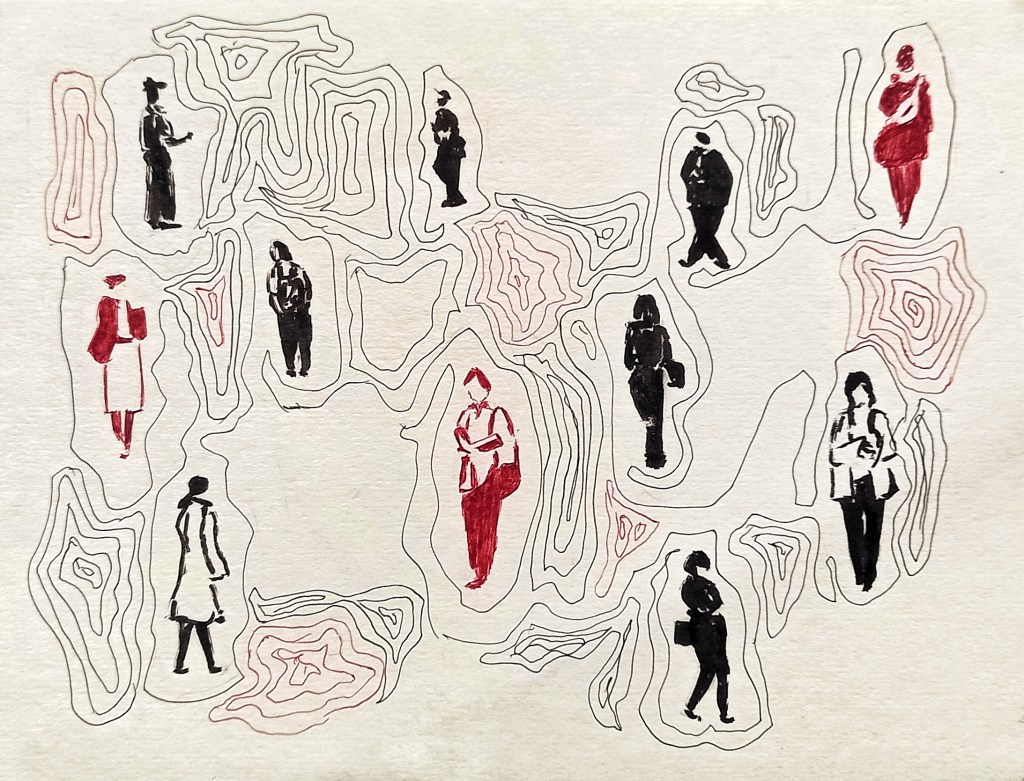
Our Due : Louis Faber
Perhaps you don’t understand
how thankful you should be now,
for we have made your lives
so much simpler than they might be.
If we hadn’t taken your language,
forced ours upon you under sanction,
we would not understand your pleas
for help, harder to turn a deaf ear.
If we hadn’t taken your lands, you
might be struggling farmers,
living tenuously harvest to harvest,
with only our handouts to support you.
If we hadn’t abrogated the treaties,
you would suffer under the obligation
to govern yourselves, without our
overreaching laws and rules.
So we cannot understand why you
do not lavish praise on us, for we
have given you all of these freedoms
and ask only blind obedience in return.

Louis Faber’s work has appeared in The MacGuffin, Cantos, , Alchemy Spoon, Dreich (Scotland), Prosetrics, Passager, Atlanta Review, Glimpse, Rattle, The South Carolina, among others, and was twice nominated for both The Best of the Net and the Pushcart Prize.
The Arrival : Monali Tiwari
I waited,
when neither time nor tide did—
withered, just
to add flower to your vase
your favourite ones.
Muted by regressive norms,
relentlessly saving my head
from the nasty uproars,
and the screechy noise that spilled venom.
I toiled while
you rested in your armchair, eyeing me.
I shrank myself
to caress your cringe melodrama
under the garb of “traditional glory”.
Yet, I stood sympathetic
when your fate upheaved.
I snuggled upstairs
when you infiltrated my zones,
grieving over my stolen share.
I excused your vanity,
the exaggeration beyond tolerance,
only to see your arrangements
purposefully exclude me.
I observed the frown
on your forehead when I wore a fine dress.
The gossip mill operated behind my back,
Whispering of how capricious I am.
It is funny what insecurity can amount to.
I was treated like the outsider,
when you were actually the one.
I ate a lesser gruel
to fill your snarling stomach.
You tumbled your blame game
all over my quiet heart.
I broke free from the callous remarks
until it overstepped,
crossing the line into the salt.
When inequity
becomes rule,
defiance
becomes a duty.
No more second-hand
embarrassment.
I stood up,
and spoke
the primeval truth—
and it stung.
I committed the bitter,
intimidating offense:
I raised my voice unbashfully,
pointing to your convenient morality.
It disturbed the flow
of your tyranny and domination.
End of the forgiving
era—not for such women.
My patience has reached fruition.
I cast it out.
I gunned down your authoritarianism
Until it was mere blabber,
I flushed
the scourge.
I flushed,
you.
My conquest prevailed.
My existence will bother you,
but I will thrive, unapologetically.
Yes, I’m at home.
Bye, you!
I have arrived,
like the truth—
a little late, though.
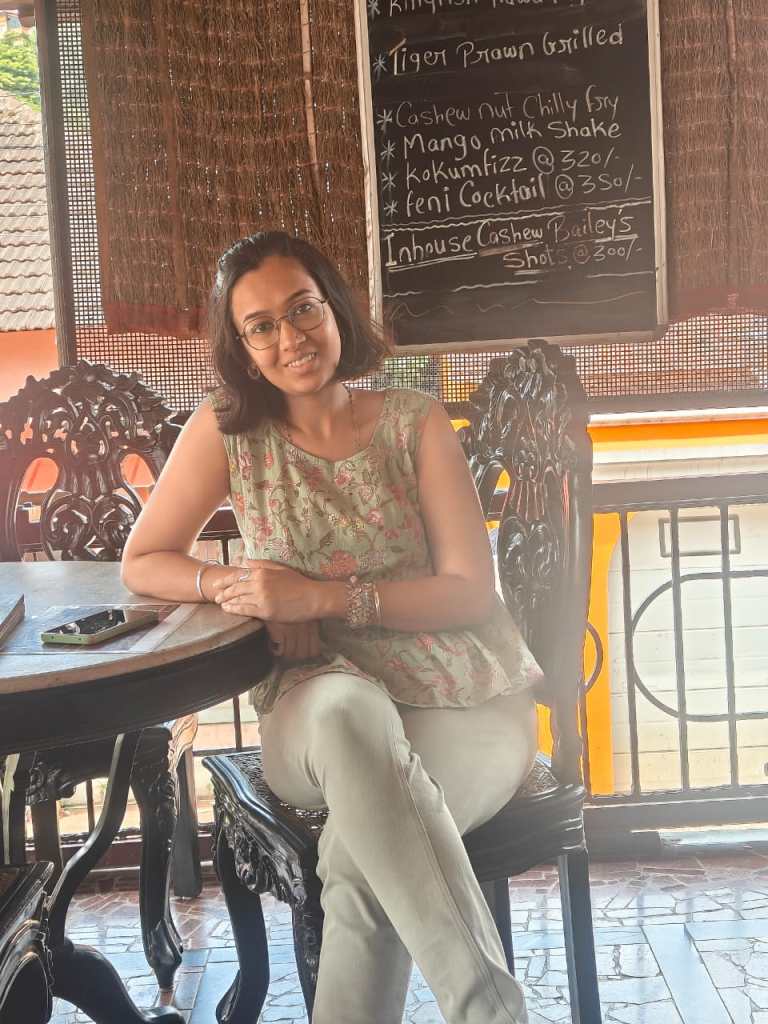
Monali Tiwari is a literature fanatic, poetry curator and proud ninja mum. Find her online on X and Insta handle @yellowhatz__ and her blog yellowhatz.wordpress.com
Visible Order : Jenny Rathod
I. The Queen’s Mirror Does Not Lie
They will call me cruel.
They will not say
what it means
to inherit a throne already watching you.
Once,
a kingdom learned to measure truth
by a mirror.
Not justice—
not hunger—
not the tremor of unrest—
only this:
who is the fairest.
Beauty, here,
was not ornament.
It was policy.
A face authorizes power.
A face revokes it.
The girl—
white as compliance,
red as spectacle,
black as the script already written for her—
did not know
she was governance.
She believed she was innocence.
But innocence,
like beauty,
is a role assigned early
and defended violently.
The Queen understands this.
That is her crime.
Not jealousy—
but literacy.
She reads the mirror
as decree:
replaceable.
And so the story rearranges itself—
a forest to contain the excess,
seven witnesses too small to matter,
a glass coffin
to preserve the image
without the voice.
The prince arrives
not as lover,
but as restoration—
returning beauty
to its proper function.
The kingdom exhales.
Order is visible again.
And somewhere beneath the tale,
unrecorded,
a question persists:
what happens
when a woman refuses
to be either
the face
or its rival?

II. Helen: Or, The Face That Was Not Asked
They will say
she caused a war.
They will not say
how war
requires a face
to begin.
Helen was named
the most beautiful
before she was asked
to speak.
This is how power works:
it declares value
before consent.
A promise is made
between gods and men—
not about her,
but through her.
She becomes
the currency
of a decision
she did not make.
A city burns
to retrieve
what was never
lost.
Armies gather
under the grammar of the visible.
Return her.
As if a woman
were territory.
As if beauty
were a border
violated.
They will write
her as desire,
as betrayal,
as cause.
Anything
but structure.
But listen—
war does not begin
with a woman.
It begins
with the agreement
that she can be
exchanged.
Helen stands
on the walls of Troy,
watching the ships
that carry her name.
She does not recognize
the story
they are dying for.
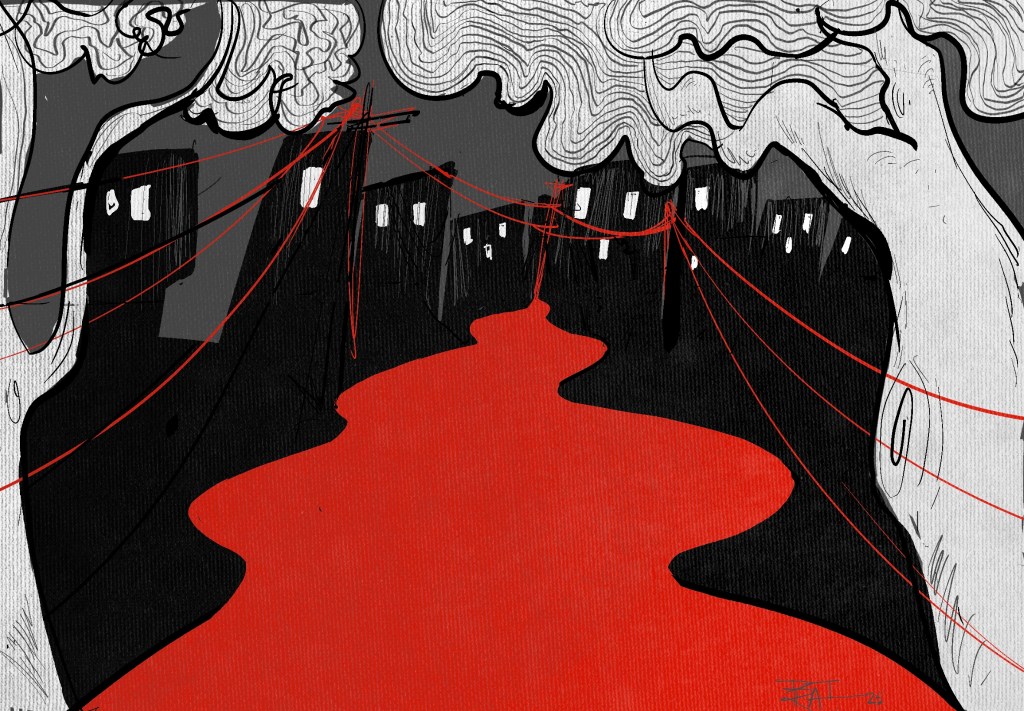
III. Tehran, Without a Headscarf
Tehran wakes before the sirens—
not to prayer,
but to the negotiations of the body.
A woman stands before a mirror
as if before a border.
Today,
she chooses her hair
like a forbidden language.
Each strand—
an insurrection.
They say modesty is protection.
Protection from what—
the sky,
the wind,
the fact of being seen?
On the street,
patrols move like punctuation,
stopping sentences mid-breath.
A scarf slips—
not by accident,
but by decision.
This is how revolutions begin now:
not with slogans,
but with gestures
small enough to be denied,
large enough to be punished.
Someone films.
Someone looks away.
Someone memorizes her face
for later use—
But she keeps walking.
Not because she is fearless,
but because fear
has already been exhausted
as a language.
And somewhere,
beneath the architecture of control,
her uncovered head
rearranges the visible.

Dr. Jenny Rathod is a retiring Associate Professor and Head of English at L. D. Arts College, Ahmedabad. Her writing and research engage literature, translation, and Shakespeare, exploring questions of language, power, memory, and representation across poetic and critical practice.
Coming in Unannounced : Vandana Kumar
Ordinary people
Who on any other day
You would have found pleasant
Even marvelled at their attractive features
Suddenly started to look ugly
As they hurled accusations
Sided with Gods
Declared some as favorites
Times like these
When it’s all over the place
Power changing hands
Friends
Who you would have sworn
Were peace loving
Also wielding a power
Mocking your helplessness
Endorsing the in-vogue brand of hatred
They were in the process
Of getting emboldened
We just couldn’t see them
Look at them today
One can spot them
Mushroomed like frogs
Jumping all around
Not even waiting
For the first wet monsoon day
Rest of the times
As we wrote poems on peace
Or slogged to please indifferent bosses
The country changed
Not loudly
But silently
It didn’t make any particular noise
Not the brittle crackle
That the opening of a newspaper makes
as you read headlines
We clearly missed everything going on
Never quite reported inside

Vandana Kumar is a translator, recruitment consultant, cinephile, Indie Film Producer and a multiple award-winning poet from New Delhi, India. Her poems have been published in over 150 national and international websites and anthologies of repute. Her poetry collection ‘Mannequin of Our Times’ has also won several awards including a Pushcart nomination.
‘Mannequin Of Our Times’ has been translated into Greek and French. She received the 2Global Icon Award at the Global Vision Summit 2025 held in Athens, Greece.
 Parcham Online
Leave a comment