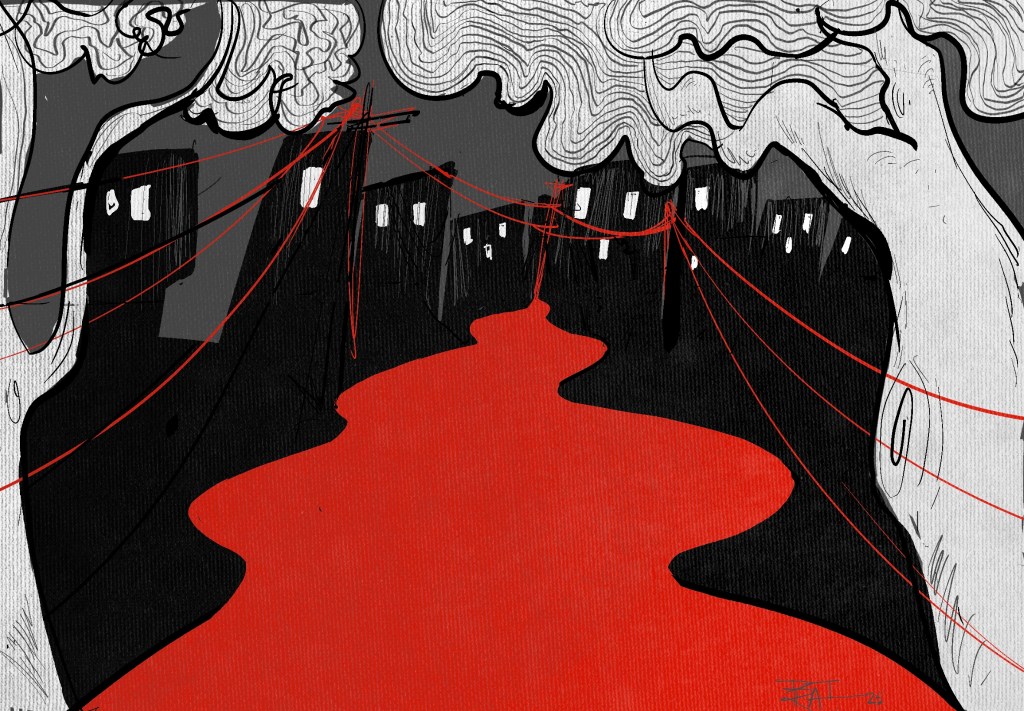

Unhinged : David Hershhorn
When is now
crowds assemble
and conform to
the indignant norm
the righteousness of
the self-involved
so let’s unlatch time
and set it free.
Now is when
unhinged minds
wander free
with sparkling eyes
and joyous souls
and an undaunted courage
to laugh
and to be free.

David (he/him) is an Ohio poet drawn to unsettling verse. David holds a Bachelor of Arts from The College of Wooster in Philosophy where he was awared the John F. Miller prize. When not reading or writing, David enjoys boardgames, playing the baroque flute, and listening to music.
Your Age : Sriyukta Misra
The strange taste of my own medicine is sweet—
citrusy, like an orange in the autumn heat, cool and bright.
It tastes of comfort, nothing like they said it would.
“You will understand when you meet someone as unruly as yourself,” they said.
“When you are my age, you will understand why I did what I did.”
I do not.
Even when I waited for it like the arrival of a storm.
Not at four. Not at twenty-four—
already older than you by a year.
Today I walk through a meadow.
A child runs toward me, crooked smile, mischief glinting in her eyes—
a quiet rebellion. I see traces of someone familiar, someone I used to be.
Another sits beneath a tree, thumb tucked in mouth, baby teeth peeking,
holding its ground against time.
Hello there, my little ghost.
I stood still. I waited.
And what rose was— tenderness, and a curious empathy.
Care, not violence. Not apathy.
I do not feel the urge to shout at the child: Why? Why? WHY?
Not at either of them.
I do not feel the urge to raise my hand in anger, to rename pain love.
Perhaps the language of anger is not the language of necessity.
Maybe what I thought was poison was wheat—
something that could feed me.
Maybe this life is what I reap,
refusing to sow seeds in soil that bled me.
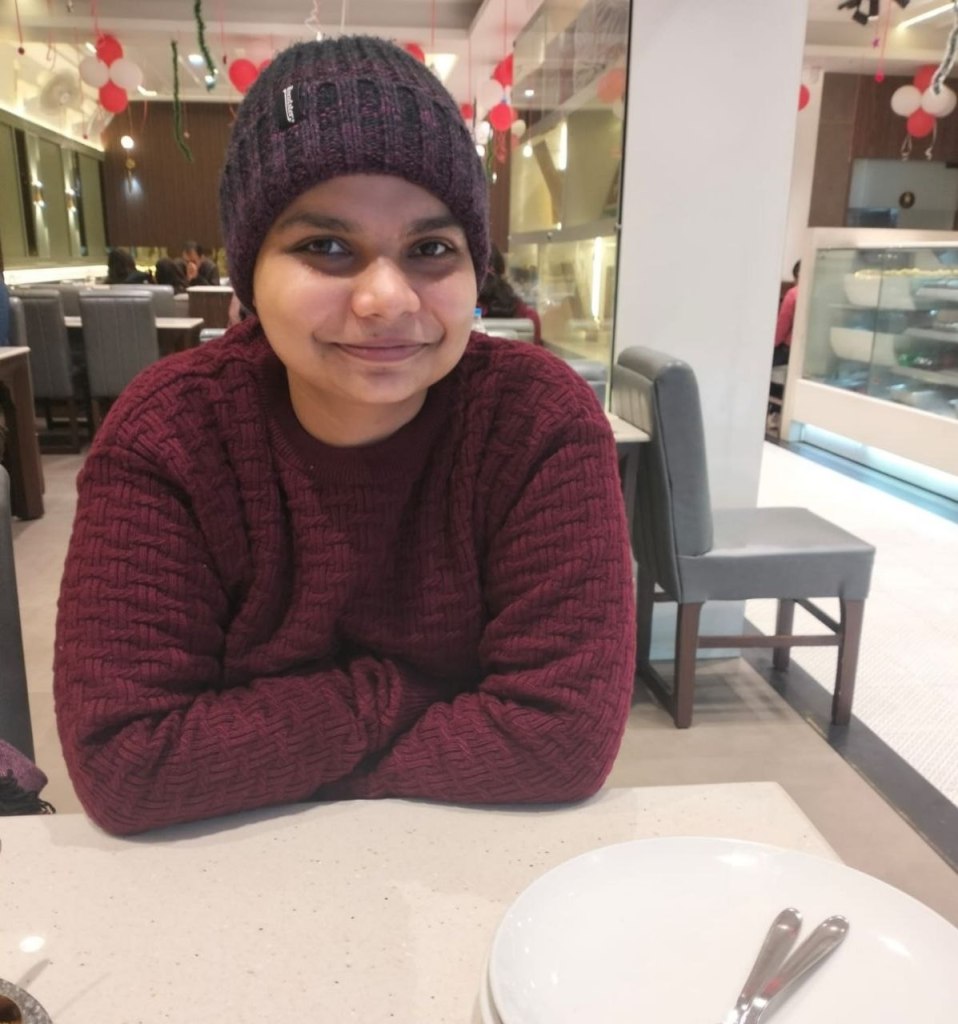
Sriyukta is an India-based poet and writer whose work explores identity and the search for selfhood through minimalist verse. Her triptych Flesh over Flesh was published in Aporia Literary Journal. She is currently pursuing a Master’s in Public Administration.
How To Ruin A Symbol : Adithi
I want to wish that your life blooms like a lotus,
but I can’t now, can I?
I want to fuss over an orange like that Wendy Cope poem,
but I can’t now, can I?
I want to summon in my head, the image of my favourite God,
but I can’t now, can I?
I want to ring the temple bell, without worrying about arches collapsing
I want to wear my bindi, without the shaming voice of a saffron geriatric
I want to close my eyes and hallucinate the naivety of a school kid
mugging up definitions of endangered words,
as anthems drone in theatres and stadiums
and we stand and stand and stand
together, for nothing.
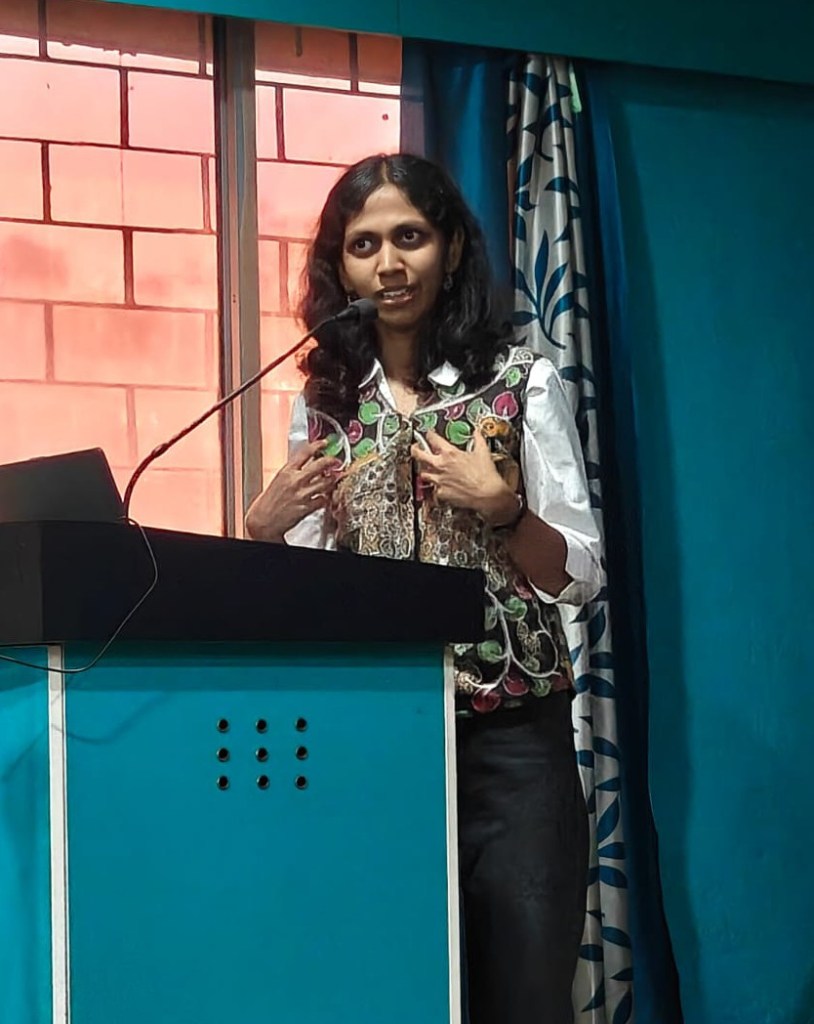
Adithi is a computer science engineering student and writer based in Mysore. She has published poetry in Thread Lit magazine, PoemsIndia, The Modern Artist and written for The Hindu, Persimmon Review and Sudha Kannada Weekly.
A Manuscript of Flame and Faith : Sushmindar Jeet Kaur
No scripture was written on her forehead,
Yet she carried entire galaxies of faith
Through seasons that intended to unmake her,
–Dismantle and deconstruct–.
The world searched for power
In crowns, in citadels, in sanctuaries and victories;
She found it elsewhere—
In the fragile miracle of remaining whole, after breaking,
–Cracking and collapsing–.
Her body was never merely a mass.
It was an archive of journeys, a landscape of scars and awakenings,
And a script engraved with sweat, yearning, love and loss,
–Countless unnamed acts of courage–.
She strived and accumulated fallen hours like petals after a storm
And fashioned from them a retreat for hope,
–Possibility and promise–.
There were nights when shadows reigned every window,
When even her heart seemed detached from itself,
Yet beneath the ruins a small flame persisted,
–Uncelebrated, unseen, undefeated–.
From that steadfast glow she learned what strength truly is:
Not thunder that startles the sky,
But a seed that breaks stone in its longing for light.
–Aching and burning–.
And so, she walked on,
Not above others, but deeper into her own being.
Her existence became a pilgrimage, her spirit its eternal horizon,
–ceaseless and incessant–.
Each act of compassion became a prayer.
Each wound became a doorway.
Each tear became a river returning to its source.
She did not ascend to the Divine but uncovered it within
–soared inside–.
What stood there was not a woman alone but a silence turned into scripture,
Wound turned into wisdom, and flesh turned into flame,
–a blaze and radiance–.
And long after she had passed,
The light she left behind continued opening doors in places
That had forgotten they were meant for dawn,
–Flourish and prosper–.
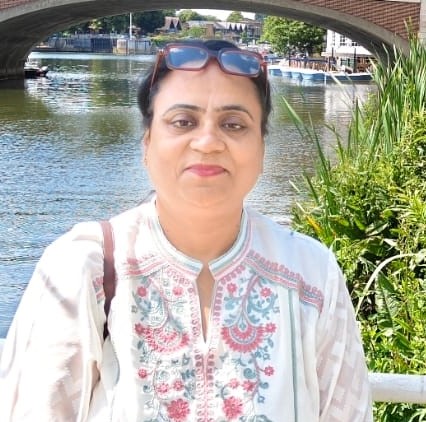
Sushmindar Jeet Kaur, an academic, poet, storyteller, translator, and editor, is an Associate Professor in the Postgraduate Department of English at Gujranwala Guru Nanak Khalsa College, Ludhiana, Punjab, India. She has been teaching English Literature for more than thirty-six years and has contributed extensively through research and publication. She has twenty-four books to her credit as a poet, translator, and editor. She has also presented research papers at international and national conferences in India and abroad, and delivered extension lectures in India.
Afterweather : Urvashi
Years later,
the house survives
in small habits.
I still enter rooms
like someone reading forecasts.
Watching faces.
Measuring temperatures.
Preparing for rain.
I apologise too quickly.
Explain too much.
Mistake vigilance for instinct.
Some forms of weather
leave without leaving.
They settle beneath the skin,
waiting to be mistaken
for personality.
But there was a terrace.
A small corner above the house
where the sky belonged to no one.
When the walls grew loud,
I carried a diary there.
Page after page, it listened.
It never asked me to adjust.
Never called the storm normal.
Never confused endurance with virtue.
Perhaps that is where the weather changed.
Not with rebellion.
Not with victory.
Only with the quiet suspicion
that pain does not become ordinary
simply because it is familiar.
And sometimes, even now,
when I hear my own voice
arrive before my apology,
I think of that girl on the terrace,
holding a pen
like a weather report
for a future
she was teaching herself
to imagine.
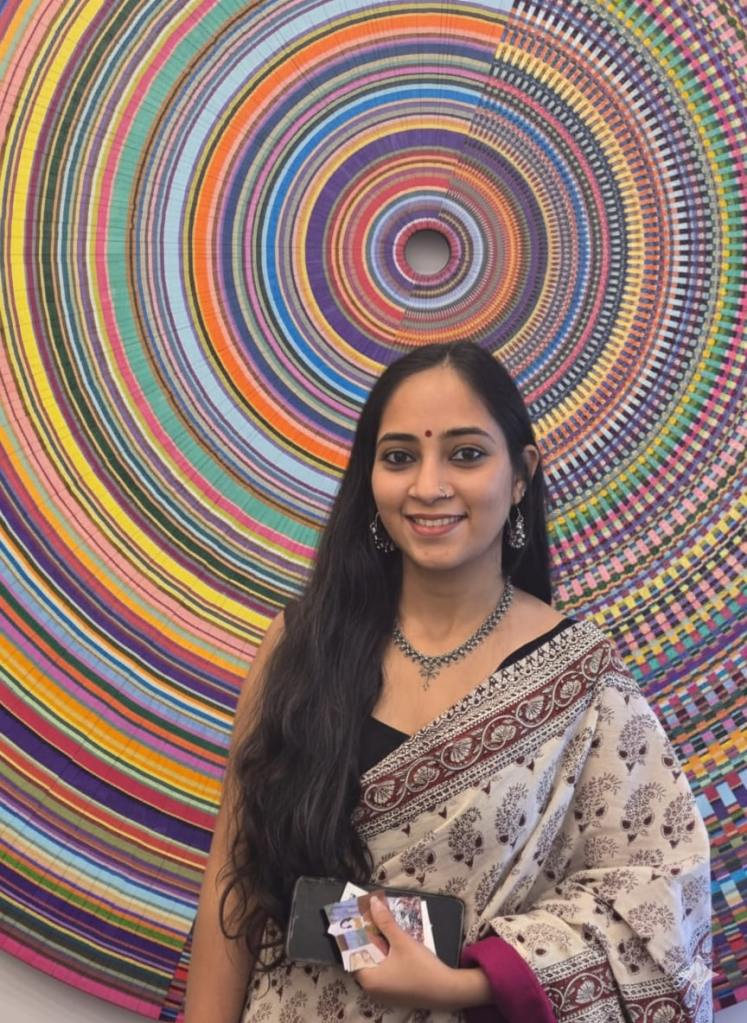
Urvashi is a writer, curator, and researcher whose work moves between art, memory, and cultural narratives. Interested in the stories people carry and inherit, she explores themes of belonging, silence, identity, and place through poetry, essays, and contemporary art writing.


Leave a Reply