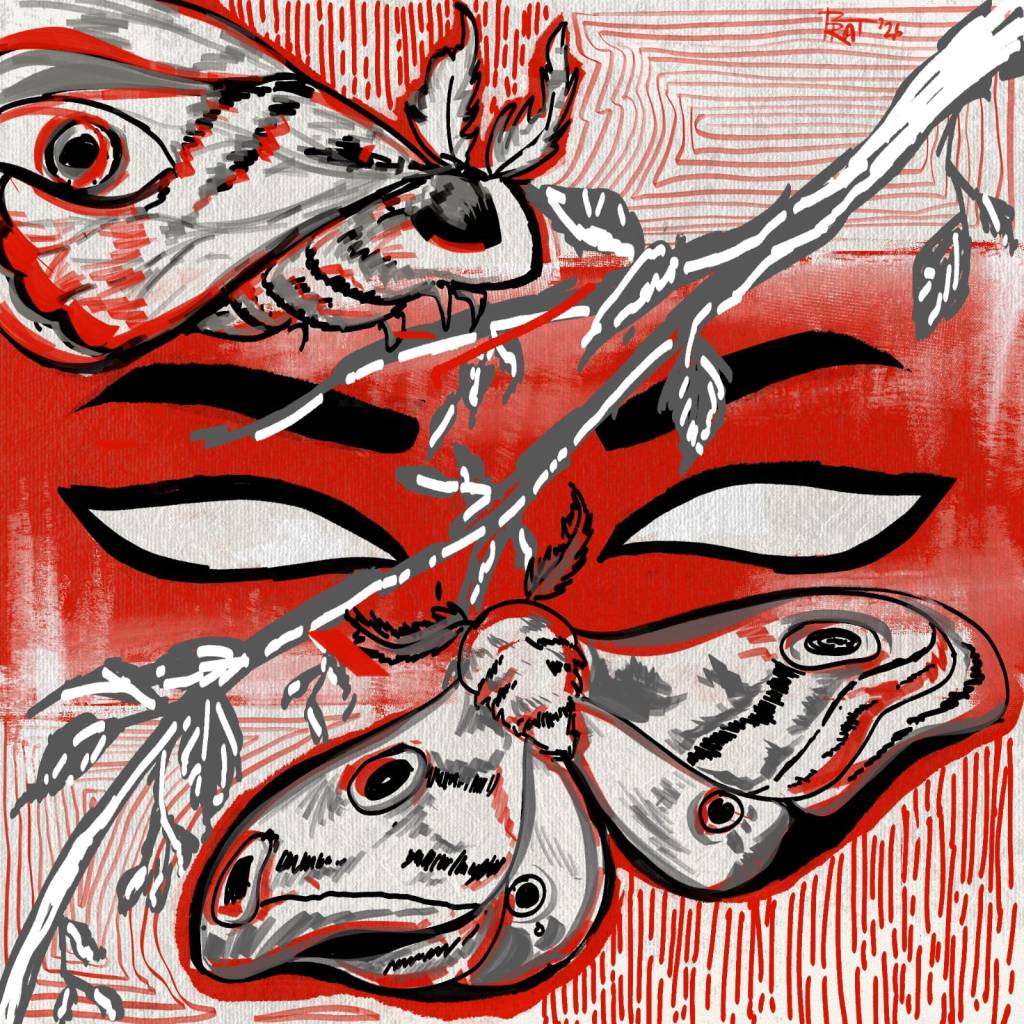
Betrayal of the Body : Durga Prasad Panda
You spend a lifetime
Looking for love
Trying to make your body
Worthy of its onslaughts
Only to realise
That the body
Nurtured with so much care
Is the first to betray you.
It is a container
Of life’s meaning, sleekly packaged
And built to last, too,
But with time, develops holes and cracks.
This body, in its ultimate act of betrayal
Turns into a mound of ash.
Love is a prison with golden bars.
Betrayal is a spectacular act of liberation.
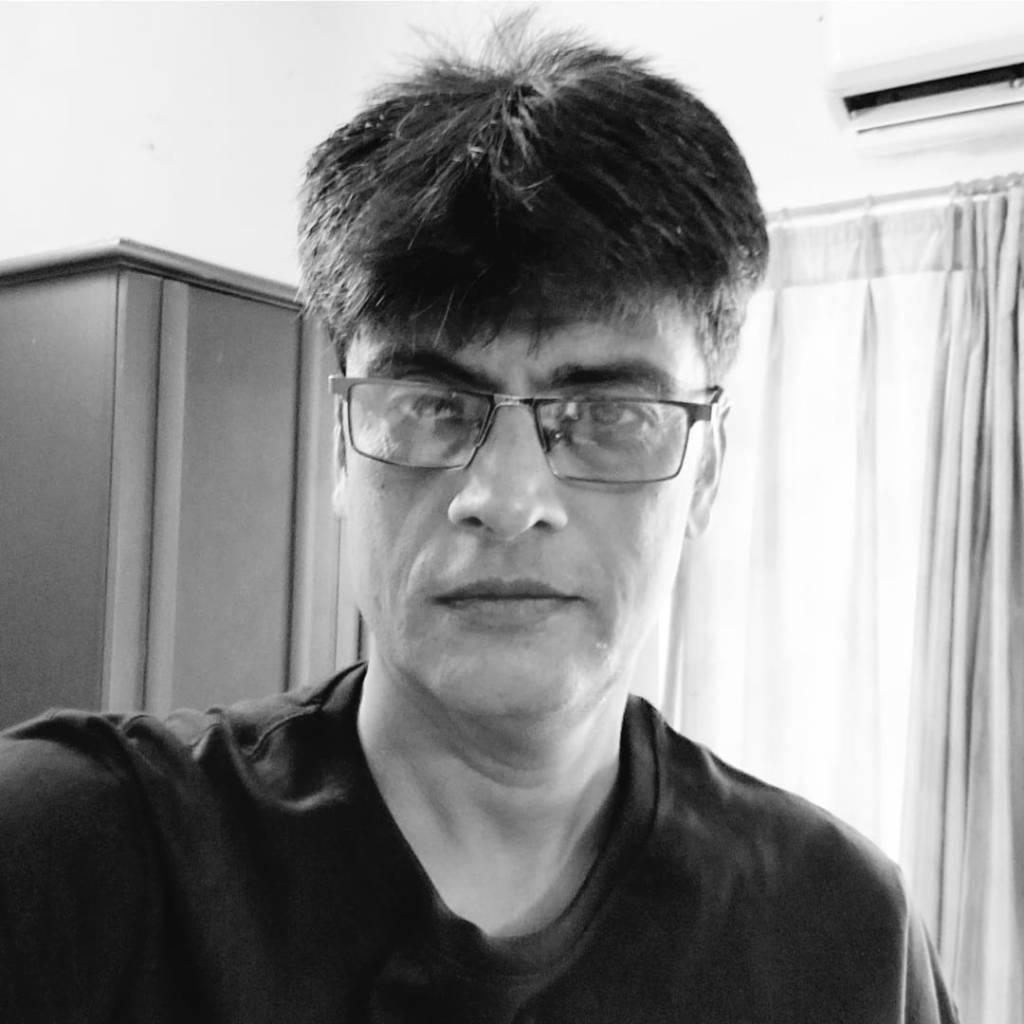
Durga Prasad Panda is an accomplished bilingual poet and critic whose works have appeared in prestigious journals across the country and abroad. He won the ‘Indian Literature Translation Prize from Sahitya Akademi, attended World Congress of Poets in 2019 and edited a ‘Reader’ on the life and works of eminent poet Jayanta Mahapatra.
Gaza : Keith Melton
Remembering the tardiness of strategy, rage
before the Golden Rule
the metronome of the heart’s curl
surging. Rockets, grenades, carnage
in a polychrome
of blood, policy in a flanking maneuver.
Genocide, it seems,
for all is not well. Strategy failing
the hostages nowhere to be found
the Oneness of dying; the betrayal of humanity
a feast of lime to salt the remains.
The armies advancing procure
chaos from the sky;
Mothers weeping, generations
asking how to demilitarize hate, how to find love?
Keith Melton is a graduate of The American University and Georgia Tech with degrees in City Planning, Economics and International Studies. His poetry has appeared in Amethyst, Agape Review, Big City Lit, Blue Collar Review, Confrontation, Compass Rose, The Galway Review, The Lyric, Monterey Poetry Review and others. He resides in Bluffton, SC (USA).
Sermon Amidst the Rubble : William Atkins
The word of a snake on a split tongue of grass?
Sever it. Lest it slither far into your ear.
A clap from the clouds on the hills of the holy?
Do not accept it; it is no prophecy.
A quiver of trees pinpointing a pale purple sky?
None of this. They’re gambling with blood.
Blood, blood, every season.
Green blood of bitter flesh, dusty twig
in the beak of a bird – no more than a hollow symbol.
Orange blood seeping out on a beige market tarp
threads receding, flame by flame, like a name.
Red blood on black, scorched earth. A soldier grabs a fistful, throws it in your eyes.
William Atkins is a British-American writer based in São Paulo, Brazil. His work attempts to analyze the relationship between the seemingly opposing natures of our world and the resulting fallout. His poems have been published in IceFloe Press, Micromance and Watershed Review.
What We Called the Fire : Khayelihle Benghu
He said it was never the drought
while the forest burned.
Cedars and mango trees
fell the same way,
their roots unable to negotiate
The flame knows no bound.
“It was not the heat,”
he kept saying,
as smoke translated itself
into every window,
into every child’s cough,
into the silence of birds.
Listen, Madam President,
a country cannot extinguish a fire
by arguing over its name.
Blame without resolution
is another way
of saying nothing at all.
Meanwhile,
the fire kept its own language.
It learned no passports,
recognized no surnames,
asked no one
where they were born.
It only knew
how to move from branch to branch,
from roof to roof,
until even the wind
smelled of departure.
History does not remember
what we called the fire.
It remembers
who refused to bring water.
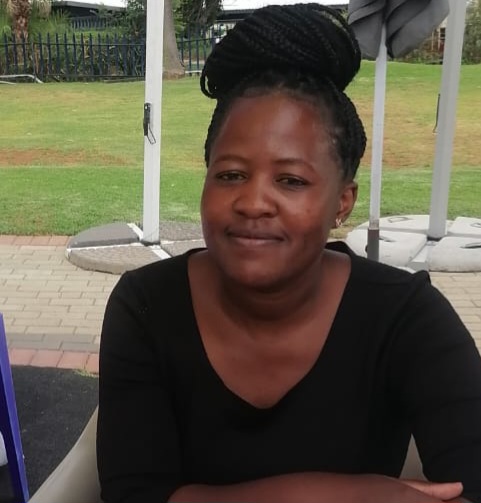
Khayelihle Benghu is a South African writer and poet based in Johannesburg. Her work explores memory, belonging, grief, place, and the quiet complexities of everyday life. She is the author of The Names We Carry (Silver Bow Publishing, 2026), her first full-length poetry collection.
I Betray Almost Every Day: Arthur Neong
little betray-als
I keep silent,
like sending my children for classes
even during haze,
because I have paid for the month,
and they have not stopped the classes,
because the numbers still haven’t reached
emergency-declaration levels,
and how does one stop the only thing
feeding one’s mouth-s?
They get their strength
and I get my sanity,
what little shred remains
within my little fragile
container.
Never mind the haze.
Their lungs are so strong,
though what little fragile,
strong containers.

Arthur Neong is a Malaysian Chinese. Having taught for 11 years, he now delineates the maelstrom of thoughts and visuals. His works have appeared in Tap Into Poetry, Oddball Magazine, Masticadores Taiwan, Shift, Pen to Print, and others.
Dust Around The Handle : May Garner
I wasted years setting an
extra place at the table.
Not for a lover, but for the woman
I was certain survival would create.
I imagined her with steadier hands,
a laugh that reached the walls,
plants climbing every windowsill,
because nothing within her flesh
would remember drought.
I folded her into every decision,
bought books she would underline,
kept dresses she would finally
feel beautiful enough to wear.
I practiced saying no so she would inherit
better boundaries than I ever owned.
The years kept arriving.
Only one of us did.
One evening,
I opened the cupboard and found
two chipped mugs pressed together
like strangers forced to share a shelf.
The second one had gathered dust
around its handle—I washed it anyway.
I filled them both to the rim,
set them side by side at the kitchen table.
Steam climbed from each cup
without choosing which soul it belonged to.That was when I understood.
No one had been standing me up all these years.
The woman I kept waiting for had been quietly drinking
from my cup all along.
May Garner is an author and poet residing in rural Ohio. She has been writing for fifteen years and sharing her work online for over a decade. She is the author of two poetry collections, Withered Rising (2023) and Melancholic Muse (2025). Her work has appeared in more than seventy literary magazines and anthologies. She is the recipient of first place in the 4th Annual Poet-It Like Poe Poetry Contest, a winner of the 2026 Woody Barlow Poetry Contest, and is a Genrepunk Awards nominee. Find her work on Instagram (@crimson.hands).
Ghosted : Janet McCann
You ghosted me.
I’m looking on the screen where you used to be.
I trace the network of lines that make these lights
looking for you.
I don’t know why you ghosted me.
But I guess that’s the whole point, isn’t it?
You just aren’t there.
I’ve packed up my equipment to pursue you.
I’ve got my ghost box, my EMT millimeter.
My voice recorder. I have polished my black mirror,
I am ready to descry.
so many years we shadowed each other
And now you are a shadow
And I am in noon sun.
You are a cold space in my heart,
And in this room.
You are just an orb, a blip.
But my equipment picks up residuals.
There’s a glow, the indicator shivers.
You are nearby.
OK, old ghost, show yourself.
Explain.
Apologize.
And then, if you like, vanish into air.
Janet McCann is a crone poet who taught creative writing and other vices at Texas A&M University for 47 years, Her most recent collection: LIFE LIST, Wipf and Stock, 2015.
The Worker’s Service to his Country : Translated by Manvi ( Original Poem by Sant Ram Udasi)
Looters of my labour, why do you drink the blood of springs?
This land is of the workers, it is not of the rich.
My tesa and hammer built up lakhs of temples and palaces
But to wind down in sleep I only have thatched huts of straw and reed
Today, due only to my labour, cars upon cars have arrived
Having murdered our spring, several springs of yours have arrived
The splendor of the rich has doubled, Capital has grown four times
But even the morsel of bread I have is nearing its end of time
Every time I have wanted to try and break through these chains
Stitching broken pieces together, I have wanted to mend my fate
Suddenly, religion is in danger, law is in danger too
The passions of contractors of religion are in danger too
We are declared traitors to the country, the prison doors open
Blinded in their cruelty, humans forget who is human
They end up becoming lakhpatis, mixing poison in everything
But dawn cannot resist being born when the earth is expecting
Then the worker breaks his prison bars and says, all of this is mine
What you call your country, it is not yours, it is mine
These snakes on the borders of crops, they have stung my own grandfather
A burning iron rod has passed through the hungry belly of my brother
His spinning head has made him fall, the one who cleans your filth
No doctor gives him strength, ah! My father writhes in pain
In this factory’s burning fuel, it is my mother’s body that blazes
And by the side of roads, the youth of my sisters is fading
From my wife’s hair itself, this electricity has woven its grids
And drop by drop of my own sweat has made these lake-dams exist
Those flowers that bloom in your garden, they are my daughter’s smiles
We have torn open the chest of mountains and filled them with our lives
Freed from your restaurant, you take your drunken anger out on us
Right by our lips, you honk the horns of your jeep at us
This earth is like our mother, it has not forgotten anything
It knows very well whose blood has been shed in the fields
I’m tired of listening so, I dare to speak today
Waving the flag of struggle, I rebel again today
Why shouldn’t the worker say now, whatever is on earth is mine
What you call your country, it is not yours, it is mine.

Manvi (She/They) is a Writer, Translator, and student of Labour Studies at JNU. She works across English, Punjabi, Hindi, and Urdu, and is currently translating post-Naxalbari Punjabi revolutionary poetry, and Punjabi Dalit, Feminist, and Progressive Literature. Her work has previously appeared in Gulmohur Quarterly and The Bombay Literary Magazine.


Leave a Reply