
Title: The Hour of God
Poet: Vinita Agrawal
Publisher : Red River
Price: 399/- INR
Year of Publication: 2026
Vinita Agrawal’s collection of poems, The Hour of God, begins with an epigraph from the Upanishad’s which highlights the desire to find peace. This, along with the cryptic title of the collection might make some of the readers ponder over the exact nature of peace that the poet is searching for through her words. And one also might be tempted to look at this search akin to the kind that activists, human rights champions, environmentalists and political leadersare fighting for in a rapidly disintegrating world. But navigating through the collection, you realise that this is a reference to a more personal quest—a sense of contentment that the individual mind and heard seeks to come to terms with the issues of loss, longing, death, of people leaving, about homes that are no longer homes and mirrors that struggle to show us who we really are. This negotiation with one’s own self is necessary to come to terms with the wider upheavals in the world and also within one’s self, and the poems do just that. The effort takes a toll on you, scourging deep inside the crevices of the soul—but I am reminded of the prophetic words of Leonard Cohen, who remarked, “If you do not become the ocean, you will be sea-sick every day.”
Most poetry collections have an underlying trope that runs through them—an image, a word, an idea. In Agrawal’s, it is that of light. Light appears in various manifestations, sometimes as necessitated with dealing with the past, as in the poem Before the Ancestral Home, where the past is a note of unfamiliarity that time and brings and “light is a blade of memory.” Her language and images flow seamlessly as if one spirit, moving from one room to the other, through past and present. In Stroke, we have “windows closing to light,” and in Conversation with a Seed, the poetic voice sees itself as “the quiet conversation the earth repeats with light.” There are multiple such examples and I would leave it to the readers to uncover the underlying repository of meaning and suggestiveness which these images carry. But light is everywhere in these poems, shining through, illuminating and providing an awareness of the self—for clarity, knowledge, self-realization and truth.
Grief too, in its various forms, for not only humans but also for nature, both ecological and human, is ubiquitous in these poems. The ancestral house becomes a shrine of the past and a repository, where “the house is a shell, a prop/ but the land holds the ritual.” (Before the Ancestral Home). The poet negotiates with loss in its Protean forms and also at the same time, becomes aware of the nature of grief. Not only is it imagined as a plant taking roots which once having taken hold, as Andrew Marvell says, grows “vaster than empires and more slow”, it is also like a palimpsest. Death and illness of parental figures are spoken of with a sensitivity and softness, but never without shying away from the terrible journey that such experience brings. It is God who seems to be able to provide comfort, not always looked upon as a divine entity but an emissary of light and hope, of comfort and care, whose presence is evident in the everyday life and things around us– ” You came disguised as a whiff of mother’s perfume, God.” (Is That You God?)

The poems are characterised by a lightness in the deft handling of the themes and images and yet, the lines carry a tremendous and gravity that each line carries. Talking about happiness, in the poem Of Joys, Agrawal writes, ” I held mirth like a dandelion seed–/ so slight, so easy to crush between fingers/still, enough to plant the sky,” and later in the poem Lightness, says ” a cumulous cloud/ weighs one hundred elephants/ and after it rains, / less than a flower;”. What emerges is Agrawal’s poetic vision where she finds strength in the smallest, lightest and tiniest of things around us– not in the declarations of strength and the titanic but in the silent presence. This silence is not to be mistaken for ennui or stagnation, but rather as in what Rilke says, “Even silence is preparation.” The fact that this silence and the apparently insignificant is pregnant with endless possibilities and carries the weight of the world is evident in the lines, “This is how the universe began–/ not with a star, but a seed.”, reminding the readers of Eliot’s “This is the way the world ends, Not with a bang, but a whimper.”(The Hollow Men). The daily and the mundane come together with the almost abstract and the metaphysical– ” Let me collect the numbers/ you whispered to stars/ the price of rice/ the weight of my absence.”(Reparation to Mother)
The trope of loss runs like an undercurrent throughout the poems– the loss of the poet’s mother appears again and again in the poems and the peculiar quality of grief is that it takes hold like roots. The same grief is also associated with the loss of a “home”, mediating grief between the twin axes of the spatial and the temporal. Not only does the poet long for the physical space that was once home, but also the time that is now long gone and beyond retrieving. Part of the peace of mind and heart that the poet so desperately seeks can be found in the act of letting go– ” But somethings one must let go quietly/ a setting sun, a ticking moment, a broken mug.” (Elegy for a Broken Mug) and again when she says, ” Disengage the shadow from the self.” (Comfort). Later, this comfort is also achieved in the act of acceptance of the struggle. Poignantly, there is a recurrence of the image of a deer. First where Agrawal says– “The deer. / Not fleeting, not challenging, / simply there– / unperturbed in the headlight sweep.” (Homebound, Dusk) and later in the poem titled Constellation Deer, when the same or perhaps a different deer lies injured on a highway but, ” She flagellates on all four/ Limps away, one leg in a bow.”

One of the striking features of this collection is the turn from the personal to the social/ political/ ecological. In the poem, Survival, for the first time perhaps in the collection, the poet addresses the issue of social inequality and exploitation of the poorest of the poor. The poem progresses in the form of questions, almost akin to Dylan’s Blowing in the Wind” and when the poet whips the rapier of the statement which needs to be made when people should be held accountable, ” The land knows its wounds, / the way water remembers/ every dam built against it,” to the Indian mind, we are reminded of Amir Aziz’s now iconic Hindi poem, “Sab Yaad Rakha Jayega,” penned during the CAA/NRC protests in Delhi a few years back. Agrawal’s dream is every poet’s dream, ” A ruby red freedom, / that belongs to everyone, everything.” (A Country Shouldn’t Be). And in the poems, Oil Spill and Musings, her concerns with the threat to the ecological are evident. This section is perhaps most significant, not only because it addresses issues that need the greatest urgency in today’s world, but also because, here Agrawal moves beyond her comfort zone of talking about her own loss and grief and personal struggles and raises issues with a quiet restraint that becomes a signature of her poetry. She, in her author’s note, alludes to the make up of the poems when she says, ” Here sorrow and solace meet in the same hushed golden light.”
India, in the last decade and a half, has seen the steady rise of the Right Wing Forces, culminating on fracturing of the social fabric on religious and ethnic lines. At a time, when there is an attempt at the erasure of a few chosen episodes of India’s history and a deliberate amnesia about a few others, it becomes imperative to restore, and remember incidents before they recede into the recesses of public memory. Reading the poem titled, “My Father-In-Law Often Spoke About” which deals with life before the Partition of India caused irreversible damage or “Those Five Homes”, which deal with the idea of home in the age of persecution of migrants in various parts of the nation and the world, I cannot but help be remined of Agha Shahid Ali’s proclamation, ” Your history gets in the way of my memory.” The poems stand out not only for the sensitive subject matter that they are dealing with, but Agrawal’s lines, and this is true for most of the collection, are like lightning strikes, splitting open a sky one thinks one has the measure of, only to open fissures and to reveal an entire universe lying beneath. For example, in the poem Israel Mulls Complete Takeover of Gaza, she writes, “Malnutrition clouds/ The eyes of children/who know only the geometry of ruin.”
As a reader first, and then a reviewer, there are two things which stick out in this collection. the first being the Ghazal Ballimaran, Delhi. The images carry a weight and lyricality of their own, but I still think it would have been better had Agrawal not gone in for the Ghazal, for she struggles with the rigours and demands of the very specific poetic form. And secondly, the two/three poems dealing with figures from mythology, history and religion, seem to overwhelm the poet– she appears to be trying too hard to do justice to these characters.
The collection comes a full circle with the poem, Saying Goodbye to a Home with the lines, “To Turn the key is to unlatch a wing/ I cannot use to glide away/ from the only vessel large enough/ to hold the shape of grief.” Vinita Agrawal has been associated with reading and editing poetry for a good while now. And it is evident in her understanding of the genre, the cadence and the ability to lift the mundane to the significant and the sublime. Her command and control over the themes she deals with, and the uncanny knack of drawing the readers into her world of joy and sorrow, of hope and despair is what makes this collection of poems one to savour.
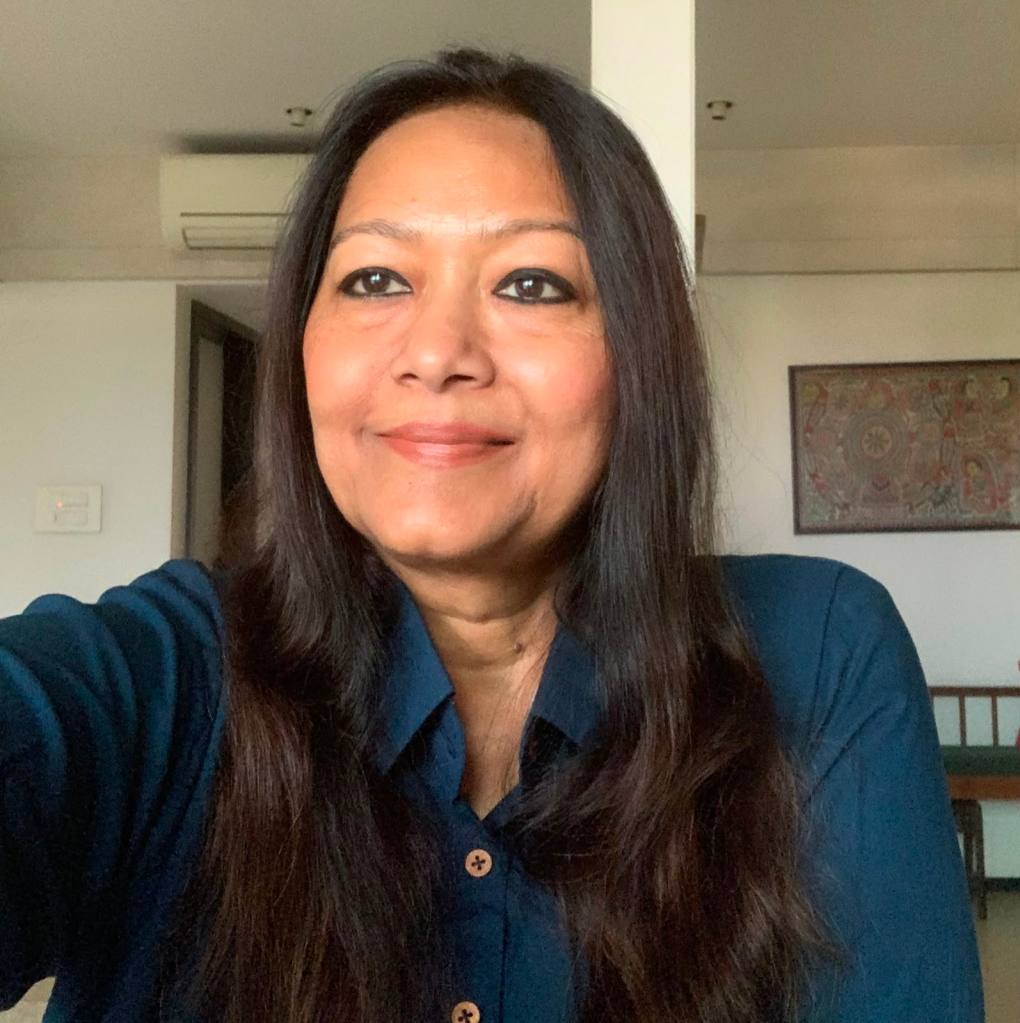
Vinita Agrawal has authored seven books of poetry and edited two anthologies on climate change. Her latest poetry collection is The Hour of God published by Red River Press. Her poem “A Place Both Inside and Out” was shortlisted for poem of the year 2026 by Arc Poetry. She received the Fresh Voices Award from Mulberry Literary in May 2026 for her poem “Bird of Debt.” She was the runner-up for the 2025 Mañoa Journal poetry prize, runner-up for the Earth Amulet Poetry Prize (River Paw Press), and was awarded the 2024 Jayanta Mahapatra National Award for Literature and the 2018 Rabindranath Tagore Literary Prize. She convened the PEN All-India Centre at Prithvi Theatre, Mumbai, and she is on the advisory board of the Tagore Literary Prize.

Sayan Aich Bhowmik is currently Assistant Professor, Department of English, Shirakole College, West Bengal, India. He is the Founder Editor of Parcham.


Leave a comment