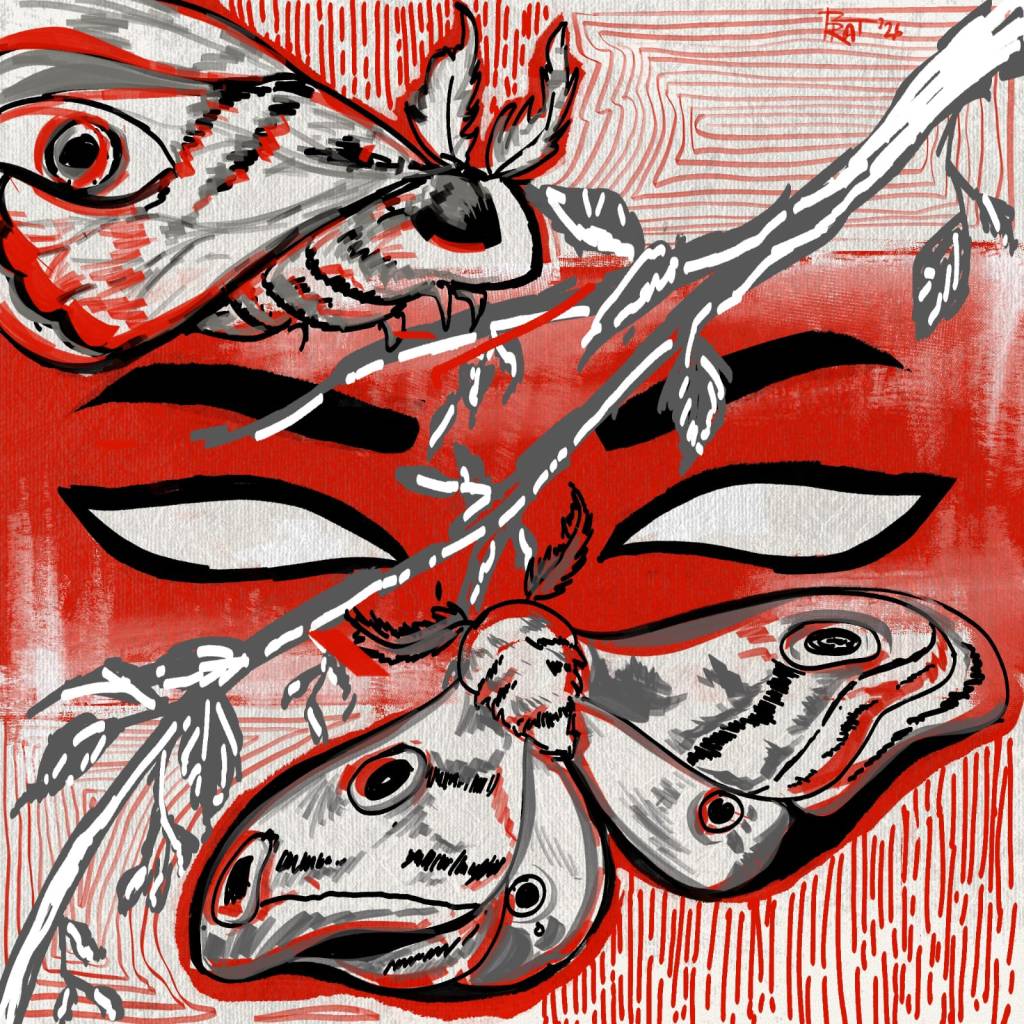
In Resistance Lie Our Hopes : Editorial by Shrutidhora P. Mohor
It’s difficult these days to make out the difference between construction and demolition. Large churning machines mix sand, cement, gravel, water, and whatever else at construction sites from early mornings to late evenings, real estate boom the only visible industry all around, while bulldozers push past my home to raze to the ground buildings with allegedly suspect legal credentials. The chaos, the noise, the pollution, and the way the geography of the place changes are nearly identical. I wonder if what is being raised today will be brought down in half a century’s time, with similar vengeance, or if what is brought down today had once been erected with similar seriousness of purpose. The power of obfuscation reigns supreme these days; our visions hazy, understandings clouded, interpretations shrouded in primitivity, in bigotry, in shameless surrender to obscene power.
I might not have grown up as a critic of power at all, in fact, I might not have even comprehended what is wrong with it had it not been for my family. Grooming me into the most polished forms of living and thinking, they trained me into understanding how far power could extend. I learnt from them how to oppose state power, power of political parties, hate muscle power, reject the power of artificial divides among humanity. But interestingly, this was not because they gave me a home where power was always effectively countered, or a place where a democratising practice was always present. In fact, it was by a sophisticated categorisation of words and deeds, an absolute and often not-open-to-argument system that upheld power while it denied doing the same, that as a child, I began experiencing it in subtle ways. So, while, say, I do remember feeling uncomfortable about the fact that in school, only some of the boys could assign pejorative call names to some others, prevail over others, decide which games to play and which ones to dismiss, whose birthday party to attend, what to bring up for discussion in a tiffin time chat, and what to rubbish as ‘girlish’ or ‘useless’, I was not too sure that at home, everyone had the equal right to mouth equally bad words, or resort to the same unacceptable behaviour.
If the mystery of ‘money power’ first dawned on my perception when I came to understand that some classmates were rich, a word always uttered in hushed voices, were driven in private vehicles to the school by their doctor fathers, families which went to Dubai or London for the holidays, and some others were poor, uttered in even more hushed whispers, and there was a compulsion to find out who all in the class were ‘just like us’, thereby ensuring that the barrier of financial power would not stand between us. Within the family, things were considerably different. Even as a child I did notice how some people at home counted for more than one, how words from one person mattered more, how decisions were always tilted towards some and not evenly placed before all. As a teenager, I had the difficult choice of falling to the temptation of siding with the sources of power in the family, or nurturing the natural rebelliousness of those years, and pointing out that I stood with the underdogs. One thing I knew for certain. Power comes with its offers. Packages. What all you get when you have power! You can’t take some of them, pretend that you have taken the better ones, and claim to discard the rest, the ones which are too blatantly vile.
My formal academic association with Political Science over the years brought power to my lap. I grew up as a student around the concept of power and its manifestations. I witnessed the power of intellect. Some of our best professors were idols to worship, their power to inspire, to influence, to motivate and enlighten changed my life, and ironically, made it more difficult for me to adjust to the ways of my family, which, over time, reaffirmed power differences even more. As a young adult, newly exposed to the ways of the world at large, I voiced ideas and arguments, whose power to upset my people at home was high. Somewhere, I had this inkling that in the decades to come, this would be the one-point stumbling block at home, with my extended family.
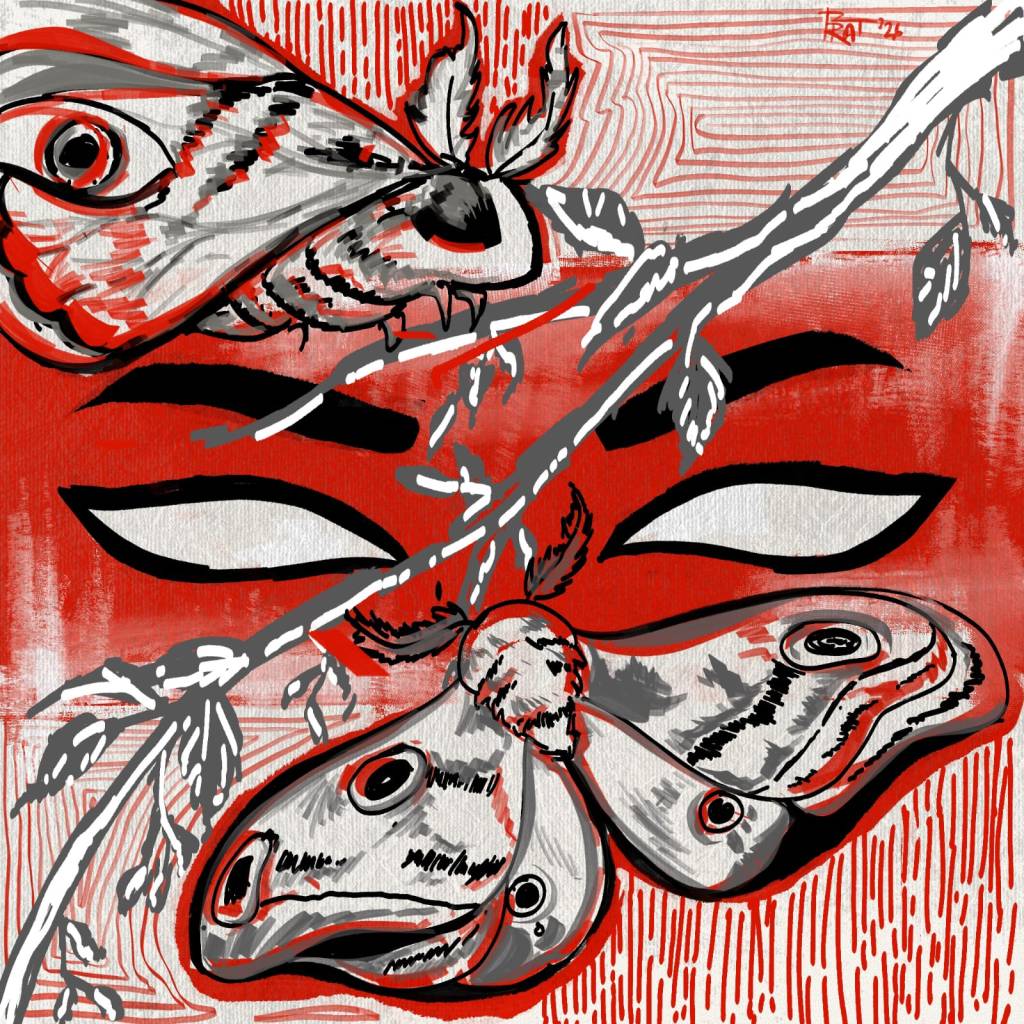
As a professional, my encounters with power continued. I am employed in an institution where that is the only vibe that works, the only element that drives things. I was expected as a newcomer to take due permission for moving a chair from one place to another, quite literally so. I looked around and found people awestruck by power. It was odd, to say the least, and it helped me focus my fight against power even more. I shall briefly share here one incident.
It was during one of my class lectures that I heard someone much known and once-feared in the institution walking down the corridor. And then I saw him. His wobbly feet shuffling on the smooth cemented floor, his hands up against the wall, trying to grip its plain surface. He looked ill, weak, helpless, and certainly uncared for. I paused my lecture and watched him. He did look up once, turned towards the classroom, and probably saw the students sitting inside, looking curiously at me watching him, with interest, with introspection, but there was no understanding in his eyes.
Old age and displacement from power spare none. Not even former heads of institutions.
“Do you know him? Do you know who he is?” I asked the class, knowing the reply would be in the negative. I, for one person, wouldn’t miss even half a chance to comment on power, to critique it, to expose its audacity.
They shook their heads both ways, as expected. An inquisitive mind among them inquired who he was.
I smiled and said, “A former principal of this college. Once he thought, and so did everyone else, that he commanded the universe by virtue of that position. Look at what happens to people who live by their chairs, swear by their designations. You take the chair and the designation away. And see the result. He is nothing better than a feeble pauper now. It isn’t old age alone. It’s old age plus the world getting back at you when you are no longer able to use power and fear as currencies.” I paused and added, “That’s why, the best thing to do when advantages are on your side is to minimise your sense of power on your own.”
So much for my diatribes against power, and my attempts to ‘brainwash’, the good kind as I would say and my critics would vehemently disagree, young minds away from its unsavoury attraction!
I have been guilty of this all my professional life, truthfully speaking. I have broken rules, questioned institutional cultures of orthodoxy, destabilised power holders, encouraged insurrections of the intellect, in short, ensured that power in all its forms looks at me with alarm. Some students have taken after me, some have stayed away, at least initially, but all have acknowledged that speaking truth to power is what gives me a sense of meaning, a reason for existence. That there can be a teacher who can use her position to challenge power has inspired them and shown them that there can be an alternative way of living life.
Now, when I am an unhappy witness to the power of hatred, to the power of injustice to reduce and endanger lives, to sub-humanise human beings, to deliberately cause harm and pain, and I see it manifested with every breath everywhere, transforming India by the minute, justifications of its shamelessness so absurdly dangerous, I turn inwards, even more than before, falling back upon interiority as my most cherished recluse, and wonder if power itself is a victim of its own hierarchisation, so much so that humanity worldwide has chosen to prefer one kind of power over so many different kinds, such that the power of violence and the power of untruth have come to decisively emerge over and above the powers of truth, kindness, reason, empathy, solidarity, common sense, tolerance, and above all, the power that is contained in being human. For once I wish, hierarchies would remain but would urgently be revised, so that the desirable kinds of power may top the chart. Dreams, then, might develop into the best channels of power, and until then, we probably have to hope for establishing the power of hopes and dreams.
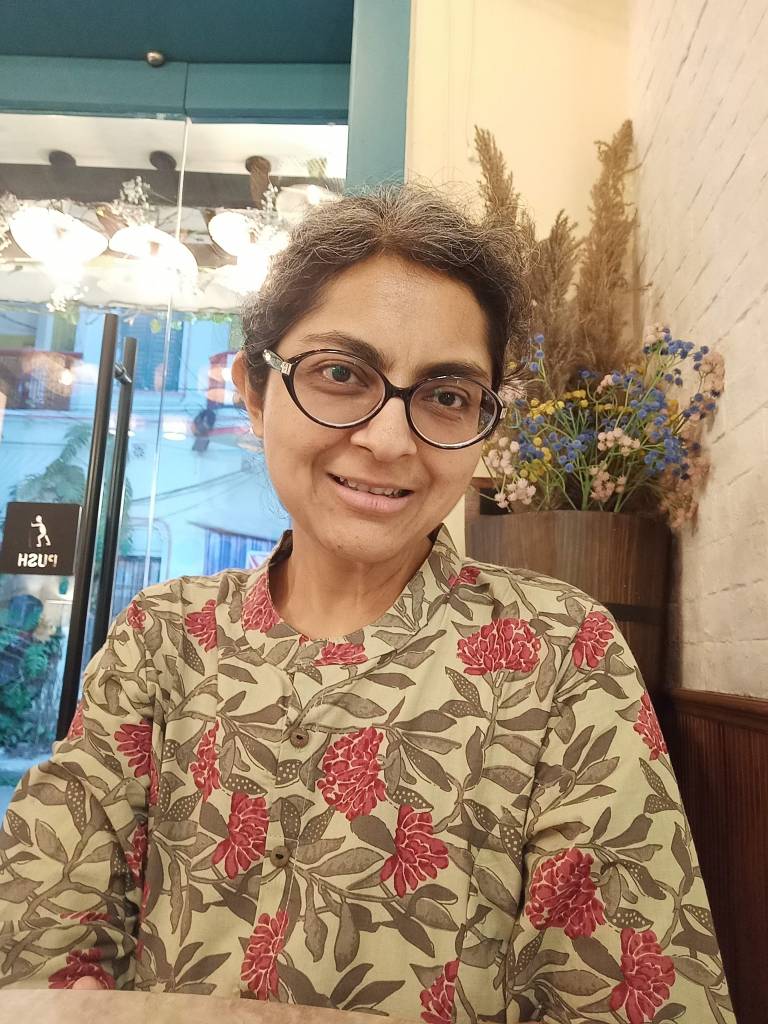
Shrutidhora P Mohor (born 1979, India) has been listed in several competitions like Bristol Short Story Prize, Oxford Flash Fiction Prize, the Bath Flash Fiction Award,
the Retreat West competitions, the Retreat West Annual Prize for short story 2022, the Winter 2022 Reflex Fiction competition, Flash 500. Her writings have been nominated for Best Micro fictions 2023 and the Pushcart Prize 2024. A collection of short stories titled A Moon-Measure of All Things (Alien Buddha
Press, February 2025) is her latest publication.
“Who Creates the Monster? Society, Rejection, and the Politics of Otherness”– Editorial by Riya Dubey
Power is not just punishment.
It generates humanity and inhumanity.
Whenever abuse of power comes to public attention, society readily sympathises with the victim and denounces the offender. But it seldom asks the deeper question of how such cruelty emerges in the first place. Often, the figure branded as a “monster” is shaped by rejection, humiliation, and social exclusion. In this sense, monstrosity is not merely personal; it is produced through the politics of otherness, where humanity is withdrawn before judgment is passed. This does not excuse or justify the actions of the guilty; instead, it seeks to examine how social rejection, exclusion, and power structures participate in the creation of monstrosity.
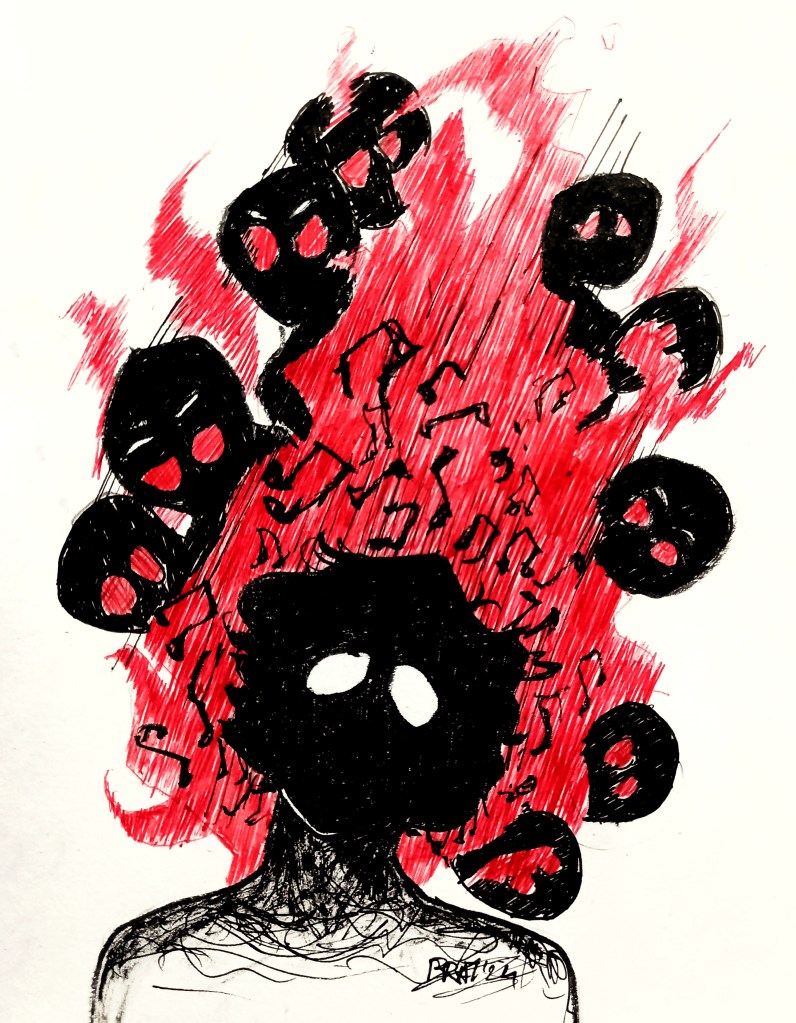
There are creatures in literature that scare us less because they are inhuman than because they reveal the workings of human cruelty. The monster is often conceived as a figure of the margins, but the margins themselves are shaped by the people, customs, and institutions that determine who belongs and who doesn’t. In this sense, the monster is seldom a beginning; it is an end imposed upon someone who has first been denied recognition. Mary Shelley’s Frankenstein remains powerful because it asks not only what the creature is, but what society does when it rejects mercy. This novel powerfully shows how excessive scientific experimentation and the urge to overstep natural boundaries can turn into a dangerous assertion of power.
“All men hate the wretched; how, then, must I be hated, who am miserable beyond all living beings!” (Shelly, 103) The creature, a vulnerable being, enters the world not as evil but is abandoned by his creator, judged by society for his appearance, and feared without being known. Shelly’s novel doesn’t remain a Gothic tale of creation and consequence but becomes a mirror for social failure. The real horror in the novel is not the creation of a human-like being, or playing God, but rather the fact that he is made without any sense of belonging. His creator discards him, fleeing the scene as if he had made something ghastly, impure. The novel suggests that the first wound here is relational, and the violence appears in neglect before it appears in action.
Power is mostly imagined as command, punishment or even in the form of domination, but one of the quietest forms is ‘exclusion’. When one excludes someone, it means that person’s presence is unanswered and uncared for. It is to hold back the human response that allows the person to feel real and seen in this world. The creature’s tragedy lies in this refusal, for precisely where he is, though seen, is not recognised; noticed but not accepted. Pain gathers between this visibility and recognition.
The politics of ‘otherness’ is not simply about differentiation but is a social problem. Edward Said showed in his Orientalism how cultures often define themselves by producing an “Other” against whom their self appears normal, rational and superior. The opposite of familiarity becomes a tool of identity. Said demonstrates how, when representations are simplified, they reduce the complexity of entire groups of people into images; they are seen as objects of interpretation rather than subjects of understanding. This understanding extends beyond the context of empires to reveal a wider issue of power: the act of naming something one does not understand as either inferior, foreign or threatening leads to a misunderstanding of the truth in that name.
Frankenstein dramatizes this process in miniature. The creature is instantly marked as “Other” because he fails to conform to the accepted image of humanity. His appearance becomes a catalyst for fear, and that fear, in turn, serves as a justification for his systematic rejection. The sequence is tragically familiar: once an individual is cast outside the circle of normality, every gesture is retroactively read as proof of inherent danger.
The creature himself articulates this agonizing trap when he laments to Victor: “Am I to be thought the only criminal, when all humankind sinned against me?” (Shelly, 241) Consequently, otherness ceases to be a mere description; it becomes a verdict.
Gayatri Chakravorty Spivak extends this archetype by questioning whether the subaltern can ever truly speak within structures that are fundamentally designed to silence them. Her foundational critique in Can the Subaltern Speak? reminds us that merely possessing a voice is insufficient if the dominant hegemony is unprepared to receive it; to speak is not inherently to be heard, and to be heard is not inherently to be understood. In this light, the creature in Shelley’s novel emerges as a profound symbol of frustrated speech. Though he can articulate, rationalize, and plead, the social framework he encounters is already structurally arrayed against his recognition as a human being. Ultimately, his words arrive too late to dismantle the monstrous representation already projected onto him.
This internalization illustrates why shame operates as a crucial psychological mechanism within narratives of systemic exclusion. Rejection does not remain external; it becomes deeply introjected. The marginalized subject begins to perceive themselves through the distorting lens of the collective gaze, transforming the external world from a potential home into a hostile mirror. The creature’s eventual malice is not an inherent defect; rather, it germinates precisely where empathy was denied. While Shelley never absolves the creature of his destructive choices, she steadfastly refuses to obscure their genesis. The novel asks whether cruelty can ever be separated from the conditions that teach someone they are unworthy of love.
Presently, the question is pressing because the contemporary culture of today is continually creating new ways to express differences. The act of performance and visibility through social media promotes individuals, while simultaneously punishing them if they do not comply. Many aspects of life, such as family, work and public, are continually asking for a conforming, polished appearance of success from its participants, and will label anyone who appears to be awkward, lonely, nonconformist or difficult as a problem. While the language of today may be less severe than that in her book, the logic of how these individual people are judged and classified as “not liked” leads to their being viewed as solely responsible for their own loneliness. Society creates the wound and, in turn, blames the scar.
The reason why the monster is such an enduring figure in literature is that it illustrates how fear moves through communities; they are typically not just singular, isolated beings, but instead are formed collectively. The things we do not like about ourselves become manifest through monsters; we project our prejudices, our vanity and coldness, and our comfort with excluding others onto them. Literature keeps coming back to monsters as a means of identifying the moral cost of dividing people into groups and distinguishing between those who belong and do not. For the most part, the identification of what is monstrous is often attributed to issues of power rather than issues of true essence.
However, literature offers a different option. If monsters result from rejection, then recognition may also stop their creation. Recognition is not a sentimental act, but rather a disciplined act of attention. It is to see someone as human before you categorize, label, characterize or fear them. It is to acknowledge that whatever label is attached to a person, the person is always bigger than this label. In this way, reading becomes ethical. Reading well means resisting the urge to rush to judgments and being conscious of the existence of life that resides beyond what you see in someone’s reputation.
This is why Frankenstein continues to resonate so strongly in today’s world. It reminds us that the greatest violence can be non-dramatic, like when people do not receive us as fully human. It shows us that, in terms of societal norms, we create space and distance between ourselves and others as a prevalent habit, and that, at this stage of social evolution, we have invented the means of conflating cultural differences with danger. The novel encourages us to challenge stereotypes surrounding the creation of monsters, and to recognise how much monster-making happens every day.
It is not the case of whether we have any monsters, but rather the type of world that produces such monsters. As it is portrayed in Shelley’s novel, once we have lost our compassion toward each other, the otherness is alienated, and from this alienation springs anger. The developmental trajectory may vary. While we as society create a monster, we possess the ability to recognize that monster and choose to be accountable for him or her by accepting the willingness to support him or her as an individual. It is in this decision to either make an outcast of the monster due to our fear of him or her or to make him or her an outcast due to our treatment that literature possesses the power to function as a conscience.
The genius of Mary Shelley lies in her unwillingness to impose a simple “good versus evil” structure upon the narrative. The monster is indeed created by Victor Frankenstein, but he does not nourish it; society creates its monster in the guise of Victor Frankenstein, but takes no responsibility for it. Consequently, the narrative of the life of Mary Shelley proves that man cares more about the show than anything else. If society values cleanliness, sameness and dominance, then eventually it will be able to see its own reflection in its values. The monster that Victor Frankenstein has created is not different from society but rather reflects what can happen to man when he fails to see himself in others. It is a difficult thing to realise, and something that literature teaches us as we bear our pain until we learn from our pain.
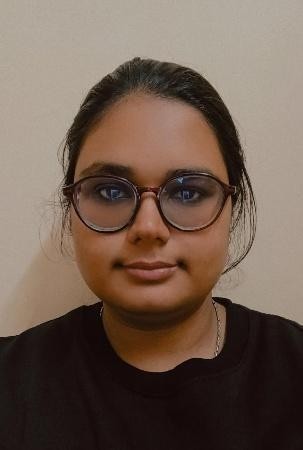
Riya Dubey is a 4th -semester PG student in the Department of English at Triveni Devi Bhalotia College. Her interests include Shakespearean drama, literary
studies and AI in higher education. She has published research and creative works and aspires to literary scholarship in the future.
 Parcham Online
Leave a comment