Theme: Power and its Manifestations
Issue # 11— June 2026
Issue Editor: Dr. Sonali Pattnaik
Last Date for Submission: 7th June 2026
CONCEPT NOTE
How does one think about power? Is it brute force, a state’s will to unleash destruction or is it more ordinary, running through and around us daily, without us even realising its presence, invisible and web-like?
I recall this incident that happened years ago when I was in boarding school. My friend and I, had decided to go to the discotheque of a hotel that her father was staying at, when we had come down to the city for our half term break. She was sixteen and I was seventeen, or perhaps fifteen and sixteen. We were children who loved to dance and barely got to go out. So, we seized the opportunity.
At the disco we danced, laughed and sort of pretended to be grown up as children are wont to do, and after a couple of hours of fun, keeping our curfew in mind, we got into the car that her father had arranged for me to be dropped back in to my house, while she would accompany me and then be brought back to the hotel. A few minutes in the car, unaware of our surroundings as we were, we suddenly realised that our driver, on old soft-spoken Sikh, was speeding furiously. He drove over a divider and onto a flyover and then we saw it– another car with five men hanging out of its windows, laughing and gesturing wildly, was chasing us relentlessly.
The car began to veer dangerously close to ours almost grazing ours and I ducked, making my friend do the same. My friend began wailing and I clutched her hand and chanted furiously, tears streaming down my own face silently. The rest was possibly the most frightening hour or more of my life. I remember the chase as unending with me feeling like we were going to be taken over at any moment. Words cannot describe the raw, huddled, palpitating site of fear that we had become.
But our god-sent driver out-drove them and we were finally, miraculously, safe.
I don’t know if I had ever come so close to power’s naked fist before. To the possibility of imminent devastation.
Once the ordeal was over, I spoke to no one about it for that was the upbringing that many of us received. I began to adopt a heinous narrative of justification of the incident. The silence around our experience produced it as one of shame and I began to catalogue my/our faults; maybe my skirt was too short, my nose was pierced, we wore lipstick, my waist was too narrow, my moves were wrong, that we moved, that we breathed. This too was the workings of power, to make me believe that I was responsible for my own violation, to teach me to censor myself, discipline my body.
Foucault reminds us power is capillary, flowing through how and what we do with our bodies, our speech, our choices. It does not only look like grown men looking to violate children but also a dark silence around the violence. It looks like a city designed to hide criminality or perhaps goes back to our childhood which trains girls into docility and boys into entitlement. Maybe it goes further back where parents and schools teach us to conform in order to survive and thrive, the individual always handing over their own power to norms and institutions in order to be accepted, rewarded for toeing the line. It produces our silences to protect its invisibility.
And then there is another kind of power– the individual’s power. It is their sense of uniqueness or particularity, when they choose to embrace who they truly are as opposed to what they are told they are, the kind that poet Audre Lorde writes of, “when I dare to be powerful, to use my strength in the service of my vision, it becomes less and less important whether I am afraid.” Does this kind of power threaten the other?
Our driver chose this kind of power by staying with us and protecting us. Survivors narrating their stories is a kind of power that chooses truth over obedience, courage over shame.
We could call such power resistance, born as it is from compassion and fearlessness or a desire for authenticity, emerging in individuals and in entire peoples fighting against domination. How we think about power in our lives, how we choose to imagine it and what we choose to do with it, holds the key to bequeathing a just world.
Parcham seeks submissions exploring the Protean nature of power in its different manifestations and the act of resisting and producing a counter narrative to the dominant hegemony of imposition of power and domination, in the realms of the personal, political, sexual, familial and such.
Dr. Sonali Pattnaik
Submission Guidelines
Poetry: Please send in your previously unpublished poems (not more than 3) in a single MS Word document to the email id mentioned above with the subject line Poetry Submission- June 2026. Individual poems should not exceed 40 lines.
For Fiction/ Short Stories (Originally in English and in translation): Please keep in mind that short stories should be no more than 4,000 words. Send in the short story to parchamonline@gmail.com with the subject line Short Story Submission—June 2026. The submissions should be in MS Word format. In case of a translation, the contributor should send in an Acknowledgment/No Objection from the original author so that we at Parcham know that the translation is being done to the knowledge of the author.
For Editorials/ Opinion Pieces/ Interviews and Book Reviews: For Editorials and Opinion Pieces, please ensure that your submissions are free from unparliamentary language or religious or cultural bigotry. The editors have complete authority to reject a piece if they feel that they are not upholding the spirit of the magazine. Please send in your submission with the Subject Line Editorials/Opinion Pieces-JUNE 2026.
Book reviews should be no more than 1500 words. Send in your submissions to parchamonline@gmail.comwith the subject line Book Reviews- June 2026.
Photo Stories: Please send in your photographs (not more than 7 and not less than 3) to parchamonline@gmail.com. The photos must be accompanied by a short write up/ captions and should be in the Jpeg format.
For Articles on Films and Popular Culture: Please send us a short pitch before sending us the complete article to parchamonline@gmail.com the subject line Films and Popular Culture. We are hoping to look beyond run-of-the mill film reviews and delve more into the contact zone of films and society/culture in general. We’re particularly interested in articles on Non-Hindi and Independent cinema.
***** The Photo Story and the Films and Popular Culture Section are open sections not restricted to the thematic concerns of the June 2026 Issue.
Copyright for articles, artwork and photographs published in this magazine shall rest with the authors, with first publication rights to Parcham. As the magazine follows an open access policy, articles or extracts from articles may be used by others, with proper attribution, for academic and non-commercial use. We reserve the right to publish the work in print in case we go for a print edition later.
Please send in a short bio (no more than 40 words) and a recent picture of you along with the submissions.
Note: If your submissions in any of the above-mentioned sections have found a place on our platform in the previous two issues, we request you to please wait for another cycle (One Issue at most) before submitting again.
Last Date for Submission: 7th June 2026
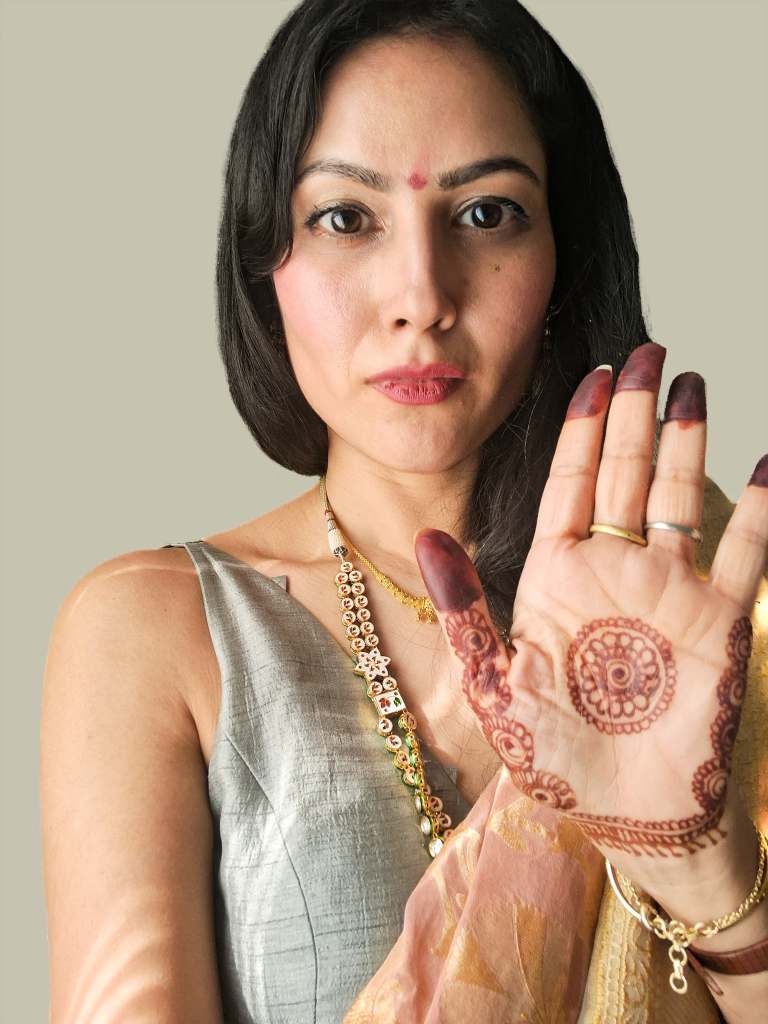
Dr. Sonali Pattnaik is a feminist poet, academician and visual artist. Her debut book of poetry when the flowers begin to speak (Writers Workshop) received considerable acclaim. Her poetry and art have been published in international journals including The Hong Kong Review, The Radical Notion, Setu, Dissident Voices, and Cafe Dissensus and anthologised in print widely. She is the winner of the Orange Flower Award for poetry and recently shortlisted for the Wood Rose Spiritual Poetry Prize. She has published and presented widely on film philosophy, corporeality and gender and her book on contemporary Bollywood cinema is forthcoming from Orient BlackSwan. Pattnaik has a PhD and MPhil in English and was formerly Assistant Professor at Kirori Mal College, Delhi University having taught literature for over twenty years at prestigious universities around the country, and serving as an External Expert on several university boards of studies. She has long been an activist for gender equality and peace.


Leave a Reply