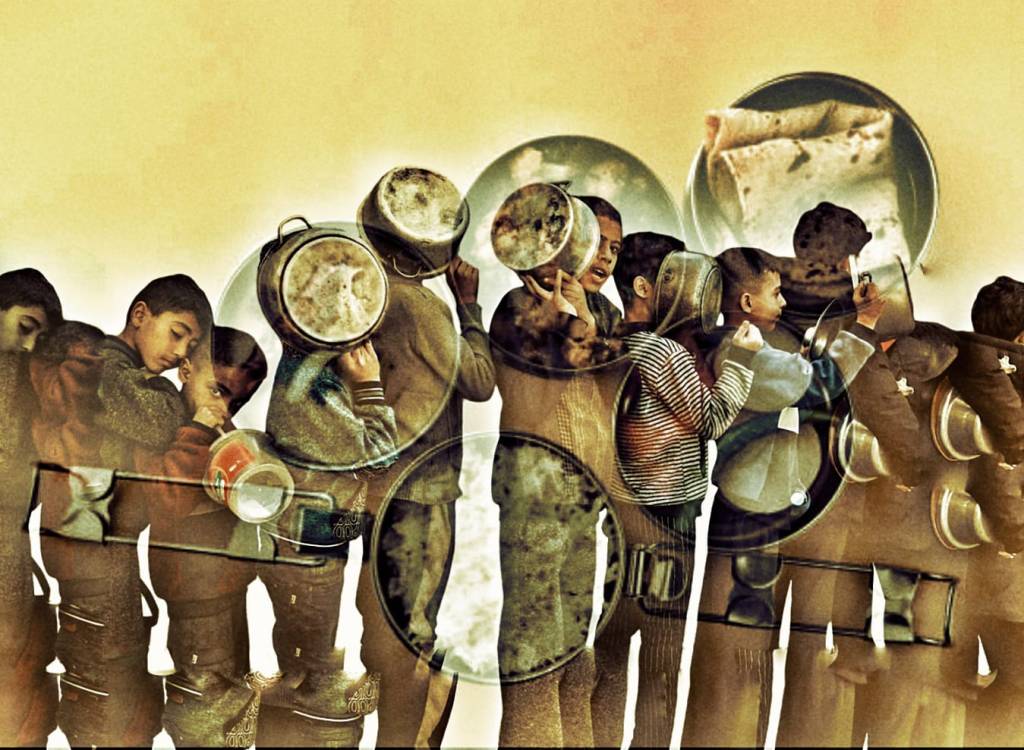
Theme: Justice
Issue Editor: Devashish Makhija
- Prologue to the Issue: Bhaswati Ghosh
- Chedipe: Anvitaa Dutt
- Spirit Touched: Jesse Weiner
- Deserve: Raymond Brunell
- Where the Mind is Without Fear. Where? by Sukhjit Singh
- The Apotheosis of Himmat Dewan by Armaan
- Featured Artist: Shiwangi Singh
Prologue to the Issue: Bhaswati Ghosh
The Unjust Catastrophe Of Our Anthropocentric World
As with most abstract and loaded ideas, the concept of justice came to life for me through the experience of its opposite in real life. I was an eight-year-old, studying in Class 4. Top-scoring students from each of our seven sections were chosen for an upcoming mathematics quiz contest. Despite scoring less than what I did in the test, one of my classmates superseded me. I naturally felt left out — unfairly at that. I was a quiet kid, yet my hurt was visible to my family. Visible enough for my grandfather to visit the school to meet with my teachers and bring to their notice my exclusion. To my fair-minded grandfather, the omission could have been an oversight after all, something an open conversation could easily resolve. Except it wasn’t an oversight, and it didn’t get resolved. I was deliberately left out as the teachers saw my shyness as an impediment to being a quiz contestant. The sting of this judgemental, obviously unjust exclusion twinged me for a long time. Interestingly enough, the word justice, which has Latin roots, came to mean “right order, equity, the rewarding to everyone of that which is his due” since the late 14th century. I now understand it was the last of those attributes — the rewarding to everyone of that which is due — I must have felt deprived of when the teachers left me out of the quiz contest squad, owing to not any mathematical lacuna but reticence that was mistaken for silence.
Curiously enough, all these years, decades later, it’s the increasing absence, or rather denial, of justice that underscores its need more urgently than ever before.
***
It’s December in Delhi, a month that used to be my favourite growing up. During my childhood, it used to be a time when balmy sunshine draped your skin like a fuzzy alpaca wool shawl. It was a month meant for peeling oranges after lunch and for shelling mungphali — roasted whole peanuts — for a late afternoon snack, for annual picnics at historical monument sites, for Christmas cheer and for getting your body wrapped in mother-knitted woollens. That Delhi is long gone, a memory wisp that only remains as fodder for nostalgia. That passage — of a certain place over a period of time — is an inevitability one learns to live with. But a transition that feels much more alarming and difficult to reconcile is losing that December, too.
I’m visiting my home city in December after a gap of fourteen years. Through this period, during which I’ve lived in North America, I’ve come back home at other times of the year — spring, summer and autumn, but rarely in winter. In merely fourteen years, I can no longer recognise Delhi. The moment I step out of the airport, a coat of smoke so thick you can almost touch its surface, licks my face and stays there, its sooty saliva impossible to wipe off. It’s reality check time for me. From an air quality index (known as AQI even to the children of Delhi) of 1 or 2 where I live in Ontario, I’ve landed straight into one of 500. Delhi’s infamous smog hits me before I can see the face of my brother and sister-in-law who have come to receive me. Over the next fortnight I would spend in the city until the time I get to writing this piece, I would nurse my mother, a cardiac patient, as she struggles with a persistent cough that keeps her up at night and troubles her throughout the day. I would fall sick myself, with a relentlessly runny nose, watery eyes and a cough that feels like a spiky fruit stuck in my throat. Hundreds of face tissues later, a face mask would finally tame the waterfall streaming down my nose and excessive ginger-tulsi infusions, my cough.
I feel cheated. This isn’t the city I remember from my childhood or even my youth. Smog isn’t new to me, but this choking, lung-decimating air is. I don’t step out unless out of necessity and feel an apocalyptic shroud enclosing me at all times. I’ve come home to spend more time with my mother, but this homecoming feels less than what it ought to be. It feels unfair. Yet, this gas chamber of a capital didn’t emerge from the vacuum.
Looking into the etymology of ‘justice’ I came across another interesting nugget. Between the 15th and 18th centuries, the word also acquired a vindictive connotation — one of infliction of punishment or vengeance. The sort of justice we humans appear to have dealt Delhi with in recent times. From a disproportionate boom in vehicular use that is choking the city’s streets to seasonal stubble burning, a farming compulsion born of economic and time pressures to dust storms that invade the city to unbridled construction and industrial emissions, there’s hardly an abuse the capital has been spared, particularly in the last decade. It’s only natural for Delhi’s air to heave and in turn to make its residents gasp. As I wrote in a poem titled ‘Counting Breath’:
Freedom fluttered atop the
air once. A thousand pigeons
rode on its wave. From the
ramparts of a fort, a blue sun
hoisted itself. The air’s laughter
archived regime changes, turbaned
pageantry, the vacuity of
promises. Its daze measured
the distance between when
freedom came to when
it became a fossil.
Once.
The air is held hostage now.
Hemmed in by a spiralling
fortress. Grey, black. It
wrestles and gasps. Dead
birds circle its grave. Little
children wear masks to school.
If the crises gripping the world — from conflicts in the Middle East and Ukraine, to the alarmingly shrinking Amazon cover, forest fires, floods, earthquakes and other extreme climate events displacing entire populations, to depleting groundwater, melting glaciers, unchecked carbon emissions and loss of biodiversity — we live in, reveal anything, it is the sheer catastrophe that anthropocentrism has proven to be. In placing ourselves — humans — front and centre of everything, we’ve turned into Frankensteins condemned to self-destruct. The scales of justice haven’t merely tipped off balance; they’re on the edge, about to crumble under the unbearable weight of obese human greed.
From my mother’s living room window, I look out at the street. I can count on my fingers the number of people wearing a mask amidst the toxic air. We’re indifferent, in denial. If we continue to look the other way, our freedom, and the justice that delivers it, will actually turn into fossils — with impressions of the past, but no life breath.
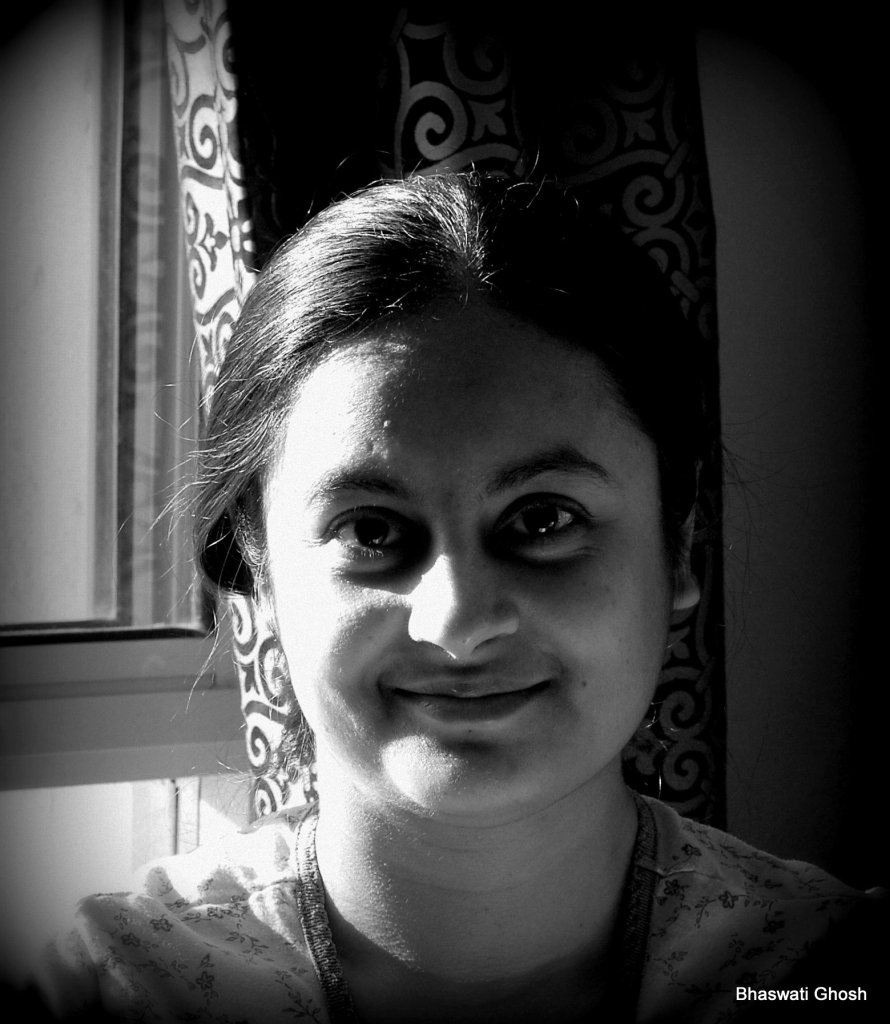
Bhaswati Ghosh writes and translates fiction, non-fiction and poetry. Her first book of fiction is ‘Victory Colony, 1950′. Her first work of translation from Bengali into English is ‘My Days with Ramkinkar Baij’. Bhaswati’s writing has appeared in several literary journals, including Indian Express, Scroll, The Wire, Literary Shanghai, Cargo Literary, Pithead Chapel, Warscapes, and The Maynard. Bhaswati lives in Ontario, Canada and is an editor with The Woman Inc. She is currently working on a nonfiction book on New Delhi, India. To learn more about her publications click here .
Chedipe: Anvitaa Dutt
8 fingers, 2 thumbs, 10 toes, 2 eyes, 1 nose, 2 ears 0 sound, 1 tongue 0 voice.
She liked to count. If she could name the thing and count it on her fingers she felt she could contain her panic in her handspan. Fear was easy. So was counting. At least up to 10. Her Amma had told her, ‘when you are afraid, when rage rides you like a tiger. Count to 10. And if the fear doesn’t flee and the rage doesn’t tire. Count again.’
Onnu rendu moonu naalu anju aaru yelu ettu onbadhu pathu
She counted the steps on her way up. Her Amma had died and all she knew was that she will have to climb these steps only to come back as ash in an urn. 1 house, 1 well, 0 Amma. All she knew was that this was holy and very, very, very important. 3 verys she counted. All she knew was that her family will no longer suffer. Will not be poor, will not have to count their meagre coins.
Onnu rendu moonu
10 after 10 she counted. There were a lot of steps. When she reached Naalu for the third time she was jostled by the pious crowd and pushed too close to a raggedy, stinking beggar woman. Before she could flinch from that woman, before her brain could tell her muscles to move, the beggar woman jerked back from her, as if she was the stinky one, and cawed out a curse, a word; Chedipe! A tamarind-pit of a word. Spat out tasteless. Useless. She kept moving up the stairs but the word clung to her 5 year old mind, followed her like a stone lodged in her sandal. Chedipe! She did not know what it meant. It was word that had rolled down to these steps from the mouth of the Godavari. It meant prostitute.
She was to be a bride. His bride. Above mere mortals, above the steps was His home. A place of darkness lit for worship. Smelling of aggar, ghee, malli pu, burnt wicks, overripe bananas and underage girls. She was not the only one. Many had come before her and many will after her. For now, she counted 9. 9 itchy sarees, 9 oily braids, 9 shiny sacred threads, 9 bodies still faintly tainted with turmeric, 9 dots on 9 foreheads, 0 sound, 0 voice. They should be seen not heard. Heard demanding, complaining, crying, screaming. 9 silent screams.
Onnu rendu moonu naalu anju aaru yelu ettu onbadhu
She counted the bars on the windows, the dosai in the mornings, the baths in the evenings, the bells on her anklets taam takatu janu thayi digda thayi. She counted the number of times the Iyengar came to her, in her, on her. Serving him was serving Him. Pleasing him was pleasing Him. His bride was his bride. Her groom with her unblinking painted eyes was made of stone. His trustee of sagging flesh on every inch of his body. Except 1.
Onnu
Onnu
Onnu
She forgot how to count. She couldn’t find the numbers beyond a non-number, beyond 0, beyond pujyam. Such an auspicious name for nothingness. A holy blankness. Every thing she did, everything that was done to her was pujyam. A dancing, fragrant, pujyam puppet on the outside and a stinky ragged scream on the inside. She wanted to slit and peel her skin and flesh and veins and screams to turn herself inside out. She could then take her place with the beggar woman on the steps and no one would know the difference.
10+3. She is told that’s how old she is. She is told that this blood is different from that blood. She is told she must celebrate. She must mourn. This is a blessing. This is a curse. She was a bride and now she can be a mother. All meaningless words told with hand gestures like pulling at puppet strings. They fall unresisting on deaf ears, deaf skin, deaf blood.
5 days of celibacy for the virgin bride. God’s oracle isolated from God’s priest. A plain plate with a bland meal slid from a safe distance through an old door into a sunless room. When the sliding plate stops near her left knee she notices she is breathing. She rides her breath, crawls into her mind and goes looking for the numbers that come after 0. She finds 1 cowering behind the top step of the stairs to the temple.
Onnu
Rendu. She must eat for 2. She must live for 2. She must bleed for 2. She must silently scream for 2. She must die for 2.
Pujyam.
Onnu. Just 1 girl bought. A new bride to replace a dead bride. 1 itchy saree, 1 oily braid, 1 dot on 1 forehead. 1 shiny sacred thread, 0 sound, 0 voice. A holy day. An auspicious one. Mournful, miserable, trash-disposal acts like funerals can’t take place on such a day. So, wrapped in her dirty bloodied sheets her body rests on the cold floor of the sunless room.
Onbadhu. 1 of 9 brides she spent 9 years in pleasing, praying, posturing, pandering, pacifying, pantomiming, prostituting, profane pujyam. 9 hours ago it petered out.
Onbadhu ettu yelu aaru anju naalu moonu rendu onnu
Reversing.
Resetting.
The dried blood cracks, flakes and falls in rust dust. She turns herself inside out. All the screams and all the lacerations have turned to stripes. 10+10+10+10+10+10+10+10+10+10 stripes. A girl tiger. A tiger girl. A girl riding on rage. She counts the steps in reverse. She lopes and ripples down the stairs. Myth made true. Fear made real.
She pads into the minds of men. Claws clicking. Growl singing. They have heard stories of her. A girl comes along all shiny itchy oily. Silently screaming. But something in her turns inside out. She will kill 1 or maybe 10 of them. She will suck them dry, like kindling ready for burning. She will take away their manhood. She will bring about the end of an era. She will make sure that they will no longer be allowed to buy 9 tainted with turmeric girls.
She enters the dreams of all the girls. Within the temple and without. Freeing their dread, loosening their coiled insides. They have told stories of her. A girl comes along all shiny itchy oily. Silently screaming. But something in her turns inside out. She will kill 1 or maybe 10 to make some space. For air enough for them to breathe, time enough to learn to count beyond 10.
So she will start with 1. The 1 she knows. She follows his rotting sagging scent to his door. She slips through the keyhole. She pads on her 3 tiger legs and 1 girl leg, across 7 tiles. He sleeps alone on 2 pillows and 1 bed. Slack-jawed, open-mouthed with 3 betel-stained teeth. She pounces softly and lands astride him. He opens his eyes. He doesn’t look too happy. Strange! He used to like it when she was on top. Terror opens his eyes and his mouth wider. 0 scream. 5 claws inserted into his throat, 1 dewclaw in his jugular and she drinks in his 0 life. She rips out his 1 tongue. 0 sound 0 voice. She spits it out. Tasteless. Useless. Chedipe!
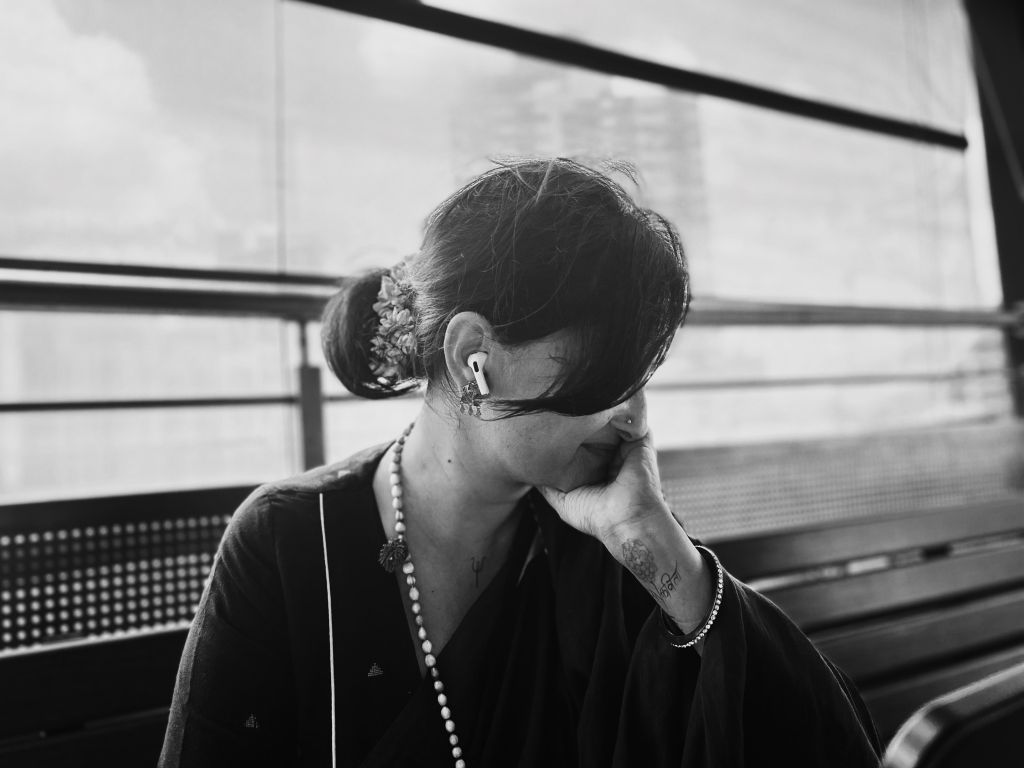
Anvitaa Dutt is a lyricist and a screenwriter with a career in the film industry spanning 15 years. She is the director of Bulbbul and Qala.
Spirit Touched: Jesse Weiner
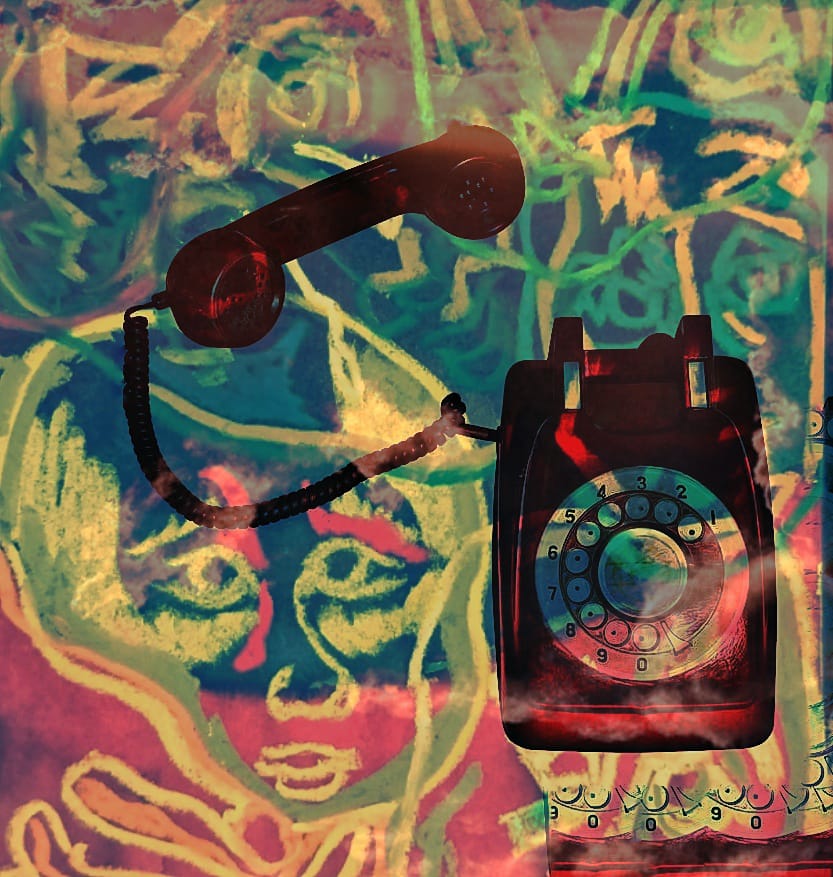
The need to scream burns, caustic as the handle of cheap liquor you’re nursing, but you won’t dare, not with so many of your so-called friends so close, and oh, wouldn’t they just love to hear you break.
Clouds obscure the moon and wind fills your ears. The howl you can never voice. You glare down the mountain at the bonfire’s faint glow. Light, seeping from the Rorschach test woods, a bright splotch marring an otherwise perfect stain.
When you were small, you used to scramble up here and imagine yourself a giantess, the pale alluvial fan your rockslide skirt. Now all you can imagine is what they’re doing now that you’re gone. Your ex and your best friend.
Your cold-stiffened hands tighten upon the bottle—another a swig, all sweet and no burn. Your phone pings, and your mouth curves into a hard smile. But it isn’t your ex, ready to grovel. Someone’s messaged you on AfterLifeConnections, one of several apps that promise to put anyone in touch with the Beyond.
SpiritTouchedSeer wants to connect!
You tap the app’s icon, smoke curling toward a starry sky.
One of your ancestors drew me to your profile. She has an important message to share.
Your heart lurches, a flash of hope swiftly snuffed by doubt and resentment. There’s nothing of you in your profile, just a stock image and a stolen name; SpiritTouchedSeer is just another charlatan out to make a buck.
And yet you’re still tempted to accept the connection and reply.
An incoming text kicks it aside. It’s your boss. I saw the tape. I have to let you go.
That shit job is the only thing keeping you in your shit apartment. You jab at your phone, beginning dictation. “She started it! I was only defending myself!”
You’re lucky she isn’t pressing charges.
You grip your phone tighter, the jagged edge of your cracked screen cutting into the pad of your thumb. That bitch had started it. Coming into your store, looking at you slantwise and giggling with her friend. Guess being Spirit Blessed isn’t all it’s cracked up to be.
You take another chug of liquor, then fling the half-empty bottle as hard and as far as you can. The spiraling glass flashes in the moonlight, then shatters.
#
Small towns like yours, rumors spread quick as a slap. Papercut words, Nan called them, but papercuts can’t slice you open.
Back then, you were a child who made a child’s mistake. You had no idea what you’d unleashed, how quickly it would spiral beyond your control. You wanted to take it back, but they wouldn’t let you. Too many folks were too hungry for hope. Or for someone to blame.
But you’re hungry, too. And your hunger has only grown and grown.
#
You stab at your Fruity-Os, speeding their decay to mush. Is that what will happen to Nan? Will her body turn to soupy mush, or will she turn brittle and stale in her cereal box coffin?
Last night, you dreamed that as they lowered her casket into the ground, she started banging on the casket, screaming to be let out, while everyone pretended they couldn’t hear.
You awoke to Mom smoothing your hair and shushing you. That can’t happen, sweetie. Spirits can speak to us, but they can’t reanimate corpses.
You didn’t believe her then, but by the cold gray light filtering in through the smudged kitchen window, the assertion makes even less sense.
Nan said spirits used to send letters, but nowadays, most just used the phone. One call per soul. Why, she couldn’t say, just stirred her tea and shrugged. I guess death brings new rules.
Which had to be the stupidest thing you’d ever heard. Spirits didn’t have hands to pick up a phone, so what was to stop them from laying back down into their bodies to say whatever needed saying?
Another stab at your cereal, then you wander out of the kitchen and into the living room, where you flop onto the couch and turn on the TV. You flip past a weather report, a shopping channel, a stupid cartoon for babies—and suddenly, there it is: the Valhalla commercial, silver letters unfurling across a fuzzy sunset. “We’re here to help you connect with the Other Side,” says a man with a calming voice.
Dad says it’s a scam, that after their one call, spirits move on. But he’s not dead. How would he know?
Mom clacks downstairs. “Didn’t I say no TV?”
You turn up the volume.
“Don’t,” Mom warns. “Not today.” She makes to snatch the remote.
“Nan called.”
She freezes.
Your face burns, but you hold her gaze, the remote gripped tight
“Oh?” Her eyes narrow. “What did she say?”
“I can’t tell you. She told me not to.”
“Really.” Mom crosses her arms.
“I’m telling the truth.” You tip your chin. “She’s mad at you.” That much was true. After Dad left, all she and Nan did was fight.
Mom opens and closes her mouth.
“If Dad were here, he’d believe me.” But he isn’t here. He left six months ago and he hasn’t come back, not even for your birthday.
Mom’s nostrils flare. “I can’t with you. Not today.” She grabs her purse and clacks outside, the porch screen slapping shut behind her.
You just wanted to get your way. To sit numbly before the TV before she made you get in the car. Instead, she left for the funeral without you.
#
At school the next day, your classmates, even your teachers whisper and stare. One stupid little lie—a lie you hadn’t even realized your mother believed—and suddenly, you’re Spirit Touched. The youngest Seer your town has ever known. You love the attention as much as you hate it. If Nan calls for real, everyone will know you for a liar.
But she doesn’t. Not after a week, a month, a year.
Only then do you begin to relax. Spirits are strongest right after their death. The longer they take to reach across the divide, the lower the chance they’ll call. Some spirits don’t. No one knows why. You’re half grateful, half resentful that Nan is one of them. Being Spirit Touched makes you special. Not everyone who wants a call gets one. Not even if they will that call with every ounce of their being.
You’re only twelve years old, but adults start flocking to you, begging you to send messages to the Other Side. As a child hungry for affection, being needed was its own reward.
It was Mom who started taking payment in exchange for your time and talent. Money you never saw, not that you’d dare ask for it.
And so being Spirit Touched taught you the shape of your mother’s soul. Or maybe it was your lie that twisted her spirit, just as it twisted your own. Lies, money, secrets—that’s what made the world go round.
Money, lies, and hope.
That’s the part that still floors you—the ease with which the desperate can be fooled. And God, it’s so stupidly easy to make it real for them: a sudden chill; the candle, dipping and swaying as if someone’s entered the room; your head thrown back, words poured like water from your mouth.
#
You spit into the wind, cursing the past. Cursing your mother. Cursing yourself, for having such a bitch for a best friend. Then again, like draws like, Nan always said.
Your laugh is a bitter thing, bitter enough to bite back at the wind. You wish you had that bottle back, if only to throw it again.
Below, a flash of movement catches your eye. You lean forward, eyes narrowed. A shadow slips from the forest, headed your way. Seth. His lean, athletic grace is impossible to miss. As he climbs toward you, you don’t know how to feel. Angry or victorious. He left her to come after you, so that’s something.
Your ex slips over and around the boulders, climbing wide of the glittering remains of the bottle until he’s right there, joining you on your wide, flat ledge. He halts just out of reach, hands shoved deep in his pockets. Fixes you with one of his long, searching looks.
The moment stretches taut. You bounce your leg, that scream rebuilding in your throat. He followed you up here. He should be saying something. He should be saying everything.
“What?” you snap.
He huffs a barbed little laugh. “You’re never going to admit it, are you?”
You scramble to your feet.
“Why can’t you just say it? Say I—”
You slap your hands to his chest and shove.
#
Turns out, folks want a Spirit Touched child, not a Spirit Touched woman. You’ve applied for work all over town, but the only place they’ll have you is bagging their groceries.
You stand behind the register, hating this town and all the people in it. Fantasizing of quitting this place for good, starting over for real, this time, if only you had the money. Even seances aren’t as lucrative as they used to be, not with the rash of cheap apps that have suddenly made it easier than ever to connect to the Beyond. Spirits aren’t calling anymore; they’re texting or tweeting or swiping left. And not just once; the new technology conserves their incorporeal energy, or whatever, making it possible for some Spirits to stay connected to their loved ones for days, weeks, months, years after their deaths.
The whole thing makes you vacillate between anger and a sick sort of relief. You’re lying less and less, these days, but only because you’re washed-up, obsolete.
It doesn’t help that your mother sold the house and went back to college with your money—to remake herself, she claims, but you overheard her slurred, Friday night confession to her friends: I lost my twenties to mothering. I just need to do something for me, you know?
“Never mind.” A crabby old man snaps you back to the present. “I’ll carry this out my own damn self.” He hobbles off, and a guy you don’t know takes his place. A hot guy, tall and muscular. He sets his purchases on the belt—a pack of gum and a sports drink—and you flash your hundred watt smile. “Hey.”
“Hi.” Flat tone, flat gaze.
Asshole. But then, you’re used to assholes. This town is full of them. “You new to Belle Vista or just passing through?”
His phone chimes. He ignores you to check it.
You clear your throat. “Are you just visiting, or—”
“We’ve met.”
You blink. “We have?”
He turns back to his phone. “Yup.”
Your mind races—surely, you wouldn’t forget a body like his. You can’t place him, though. You wrinkle your nose. “God. I’m awful, but—”
“It’s Seth. McGinnis.” At your frown, he adds, “Our grandparents were friends.”
You press your lips together. You don’t talk about Nan. Not with anyone, not ever.
You ring him up without meeting his eyes. “That’ll be twenty-six sixty.”
He hands you a wad of bills. You pop the register and count his change back to him. As he’s shoving the money back into his wallet, he says, “I spent a whole summer here.”
You shake your head. “I don’t remember a lot. From when I was younger, I mean.”
“Guess not.” He takes his purchases and goes.
You do remember him, though. How could you not? The summer Nan died, he used to wave and call to you from his grandpa’s porch, but you never waved back, and you never stopped. Hanging out with the weird new kid would’ve made you an even bigger pariah.
#
You slap your hands to Seth’s chest and shove.
“Hey—” His eyes flash wide, and suddenly he’s falling backward, so fast it feels like a dream, a nightmare pinning you in place.
You didn’t know a body could bend like that. Like a sick circus act, his spine turned to rubber, feet whipping backward toward his head, spiraling down until he slams to a halt.
It still doesn’t seem real. It can’t be real. But you’re here, and he’s all the way down there, and lying still, so still.
“Seth! Seth, I’m coming!” you choke on the words, breath sawing as you scramble down to him, quick as you dare, sneakers slipping, down, down the cold, sleet slick rocks—
He’s wedged against a boulder, his neck at a funny angle. I drop my gaze to his feet. One shoe is missing, the pale skin of his foot peeking through a hole in his sock.
“Seth?” a petulant voice calls.
Your gaze snaps up, toward the woods. It’s Becca. She’s headed your way, flashlight bobbing. “Seth, come back!”
You yank your phone from your pocket, jab at the screen until the flashlight app turns on, but the sight before you doesn’t make sense. That can’t be Seth, covered in so much blood, white shards of bone protruding from his legs—
“Seth!” Becky yells, drawing closer. “I’m not playing!”
#
When you clock out, you go straight to the library. You don’t want to think of stupid boys grown to arrogant men, thoughtlessly pushing you to think on what you lost, who you used to be. No. What you need is to get lost in someone else’s story. But only if you can get there before closing.
You run the whole five blocks, arriving out of breath but with ten minutes to spare. Hustle to the holds aisle, snap up your loot, hurry for the front—
And halt.
It’s him. Seth. Standing behind your librarian’s desk, clacking away at the keys.
He glances up. Does a double take and frowns.
You set your jaw and start toward him. Set your books on the counter.
“I need the—”
“Obviously.” You toss your card down.
He looks from the card, to you, to your stack of books. His mouth twists.
“Need help, new guy?” You reach across the counter for the scanner.
He grabs your hand, startling you. “I’m sorry. About before. I was…a bit of an ass.”
Your heart beats wildly. “Let go.”
One side of his mouth curls in a smile. “Promise not to touch my scanner?”
You slip your hand free. “So. What brought you back to this dump, anyway?”
“You’ve remembered me, haven’t you?”
There’s a bitter tone to his voice that makes you flush. You fit your jaw together and look away as he scans your books.
“These are due back in two weeks.”
You take your books with a muttered thanks and start for the door.
“Wait.” He scrubs a hand through his hair, looking suddenly uncertain. “Can I take you out? To dinner? I’ll tell you all about what brought me back. Or not,” he backtracks. “We could always talk about our awful taste in books.”
Our, not your. You fight a smile. “Fuck you. I happen to have excellent taste.”
He grins. “Is that a yes?”
#
Your scream rips the night open.
Seth, heels bent back to his head, then snapping back—
A light shines in your face, blinding. You jerk a hand up
“Lex?” Becca asks in a high, worried voice. “What—”
“What’s going on?” Mark climbs up beside her.
They haven’t seen him yet. The boulder is blocking their view. Bile surges up your throat. “He—he grabbed me. I only meant to push him off.”
“Who grabbed you?” Mark demands.
You try to say his name, but it chokes you. Your heart pounds so hard, you wonder if you’re having a heart attack.
“Seth wouldn’t,” Becca argues. “He’s not like that.”
“He did! He grabbed me, and—and—” You raise a shaking hand to point.
The beam of their flashlights follow, like stage lights, illuminating Seth from above.
“Oh my god! Oh my god!” Becks chants.
“I’m calling 911,” Mark barks.
“He’s dead!” Becca wails. “Look at his fucking neck!”
You shut your eyes, swallowing down another surge of bile, try to shove the horrible image from your mind, but it’s burned into your brain: Seth with his eyes shut and his arms stretched wide, like he’s asking for a hug.
#
Time turns stiff and unyielding as stale taffy. Your eyes burn with fatigue, and you want nothing more than to pop a few Xanax and crawl into bed.
But you can’t go home, and you can’t go to sleep. You’re stuck at the police station, waiting on a deputy who’s taking his sweet ass time.
You bounce your knee and check your phone, but you can’t stop picturing a darkened forest painted in the officer’s spinning lights. Can’t stop replaying the moment Seth’s grandfather stumbled out of his truck, crying out at the sight of the sheet-draped stretcher being loaded into the ambulance.
You pinch the bridge of your nose, bringing yourself back to this tiny, depressing room with its chipped walls and hard plastic chairs—Deputy Johns? Johannes? Whatever. He didn’t even let you tell your side, just passed you a Snickers bar and a Styrofoam cup of shitty instant coffee and disappeared, like, for fucking ever ago.
You snatch up the Snickers bar, the wrapper crinkling loudly as you rip it open. The candy’s gooey caramel center stretches, sticks to your teeth, and the image of Seth, bending end over end, flashes to mind.
You lurch forward, spitting the masticated glob into your coffee.
#
“Why do you do it?” Seth asks.
You tilt your head to look at him. You’re in that blissful, well-fucked haze, insides clenching and unclenching, body languid. “Why do I do what?”
He smiles sadly, tucking your hair behind your ear. “You know what I’m talking about.”
You drop his gaze, let your hand skate lower. “I really don’t.”
He grips your wrist, stopping you. “Lex.” He says your name softly, like a plea. “You can be honest with me.”
You stiffen. “I certainly didn’t fake it. Did you?”
“No.” He rolls on top of you, touches his nose to yours, so close you can’t look away. His voice dips to a whisper. “Why do you lie about being Spirit-Touched?”
You stiffen.
“Why? All it seems to bring you is—”
You shove at his chest. “Get off. Off!”
Even after he complies, you slap him, hard. “I’m no liar.”
He gives you a hard look and grabs his jeans from the floor. “I know your Nan didn’t call you.”
Your heart races. “How—how could you say that?”
“She called my grandfather. I was there. I answered the phone, then passed it to him.”
You swallow thickly. “Well…then she must’ve called us both.”
He yanks on his pants. “You know it doesn’t work that way.”
You hop out of bed, yank on a shirt.
“They loved each other, Lex. When she wasn’t with you, she was with us.” His voice thickens and his eyes shine. “They said I love you every morning and every night and a dozen times in between. And I was there when she called him, just so she could say it one more—”
“Shut up! Shut up shut up shut up!”
He blinks. Snaps his mouth shut.
“Fuck you.” Your voice shakes. All of you shakes. You hate it. You hate him.
He reaches for you. “Lex—”
“Don’t touch me.” You sidestep him. “Get out.”
The apple of his throat bobs. He stands to button his pants. Pull on his shirt. Face pale, clothes rumpled, he looks like a ghostly, older version of the kid he used to be.
“Get. Out.”
He snatches his wallet and keys. “Don’t worry. I’m going.”
You listen, jaw clenched, as he walks down the stairs and out of the house, the front door quietly clicking shut behind him.
#
The inside of your cheek is chewed raw. You check your phone. Forty minutes, you’ve been sitting here. Forty-two. Fifty.
The camera hung in the corner is making your neck itch.
You could leave. You’re here by choice, after all, and they didn’t lock the door.
But leaving would look guilty, and guilty, you are not.
It was his fault for coming after you.
For starting a fight.
He’d stepped forward, reached for you—
No. You said grabbed in the car. He grabbed you—
The door swings open. “Hiya.” It’s a different, haggard-looking deputy. “Officer Kendall.”
But you already know his name. You snuck around in high school, met behind the bleachers while his girlfriend was busy tutoring other freshmen. An arrangement that had given you an illicit thrill, until you heard him laughing with his friends. Saying you were just a dumb slut, ready to fall on your knees, mouth open.
Now, he’s pretending you’ve never met. You cross your arms, gaze darting to the camera.
“So. I hear you were with the victim, before—”
“It was self-defense. He grabbed me.”
The deputy’s mouth twists. “Right.”
He wasn’t strictly handsome then, and he’s grown a paunch, since. Your stomach turns at the memory of his grunts, his hands in your hair—
“That’s what happened. He—I needed some space, but he followed. Started yelling. I—”
Your phone starts ringing.
Seth’s ringtone. Seth’s face, flashing across your screen.
“Answer it,” Kendall barks.
Smashed bottles, swallowed screams—
“Answer it,” Kendall orders, “or I will.”
You swallow against the glass in your throat and answer. “H-hello?”
You expect him to be cold. Cruel. It’s the least of what you deserve.
Instead, his voice is unbearably soft. “Hey, Lex.”
You squeeze your eyes shut.
“Put him on speaker,” Kendall snaps.
When you don’t comply, he snatches the phone and does it for you.
“Lex? Lex, I need to ask you something,” Seth says. “And I need you to be honest.”

Jesse holds an MFA in Writing for Children and Young Adults from the Vermont College of Fine Arts, by whom she was granted the Norma Fox Mazer Award, which honors excellence in craft. Jesse is a member of the Author’s Guild and a writing coach and developmental editor. She also runs a free newsletter with sub & pitch opps, grants and scholarships, and other industry news.
 Parcham Online
Leave a comment