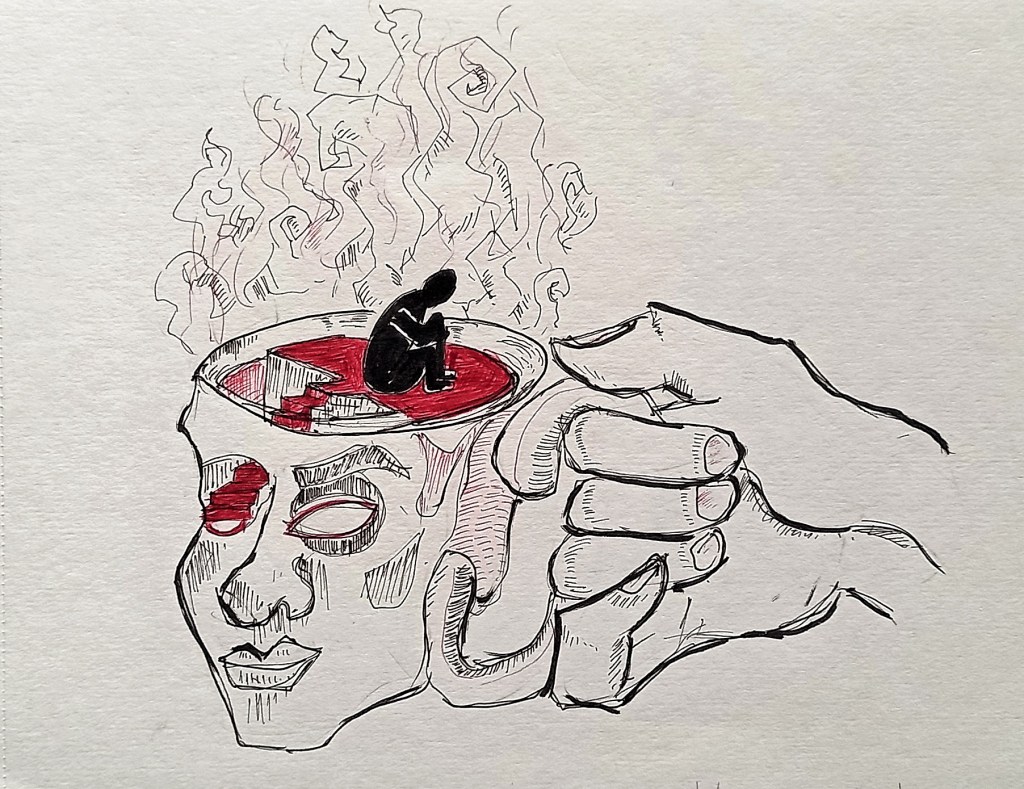
Like The Same Woman You Have Slept With: Arjun Razdan
Cutback to Goa, India, November 2024
I enter a barber-shop, and invariably the conversation turns to greens. He explains to me what Bathua ka saag is. When two people talk about greens from cultures that appreciate them, it is like two men talking about the same woman who they have been in love with. Jules-Bathua and Jim-Haakh sit on the barber’s chair, rather Jim sits on the barber chair and Jules clips his hair, or plies the rasoir on his cheeks or trims his sideburns or extinguishes the ear-hair with a chalumeau. Jules-Bathua tells me his local saag from his local Saharanpur is unlike any other. ‘But, how does it taste?’ I ask him still in the French lexicon of taste, still in the category of doux, sec, astringent, fruité, floral, etc. My bathua-man struggles to explain the taste. ‘But, is it had with parathas?’ ‘Yes, Sir’ he tells me, but ‘what is the taste’. ‘But is it had with paneer’, yes Sir, he tells me: ‘But what is the taste?’ ‘But is it good for health?’ ‘Yes, Sir, he tells me but what is the taste…’ He struggles with terminology. Arguably, he is a barber and not Baudelaire.
Flash-forward to Old Rajpur, Dehradun, India, January 2025
I walk into a vegetable shop early on in the morning, and up on display are very pretty vegetables, the Indians have no option, when you eat nothing else, you better make them pretty otherwise the neighbouring cow will not find it too attractive to confuse it for the neighbouring bush. The Muslim man, as is the case with the unwritten rule in peninsular India, most of the barbers turn out to be Muslim, most of the butchers turn out to be Muslim, but here the man is a vegetable man and he is a vegetable man and a meat man at the same time (a side business), and he is Muslim. He is from Saharanpur, he tells me, and he offers me something resplendent from his bunch of greens. It is called Bathua ka saag, he tells me. ‘But what does it taste like?’ I ask him. He tells me: ‘It is had with parathas.’ ‘But what does it taste like?’ I ask him. ‘It is excellent with paneer,’ he says. ‘But what does it taste like?’ ‘It is excellent for health, with a lot of iron, especially in the winters, he tells me. ‘But what does it taste like’. Nutty is the word he profères, almost straight out of the dictionary, or maybe he does not profère it, but I imagine it in my head. But his description is accurate enough for me to imagine the word, and to enter into the French lexicon and place it in various categories of doux, sec, astringent, fruité, floral, etc.
Pan-up to the exhaust of my fan, my pad, Old Rajpur Road, Dehradun, India
‘Allons…mes petits enfants…what have we got here. These humans often eat so poorly, I have a cholesterol appointment with my physician. Eat so poorly, and are so stupid at all. Why leave a hole in the exhaust-fan open for monkeys like me to stream in and raid their belongings. Perhaps they like some extra-terrestrial action…kinky people they are. What have we got here? These humans eat so poorly…but no, Bananas. My favourite Bananas. It is the unique tie that ties monkeys and humans. Though, it is true, now a days it has grown very expensive and the Muslim man at the chowk, refused to sell it anything less than ₹ 60 a dozen. I should teach him a lesson and train my Bandar ho Jao Party (BJP) guys on him, for having insulted the messenger of God, Wonderful bananas, how lovely it taste in the sun. What a joy it is to have a Banana in the sun under the shade of a chakotra rutaceae (C.R.) tree, having made love to my wife, and having treated my kiddler’s head for the offending little pieces of lice which I am going to suce like an ice-lolly. Allons…mes petits enfants…what do we have here? Banana, moderately ripe, I like the fact that the terroir is reflected in the doux-sun skin and the notes of abricot, coffee and peach. The aftertaste in the mouth is lingering, if slightly on the gras side. The vigneron…I mean the bananmaker…needs to respect the règles of ripening and allow it to attain full maturity when we would have at its apogée…what do we have here…bhere are the DUSTBINS? How arbitrarily the humans sort…where am I supposed to dispose of these banana skins having consumed them from somebody else’s pocket but being a responsible citizen and always taking care to segregate waste from organic, hazardous objects like lead, household waste and plastic…
Tilt-down to the balcony of my house, where a Bandar is sitting observing the dark insides, a bottle of Bordeaux on the sill across the jalousie…
Voilà…a decent meal it was…took it all out in a trip to the loo…these grands enfants of mine are growing increasingly rambunctious. I might admire these humans, in the book racks I saw two volumes of Rabelais, but for all their sophistication, I do not understand what is the need to bring grass into the kitchen and tie it all in bottes? I raided the surroundings and I found most of it was useless, except four bananas and a pocket of peanuts, which I will dishevelle carefully with a scissors and have it with Monkey Shoulder Scotch in the evening…but this botte of grass is strange? Strange, these humans are, they admire savants and then bring grass to eat at home? If they needed some I would have given them a whole stack from my prairie…various kinds of grasses we have…all eaten by cows…of course, I do not meddle with these low-caste fellows, but, even humans have started eating grass? Very strange, kept in a corner and a pack of paneer next to…paneer, I do not eat, of course, because it increases my cholesterol…and finally what is up with these humans? Since when they have started packing human piss in bottles, and that too it is red…uncivilised monkeys, they are.
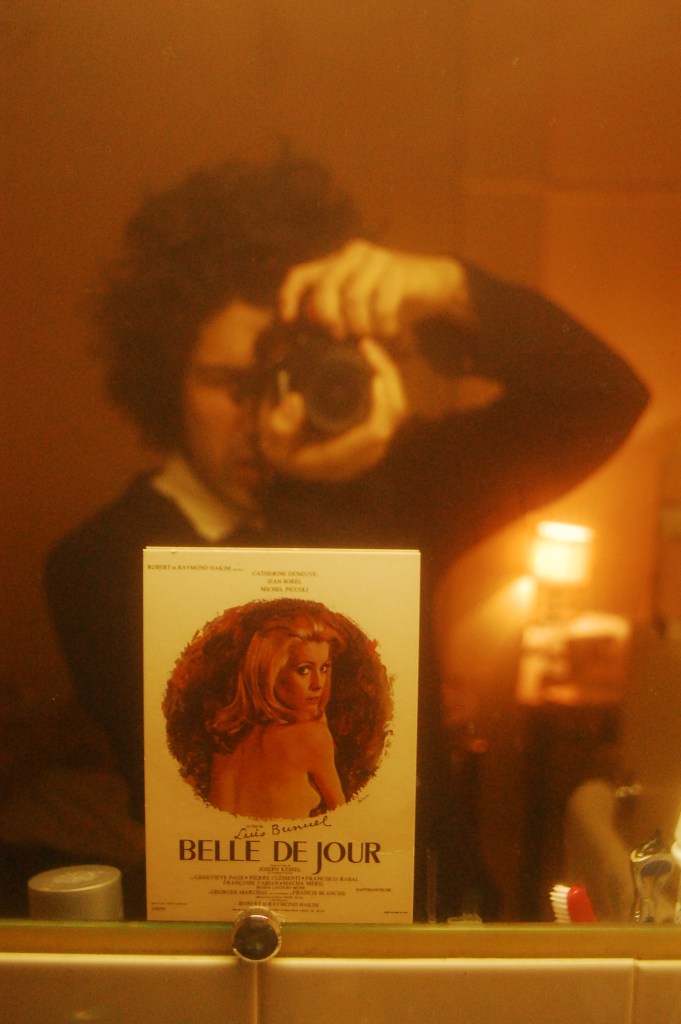
The Crime of Freedom: Akash Sangwan
The armchair had a very peculiar way of making Uncle Sam sit on it.
The Sunday mornings were especially beautiful because they were decorated by laziness. The weather was quite refreshing, as it was drizzling very softly. The fresh face of the rose looked out of the window in a state of wonder, as this was the first time it was encountering the rain.
Uncle Sam woke up a bit early that day, at around six. He was a widower and a retired government servant. He had been very particular about time throughout his life, though some of those bonds were now loosening. He had become a bit withdrawn and relaxed after the demise of his wife. Not out of joy, but from accepting it as an ultimate reality. He was experimenting with new ideas, hobbies and people on a regular basis. The thing most fascinating about Uncle Sam was his spirit of inquiry and his enthusiasm to live life fully, as long as it lasted.
A recent development in his life was that he had bought a pair of birds. The shopkeeper told him that they were budgies. They were chirpy blue birds, and Uncle Sam fondly named them Michael and Stella, the names of his children. That might have been his way of meeting and remembering his children, who had not been so fond of Uncle Sam lately.
Last month, he had been on his morning walk when he saw a beautiful rose blooming at a newly opened plant nursery. He felt the need for some colour in his life. He went to the nursery and asked for the owner, who was not yet awake. He stood there for fifteen minutes. After some time, a young girl came out and told him that the shop opened at 6:00 a.m. and that he could come later.
Uncle Sam looked at his watch. It was still 5:20 a.m. The idea of waiting for forty minutes there, just for the flower, felt absurd to him. He picked up his stick and continued on his walk, even more vigorously, brandishing it in disappointment.
He usually preferred a small walk at 4:30, just to loosen up his limbs, and then carried on further towards the vegetable market to buy fresh vegetables for the day. He bought vegetables every day, just enough for the day, and that was one of the most tactical decisions he used to make each day: which vegetables had to be bought that day.
But that day he went on and on, driven by the sheer disappointment of not being able to buy something he had intended to. The round he took was so lengthy that it took him a full hour to reach home. He was completely tired that day, but the rose still remained an unaccomplished love for him.
The next day, he went there precisely at six and stood outside the shop. He did not bargain a dime. He simply pointed at the rose with a pot, a jasmine with a pot, and a money plant without a pot. He was filled with childlike joy that morning, planning where the new pots should be placed, whether in the balcony or the living room, or whether he should create some new place for them. That became the very next task he undertook that day.
For twenty more days, he was in a romantic relationship with those three plants. Then his fondness diluted a bit, because he wanted a conversation to be two-way. Here, he was simply speaking to them, telling them about his daily routine and asking them about theirs, without getting any response, any answer.
That was why he went for the birds.
Uncle Sam was very particular about them. He bought the best quality grains for them and made sure their food was always fresh. He cleaned the cage every morning as if it were a ritual. He changed their water regularly and made sure everything they needed was in place.
He talked to them often, and they too replied, though not in the same language as Uncle Sam. Their chirping and little movements became part of his daily life. In his own way, he began to treat them like children. After all, he had named them Michael and Stella, after his children.
These things went on for some time, and they were happy times for him.
But one day, while he was feeding the birds, he had to open the cage slightly from the gate. His phone rang while he was feeding them, and he turned his head for a moment.
In that instant, Stella escaped the cage and flew out of the window.
It was deeply disheartening for Uncle Sam. He could not understand how it had happened. Michael was still there, inside the cage. Uncle Sam looked towards the window, hoping Stella might somehow return.
After that, Michael became silent.
He did not chirp at all. He simply remained there, quiet and still. Uncle Sam could see the grief of a partner in Michael’s eyes.
Eventually, Uncle Sam freed him too.
Both birds were free. He took the cage and placed it outside on the balcony. For a while, he consoled himself with the thought that at least he had freed them. It was better than keeping them in the shop, he thought.
Still, he kept wondering where they might have gone and whether they would return. He had cared for them, fed them and talked to them every day. He had begun to believe that there was a relationship between them. He thought they might come back.
So he searched for them on the internet.
What he discovered left him deeply troubled.
The blue budgies he had brought home had been bred for generations to be kept as pets. They were accustomed to human homes and depended upon humans for their food and safety. They were not prepared for life outside. They did not know how to find the food and water they needed or how to protect themselves from the dangers beyond the cage. Even the seeds they had been accustomed to eating were specific to them and costly.
What he had thought was freedom could actually be fatal.
Uncle Sam sat quietly and held his forehead.
He thought about the cage. He thought about the nights when the birds used to climb to the highest part of it and hang there. Perhaps that was their instinct. In nature, their ancestors would have climbed to the higher branches of trees at night to remain safe. The urge to fly had remained in them. So had the instinct to seek freedom. Yet they had been raised in a world where freedom could mean that they would not survive.
Uncle Sam could not conceive what mistake he had made.
Was it a crime to keep them in bondage when freedom was in their instincts? Or was giving them freedom the greater crime when he knew they could not survive it?
He sank into his armchair and held his head in his hands.
He looked at the empty cage on the balcony and remained there for a long time. For the first time, he could not decide whether the cage had been their prison or their protection.
And somewhere between the cage and the open sky, Uncle Sam realised that what he had called freedom might have been another kind of helplessness.
The cage was not the crime.
The freedom was.
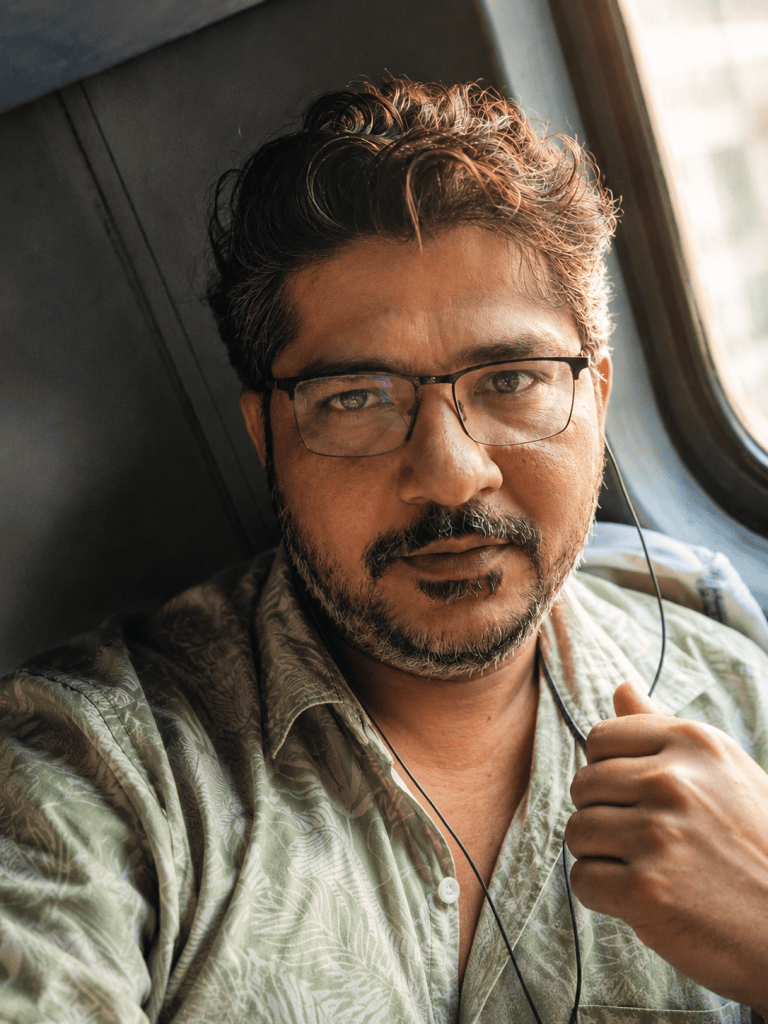
Flat White : Priyam Marik
Slowburn was still the best cafe in Chandigarh. It had none of that matcha nonsense, which Arjun considered slightly better than green vomit. Its lights were neither too bright, nor too dim and the décor was tasteful. Arjun visited at least twice a month, but this time he was more nervous than usual.
Sipping his customary black coffee with a hint of mint (not many places served this curious concoction), he was constantly refreshing his inbox. But Dr Overmars hadn’t replied yet. Arjun briefly speculated if Overmars’s flight had crashed or if the poor Dutchman had been so overwhelmed by Chandigarh’s heat as to lose all sense of IST. The two scholars (Arjun found the term grating in his own head) had met at a conference in Bali last winter, where they had bonded over Johan Cruyff and Thomas Piketty. Even though Arjun was a far bigger admirer of the former, he had agreed to co-author a paper on the latter with Overmars, whose first name Arjun found too complicated to pronounce (or remember). They were scheduled to meet at 3pm to discuss their final draft before it (hopefully) found pride of place in the American Economic Review. Overmars had done this more than a dozen times; for Arjun, it was his first.
Arjun stared at the digits 14:40 on his laptop and then, with all the innocence of an impatient squirrel, peeked at his wrist watch to confirm that it was indeed 14:40. Of course, Arjun needed no excuse to look at his watch, which said more about him than his black Denims, clipped beard, or Uniqlo sneakers. It was a silver HMT with a maroon dial, the kind that made a soon-to-be 38-year-old’s wrist look much older. But Arjun wore it with the same excitement with which he had unwrapped its purple-ribbon box some 11 years ago, on the eve of his PhD interview. It was a birthday present by Iqra, the woman he had learnt to love only after he had lost her.
As he polished the dial with this thumb, Arjun sniggered for the umpteenth time at the sight of the day hand being stuck on Saturday — the day of his first date with Iqra. Their fourth was at Slowburn, where she had persuaded him to try the black coffee, even though she had ordered a flat white for herself. “You’re far too charming to have a flat white,” he had complained. Iqra had smiled one of her enchanting smiles in response, one suspended seductively between tacit approval and polite reproach.
Iqra and Arjun hadn’t spoken in the past nine years, after their tumultuous romance suddenly came to a halt. Iqra, Arjun found out from a sleuthing friend, had married a beer baron, who was rich enough to not bother checking his emails. Arjun found it so baffling that he assumed that Iqra had been possessed or, worse still, compelled into a marital alliance by her paternal uncle, the father figure nobody needs or deserves.
As he lifted his eyes from his table, Arjun spotted a couple sitting opposite, occupied in small talk, with the guy sneakily texting on what appeared to be Hinge. Next to them was a teenage girl with a copy of Finnegans Wake. She seemed to have no idea of what to do with her tome, now that she was done snapping it from every angle. A few tables ahead, an old man was alone, jotting down something in his diary, whose pages were more wrinkled than his skin. A steady queue was beginning to build in front of the main counter, and Arjun was getting itchy about his Dutch colleague when he spotted something he hadn’t spotted in years — a long, swirling wave of dark brown hair cascading down the back of a familiar silhouette.
Arjun got out of his chair to take a closer look, to convince his eyes to convince his head that the both of them weren’t deluded. Her alabaster skin was decorated with freckles, with her ochre yellow kurti reaching almost to her ankles. She had a scrunchie around her right hand, while her left was gripping a wallet with the initials IM. It gave Arjun a spring in his step to know that she hadn’t abandoned her maiden surname.
Making his way through the crowd, Arjun took up a spot a couple of paces behind her, his heart pounding at the idea of her turning back. As she was about to announce her order, Arjun whispered to himself: “One flat white, please.” Instead, she asked for iced tea and some ginger biscuits. Arjun raised an eyebrow the way he always would at Iqra’s choice of beverages. How could a woman who read Baldwin and Arundhati Roy, listened to Springsteen, crushed on Michael Phelps, and painted like Matisse order a stupid iced tea? Then again, Iqra was addicted to Appy Fizz when she and Arjun had been together.
Now that Iqra had paid her bill, Arjun got cold feet. He didn’t want her to see him. Or have himself see her see him. It took a nudge from a muscular customer to bring Arjun back to his senses, at which point he simply side-stepped the queue and crawled back to his seat, all the while scanning Iqra’s shadow in his peripheral vision. To his surprise and, eventually, his relief, she was unaccompanied. Putting on similar wired earphones to the ones they used to share, Iqra was sketching, her iced tea lying undisturbed.
It hadn’t occurred to Arjun that it was well past his appointed slot with Dr Overmars. He was now haring down a memory lane he hadn’t visited in some time. In between furtive glances at Iqra, which required Arjun to look over his left shoulder as if he were repeatedly reading the dessert menu at the far end of the cafe, Arjun rifled through their best (and worst) moments together.
The January afternoon when they shared their most passionate kiss on the sidelines of a lit fest, with an overzealous puppy as the solitary witness. The March evening when they got lost in an escape room, and Arjun briefly felt like he may never see the love of his life again. When they both came out of the maze within 30 seconds of each other, Iqra couldn’t stop giggling at the sight of Arjun’s sobby face and quivering lips. The April morning when Arjun first confided in Iqra about his lashings in boarding school. The May night when Iqra first saw the scar on Arjun’s left thigh and caressed it with the gentleness of a ripening love. The July morning when Iqra opened up about her abusive uncle, and Arjun vowed to spill blood. The August evening when Iqra accused Arjun of loving his studies too much, of caring more about publishing oblique arguments than being there for his girlfriend. The September night when Iqra had overdosed, leaving Arjun with a sharp sense of being deceived by his own judgement, his willingness to believe that Iqra had fully recovered. The October afternoon when they both hugged their last hug, and Iqra left without an explanation for why she was closing the most glorious book of their lives a few chapters in.
It wasn’t like Arjun did not persevere for a reason, a rationale, or some semblance of sense behind Iqra’s drastic call. “We have nothing left” was all Iqra said, over text, before Arjun’s increasingly desperate messages started meandering through fibre-optic cables, reaching as far as the ocean bed, only to be thwarted by a blocked chat.
Re-reading their previous conversations, Arjun was convinced that Iqra would come back. She had loved him too much to let him go. On the fourth or the fifth read, Arjun’s conviction started wavering. By the time he had analysed their longest chat on July 18 three times in the space of a few hours, it struck him: what if he had sabotaged it all?
What if Iqra had made up her mind to leave when Arjun failed to drive her to therapy just because he could not find the right reference on JSTOR? What if Iqra stopped trusting Arjun the day he could not wiggle out of a Zoom meeting to help calm her panic attack? What if Iqra thought that Arjun was embarrassed of her when he forgot to introduce her to a friend they ran into at a grocery shop? What if the micro-sins that barely registered for Arjun had accumulated like tiny drops of betrayal in Iqra’s heart? What if Arjun’s repeated reassurances of “I love you” were understood by Iqra as “I love you when I wish to”.
Nine years and 50 metres separated Arjun from the Iqra he remembered perfectly, but no longer knew. His mind had now clawed back to the present, only to be flooded by questions: Is she still married? Does she have kids? Is she a full-time artist? Where is her next exhibition? Did she paint that portrait of Phelps swimming in the Pacific? What of her younger sister and her dyslexia? Did her mother overcome diabetes?
Arjun felt a strong urge to march to Iqra’s table and introduce himself. He felt an equally strong urge to tiptoe to Iqra’s table and, like the jilted lover he was, to wail ceaselessly: how dare you leave me, leave us, leave everything to wander off into oblivion with a man whose mouth opens up like the Grand Canyon? Don’t I, don’t we, deserve a second chance?
Arjun did neither. He sat in his seat, his feet trembling against each other, his fingers interlocked in constant tapping, his forehead glistening with sweat, his throat searching for something to gulp, his jaws tightening with every breath. His eyes, though, remained on Iqra, as if fencing her in with his gaze, away from the outside world that never seemed to like them together, away from the naysayers who whispered mean things about her past and his future. Away, even, from the Arjun of this morning, who hadn’t figured out how to forget Iqra without forgiving her.
It was one of those moments when Arjun wished for the world to pause, for space and time to fold upon each other, for all motion to be suspended, except for the cute little habits of Iqra, whom he could watch sketching and ignoring her iced tea forever. He did not need them to reconcile; he did not want them to fight or make love. All he sought was the assurance that he could keep looking at her today without the regrets of yesterday.
Before Arjun realised, Iqra had disappeared. How on earth did he lose her? Was he so immersed in his reverie that he couldn’t even tell when she got up and strolled out of the cafe? Had she actually spotted him and scampered away?
Before Arjun could process any of this, he saw Iqra walk back in through the big, wooden door. He let out an audible sigh, the sort he would heave as a kid on the restoration of electricity following the shortest bout of loadshedding. But before Arjun’s heart could get six beats to fall in peace, a tremor shot through his body, tingling his spine. It felt like someone had clobbered him on his neck with a blunt object. His vision was getting blurry and woozy. For Iqra had not come back alone. There was a boy with her: gently swaying with his school bag, which was about half his body weight.
It took a few minutes for Arjun to properly examine the boy. No older than third or fourth standard. Jet black hair combed by the wind. Round, puffy cheeks, and a gait that was confident without being brash. This was a boy used to getting his way. His school uniform was crumpled and there was visible dirt on his socks. He probably plays football, thought Arjun, smiling at his own conjectures. But there was something about the boy’s eyes that felt hauntingly dear. Even though Arjun wasn’t close enough to gauge the exact colour of his eyes, he could sense that they were Iqra’s. As the boy blabbered on, there was no doubt that he was doing so to his mother, who had forgotten all about her sketch now that her most prized possession was in front of her.
For nights at a stretch, Arjun had imagined Iqra as a mother, but always that of a girl. Maybe it stemmed from his own desire to have a daughter, someone who could make him reconstruct the infancy of his partner, all those heart-melting ways in which a baby girl grows up — the way she stretches her first vowels, embraces her cutest toy, and starts to get picky about her nutrition. But watching the boy eating a ginger biscuit out of Iqra’s hands and gesticulating as if he were on Broadway felt right. Even if Arjun couldn’t listen in on the conversation.
Arjun wondered when and how this boy would learn the most quotidian details about his mother, the ones Arjun had long committed to memory. How she never ate the meat in her biryani, concentrating all her appetite on the aloo instead. How she always read a book she loved while lying in bed, underlining passages she liked in reverse. How sharpeners and semicolons were her existential enemies. How she was relentless with herself, and yet, more generous with her love — to humans and animals (not always in that order) — than Arjun could wish to be.
Just as Arjun was beginning to relax in the way his non-existent therapist would call closure, he saw Iqra take the boy by his hand and go to the counter again. This time, Arjun remained seated. He could tell from the cup that Iqra had gotten her trademark order. At long last. Along with a chocolate cookie for the boy. She then gestured towards the washroom, and the boy dashed away. Something inside Arjun propelled him forward. Checking that Iqra had gone back to her seat, Arjun resumed his favourite game: the game of angles, which he had mastered during his PhD days, when Iqra and he knew just how to steal a peck in broad daylight without being caught by the campus cameras or envious batchmates.
The walk to the men’s washroom felt like an eternity. On opening the door, Arjun found the boy struggling to pour soap. He had screwed the nozzle the wrong way. Arjun, so often at the wrong end of toilet inelegance himself, got a golden chance to be the saviour. The boy marvelled at how simple the technology was, and proceeded to wash his hands with so much soap that Arjun thought he would never finish. Once he did, the boy was on a desperate hunt for tissues, whose dispenser was placed perilously high. Arjun knew that, of course, this being a toilet he had entered more often than he could count. And so, Arjun shuffled across to give the boy a helping hand, lifting him gently towards his desired dispenser. The boy smiled him an enchanting smile, one suspended between tacit approval and polite reproach. “Brown eyes,” muttered Arjun to himself, as the boy rushed out with the same intensity with which he had rushed in, still clutching a chunk of tissue paper.
As Arjun returned to his table, he felt a surge of sadness. What had just happened? What if the boy told Iqra that a stranger had assisted him in the washroom, and Iqra wanted to meet this man? What if she threatened to take “appropriate action” against Arjun again? With guilt pulsating through his veins, Arjun went to close his laptop when he heard the ting of a reply: “My apologies… I was jet-lagged and my power nap went on a bit too long! Can we meet at 4.30 in my hotel lobby?” “Yes, of course. I’ll be there now,” said Arjun in his head, without typing it out, as he set off to storm out of the cafe.
On finally emerging unseen and unscathed, it struck Arjun that he had left his AirPods behind. “It’ll be quick,” he said to himself and pushed the big, wooden door of the cafe with a bit too much force. As the door swung inwards and Arjun trundled in, he collided with a body whose touch and texture, shape and smell he hadn’t yet forgotten. “I’m so sorry,” said Iqra, even as Arjun knew it was his fault. Her eyes had not yet met his, but he had noticed the majesty of her hair as it curled up with the rest of her anatomy. Iqra was still on her way to full verticality when she was scandalised to find that her cup of flat white had emptied its residual contents on Arjun’s left sleeve and… his watch.
Iqra must have seen Arjun’s stained watch and his stunned face at the same time, for she froze for a few seconds, during which the boy kept looking at both his mother and Arjun. Arjun didn’t know what to say. Iqra didn’t know what to do. It was now down to the boy’s ingenuity, as he smartly pulled out his stock of tissue paper and wiped Arjun’s watch and sleeve clean. Impressed with his dexterity, he gave himself the reward of tapping on Arjun’s watch, before announcing in his most eloquently commanding voice: “Mumma, I want…”
“No no, come here… I’m so sorry,” bumbled Iqra as she searched for the swiftest way out of the melee. Almost instinctively, Arjun stretched out his right hand and found the boy’s left wrist. Before anyone could say anything else, Arjun took off his watch and presented it to the boy, whose face lit up with the kind of joy Iqra and Arjun had last seen in each other’s decade-old eyes. Crouching on his haunches, Arjun patted the boy on his head and asked, “What’s your name, young man?”
“My friends call me Abhi.”
There was no scope for a supplementary question as the boy whizzed out of the cafe with his latest gift firmly in his clasp. A navy blue Vitara had come into focus, and the boy did not need any help in plonking himself on its back seat. Iqra, still coming to terms with the past few minutes, nervously followed her son’s lead. Just before entering the car, she turned back at Arjun, reining in her tears, to answer something she knew was lurking on his lips.
“His name is Abhimanyu.”
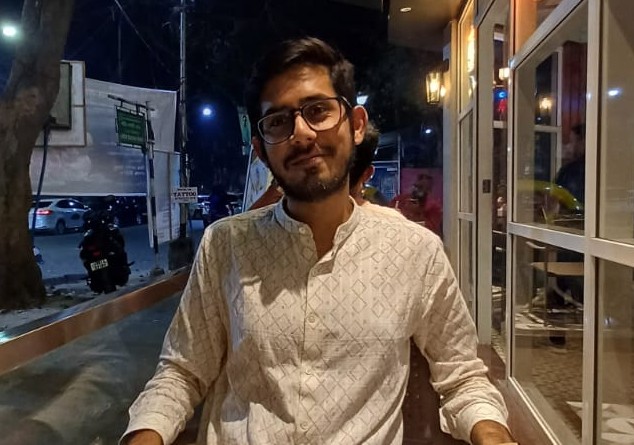
Betrayal: Christopher Moore
The water is dangerously high.
Part of me longs to throw myself in, to let the coolness soothe the pain in my skin, which has been cracking and breaking and burning in the afternoon sun for most of the journey. Not even the coverings of animal fat, the daily ritual performed on me by my husband’s family, are managing to soothe it. Not today. Today, the heat is like a poisonous air escaped from hell itself.
She, by contrast, is making no sound of complaint as she walks alongside me, adjusting her step to keep pace with my crawling. Paws showing no sign of being scorched by the earth as she places one foot in front of the other, continually looking ahead in anticipation of our destination. Perhaps it is always thus. Perhaps we snakes are condemned to suffer to a greater degree than any other animal on the face of the earth. I don’t know. But often, on days like today, it feels that way.
The jackal. My friend. My constant companion on these foraging trips for many years now. She has always shown me nothing but kindness and companionship, a confidant and listener whom anyone would be glad to call upon. My husband’s family have long derided her species, hurled cruel names at her, called her ugly, bid her leave our camp and cease having anything to do with us. It is to her credit that she never protests, never displays any grievance, never gets angry, never expresses hurt. Even though it must sting. I’ve tried to intervene, to ask them to mind their tongues, even taken the matter to my husband. But he prefers to stay above such disputes. Above the melee of us lower beings. And so, little changes in how my friend is treated. It remains one of my biggest regrets that I’ve been unable to do more for her.
My husband. My heart skips an instant just from thinking about him. Even now. After all this time, all these years. That magnificent bird, the great kori bustard, the object of desire for every animal in Africa. I still struggle, sometimes, to accept the truth that he is mine. That we are one, united in marriage, that a god among beasts could love me. Me. A serpent. A creature that crawls upon the ground, amidst the dust of beings like him. And yet I am told, daily, by his family, that he loves me. Deeply, and passionately. To the point where anyone who wilfully did me harm, or tried to come between us, would not go long without suffering harsh vengeance at his hand. I can only suppose that when one is a higher entity, one would find one’s own kind unfulfilling company. The novelty of difference is the only explanation I have for why he would ever glance my way. The camp believe he sees something noble in me. But I can’t share in that belief.
The sun seems to grow, if possible, even stronger, and my skin cracks again, leading me to let out an unwilling hiss. Beside me, my friend notices.
‘Do you need to rest?’ she asks, stopping in place. I shake my head, beginning to spot, just up ahead, the beginnings of a familiar trail. Right down by the edge of a particularly low river bank, the water high from the last month’s rain.
‘No,’ I reply, forcing myself to keep going, and she resumes walking alongside me. ‘We’re almost there.’
Another few moments, and we arrive at the trees, their berries glistening in the sunlight and making my mouth immediately water. It will require some willpower not to eat half our haul before we ever make it back to camp.
The jackal makes a try for the first tree, reaching for the trunk and pulling herself up. She makes it comfortably to the lower branches, snatching a handful of fruit in her mouth and bringing it down to the ground, quickly depositing it in the dirt, before leaping back up for a second attempt. Sometimes, she finds her grace, and manages the higher levels, without my having to do very much. Sometimes.
Not today.
With a groan, she slides back down to the floor, her paws failing to get proper traction in the wood. With an apologetic look my way, she lies down to rest on the path, while I begin slithering towards the next tree, much closer to the river, and, doing my best to ignore the rushing of the water right beside me, water that would surely carry me to the ends of the earth with such strength, begin the assent up to the higher branches.
My friend watches from below as I spit berry after berry down to the floor, enough to satisfy the camp for at least a few nights before we will need to return. But, just as I’m about to finish up, and start sliding back down the bark to rejoin her, she nods towards a branch overhanging the river, and I follow her gaze to see what she’s indicating.
Oh.
There are more berries out there. But not the same ones we’ve just been collecting. No. These…
These are Nah berries.
The most succulent fruits in the forest. Sought after by every creature within it, and consequently regarded as a great rarity now, a treasure to be savoured for anyone who finds one. But this isn’t just one. This is a few dozen.
‘Go on,’ my friend encourages me, smiling in delight, no doubt already wild with desire for the taste. ‘It’s not that far out. And you hardly weigh a thing. We’ll be heroes in camp.’
I can’t help but feel, just for one, selfish instant, that that prospect matters a great deal more to her than to me. But then I catch myself, and, despite another wary glance in the direction of the water- the current seemingly fiercer than ever- I nod in acceptance. It’s not as if I don’t wish to taste Nah fruits again myself. I do. Very much.
Carefully, taking my time, I wrap my body around the branch, and begin sliding over and around it, edging my way out, out across the river, out to where the berries sit waiting for me. Their skins shining in the sunlight, as though beckoning to me. Asking to be picked.
‘That’s it,’ my friend calls from below. ‘You’re almost there.’
She’s right, but she also isn’t feeling the sudden sense of weight pulling at the branch, and the creaking that immediately accompanies it. In an instant, my anticipation turns to fear, and I begin to think I’ve made a terrible mistake. Succumbing to greed, and putting myself at needless risk out on so precarious a limb.
But as the creaking grows louder, and the branch definitely starts to droop, I realise I’m no longer hearing anything from below, and I turn my head towards her. Towards the jackal. Towards my friend.
My blood freezes.
She’s on her feet now. Looking at me. Staring me directly in the eye. Watching my peril, looking on at the danger. But the look in her eyes isn’t one of concern, isn’t one of fear, or even nervousness. The only thing I can see in them…
Is excitement.
And in an instant, I understand. I see it clearly, for the first time, as though a veil has been lifted, as though I’ve only seen the world though a mist until now.
All my husband’s family, all their instincts, all their wariness and disapproval, all their warnings… Have been correct. This isn’t some creature who wants to be my friend. Who cares for my welfare. This is a predator, a force of ill, a being that has coveted my husband ever since he took me as a wife, and has wanted me dead for many, many years. It’s all there in her eyes now, gleaming with malice as drool drops from her lips to the dirt beneath her, waiting for the moment to reach completion. Waiting to see me die.
‘Almost there,’ she repeats, her voice a dark whisper this time. Basking in the glow of her successful temptation of me. At the failure of my willpower, at my engineering of my own destruction. ‘Any. Second. Now.’
And she’s right. Because then, the bough breaks, and I fall, screaming in useless, futile protest, in pointless terror, away from solid hold on anything, and into the depths of the waters, the realisation of betrayal burning me more than the sun ever could as I plunge into the gloom.
There are those who think of serpents as a cursed species. As wretched creatures, hated for some unknown crime either long past, or yet to come. My husband did his best for many years to dissuade me of that belief through his love. Often, I’d allowed myself to think he’d succeeded.
Now, as I feel the current wrench me away from him forever, feel the darkness enveloping me, feel waters that could be those of the primordial world in their ferocity pull me away towards my doom… I know that he didn’t.

The Tapestry Weaver: Zoya Siddiqi
The yarn is stuck in the loom again. The spindle and the wheel are taut, the tangled skein preventing any movement. It is hard to see where the knots in the yarn are, for the room is dim. The candles burnt to little stubs, yellowish-white wax melting in pools on the table and dripping onto the floor. The hewn stone is always slightly oily. It takes the Weaver time to pour oil into the clay lamps every evening, and even with all her precautions, she spills drops here and there. The room is bathed in beams of gold; the soft flames of candlelight and the oil lamps cast looming shadows that look like monsters with gaping maws, a stark relief against the swathes of light that illuminate the half-woven tapestry.
The Weaver is small for a girl of her age. Her back seems curved into a permanent ‘C’ for she spends hours slouched over the loom, threading and knotting together skeins of yarns into calligraphic patterns. The Nawab has commissioned the Weaver to create the tapestry, and so it has been the only project she has been working on for many weeks. Now, with the yarn knotted and the skies outside becoming darker and darker right before sunrise, the Weaver almost wonders if she should give it up for the night. She could leave the knot in till the midmorning sun hits the skin of her eyelids, forcing her from sleep and back to the loom. It could be a problem for another time. The gold skein currently being woven into the large tapestry will be embroidered with real gold threads once it is complete. It is a long and tedious process.
The weaver tiptoes across the oily tiles, peering into the room where her mother and father reside. Her father is asleep, his back stiff and uncompromising. He once used to sleep on the top floor of the large house above the weaving room. Long ago, her father had taught her how to use the loom, how to knot the yarn, how to keep the tension even between each stitch, and how to match the skeins of yarn so the colours on the tapestry melded flawlessly. It was like writing poetry with cloth. Her father had long been the best tapestry weaver in this part of the subcontinent. His hands were always callused and bloody. Years of using the gold thread and wiring it through the thick tapestry had left tiny holes in her father’s fingers. When he placed them on top of hers, teaching her to weave, she could feel each puncture against her own soft skin.
She was still a girl when her father fell down the stairs. The village doctor chastised them about the oil on the stone floors when they came to see him. She told them he slipped down the stairs and that’s how he broke his neck. She said it was quick. The weaver remembers the snap when he fell, like the noise that she’d heard at the butcher’s when he got a new delivery of hens. Their wings would flutter restlessly inside the cage before he reached in and grabbed one with a soft caress below its wobbly little throat, before the butcher twisted and bones spurted from the fleshy wattle.
The Weaver and her mother moved him to the room on the lower floor of the house. Before the room had been filled to the brim with skeins of yarn and spools of thread, it had been a riot of colour, threads of crimson and tangerines lined one shelf like soft flames. There had been an entire shelf of just blues, cerulean and navy, teal and soft eggshell, robin’s blue and the kind that one found colouring the veins under the thin skin on the inside of the wrist. The golds had been hardest to reach. To deter thievery, real gold hammered into the finest embroidery floss.
Her father had arranged the greens and pinks together; it had been like a garden, almost reminiscent of the perennially blossoming bougainvillaea that grew on the boundary wall of the Weavers’ house.
Now the yarn is always a tangled heap of skeins in the weaving room, the colours a mismatched rainbow in one corner, threading out into a maze across the floor. The room in which her father lies, unmoving, eyes flitting from place to place, smells of faeces and death. It is dank and dark; the once waxy smell of candles and musky aroma of fabric has disappeared entirely.
Looking inside, the Weaver is met with smoke. Her mother is sitting by the bed, still dressed in her sari. Her feet are propped up, resting gingerly on the Weaver’s father’s thigh. She takes a long drag from the hookah pipe in her hand before blowing out smoke rings towards the weaver. They begin large, becoming smaller and smaller with each smoke ring spawned from her mother’s betel-leaf-stained mouth. The smoke smells of opium and cardamom. Her mother’s eyes glaze over as she looks at the weaver. She beckons with a single finger a large ruby sitting atop her knuckle. The Weaver sighs, picking up a copper vessel on her way to her mother. She hands the vessel to her mother, watching as it is uncorked and swung back, the burn of the alcohol causing her mother to wince and wrinkle her nose. She looks at the Weaver, and dutifully, the Weaver bends, finding wet lips pressing against her cheek in a kiss.
No one else knows their secret. The Weaver and her mother entered into this alliance without intending to. They heard the village doctor’s words with bowed heads and tears tracking down their skin, and they kept quiet. But the Weaver knows the truth. And more importantly, her mother knows she knows. She saw it happen after all, just as it did. Her hands were spinning a tapestry depicting the great God Indra as he took the mortal warrior Karna’s golden ornaments before battle. The tapestry had been difficult, the anatomy of men much more complex to weave than the calligraphic Arabic and Urdu the Weaver was used to. But her father was adamant that she begin with the weft technique, moving on from brocade.
It had happened while she tried to weft the skin of Karna with his golden armour. The colours were hard to meld, too similar and yet necessary. She had called him down to help her understand how to correct whatever mistake she was making. The voices upstairs yelling ceased. The Weaver was used to the yelling. She used the voices as a steady tempo to keep her stitches fast and the tension constant. As her father appeared from around the corner of the stairs, she saw her mother’s sari drift behind him. The fabric trailing along the bannister, and a second later, he was falling. Her mother followed behind him, her bare feet making no sound. She looked down at his unconscious, crumpled form, her face mottled with a bruise and a chipped tooth and raised a single foot, placing it on his chest in one final victory. She wiped the blood from where her broken tooth snagged on her lip.
The Weaver has learnt how to separate things in her life since she was a little girl. She has separated identities the same way she separates threads, floss, and silk to create tapestries. There are secrets in those colors as there are secrets in her separate identities. She has dissected her father into two men. He would be her father when he taught her how to weave, his hands gentle as he corrected the way she held the skein and placed the spindle. He would be patient as she made mistake after mistake; he would give her sweet tamarind candy after she finished every assignment. He was her mother’s husband when he began screaming; he would roar when the cold water wasn’t cold enough, shriek when the food wasn’t warm enough. Every word was perceived as a slight until his temper erupted. A volcanic fury, showering sparks until she was pockmarked with burns. When he beat the Weaver’s mother, he became nobody at all.
The Weaver wonders sometimes if he was preparing her for the people outside, their rage when it came to their door that December.
Outside of their time on the loom, the Weaver tried to avoid him. It was hard to love someone with so many sins against their name. And so when the village doctor asked, a shawl covering her mother’s ravaged face and body, they remained silent. The Weaver answered that he simply slipped down the stairs. They had examined the stone steps then, finding their fingers coming away with a slight sheen. The official verdict had been oily floors. The Weaver was prescribed medicines for her father, a bedpan, and some floor cleaner.
The Weaver’s mother administers the medicines and cleans the bedpan, but the floor cleaner sits unused in some corner of the house. The Weaver decides to go and search for it in an attempt to forget that the skein of yarn on the loom is tangled, undoing hours of painstaking work.
Outside the house, she stands under the arched doorways of the courtyard, the smell of opium rose and cardamom from her mother’s hookah a visceral memory. It sits inside of her nostrils, so thick she can’t smell the night.
When her mother first married her father, she was a religious woman. The Weaver fingers the wall, where verses of God have been painted in exquisite calligraphy. The paint is blue, but the way her father has melded the colours made it look like the Indian Ocean. The dappled shallow green blues when the sun glints off them, the roiling of the deep sea, the rich glint of water when a fish swims through it, causing ripples everywhere. Now the walls are faded, the blues fading into pastels and slate greys. Her mother has decided that religion is a hopeful man’s dream. And her hookah-glazed eyes have lost hope many years ago.
Crossing the courtyard, the Weaver glances out of the entryway of their house. The marble plaque outside once read ‘Alif (الف)’ in Urdu, with a large crack running through it. It now lies discarded somewhere under the tangled yarn. She fingers the vacancy in the wall where the plaque had sat, feeling the cracks in the cement from the force with which it had been pulled out.
When the Weaver was a little girl, her head reaching only the top of her mother’s knee, she would tuck herself in her mother’s lap and demand a story. Of all the favourites she heard, she once liked the one about Alif the best. The story stopped when the belief died.
The fable has been spun into one of the numerous tapestries the Weaver has woven. It went something like this –
Beginning with a full moon and a prince who wandered the desert for an eternity. There were golden deer and mother-of-pearl mirages, and the stars above changed until they wove the prince so far into the desert that he was helplessly lost. The heat bore down upon him, his clothes were torn, and he hadn’t had a sip of water in days. Even the wind had gone silent. In the stillness of the air, the prince had created a pattern in the sand. The stars had led him to create the word ‘alif’ repeatedly in the sand. When, finally, the prince could bear the agony no more, he fell to his knees and bowed his head. He raised his palms to his face and began to pray. There before him God appeared. God appeared to tell the prince that, amidst his suffering, the only thing he was able to do was invoke the symbol of God, the alif. The shape of the letter itself denoted the connection between man and God, and when all else failed him, it was only the connection that had sustained his life. God drew the map for the prince so he might leave the desert, and he left the dunes behind to pursue his faith. For when all else failed him, God came down to bless his devotion. The prince left behind all his worldly means in the desert, his sole intention now to spread the symbolism of the Alif. The symbol he saw everywhere, from the trees that reached for the sky to the spine in his back that stood straight in connectivity to the Almighty.
There is a fantasy to this story: the simple act of standing straight calls upon God, a fairytale her mother created to tell her at night. There is a magic that feels distant. It feels like a platitude for children who are scared of the dark. The Weaver, her back curved into a C over the loom, has feared far worse than starvation, destitution, and sleepless nights. The story feels like a dream now. And the Weaver has not dreamt for many years.
And so the tapestry was lacklustre. There is an absence of luminosity that arises from the lack of belief that what is being woven will be beautiful. The Weaver no longer has faith in beautiful lies. She no longer recognises the taste of one nor the sound.
Here is what she does know. Her mother had a friend once in the house next door, which is now a mansion. Her mother and her friend would sit in the courtyard while the Weaver spun threads into a story. They would talk and exchange platitudes. But the woman never ate or drank anything that was offered. She would shake her head politely, her necklace dotted with dainty black beads winking on her thick neck. But then neither did the Weavers’ mother when she visited the neighbours.
They lived side by side, looking over the low boundary wall tiled in blue to the woman’s garden, which indulgently held a pond of blooming lotuses, an enormous stone statue of a deity with a bow standing in the middle of the water.
The friendship was fickle, it did not last long, it did not stand true. The woman no longer comes to their blue tiled house. The woman no longer talks or touches the people or the walls. She is careful to ensure not even her shadow touches the shadow of the azure walls in the midday sun. The Weaver does not ask about her. She remembers the day the change happened after all. It was that cold December, the sun warming their icy bones but unable to thaw the chill in their blood.
There was once a place of worship, a hop, skip, and a jump away. It has not been a place of worship in most of the years that the Weaver has been alive, but she remembers when it once was. There is a perfection to its desolation that only a home of God can have—a pretension to its ruin. The brick has been razed to the ground in exact geometrical patterns. Placed in the centre at the crossing of eight streets, the plot is a perfect chalked-out square standing in a circle with the roads leading away from it like rays of the sun.
The Weaver has often stared at the barren ground from her roof. She focuses on the dull reddish grain of sand so her eyes might obtain relief from the multitude of colours threaded on her loom. The lanes of this area of the city, so close to the Nawab’s palace, are bustling, and yet no one nears the empty land where the House of God was once erected.
The Weaver closes her eyes, she remembers the sandstone walls, the imposing marble inlay, the minarets like birds with their beaks turned up to the sky. She tries to reconcile the idea of the brick and stone as they once were with what they are now. But the moment it appears in her imagination, she can no longer imagine the world around her as it currently exists. The bustling of the vendors who hawk clay pots of biryani and crisp golden jalebis piped into an enormous vat of sizzling oil. The way people ignore how empty houses marked in red are suddenly occupied by new people, welcome people. The way her father now lies on the bed, unable to move.
No, her memory of that land exists in a world of dark night where her father sat at the loom knotting skeins while she sat at his knee, it exists when she can hear prayer song at dawn drawing her to the loom, it exists in a world where her mother didn’t have the hookah pipe and had a friend instead.
She can’t imagine that House of God in her world today.
The House of God exists in a void. It has been empty for decades; the footsteps meant to imprint themselves on the dust and the stone have been washed away by the wind. It has ceased to exist as a place of worship.
Now people only remember how it was torn down, long ago. The people who came with pitchforks and knives claimed that their god had been born on the same land a millennium ago, upon which the House of God stood. They declared it to be returned to them for the sanctity of their faith. They tore, and they tore seeking the cradle, the blanket, the childhood bow of their god, trampling and slicing the others. Those worshippers who had come to offer their prayers at a House of God built thousands of years before they were alive, leaving them bleeding into the dust and stone. They found no cradle, no blanket and no bow, and no condemnation either.
Now, people only remember that once God lived there, whether it was the God who was born there or whether it was the God who had built his house there, people remember that once God lived there and when things became difficult, God himself fled. It exists in a void, for it does not exist at all. It has not survived in the present, and it has ceased to be what it once was. Soon, people who know it as it once was will be reduced to ash and soil, it will not be remembered at all, and it will simply be a ghostland.
The Weaver is tired of these vacancies. The Alif was torn out by her mother when the flames of torchlight burnt saffron like the tea her mother once brewed before the hookah smoke filled the house. They marked the houses with plaques and left the ones without. She remembers that her mother’s friend herself placed the red-painted X on the marble Alif, marred the calligraphy, before scurrying away. Clad in black so she might be another demon of the night, her mother tore out the Alif and left pieces of her fingernails embedded in the wall instead. Another gaping hole the Weaver cannot fill. Like the one in her mother’s eyes and the one in her father’s mind, the one on the land, a hop, skip and jump away.
The Weaver drags in a deep breath of fresh air, feeling the smell of night-blooming jasmine fill her lungs, before she turns to return to the house. The floor cleaner lies forgotten somewhere in the mess outside. She sits back down at the loom, her back curved into the C.
She tugs at the knot, the tangle in the tapestry a large hole still in the middle where an enormous temple is to be woven. She pulls at the tangle, gently trying to unknot the threads. But it is futile, for frustration claws at her insides as the knots remain tangled, only the edges of the tapestry complete an enormous hole still in the middle where the rest is to be woven. A particularly furious yank results in the snap of the taut thread, the tapestry sagging, the embroidery incomplete. The temple will only be woven into frayed knots now, an unstable ground for it, in the craft of weaving.
The Weaver stares at the enormous cavern that mars the centre of the tapestry. The Nawab will be disappointed. His protection of their craft has kept them in this house, with the oily floors and the tangled rainbow beneath which the Alif plaque must hide somewhere, discarded and forgotten.
Now, with the torn tapestry, the Weaver wonders how long it will be before this rupture in the yarn will render them unsafe. Before they are removed from the house with the ocean walls and the smell of hookah and fabric. When they will fade into saffron tea and incense, replaced by new people, welcome people. When their dissected identities, parts of themselves that they have hidden or tried to kill, will become irrefutable, and they will be discarded and thrown out like the frail chickens the butcher won’t sell. How long before the vacant land where the House of God lies will not let them remain, even when they have separated and halved themselves into pieces expected to fit? The Weaver split in two; she believes in God like the saint of the story, and she is a Godless girl whose spine won’t contort into the Alif that requires his benediction. Perhaps that is why he has not come to save her.
She looks at the torn tapestry strung on the loom. Stares at the vacant House of God, the threads trying to clutch at the dream of the Sufi saint who wandered the desert.
In this world, even the tapestry will no longer tell the true story.


Leave a Reply