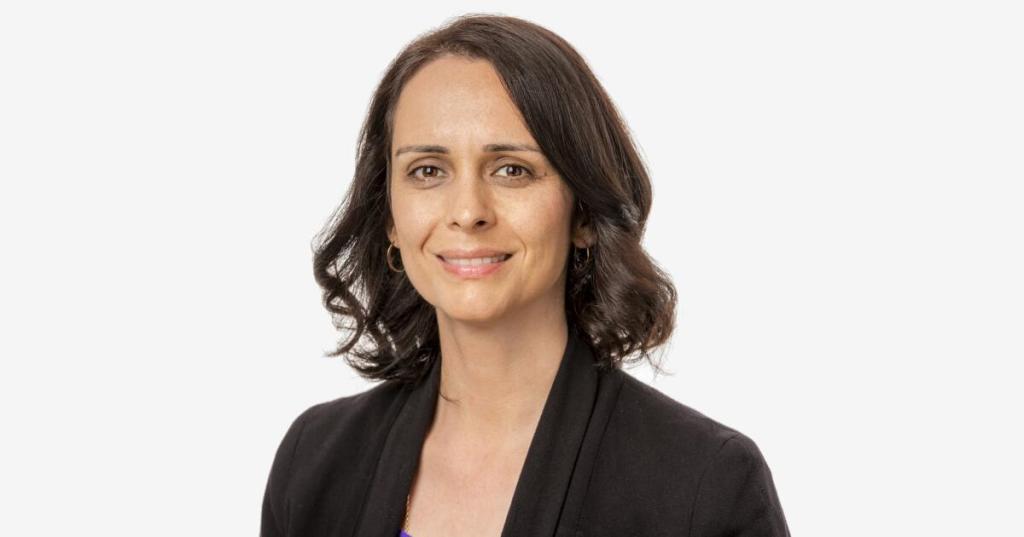
Claire Wu in conversation with Nepali filmmaker Nani Walker about her first narrative feature, “Shakti,” which is set in Kathmandu. The film follows a single mother’s fight for justice after her young daughter is sexually assaulted.
Power in “Shakti” seldom announces itself loudly. Rather, it appears in quieter forms, whether it’s men’s authority over women, a father’s concern for reputation over harm, a family’s silence around sexual violence and a caste system that teaches the powerful to see others as beneath them. Nani Walker’s first narrative feature is set in Kathmandu, but its central question travels far beyond Nepal: What forms of violence endure because families, communities and institutions collectively agree to silent complicity?
The film follows Durga, a hospital cleaner and single mother whose young daughter, Lila, falls ill and begins to withdraw after being sexually assaulted. When the medical system fails to reveal what happened, Durga turns reluctantly to a shaman, whose revelation brings buried trauma to the surface. For Walker, this turn toward mysticism is not an escape from politics but a return to a form of feminine power often dismissed by rational, patriarchal systems.
In this conversation, Walker speaks about caste, sexual violence, inherited silence and the role of fiction in uncovering what power keeps hidden. She also discusses “Shakti” beyond simply spreading awareness, but as a call to action for the everyday praxis of listening, believing survivors, breaking cycles of shame and refusing the hierarchies that make violence possible.
Claire Wu: The film begins with a child’s illness rather than an explicit legal or political premise. And I’m wondering, why did you choose mystery, the body and the supernatural as the entry point into a story about justice?
Nani Walker: Yeah, well, I feel like it’s really a personal story about a family. I wanted the film to have that intimate element — a family story at the heart of it.
Rather than explicitly coming out with some of the film’s themes, I wanted them to build gradually. The whole search for justice builds throughout the film, because the mother is seeking justice, and you’re hoping she gets it. And the final shot is this moment where we have to reckon with what that means for each person watching.
CW: I have another question about the mysticism aspect in the film. I thought it was interesting that when the male doctor fails to understand what’s happening to Lila, it’s the female shaman who can bring the truth out. That felt like a very gendered treatment — you know, mysticism, spirituality and intuition are often coded as feminine, while medicine and rationality are often associated with men.
In that way, it made sense that it was a woman who ultimately uncovered what happened to this little girl. Was that gendered treatment intentional?
NW: Yeah, well, the gendered treatment wasn’t necessarily intentional in the sense that the doctor was male. That had more to do with the relationship the doctor character has with the mother, with Durga. They’re on these two vastly different sides of the societal class divide. He’s the professional, the doctor, the revered figure, and that also connects to how work is divided within the caste system. She’s working there, cleaning the hospital, so she’s really considered to be on the lower rung.
So it wasn’t so much about gender in terms of whether he was a doctor because he was male. But the fact that Leela goes to the shaman — or is taken to the shaman — was a very intentional choice. I think there’s such a disregard in our world for healing, alternative practices, the supernatural, mysticism and shamanism, and so often that is also, in a sense, a disregard for feminine power.
“Shakti” itself means feminine power. It’s kind of like the yin and yang, and “Shakti” is the yin. Our world is so grossly leaning into only one side. I think the film is about looking at that imbalance and saying that when the logical way doesn’t work for us, there may be another way — a more intuitive side, an exploration of the intuitive side of human beings.
CW: That’s really interesting because in my mind it felt very intentional, even if it wasn’t meant to be. That’s really cool.
NW: Yeah, thank you. With the male character, I didn’t think of it that way. But yes, she goes to the doctor because the mother is actually a very pragmatic woman. Her sister is much more traditional, I would say, and believes much more in the spiritual aspects of things.
Durga is very pragmatic. She thinks, “Doctor first. I’m not going to go to any of the shamans or these people.” She even speaks poorly of them. But in the end, she gives in and says, “Okay, this is my last resort. Let me try this.”
CW: You’ve said in previous interviews that “Shakti” is about silence and complicity. Were you thinking about different forms of silence — within families, within caste structures, within the legal system or within the broader community?
NW: I think it’s very layered and intersectional. In the South Asian community, a lot of people don’t talk about caste. If there is any mention of it, there’s either disregard or denial. A lot of uncomfortable things, like the caste system, get swept under the rug.
It’s the same with childhood sexual abuse, sexual abuse in general and sexual assault. Sexual violence is something we have deemed taboo as a society. As a result, it’s always pushed aside and slipped under the rug. Nobody wants to talk about it or confront it.
I think that’s what perpetuates it. It perpetuates it because of that silence. By being silent, we’re agreeing to be complicit in it.
CW: As an East Asian-American person myself, that reminds me of the concept of saving face. In many Eastern cultures, there’s this sense that everything is boiling under the surface. For example, if someone’s husband is committing adultery, people may avoid saying anything or telling the wife because exposing it would damage someone’s public image.
I felt something similar in the film. There’s that scene where Hira, Rabi’s father, confronts his son after Durga accuses him of sexually abusing Lila. He doesn’t tell Rabi to stop assaulting girls; instead, he yells at him for potentially damaging his reputation if he gets caught.
That felt very telling to me. It seemed like a face-based society, where the concern is less about the harm itself and more about public shame or reputation.
NW: Yeah, I think East Asian and South Asian cultures are very similar. It’s all about saving face. Unfortunately, that’s why there’s still the caste system, and there’s still this huge amount of silence around sexual violence in South Asia.
In India, for instance, if you look at the numbers, something like 53% of women have experienced sexual violence. In Nepal, during the course of making this film, so many women have come to me. It’s shocking and heartbreaking. I find myself wondering, “Am I the only person you’re able to tell? Are you able to talk to anybody about this and heal from it?”
With this film, I really want to open up the conversation and allow people to share what is really going on. I also want to bring awareness to some of the changes we need to make around the statute of limitations. That’s at the heart of the impact work I want to do with this film.
CW: I feel like people often prioritize STEM-adjacent approaches to advocacy and favor documentaries over fiction for effectiveness. So, how do you go about using fictional narratives as a vehicle for activism in this environment?
NW: Yeah, well, it’s my first feature narrative project, and it was a big question for me.
Initially, it started with my outrage after reading about the 35-day statute of limitations that was in place until 2015. It was so shocking to me that I felt like I needed to make a film around this.
My only real experience had been making documentaries. I had worked in fiction along the way, but I had never directed a major work of fiction. I realized, for many reasons, that fiction made sense. One reason was that I was setting the film in the past, and I also really wanted to protect the privacy of survivors.
Because this is also a personal story, I thought: Why don’t I find inspiration from my own story?
It became a blending of the nonfiction work and the nonfiction approach I’ve had for most of my life as a documentary filmmaker, while also learning along the way how to build narrative and arcs, and how to layer in all of these different characters and themes within the film.
CW: Building on that, how did your background in documentary and journalism shape the way you approached fiction filmmaking, especially when dealing with trauma, testimony and larger social systems? Did working with actors around these themes feel different from interviewing real people for a documentary or nonfiction story?
NW: It’s about how you go from nonfiction to fiction. A lot of the scenes — for instance, even the shaman scene — came from something I witnessed during my documentary research on another film. I had sat in a room where something like that transpired, and I was amazed. I was in awe.
The image of that moment — the exchange between the person who is ill and the person who comes to heal them — stuck with me for so many years. It was such a vivid memory and image, and I wanted to bring that into a film in some way.
But at the time, it was so hard. Going into a room with shamans and people who are looking for healing, there are a lot of private stories and very deeply personal things happening. I felt like that was not the space to bring a camera into. In fact, a lot of shamans don’t want cameras in those spaces.
So it was something I wanted to share and show, but I knew I wasn’t able to bring a camera into that moment. I also don’t think it would have made sense, because there’s so much context you would have to build around a person’s story.
I felt like this was the perfect project to blend that nonfiction experience and the research I had done for the documentary into a fiction film. So much of it is about researching and doing the work early on, and then building upon that research, building the layers of a character through the research and through all the other work I’ve done.
In a sense, all of that comes from making documentaries. You do a lot of research and reporting early on.
CW: As you’ve begun showing the film in America, how have diaspora audiences here responded to the film compared with audiences in Nepal?
NW: Yesterday’s screening was tremendous. The response has been great. So many people came up to me afterward and said they were grateful that I made a film about this — about how complex it is, and how important it is for us to be talking about these things.
I think a lot of people want that sense of relief: that we can be ourselves, be open about it, and stop having to save face. So the response was great.
CW: How did audiences in South Asia respond when you screened the film there? Did the response feel different, or maybe even stronger, because the subject matter is so close to home? I feel like here in the West, there’s a bit more public discourse around speaking up about these issues, whereas in South Asia, there may be more pressure to keep things private.
NW: Yes, in Nepal, the response was also very strong. People want it in theaters, so we’re trying to get it out in theaters there and bring it to a wider audience.
I think the big question is that everyone wants justice. That’s the whole thing. The film is really a call to action for people to go out there and demand changes, amendments, and better ways to support people. How can we live in a safer society? How can we create a place that is safer for women, for children, for men, for everyone?
That’s the goal of the film. In South Asia, I think that was felt more immediately.
But even in screenings here in America, there were a lot of people who were asking, “How can we help?” Someone came up to me who was East Asian — I think she was Asian American — and said the film had inspired her to think about actionable things she could do in her own life to bring change.
That was amazing to hear, because I realized it’s not just about impacting the community I’m telling the story about. It’s about inspiring everybody to get up and do something.
CW: Right, it’s not just about spreading awareness, but also inspiring praxis.
Among diaspora viewers, are there conversations you hope “Shakti” might spark between parents and their children?
NW: Yes. I hope parents have conversations with their sons, daughters and children about safety, consent and building awareness around these issues.
I feel like there’s such a divide. Some people say, “Everything is great. What’s your problem? Stop complaining.” But on the other hand, it’s like: Look at the reality of what’s happening. Look at the numbers. Look at what’s going on. How can we do more? How can we do better?
I would hope parents can have those conversations with their kids — about building awareness around respect, dignity and treating each other with the kind of respect and dignity you would want for yourself, and that you would want for your own children.
CW: I was also struck by the idea of inherited silence in the film. Durga has her own history of abuse, and then Lila experiences abuse as well. Both of them remain silent until the shaman enters the story and helps break that cycle. Is that intergenerational silence — and the possibility of interrupting it — something you hope the film opens up for families watching together?
NW: Yeah, you’re definitely pointing to another layer in the narrative, which is that maybe this is also an opportunity for parents to open up about their own trauma.
I think that’s the way to heal: to open up, to give space to it, and to give air to things that have been living inside you for a long time — things that may have been silenced.
I hope the film can give people an opportunity to heal and to open up within their families. If there is an opportunity for intergenerational healing, that would be incredible.
CW: For people who might be watching this film without much context about Nepal’s caste system or its legal history around sexual violence, what do you hope they understand by the end of the film?
NW: I think caste and sexual violence are intertwined. In a way, caste is a system of colonizing a certain people, and it doesn’t always have to be an outsider doing the colonizing. Our idea of colonization is often someone coming from the West, or from elsewhere, and colonizing another place. But within societies, there is also stratification and domination.
In that sense, the caste system is connected to sexual violence and to the disparities in our cultures — the ways women, trans people and people in general are not given the same amount of respect. We are all here, and there is really no hierarchy of any sort.
But that hierarchy has been ingrained in us through patriarchal systems: this idea that there is a ladder, with people at the top and people at the bottom. For me, this film is really about smashing that whole idea to pieces.
CW: I agree, those systems feel very intertwined. In the West, we often have this egalitarian idea that everyone is equal here, while the East is somehow “behind” because it still has systems like caste. But as you said, people are not treated equally here either. We have our own forms of hierarchy, especially around socioeconomic class. We may not call it a caste system, but we place people into the same oppressive hierarchies that determine their worth as people.
And even though we’ve had movements like Me Too, women here still face shame and disbelief when they speak out. Perpetrators still say things like, “No one is going to believe you.” So in many ways, the same dynamics happen here too, just in a different form.
For me, “Shakti” helped break down that perceived difference between East and West. Was that something you were thinking about — showing that these systems of silence, hierarchy and violence are not just “over there,” but exist everywhere?
NW: Yeah, definitely. For me, the film is set in this tiny corner of the world, in Nepal. Nepal, in people’s imagination, is often just mountains, and it gets exoticized a bit. Beyond that, people don’t think much about it.
But I wanted this story, set in that corner of the world, to translate and have ripple effects. Because, as you’re saying, those systems of hierarchy exist everywhere. They exist here, too.
I want us not just to look over there, but to look here — at our own systems and our own lives — and think about how this shows up, and the impact it has, especially the emotional impact.
For me, the film is so much about the emotional landscape, and using emotion as a tool to bring the point across.
CW: For some viewers in the West, where there’s often more support for progressive politics and equality, what blind spots do you think “Shakti” can reveal? What might the film show to audiences who consider themselves politically aware, but may still have gaps in their understanding of caste, gendered violence, or silence within their own communities?
NW: I think a lot of times, when you’re sitting in a place of privilege, the question to ask is: What can I do in my own life?
It might not be directly related to something happening in Nepal, per se. It could be right here in your own life. What can you do, and how does that show up?
The caste system is, of course, a deeply ingrained, thousands-year-old system of hierarchy that has been fashioned in South Asia. But here, as we were talking about earlier, hierarchy shows up in wealth stratification. What does that look like in our own lives?
I think we can really learn from that. How do we break down those barriers and actually look at each other in a more human way, and have more dignity for each other?
CW: I think fiction often acts as a mirror, and sometimes that mirror is uncomfortable. For example, when Durga looks directly into the camera at the very end, it feels like she’s addressing us and asking us viewers to confront our own complicity in patriarchy and other oppressive systems.
How do you think “Shakti” holds a mirror up to viewers and brings out that uncomfortable self-awareness?
NW: It can definitely be an uncomfortable film to watch. There are moments that are emotionally very uncomfortable, and others that are very tender. There’s a whole wave of different emotions.
For me, the beauty of fiction and narrative is that it can embed people in the lives of others. You start to care about these characters, and then you begin feeling with them and for them.
By the time Durga looks into the camera, it’s kind of like, “Okay, what can I do?”
For me, the end of the film is really about her asking us to look at our own lives. By that point, it’s about how we need to support and help each other as a community of human beings. One person can’t fight a system alone or bring a system down by themselves.
Durga is resilient. She’s super strong. She’s out there, ready to do whatever it takes. But she’s also looking out at the audience and saying, “Are you coming on board with me? Are we doing this together?”
I think it’s a call for all of us to stand up and work toward change.
CW: Speaking of that call to action, what are some tangible forms of praxis that audiences can bring into their everyday lives? After watching “Shakti,” how can viewers here begin to participate in the kind of collective change Durga is asking us to join?
NW: I think in your own small communities, look for places where you can help — less privileged communities, for instance. In this country right now, and in the world right now, there is so much going on. The question is: How can we stay on the side of people who are being oppressed?
It’s about asking how we can stand by the underdog and uplift the underdog as a community. Whether that’s with what ICE is doing with undocumented immigrants in this country, or what’s going on in Gaza, or the many wars happening in the world right now, there is so much oppression and violence happening.
I think it’s about looking in every direction and asking what you can do. How can you help in some way? And not help in the sense of creating a divide, like, “Here I am,” in a savior-complex situation. It’s more: How can I be involved?
Sometimes that can mean being emotionally involved in a way that translates into action. Join an organization. Vote. Get engaged in local politics. Organize to change laws, bills and other things. There is so much you can do.
Make art. Making films, making art, writing — all of that is also very empowering. When you’re informing other people and bringing stories with an emotional thread that you’re able to share, that matters.
Everybody is different, so I think whatever your calling is, that’s the way people need to go for it. There isn’t one way I would say to do something. There are many ways to get involved.
CW: And also, as you mentioned earlier, there’s the interpersonal side of it: treating people with dignity, believing victims and being kind.
NW: Yeah, exactly. It’s so simple. It’s actually really simple. But I think people make it complicated when it becomes so politicized, and it doesn’t have to be.
You’re born here as one human being. You’re not going to be here for that long. So what are you going to do? What kind of impact and legacy do you want to leave behind?
CW: What are some specific ways people here can use that environment to stand up for children like Lila, not just in Nepal but around the world?
NW: Yeah, for all around the world. I think a very simple thing is that there’s a lot of organizing work happening around caste equity, especially within the South Asian community. That’s something a lot of people are not aware of, or they deny it. They’ll say, “Oh, that doesn’t exist in our community, so I’m not going to do anything about it.” Stay engaged. Listen to the people who are actually experiencing it.
That’s one example. Similarly with immigrants, there’s so much politicization around immigration and immigrants. This country is made up of people who come from all different parts of the world.
To deem one person better than another, or to say that someone who arrived earlier has more right to be here — that whole sense of ownership — I don’t think that’s helpful to who we are as a whole.
CW: Is there anything else that you’d like to add as a final statement?
NW: I think you pretty much covered everything. I really just want to urge as many people as possible to watch the film.
It’s set in Nepal, but it doesn’t have to be only about the South Asian community. I think it really is a universal story. It can be about anybody in this world who feels left out of the conversation.
In a way, it’s about how we bring people back in and embrace each other, and how we allow for an experience that brings us together rather than isolating us.
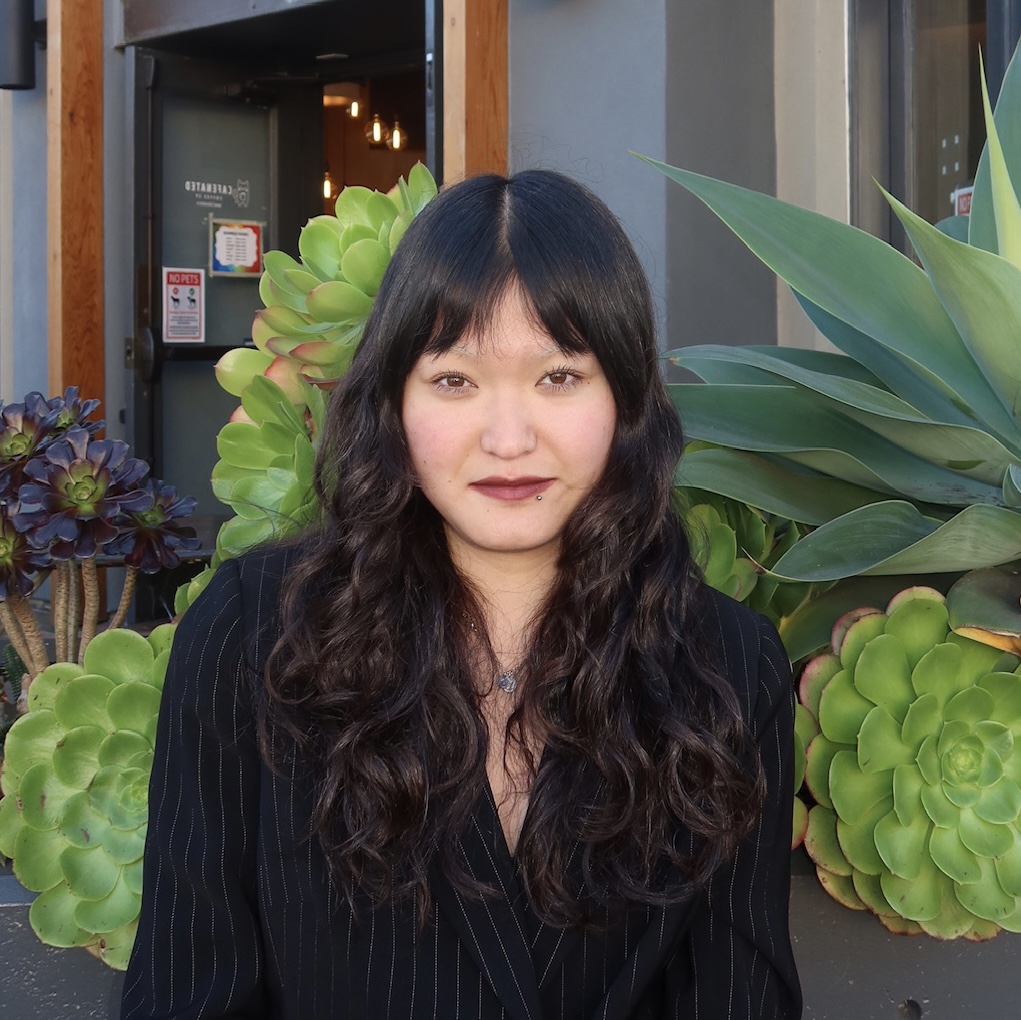
Claire Wu is a film and culture reporter and UC Berkeley English graduate based in San Francisco. Her writing has appeared in KQED, Mission Local, 48 Hills, Eat Drink Films and The Daily Californian.”


Leave a comment