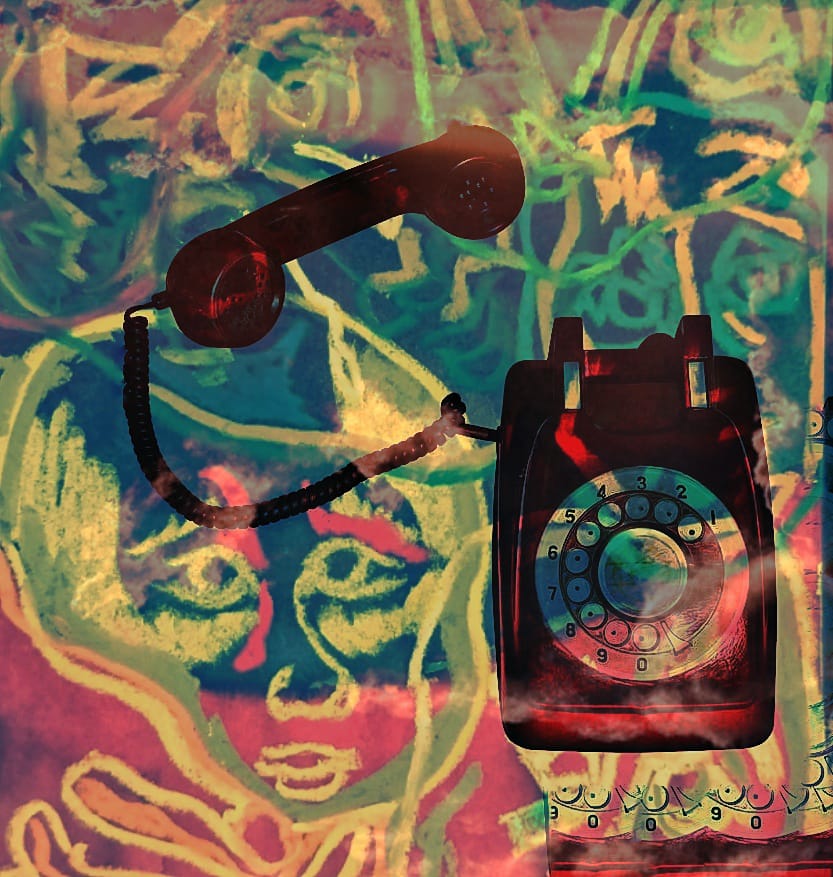
- The Conundrum of India’s Domestic Workers by Parth Singh
- When Words Disguise Injustice by Mallika Ravikumar
The Conundrum of India’s Domestic Workers by Parth Singh
The Invisible backbone of Urban Life
Before sunrise, millions of women across India wake up to cook, clean, fetch water, and send their children to school—working on their household chores with little rest. Then, they leave home to go to middle-class apartments, where they do the same tasks—sweeping, mopping, cooking, and caring—for someone else’s family. These women are India’s domestic workers—about 50 million of them—whose unseen work keeps both their families and urban life running smoothly.
Despite all this, they are still among the most underpaid and exploited workers in the country. They don’t have official contracts, fixed wages, or social security. Many are migrants, Dalits, or from marginalized communities, which makes them more vulnerable to abuse or harassment. Their fight for recognition has gone on quietly for decades, but it needs urgent attention in a democracy that talks about valuing dignity and equality.
A Long-Standing, Underrecognized Movement
Domestic workers in India have been organizing quietly for years. They do this persistently and often without much attention from the media. They are asking for things that should already be guaranteed:
A legal minimum wage
Clear working hours and weekly days off
Social protections like healthcare, pensions, and maternity leave
Protection from harassment and unfair dismissal
Some states—like Kerala, Tamil Nadu, and Maharashtra—have taken steps through welfare boards or informal schemes. But in India as a whole, they are largely ignored. The country still hasn’t ratified ILO Convention 189, which calls for domestic workers to have the same rights and respect as other workers.
The Patriarchy Issue: Double Discrimination
This issue is made worse by patriarchy and social inequality. These factors make domestic workers especially vulnerable.
Most domestic work is done by women. India’s traditional, male-dominated society adds to their problems:
As workers, they are denied legal protections and fair wages.
As women, their work isn’t valued because it takes place at home and is seen as unpaid caregiving.
This labor, often called “invisible,” is considered natural and not skilled. Because it is linked to women and has traditionally been unpaid, it is treated as informal work that shouldn’t have rights.
Most domestic workers are from marginalized caste or tribal groups. The oppression they face combines caste, class, and gender issues. This makes it harder for them to get recognition and justice.
What Reality Looks Like
Here are some facts:
Wages are very low. Many women earn between ₹2,500 and ₹5,000 a month in big cities. This is much less than what the law says they should earn for unskilled work.
There is no job security. Most are hired through just a conversation, and they can be fired any time without warning or money.
Harassment is common. Many face verbal abuse, sexual harassment, or even assault. They often work alone in private homes, which makes this risk higher.
The COVID-19 pandemic showed how fragile their situation is. During lockdowns, thousands lost their jobs suddenly. Some were kept out of apartment buildings because of stigma, with no income or support.
These problems are widespread. They show society’s failure to respect and value care work and the people—they are mostly women—who do this work.
Counterarguments and the Issue of “Help”
Many employers say that domestic work is a personal arrangement, not a formal job. Others say they treat their workers well—giving food, gifts, or hand-me-downs—and that creating formal rules would be difficult.
But the reality is simple: charity doesn’t equal justice. Domestic workers need rights, not just kindness.
Other countries like Brazil, South Africa, and the Philippines have set rules for domestic work—through contracts, social protections, and wage laws. Regulation is not impossible; it’s necessary.
Although many middle-class families rely on domestic workers because public care systems are weak, this makes protecting workers even more urgent. Fair wages and good working conditions shouldn’t be optional or seen as inconvenient.
Why This Fight Matters
The rights of domestic workers are about more than this work. They touch on how we see equality and justice in India.
If millions of women are left out of legal protections, it sends a message about whose work counts and whose doesn’t. It shows the limits of our democracy.
This fight also connects to bigger issues:
Gender equality: Recognizing domestic work challenges old ideas about what “real” work is.
Caste and class justice: Most domestic workers are from Dalit or Adivasi communities. Their experiences emphasize social inequalities.
Urban inequality: Behind the clean apartments are workers living in slums without water, health insurance, or job security.
The Way Forward
India must take clear steps to fix this unfairness:
1. Ratify the ILO Convention 189 and give legal protections to domestic workers.
2. Require standard contracts with set wages and reasonable working hours.
3. Expand welfare boards to provide pensions, healthcare, and accident coverage.
4. Create systems for workers to report problems and get help if they face abuse or harassment.
Most importantly, India needs a change in mindset—to stop seeing domestic workers as just “maids” or “helpers” and start recognizing them as professionals whose work keeps city life going.
Conclusion
The fight for domestic workers’ rights may not get much media attention, but it’s one of the most urgent social issues in India. These women support the backbone of our cities—without them, middle-class life would almost stop.
And because Indian society is patriarchal, they face double discrimination: treated unfairly as workers and as women. Their fight goes beyond about wages; it’s about breaking down long-standing beliefs that undervalue women’s work.
If we ignore their needs, we keep a democracy that favors only the rich and powerful. But if we support them, we move towards a society that respects all kinds of work—even the quiet work done behind closed doors.
Parth Singh is a student of Media and Public Affairs.
When Words Disguise Injustice by Mallika Ravikumar
As a law student and then as a young lawyer, the idea of justice was central to much of what I read and discussed. Searching both within the syllabus and beyond, I seemed to be embarking on a quest to understand what this word, that seemed quite elementary at first glance, really meant.
The search led me to books: The Algebra of Infinite Justice by Arundhati Roy, The Idea of Justice by Amartya Sen, among others. It led me to sign up for an outstanding course called Justice conducted by Professor Michael Sandel at Harvard Law School. It led me to read about the lives of those who strived for justice-people like Nelson Mandela, who famously said : “Overcoming poverty is not a gesture of charity…it is an act of justice.”
But over time, the quest began to feel like chasing a mirage. Or perhaps, as saints have said about attaining liberation, it is not something you can express in words, but when you get there, you just know it.
As motherhood, career and life took over, I was content to leave it at that.
Until, in my new avatar as a writer, another angle to the same question resurfaced. Words had become my working tools, and I began to notice how wordswere used to mask injustice.
The Velvet Veil of Words
As a writer, I am fascinated by the power of words and enjoy literary devices and figures of speech. Words can hurt, but they can also heal. Words can entertain, inform, educate, transform. Words can be used to imagine, words can help to share. But words, are a double-edged sword.
Figures of speech are literary devices that help enhance the beauty of a sentence, and from alliteration to zeugma, I can never seem to get enough of them. But here’s a device that has be in a tangle – the Euphemism.
A Euphemism is a figure of speech where one word is substituted by another; the objective being to reduce or avoid unpleasantness. So “he died” becomes “he passed away”, “old people” become “senior citizens”, and “used clothes” begin to be called “pre-loved garments”.
But there comes a point when one feels like its being stretched beyond reasonable limits. I once visited a school where teachers were being called facilitators. I asked the head mistress why that was so. She said something about how teaching a child seemed like a demeaning idea; while facilitating a child’s learning, seemed more appropriate. Unconvinced, I nodded and smiled politely.
Even in the social realm, over the years, crippled became differently abled, which became divyang (godly-abled). While born of good intent, such re-labelling can border on denial. As a lawyer, I often worked with people with disabilities, and most people I asked said they preferred being called deaf or blind, because that, they said, was the precise word for their condition. Besides, changing the name did not change their reality.
We seem to have tricked ourselves into believing that if we change the word, we change the world. And yet, one can argue that this kind of euphemism seems rather harmless. But this is only the beginning of how good intent can lead to distortion.
There comes a point when euphemisms, are not a mark of politeness, but phoniness, about which the Economist once had an aptly titled article : “Making Murder Respectable”
A recent study (***) analysed about 750 news articles from leading outlets like BBC News, The Guardian, The New York Times, between 2020 and 2021, and identified 482 euphemistic expressions that concealed rather than revealed. The study defined political euphemisms as instruments for truth evasion.
According to the authors of this study, political euphemisms “veil the negative reality and consequences of adverse political actions”, making a desired impact on public consciousness without appearing manipulative. They use what linguists call the “buffer mechanism,” creating a neutral or positive tone around something inherently ugly.
So, war becomes a special military operation.
Torture becomes enhanced interrogation.
Civilian deaths become collateral damage.
Unemployment becomes downsizing.
The reality remains unchanged. But the words have been softened, numbed and polished for public consumption. And we saw plenty of this during the Israeli genocide in Gaza.
Language on Trial
No one exposed this better than comedian George Carlin, who famously traced how military trauma was linguistically sanitized over time :
“Shell shock” in World War I,
“Battle fatigue” in World War II,
“Operational exhaustion” during the Korean war,
and “Post-Traumatic Stress Disorder” in Vietnam.
With each step, he said, the pain was completely buried under jargon. He called such euphemisms “language that takes the life out of life!”
In his show, Carlin also mocked the hypocrisy of calling Israeli attackers commandos and Arab ones, terrorists.
And this then, is precisely how harmless words and literary devices become vehicles of injustice.
When is the line crossed? When do euphemisms cease being vessels of politeness and begin to become tools of manipulation? Is it possible to tell? Giving it some thought, I gather that it is indeed possible to tell. It is when the euphemism protects not the listener’s feelings, as it was intended to, but instead protects the speaker’s conscience.
Justice Demands Precision
Returning to my quest to understand the nature of justice, here’s one thing I have understood. The first step in the process has got to be honesty. And that cannot happen if the manner in which we perceive reality itself, is distorted.
When governments neutralize targets, when armies depopulate areas, when leaders speak of progress after fruitless negotiations, language itself becomes complicit in injustice, by changing the frame of reference and dulling our moral compass.
After the bombing of Hiroshima and Nagasaki in the Second World War, the Emperor of Japan announced his country’s surrender by saying “…the war situation has developed not necessarily to Japan’s advantage…” Not only was this feeble attempt at giving defeat a cloak of respectability, a colossal understatement, it was also an ugly mask that lay to waste the sacrifice of millions.
To seek justice then, we must begin by reclaiming language. When words lose their honesty, justice becomes collateral damage.
**Euphemism as a Linguistic Strategy of Evasion in Political Media Discourse, appearing in Theoretical and Applied Linguistics (Vol. 9, Issue 2, 2023)
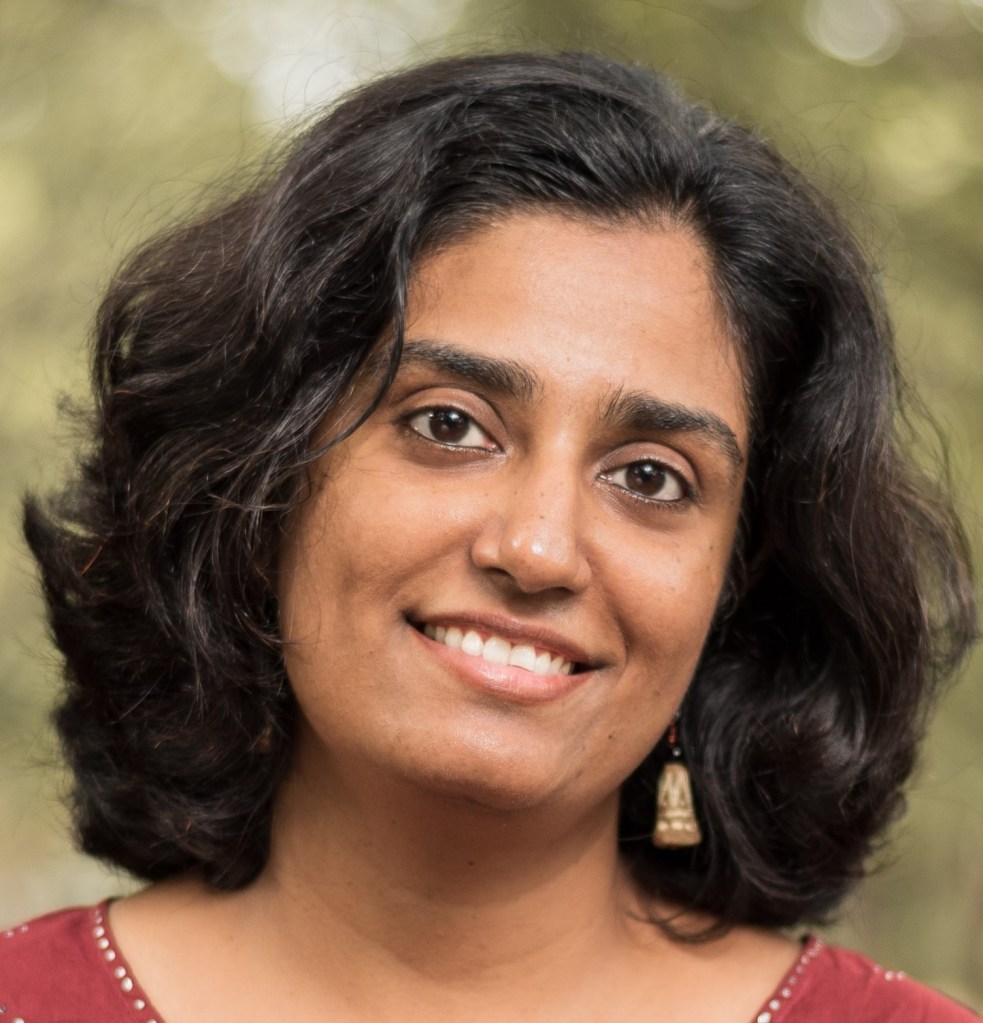
Mallika Ravikumar is a lawyer-turned-writer who is the author of multiple books published by Penguin, Hachette, Speaking Tiger, amongst others. Her books include the award winning The District Cup and 565 : The Dramatic story of Unifying India. Mallika has won the Bangalore Literature Festival Book Prize and the Binod Kanoria Children’s Book Award, 2023. When she isn’t writing, she can be found talking about trees on her YouTube channel – Tree Talk with Mallika Ravikumar through which she hopes to get people to notice the beautiful trees around them.
 Parcham Online
Leave a comment