
- Kashmir: A Valley Between Guns by Saniya Naseem
- Mirror by Subhajit Sur
- Searching for Words by Rehan Sarkar
- The Symmetry of Spice and Spirit by Gopu Sunil
- The Pursuit of Moonlight by Keshar Singh
- “Abhi Na Jao Chhod Kar” by Stiti Ayona
- If She Really Asks by Liza Sangita Das
- PARASITIC JAEGER by Sagar Baidya
- The Stories We Carry by Navratra
- I’M TIRED OF PRETENDING by Shrinka Mitra
- If not the Mothers, Who do we run to? by Areefa Ashraf
- Fade Away by Ananya Saha
- The Child Who Remains by Gargi Hajra
- Petals and Pages by Srijita Talukdar
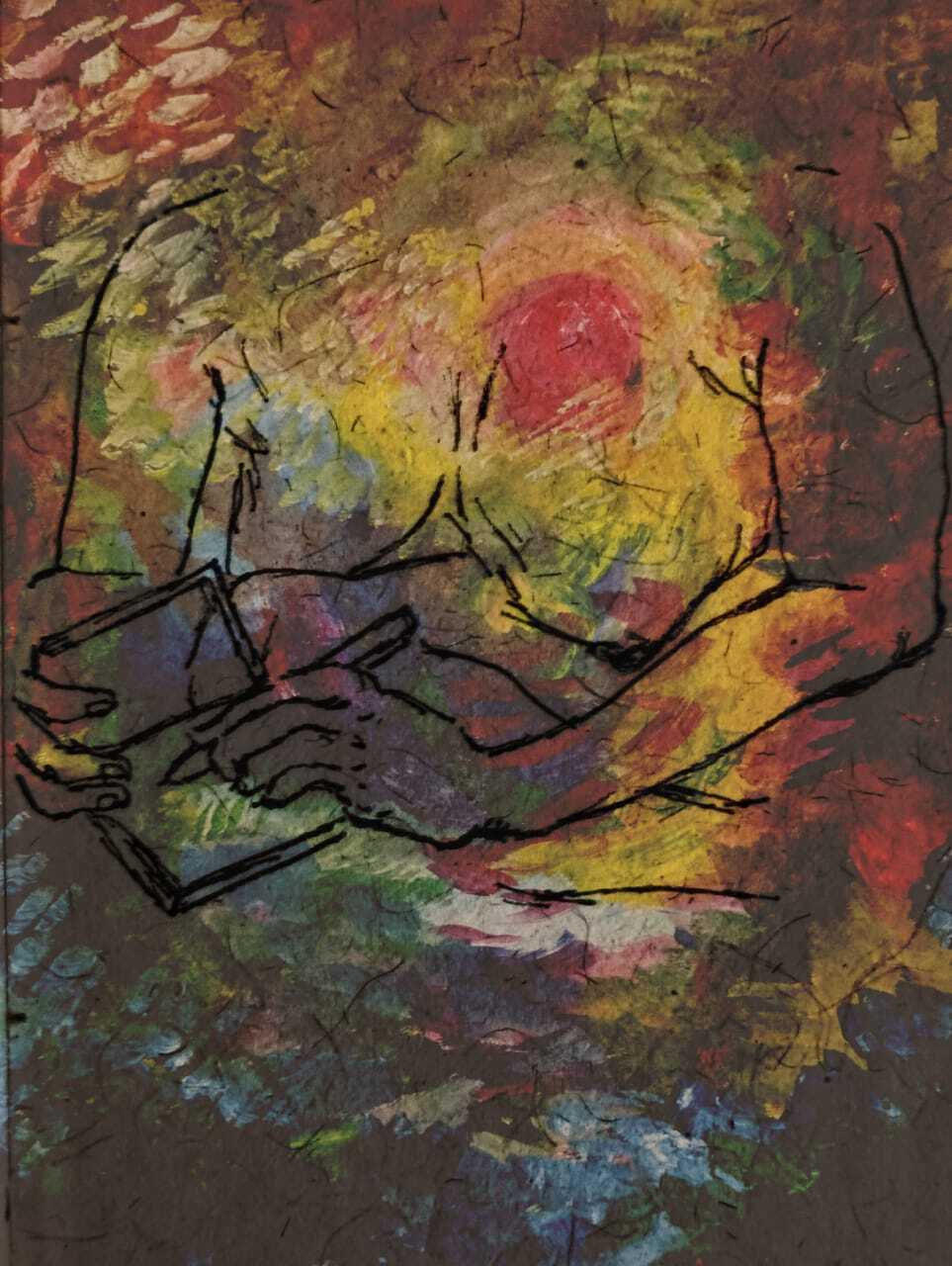
Kashmir: A Valley Between Guns by Saniya Naseem
In the cradle of mountains, where silence once sang,
Now echoes of sorrow and gunfire hang.
The chinar trees whisper of blood in the snow,
And the rivers run red with the tears that flow.

A mother waits by the shattered door,
For the son who will never return.
A father’s eyes search the empty sky,
As the living ask, "Why?" in silent prayer.

Two nations tear at your wounded heart,
Each claiming control, yet neither brings peace.
Borders are drawn where children should laugh and play,
And dreams crumble into dust in the harsh light of day.

Let not your beauty be wrapped in sorrow.
Let peace return with the breath of mountain air.
Not as a prize for the hands of power,
But as a land that remembers every name.
Saniya Naseem is currently pursuing a BA Honours in English Literature at Government Degree College, Pampore.
Mirror by Subhajit Sur
I stand before the mirror—
now—
and meet a face I half recall.
He once was fairer to the eye,
yet dark within his wandering soul.

Now, the glass does not just show
the lines upon my skin—
it whispers of the man I was,
and the man I’ve come to be.

Each time I gaze, I see
the quiet wars of thought and time,
the storms that shaped my mind,
the calm that followed pain.

Looking at the mirror—
now—
I find not ugliness,
but a change.
And perhaps,
a kind of peace.
Subhajit Sur is a 19 year old student of English Honours at Barasat Government College, West Bengal.
Searching for Words by Rehan Sarkar
I have no time to take care of myself, I am searching for the words, Ravaging libraries, dictionaries, Books, essays, newspapers, letters. I am listening to the sound of waves; I am watching the steps of nature.
I have troubled all the dead poets— Shakespeare, Spenser, Sidney— And all the ones who still write.
I have asked the birds,
I have asked the flowers,
Just to find something—words
Perfect enough to describe the masterpiece that is you.

But now I have realised: perfection is not for mortals,
Because God wrote this perfect poem, and only He can describe you—
Not with the words, not on paper,
Something that generations of poets, dead or alive, Or half alive,
Strive to grasp;
He crafted them into your smile, into your eyes.

Rehan Sarkar is a first-semester English Honours student at Maharaja Manindra Chandra College.He is deeply passionate about literature and creative writing, and is currently exploring poetry as a medium of expression.
The Symmetry of Spice and Spirit by Gopu Sunil
The mountains rise, the Sahya spine, a wall of ancient green,
Where mist clings to the silver fern and secrets lie unseen.
Yet down below, the valleys sigh, in rhythms soft and slow,
Where Kathakali dancers learn the ways in which the seasons flow.

November's dawn on Kerala Piravi, bright and clean,
A landscape born of myth, where a single state has been.
From the Kannur coast's bright beaches to the Kollam river’s end,
A tapestry of unity, where ancient histories blend.

The rice fields stretch, a mirror wide, to catch the tropic light,
And shadows move, not just of clouds, but of the Tharavad site.
The sloping tile of old homesteads, by jackfruit shade concealed,
Where stories told in Malayalam are forever revealed.

The kettuvallam glides upon the silent, winding lake,
And on its deck, the fisher sings for every dawn to break.
The Onam yellow blooms still grace the threshold, petal-laid,
A sweet reminder of a king whose promise will not fade.

Hear the chenda drum's fierce thunder, signalling the start
Of temple rites and festivals, deep-rooted in the heart.
The pepper vine, the cardamom, the spice trade’s fragrant thread,
Are woven through the handloom cloth, the lines of gold and red.

It is a birthday, yes, a time the history books define,
But more—it is the living pulse of human and divine.
The sea, the soil, the serpent god, the coconut tree's lean grace,
Are mirrored in the wisdom and the smile upon each face.

A culture nurtured by the rains, a spirit strong and mild,
Kerala, an emerald poem, perfectly reconciled.

Gopu M. Sunil is a first-year B.A. English student at Government College, Tripunithura, and an emerging poet who writes on themes of mythology and personal experience. He maintains a growing interest in literature, language, and critical analysis, and continues to develop his voice through both creative and academic writing.
The Pursuit of Moonlight by Keshar Singh
The pursuit of moonlight in the starless expanse,
The delirious moth flutters its wings in trance
Blinded by a passion it cannot resist
It approaches a deceptive glow shimmering in the mist.

The growing incandescence provides warmth;
To the moth, deceived by its own beauty.
It inches towards the fatal trap with faith
Inviting itself to its own death.

As it neared the all-consuming flame,
Somewhere towards the end, it knew the fate
Of that which held it captive,
Freed the moth only in ashes and light
While the sky remained starless, silent, and vast.

Keshar Singh is an English Literature student whose creative practice spans poetry, journaling, and visual art. Her work is marked by a nuanced engagement with the emotional and psychological landscapes of the human mind. Through sketches, reflective prose, and poetic expression, she seeks to articulate her inner experiences with clarity and authenticity.
“Abhi Na Jao Chhod Kar” by Stiti Ayona
Every evening, when the sun folds behind the neem tree,
and the last whistle of the cooker drifts through the lane,
the same ritual begins.
Baba in the kitchen, wipes his glasses, pretending that it is the steam that fogged them,
my sister hums softly—Maa's favourite Rafi song,
and me, setting out plates.
Three.
But somehow, there is always a fourth.

At first, we blamed the habit,
the body remembering what the heart cannot accept.
But soon, it felt like the table itself refused to forget her.
As if it had learned love from her hands
and did not know what to do with the emptiness.

She wasn’t just the one who cooked or called us to dinner.
She was the warmth that rose from the steaming rice,
the laughter that made burnt rotis forgivable,
the taste of ghee that stayed on our fingers long after the meal was done.

Now, Baba tastes the dal twice,
First for salt,
Then for memory.

He still folds his hands before meals,
murmuring words that sound more like her name than a prayer.
My sister still rolls out an extra roti,
As if someone might walk in
Late, but hungry.
And I... I still place that fourth plate,
One too many.
Sometimes I even pour water into her glass,
watch it catch the light from the diya on the shelf,
and then settle.

I once began to pack her things,
Believing that's how healing begins.
Her sandalwood box, her favourite Kanjivaram sarees, her glass bangles,
Silver comb still smelling of Jasmine oil.
But Baba stopped me.
“Let the house remember,” he said softly,
“some goodbyes are meant to linger.”

And so we let the table remember too.
We let it keep its ghost.
We let the silence sit beside us like an old friend.
Because love does not leave when the body does,
it lingers, in teaspoons and tea stains,
in the smell of ripened mangoes,
in the warmth that refuses to fade.

The house has learned to live like this,
and grief feels gentle here,
folding itself near the window,
Listening for footsteps that never come.
And when the night deepens,
the heart still murmurs in its own tongue,
"Abhi na jao chhod kar,
 Ke dil abhi bhara nahi..."
” Abhi Na Jaao Chhor Kar” is the title of a song from the Hindi film Hum Dono. The lyrics was penned by Sahir Ludhiavi and the song was sung by Mohammad Rafi and Asha Bhonsle. The phrase roughly translates to, “Do not leave me, for my heart is not yet content.”
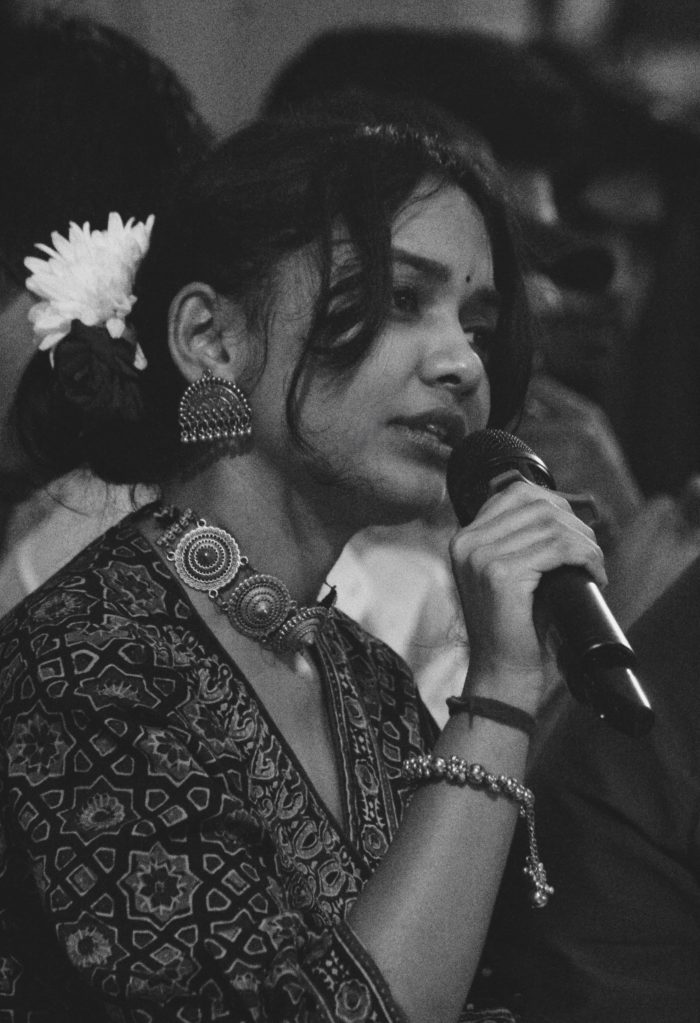
Stiti Ayona studies in Motilal Nehru college, New Delhi. She says that she is not seeking permanence, and yet every fleeting moment leaves a lasting impression on her.
If She Really Asks by Liza Sangita Das
She knows the name she gave to me,
but not the girl I’ve grown to be.
If she asked who I am today,
I’d lose the words, not know what to say.

She doesn’t know the dreams I dropped,
the fears I swallowed till they stopped.
How I’d been broken, how much I bent,
shaping myself to her content.

If she asked how I survive
in this world where I barely thrive.
Would I reveal the truths I hide?
Or keep them away, locked inside?

So, I keep the distance, keep my peace,
speak in a tongue she never reads.
A love unspoken, left unheard
I learned her silence word for word.
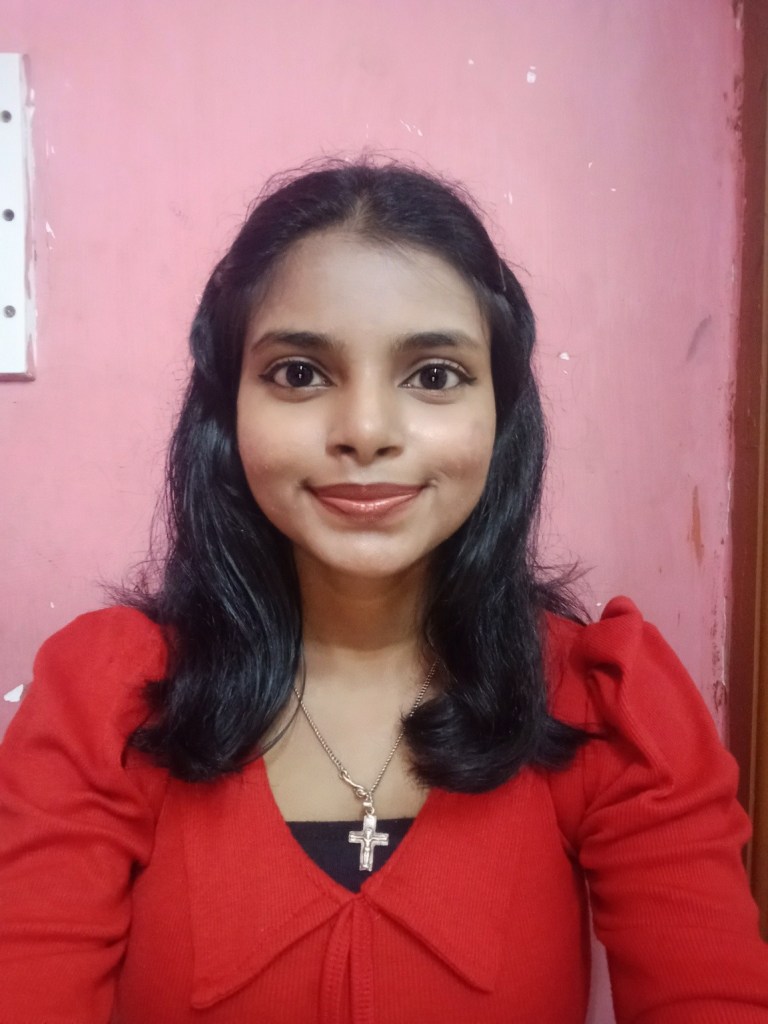
Liza Sangita Das is an emerging poet and the indie author of All That You Never Knew. She is currently pursuing B.A. (Honours) in English Literature at St. Paul’s Cathedral Mission College, University Of Calcutta. She tries to capture quiet emotions, unspoken thoughts, and the little moments we often overlook.
 Parcham Online
Leave a comment