Marked by What I Do: Body, Labour, and the Residue of Identity by Srinithya Pasupuleti
What ink is to a writer, what dust is to a construction worker, what mehendi is to a bride’s hennawali, and what sindoor is to a wife—is what paint is to an artist. There are certain marks that make our identity, that never fully leave us. In a society, people spend their lives always doing something, whether it is their work, responsibility, role in society, or their livelihood. These activities leave marks on them. Some exist internally—memories, passion, habits, and exhaustion, etc. Others become visible on the body itself: paint beneath fingernails, ink, stained clothes, creases formed through recurrence, and dust on palms.
These marks, stains, and traces, despite being visible, are often dismissed as temporary mess, accidental residue, or something that needs to be cleaned and removed. However, they reveal a certain intimacy between a person and the work they repeatedly engage in. The subtle intimacy between the art and the artist is the residue it leaves behind.
Marked by What I Do follows from this concept—the labour that we do leaves behind evidence. Not only emotionally or psychologically, but physically too. In this essay, the body of the model becomes the archive of her identity, repetition and her routine.
As a girl I am consistently engaged in painting, working with paints and art work. I identified that my work rarely stayed with the piece I’m working on. My work always has a way of not confining to the canvas and marks me as residue on my body, hair, clothes and surroundings. The painting also followed me into the daily, ordinary moments in life. From tiny accidents to a constant identification mark—they became something people started identifying me by. They reflected not only the temporary mess on my clothes but also a process of becoming.
This essay underscores the idea that my body carries everything that it repeatedly encounters. The photos explore these traces in various places on my body and show how they become a part of my identity. The materials I used in this photo essay were elements that I constantly used or engaged with, forming a personal relationship with the body of the self.
The stains in this project are not treated as accidents or imperfections. Instead, they are reframed as intimate records of lived experience. What is normally considered messy or dirty becomes expressive and human. The residue itself becomes meaningful because it reveals contact between the artist and the act of creation. This transformation of residue into identity forms the conceptual core of the essay. The images portray this transformation.
The body of the self plays a critical role within the framework of this project. Traditionally, art is separated into clear categories: what the artist creates, the tools that are used, and the canvas that captures the tangible work. This project intentionally collapses those distinctions. Paint spreads beyond the surface of the artwork and onto the body—blurring the boundary between creator and creation. The body no longer exists outside the artistic process. It becomes absorbed into it.
Different parts of the body carry different relationships and connections to labour. Hands suggest direct creation; legs and feet suggest movement, endurance, and physical immersion; paint embedded in hair suggests that work continues to linger long after the act of creation ends. Clothing absorbs evidence of routine, while skin becomes a temporary canvas recording each interaction with material. Through this, the body transforms into evidence.
Residue is therefore not only physical matter; it is the visible consequence of repetition into a messy and embodiment transformation. Paint no longer functions merely as a medium placed onto a canvas; it becomes integrated into skin, movement, gesture, and appearance. The artist gradually becomes the canvas.
The visual language of paint serves as a metaphor for all forms of residue that artists leave behind. Every act of creation alters the creator in return. Every repeated gesture leaves a mark. Over time, these marks accumulate until they become inseparable from the individual carrying them. The final intention of this essay is therefore not to document artistic practice alone, but to reveal how deeply the things we devote ourselves to can inhabit the body, shape perception, and redefine identity itself.
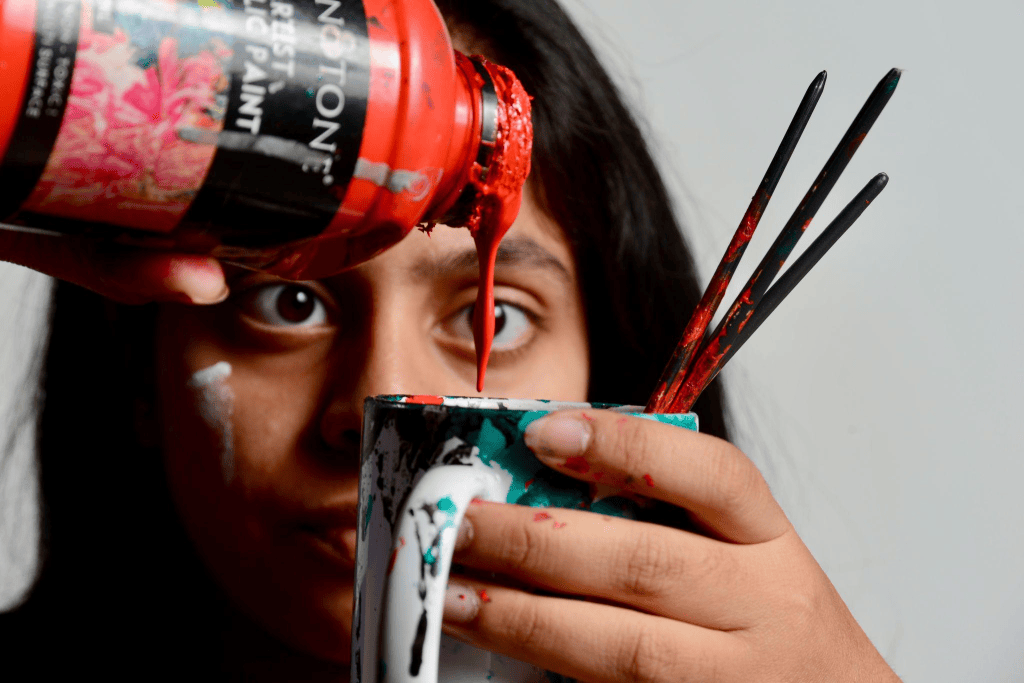
The act starts before the stains spread onto the canvas or before the stain spreads across the entire body and clothes. It shows the moment of near contact. The start of the painting. The act itself has not fully unfolded yet, but its consequences already feel inevitable. Here, the paint is caught mid-air between containment and release into the cup, reflecting the intimate space between an individual and the work that will eventually consume them. The gaze of the subject is fixed, almost confrontational, as though aware that once creation begins, there is no clear separation between the artist and the process anymore. There are already faint smears spread on the skin. The story has already begun—a process slowly taking hold. It represents immersion. The moment of pouring color, intentionally, isolates this moment. The suspended drop becomes a metaphor for becoming—a transition from intention into embodiment—before the artist slowly begins to resemble the work she creates.
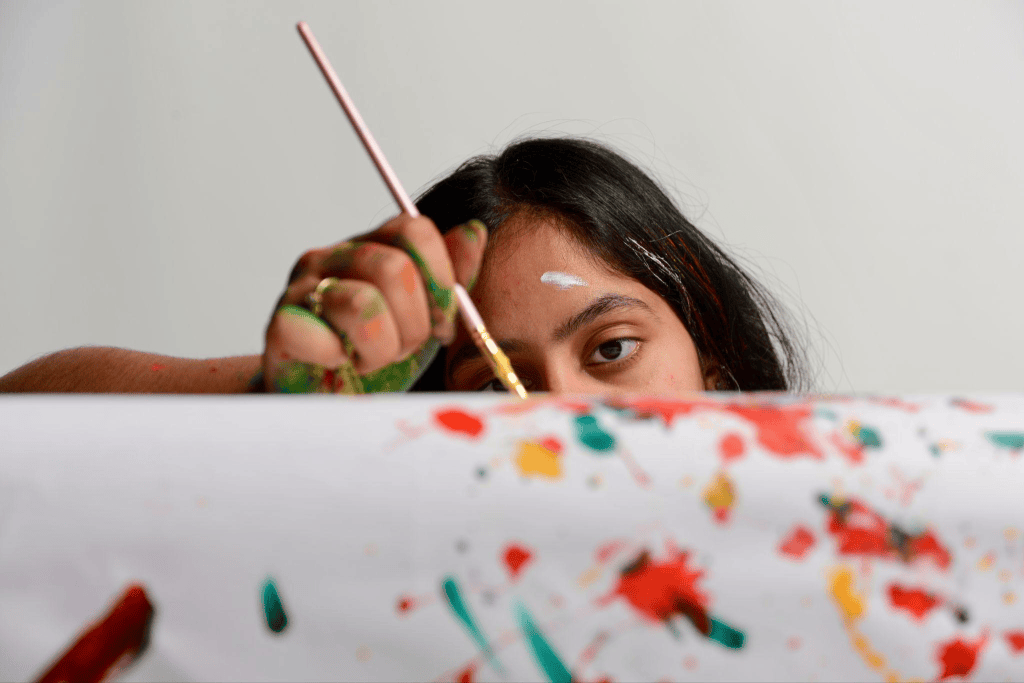
The artist slowly loses the outside world, as she focusses into her painting. Yet even while covered, the subject emerges through the work itself. The painting becomes blurred despite covering half the frame. Hand already saturated with paint, reveal the growing relationship between the artist and the process consuming her. The canvas dominates the composition, yet the eye quietly anchors the image. Creation is never detached from the individual producing it. Even when physically hidden, the body continues to reveal itself through residue. The subtle marks on the face and traces within the hair indicate that the process of work embodying the artist has already begun to take place. The focused gaze reflects a kind of devotion and concentration that comes with repeated engagement. Painting here feels less like an action and more like a state of being. The skin appears to absorb layers of colour. The body slowly recedes behind the artwork.
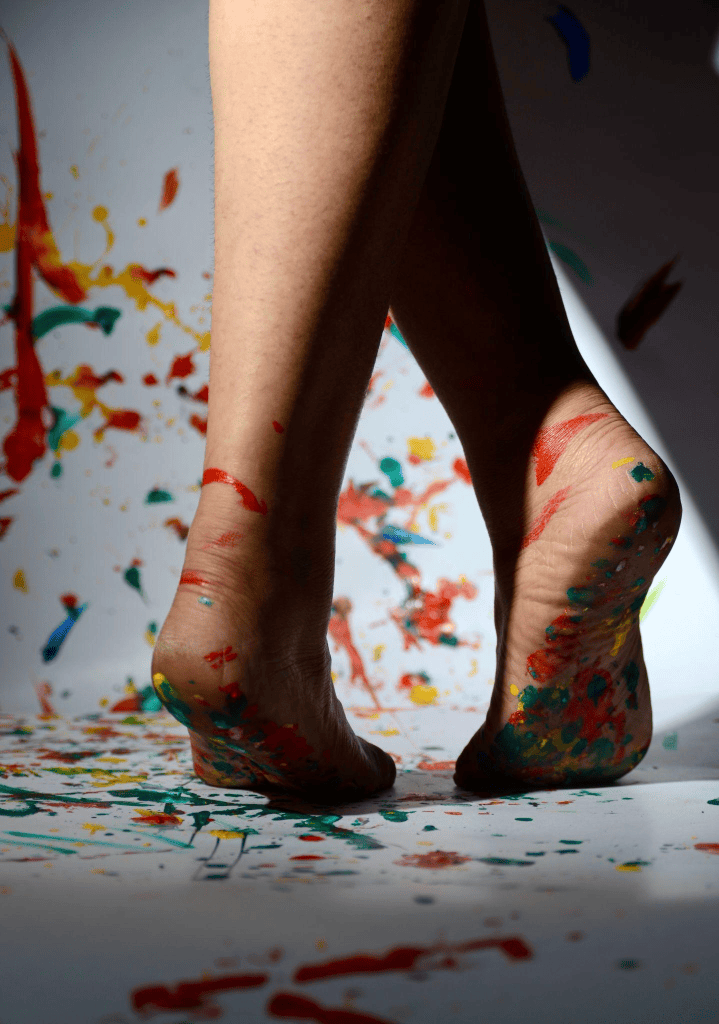
The feet represent support, movement, balance, and endurance—the often unnoticed physical labour behind creation. Unlike the hands, which are traditionally associated with painting, the feet suggest that the entire body participates in the act of making. Paint exists simultaneously as a stain and a trace. The marks on the soles do not appear accidental; they resemble accumulated evidence of interaction. Every step, takes leaves behind colour, while every other step gathers more of it in return. The body and the surface begin affecting each other continuously, making it complex to identify where the artwork ends and the artist begins. The body is caught between contact and departure. Paint is embedded on the skin. Traces of labour continues to follow the body long after the act itself is complete. There is an intimacy in paint getting on a parts of the body usually hidden, covered or ignored. The soles of the legs carry weight quietly, much like repetitive labour itself. The image transforms them into visible records of immersion.
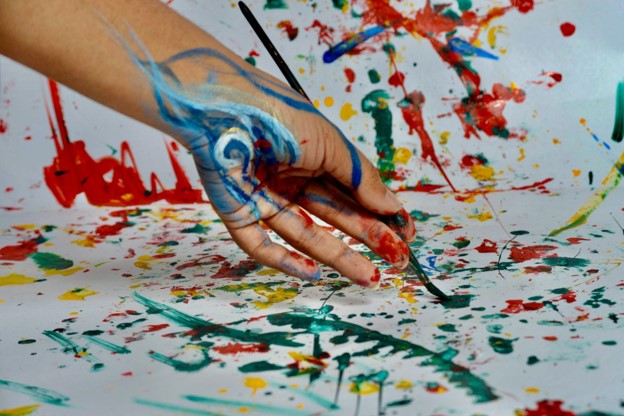
This image isolates the hand, transforming it from a tool of creation into a surface being shaped by the process itself. The paint spread across the skin—almost as though the colour is seeping through the body rather than simply resting on top of it. The hand no longer feels separate from the medium it controls. Instead, it begins resembling an extension of the painted environment surrounding it. The background remains covered in uncontrolled splashes, drips, and scattered marks. The hand carries evidence of labour in the same way the canvas carries evidence. The artist and the artwork begins to physically merge.
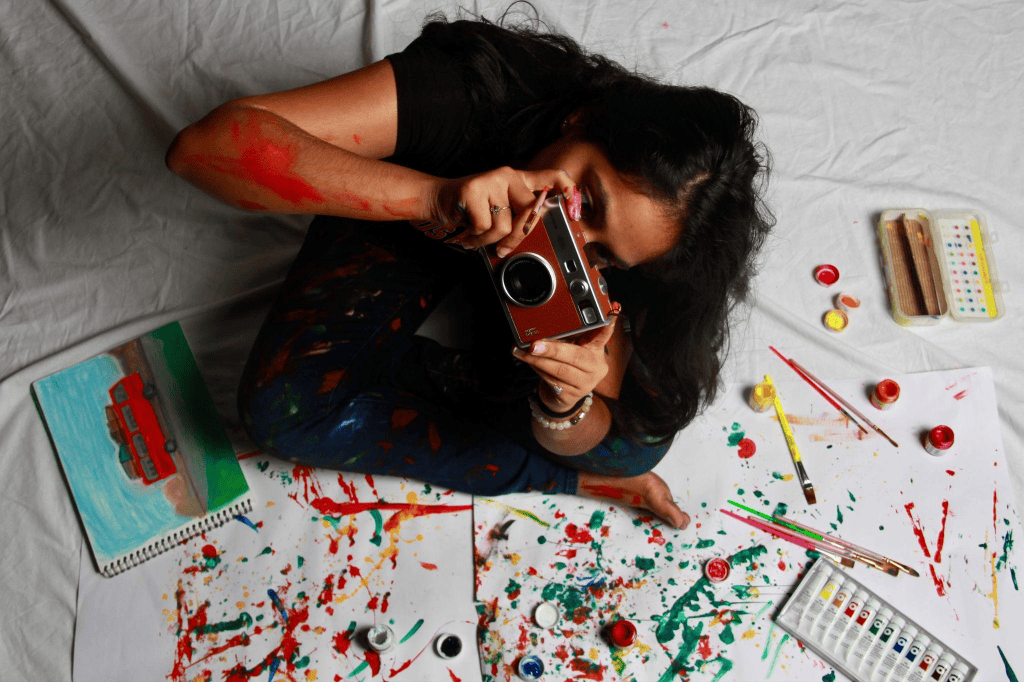
The subject sits surrounded by paint, brushes, unfinished marks, and scattered materials while holding a camera toward the viewer. Although she is attempting to capture something external, she remains entirely consumed by the visual residue of her own work. There is a contradiction between documentation and immersion. A camera usually suggests distance, the ability to observe something objectively from outside. Yet this image removes that separation completely. The subject cannot step outside the process because the process exists all around her. Paint covers her body, surrounds the floor, stains the environment, and frames the act of looking itself. The direct positioning of the camera also creates an important reversal. This creates a layered relationship between artist, subject, and viewer, reinforcing the idea that identity itself is shaped through interaction and perception. By this stage in the essay, the residue of work has fully occupied the space around the body. She has become inseparable from it.
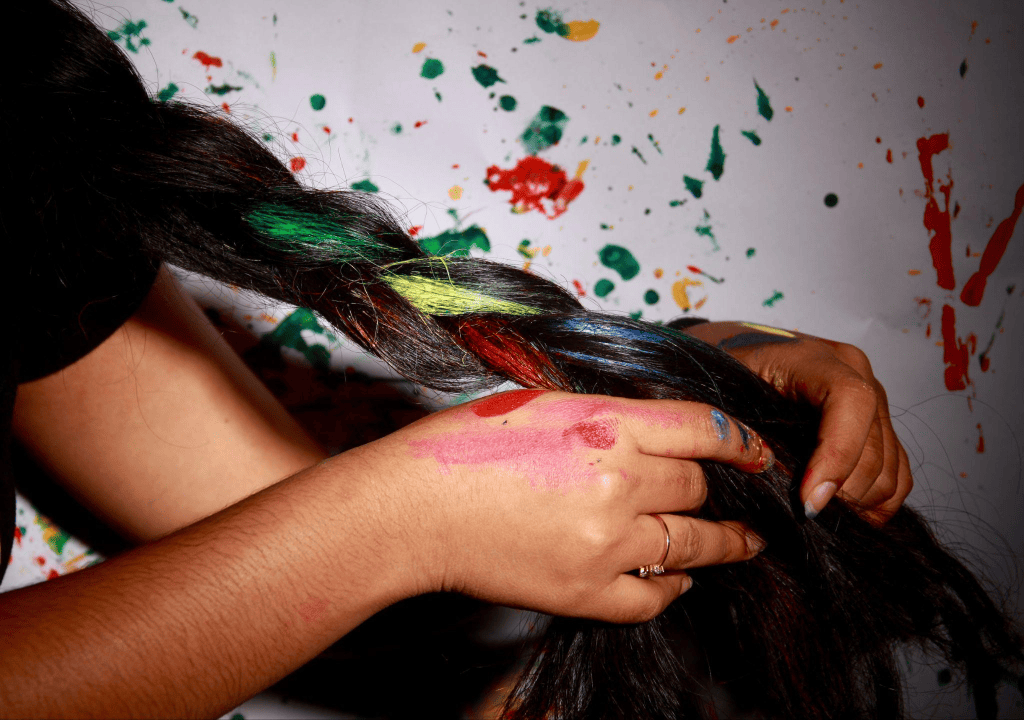
This image captures a quiet moment that exists outside the act of painting itself. She tying her hair, an ordinary, habitual gesture performed almost unconsciously after work. Yet even within this moment of routine, the residue of creation continues to follow her. Paint remains embedded within the strands of hair, woven into movement and texture as though the process has slowly molded itself into her body. Hair is often associated with identity, self-presentation, and ritual. By allowing paint to spread through it, the image suggests that artistic labour no longer ends once the canvas is abandoned. The work lingers, attaching itself to the most intimate and everyday parts of the self.
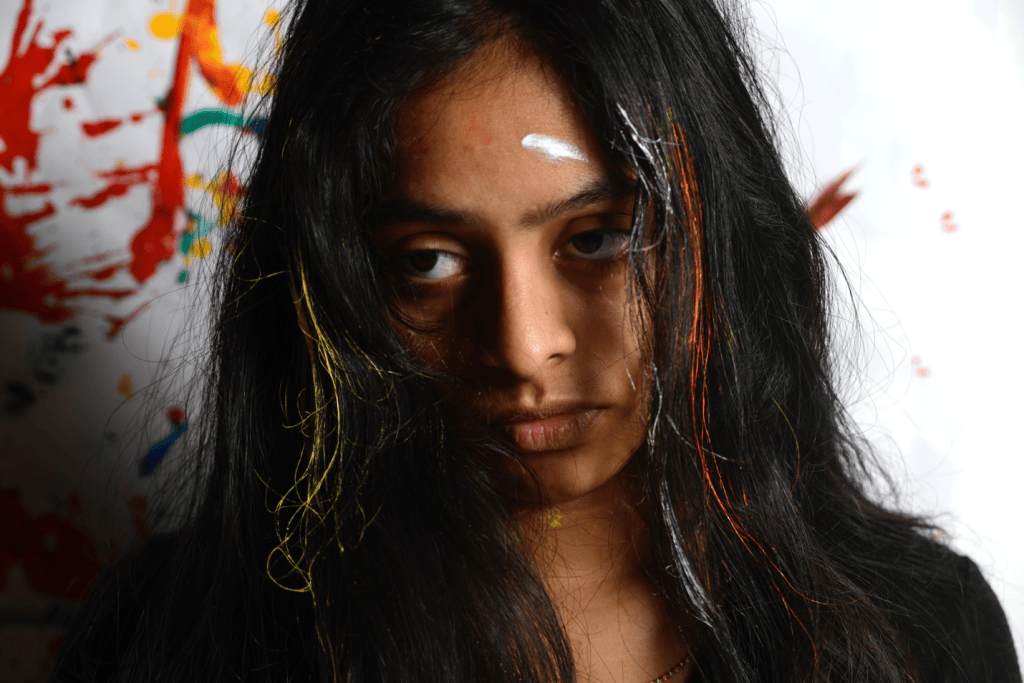
She has accepted her residual identity as a painter who is part of the painting. These images capture a moment of recognition—the point within the narrative where the artist begins to understand that the process has moved beyond the canvas and settled into the self. The paint spread across the fingers and woven into strands of hair suggests that creation has followed her beyond the act itself. She is confronting a transformed version of herself. Paint remains subtle across the face and hair, but its presence changes the portrait entirely.
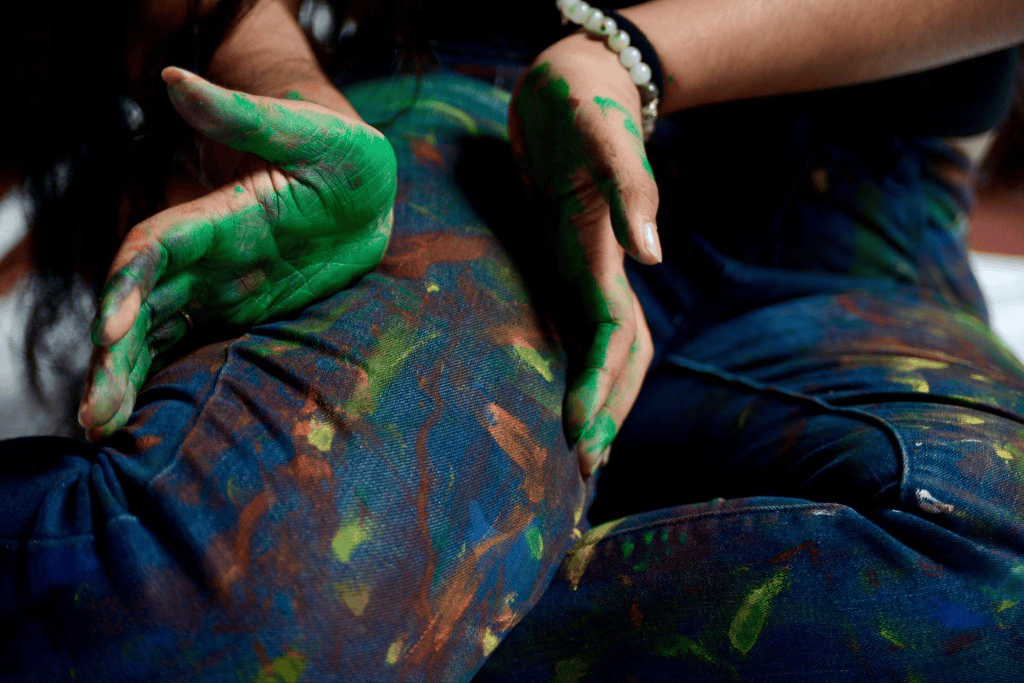
This image shifts attention toward paint-covered hands wiping themselves against denim jeans. The clothes no longer function as something separate from the act of painting; they begin absorbing evidence of labour alongside the body itself. The wiping motion does not appear deliberate or performative. Instead, it feels habitual, suggesting repetition through routine. Over time, the denim accumulates layers of colour, stain, and contact until it starts resembling a canvas of its own. The jeans become an archive of gestures. The image also reflects the idea that residue travels beyond the artwork. It spreads onto fabric, skin, posture, and movement, embedding itself into the artist’s daily existence. The body creates the work, but the work begins shaping everything around it.
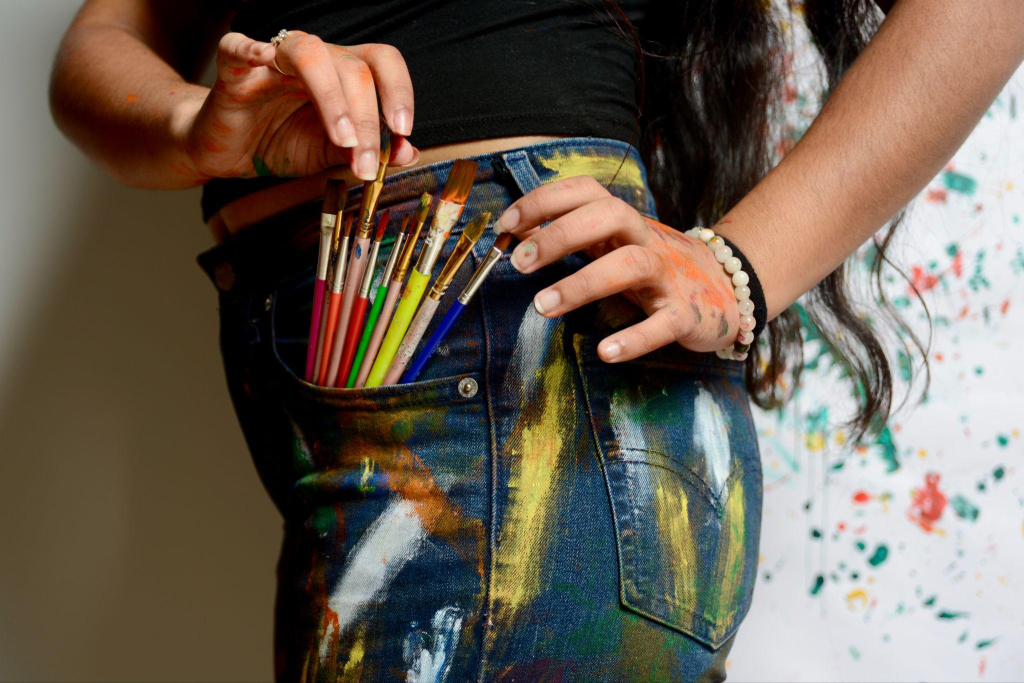
The brushes emerge directly from paint-stained denim, as though the tools themselves have become embedded within the body and clothing of the artist. Rather than existing separately in a studio space, they appear integrated into her physical presence. The jeans carry smears of colour, fingerprints, and layered stains, suggesting that the process of creation is still unfinished and actively unfolding. Creation is never fully complete, only paused between gestures. Even in stillness, the body continues carrying evidence of work. Brushes are traditionally viewed as tools external to the artist, yet here they feel almost like extensions of the body itself. The artist no longer simply holds the tools; she wears them. Labour no longer surrounds the artist. It has inhabited her.
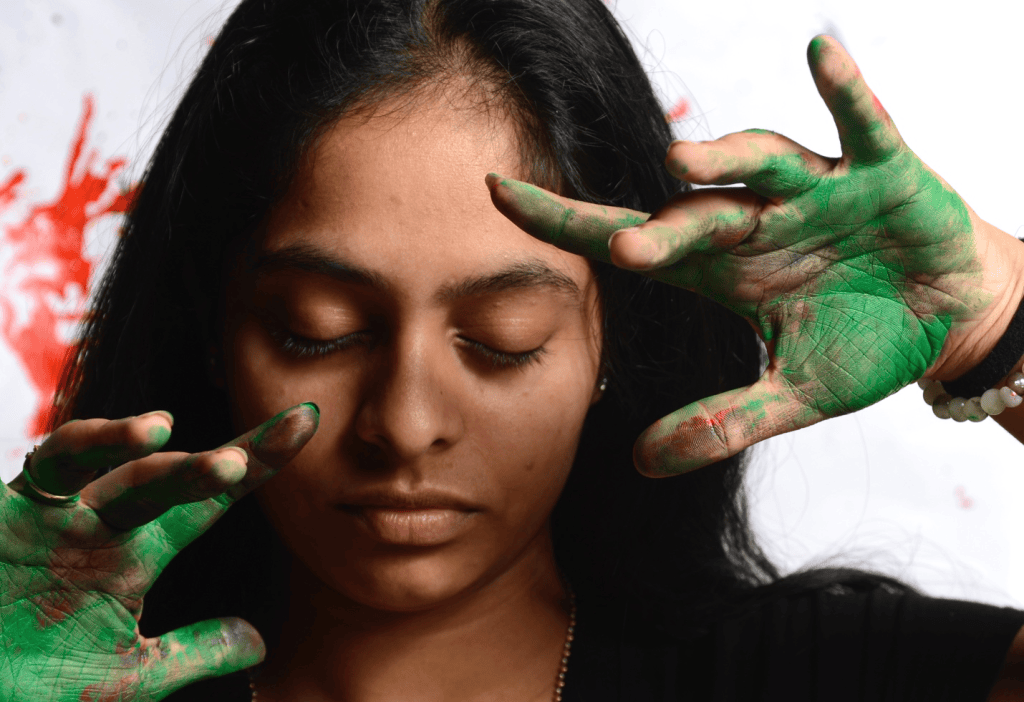
This image serves as the culmination of the essay’s central idea: the moment where the artist fully begins to see herself as part of the artwork rather than separate from it. Creation no longer exists externally. The self becomes the surface. The important thing about this image is its quiet intimacy. The act of painting the face feels careful and almost ritualistic, suggesting complete transformation and acceptance that the paint is part of her rather than decoration. The body is no longer passively marked by the process; it willingly enters it. The marks on the skin no longer resemble residue alone. They begin functioning as extensions of identity. Paint shifts from being evidence of artistic practice into something integrated with her inseparable embodiement. The process of creating continuously recreates the creator in return.
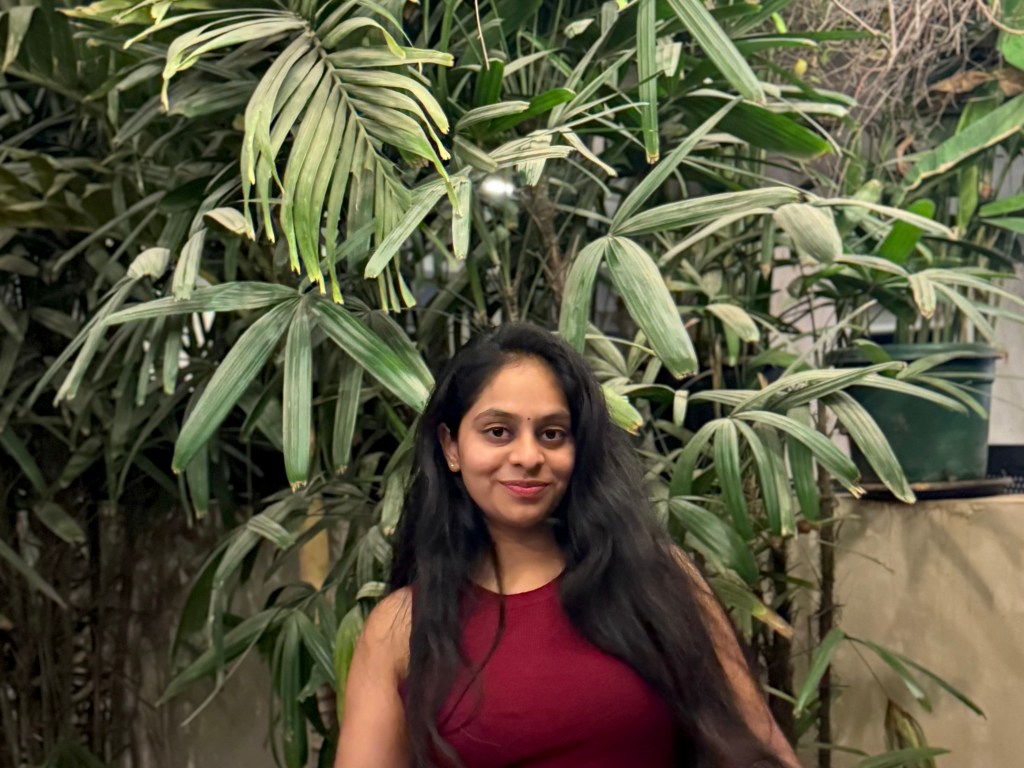
Srinithya Pasupuleti, is a third-year Management Studies student at Shiv Nadar University. Photography has always been something she has been interested in.
Artwork by Edward Michael Supranowicz
The pieces are digital paintings done on GIMP as a blank digital canvas, using variations on traditional painting methods.
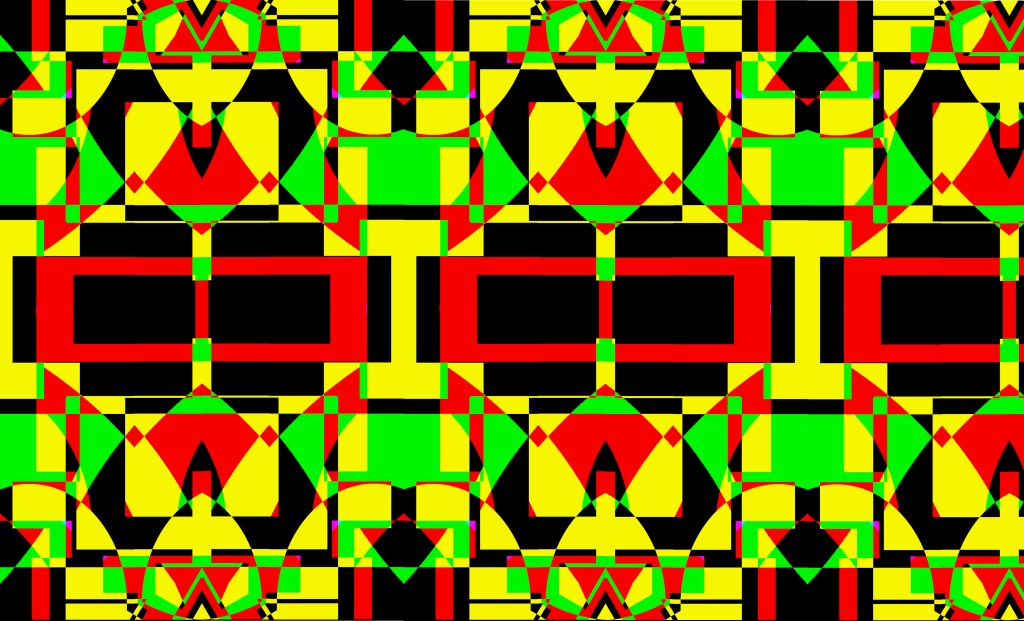
“Dealing From the Bottom of the Deck” indicates willful betrayal, breaking of social and moral bonds, wanting to be the “winner”.
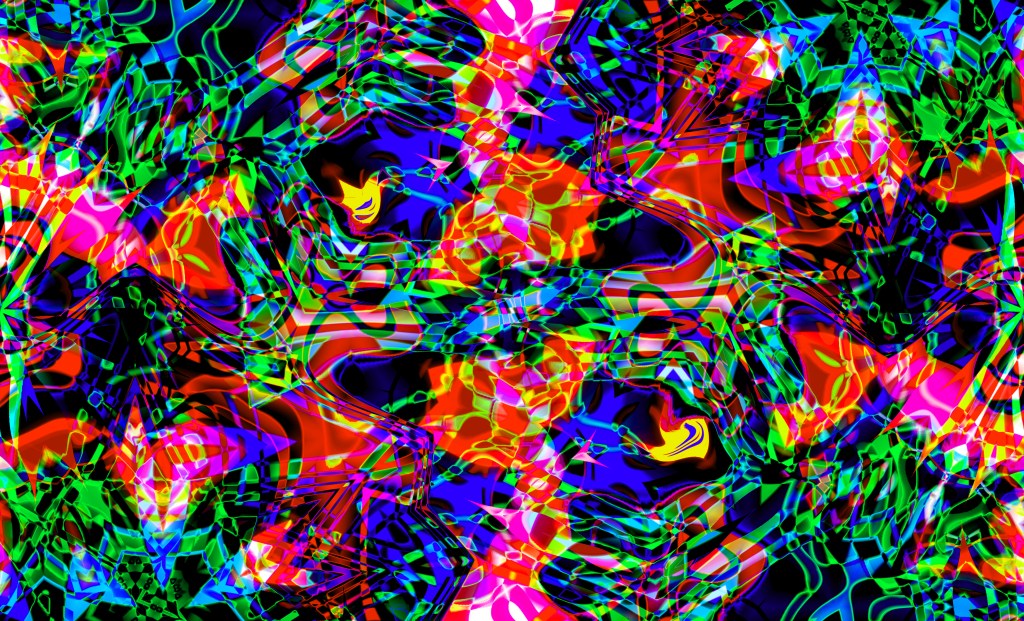
“Sudden Unexpected Storm” is the nauseous, uprooted, lost feeling when the one betrayed realizes the betrayal, but may also be experienced by the betrayer depending on their sense of guilt, and one can also be betraying oneself without any specific social interaction.
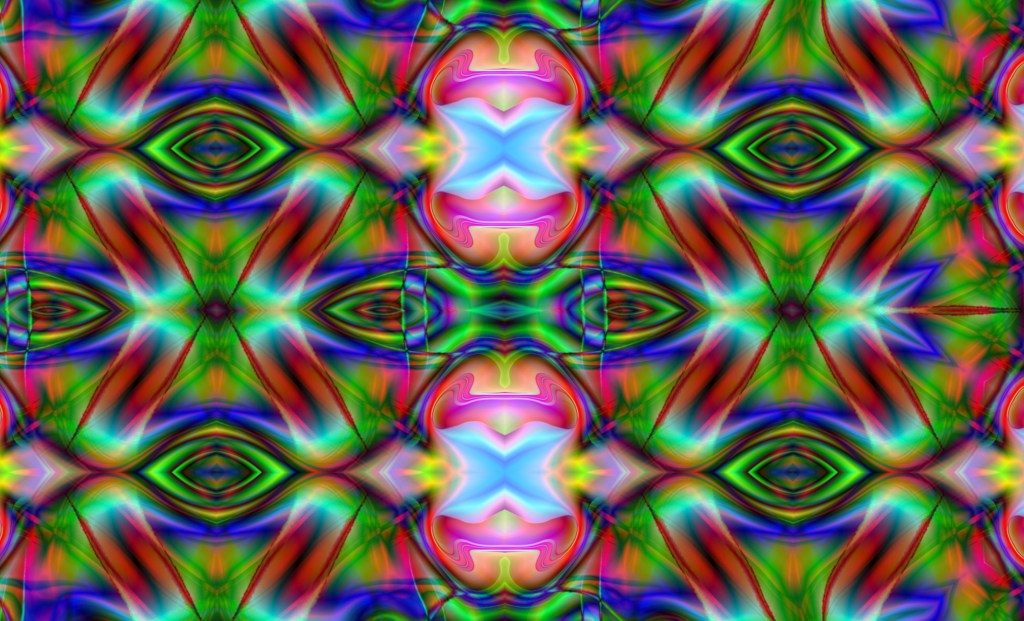
“And the Sun Cried Green Tears” is meant to suggest that betrayal can alter one’s entire life outlook, change their perceptual acuity to the point that there seems to be no reality, or at least not one one can trust.
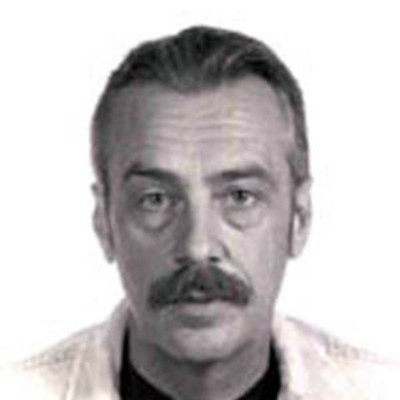
Edward Michael Supranowicz is the grandson of Irish and Lithuanian/Ukrainian immigrants. He grew up on a small farm in Appalachia. He has a grad background in painting and printmaking. Some of his artwork has recently or will soon appear in Fish Food, Streetlight, Another Chicago Magazine, Door Is A Jar, The Phoenix, and The Harvard Advocate. Edward is also a published poet who has had over 700 poems published and been nominated for the Pushcart Prize multiple times


Leave a Reply