Short Fiction: Under the Shade of the Neem Tree by Anu Shukla
By the time they heard the wind whisper her name, it was already too late.
In the sleepy village of Sonapur, surrounded by mustard fields and red earth paths that curled like old braids, lived a little girl named Meera. There was little that set Sonapur apart from a hundred other villages—mud houses, buffalo carts, evening radio tunes—but to Meera, it was her entire universe. And in that universe, the centre of everything was a crooked, fragile neem sapling that she planted herself when she turned seven.
It was her birthday. Her father, a farmer with callused palms and a tired but loving face, gave her the sapling wrapped in a damp burlap cloth. “This will be your veer*,” he said with a smile. “It will grow strong like you.” The tree was barely taller than her knee, thin and trembling against the steady village breeze. But Meera saw something more: she saw a friend, a listener, and a guardian.
She dug into the soil herself with a borrowed trowel, determined hands burying roots deep as her small arms would allow. She watered it every morning with her chipped tin cup, whispered her secrets to its baby leaves, and sang lullabies to it under starlight.
As Meera grew, so did Veer. Each year, the neem’s branches reached higher, its shade spreading wider. By the time she turned ten, Veer was well on its way to becoming the centrepiece of the courtyard—a towering emerald guardian. Meera tied ribbons to its branches, carved initials in its bark with a rusting nail, and occasionally left behind bits of homemade laddoos**, convinced the tree might like sweet things too.
She tied an old saree to its arms and made a swing. She read her schoolbooks to it, practiced poetry she’d memorized under its shade, and once cried beneath it when her friend moved away. No matter what storms the world brought, Veer stood tall. And it made her feel tall too.
But by the time Meera turned fifteen, storms began to arrive not just from the skies, but from shadowy corners of the village.
It began with uneasy silences—men lingering just a little too long when she passed, lips curling with unspoken thoughts. The same boys she’d once chased barefoot through the dusty lanes now stared at her differently. Their laughter at the tea stall turned more sinister when she neared.
Still, she tried to keep smiling. Meera was taught by her mother that silence is the ornament of a girl and is praised by all as virtue. So, she focused on her books and her Veer, the neem tree. Meera acknowledged that the world might be changing, but her Veer remained an anchor of quiet strength in the centre of her chaos.
Then came the summer mela.
She wore her favourite yellow salwar that evening, her bangles chiming delicately with each movement. Amusement resonated across the fairgrounds as lanterns oscillated and music resounded, merging delight with the aroma of roasted peanuts and temple incense.
She departed late, opting for the shortcut home—a narrow dirt path that meandered along the village’s periphery, flanked by twisted trees and dilapidated walls.
That was where they cornered her—three village boys, half-drunk on stolen country liquor and emboldened by the hour. They were faces she knew. Names she grew up answering in games and prayer recitals. But their eyes had turned feral. Their hands didn’t ask. And the shadows swallowed her screams.
By the time she made it home, her dupatta was missing, her braid half undone. Her skin bore dust, scratches, and shame she didn’t earn. Her voice had folded up into her chest, like wings crushed before flight. Her mother asked why she was late, but Meera only stared out at the neem tree, tears sliding quietly down her cheeks. But her dishevelled conditions told her story to her mother who pleaded her to keep her silence as she would be blamed for what happened.
Days passed. Nights became heavier. She no longer spoke to Veer. The swing hung still. The leaves rustled in the wind as if whispering her name, unsure whether to call her back or let her go.
The shame began to fester—not in the eyes of those who harmed her, but silently in her own. The village, as always, rarely questioned men’s behaviour but quickly studied every step a girl took. And so, her silence became her only refuge. Rumours stirred. Her body, her story, discussed like a stain over morning tea. The tree watched it all.
One early morning, before even the hens stirred, Meera stepped out into the courtyard. The world was still silver, dipped in mist. She climbed Veer, barefoot and expressionless, like she knew every knot in its trunk and every creak of its mighty limbs.
She tied her school scarf to the branch she had once swung from—and let herself go.
When the village woke, it was already too late. Her mother now couldn’t hold the secret and wailed out to the whole village as to why Meera took this step.
Shock swept through Sonapur like a wind that had forgotten how to howl. Her neighbours wept. Her classmates stared blankly at the ground. The same boys stayed silent — one even lit a candle at the base of the tree. The police report was short. Nothing was pursued. The village moved on.
But one thing didn’t.
Veer—the mighty neem tree, keeper of Meera’s love and life—began to change. Slowly, without announcement.
Its leaves withered, not from drought but from despair. Green faded into yellow. Yellow into brown. Birds left its branches. Children avoided its shadow.
The elders first blamed a borewell leak or maybe a fungus underground. Rituals were performed. Holy water sprinkled. Someone called a priest from the neighbouring district. But the branch that once held Meera never swayed the same again.
The swing rotted. The trunk cracked. The once-living memory of her joy shrivelled quietly, season by season.
Despite every attempt to revive it, Veer could not be brought back. Eventually, it was declared a dead tree.
Someone suggested cutting it down, but no one had the heart to swing that axe. It stood in silent protest—bare, silent, and fiercely unmovable.
Only then did the village truly understand.
When a girl’s dignity was lost, and her pain unheard, something died in all of them. They had not just lost a child—they had lost a mirror, a song, a small light they hadn’t known they needed.
The neem tree did what the village did not – it absorbed her story. And when she was gone, it bowed to her grief, and faded into silence, standing as a scar none could hide.
Now, every year on Meera’s birthday, a handful of girls gather under its brittle branches. They light small diyas and offer marigolds. They don’t say much. They don’t need to. In their silence, there’s remembrance. In their silence, there’s rage. And above all, sorrow—for what was lost, for what could have been saved.
If you listen closely, when the wind swirls through the dry branches of Veer, you might still hear her voice. Not breaking with pain—but young, free, laughing, and full of life.
As it should have always been.
*brother
** sweets

Dr. Anu Shukla is a Professor of English at Chaudhary Devi Lal University, Sirsa. A scholar of Indian English literature and postcolonial studies, she has authored and edited several critical works and numerous research papers. Alongside her academic writing, she also writes fiction, with her stories appearing in literary anthologies and magazines.
The Forest Remembered ( Short Story) by Urmi Chakravorty
The forests do not forgive. Or forget. They heave and sigh like a great living beast. Tides, tigers, tears, and truth – the Sunderbans swallow them whole.
The numerous distributaries of the mighty Ganga, Brahmaputra and Meghna snaking through these saline marshes of south Bengal are dotted with dense mangrove swamps. The mangroves stretch their twisted limbs over brackish water, cradling mud and memory alike. An environmentalist’s delight…a veritable gold mine for the tourism industry!
The village of Sonakhali had the Matla gushing by it on one side, and the dense green forest wrapping it up on the other. Matla, or the drunken river, often lived up to its name, either during the relentless monsoons or whenever the tides rose high. Intoxicated by its own power, it surged ahead with unbridled force and fury, sweeping away everything in its path.
Challenging the river on its home turf lived 35-year-old Rinu Mondol — masterni (teacher) in the elementary school by choice, a honey-harvester’s widow by destiny. Rinu had a voice that could command silence in a room full of animated, noisy children. But at home, she rarely spoke. Her eyes, black as monsoon clouds, had not cried since the night her husband, Subol, failed to return after work. Subol had ventured deep into the forests to collect honey. The denser the forest, the better the honey, they had advised. And greater the chances of being mauled, was a home truth Rinu learnt the hard way.
A tiger had taken him, they said. There had been no body, no bloodstains — only his upturned boat, redolent with the scent of crushed mahua flowers he always carried in his shirt pocket. Initially, Rinu refused to mourn. Or observe the funerary rituals. She simply stared at the boat in disbelief.
What if he had been washed away by the tides? Wouldn’t it take days for Subol to find his bearings and then swim back home?
She had repeatedly requested the village elders to take her to the site of his ‘disappearance’ as she called it, so she could look for tell-tale signs. But no, that would anger Ma Bonbibi, they declared — the reigning goddess for Hindus and Muslims alike.
After Subol, Rinu’s only companion was her scrawny twelve-year-old son, Mithu – a child with more questions than answers. Life, for them, was mundane. And monotonous. Like the meal they consumed every night — steamed rice and runny lentils tempered with turmeric, salt and green chilli. If they got lucky, Rinu threw in some diced vegetables, which swam in the pools of lentil. Lunch, of course, was better. They would have fish, shrimp, crab – whatever she managed to haul from the periphery of the saline river.
Salary from the government school was paltry and sporadic. Rinu would consider herself fortunate if ever it was disbursed on time.
The walls of their hut were regularly smeared with fresh clay that Rinu fetched from the riverbanks. That, and the thatched roofs made of dried pili grass and golpata (palm leaves), helped keep the huts marginally cool in the hot, humid summers. Every night, she gently twisted the knob of the kerosene lantern and lowered the flame until only a tiny speck of fire remained, bobbing in the sparse air inside the hut. She never kept her home in complete darkness. Some nights, she would wake to the sound of dry leaves rustling, a sound like breathing — or was it a predator on the prowl?
“Ma, do you think Baba has become a part of the jungle?” Mithu asked her on certain days.
She would respond with silence, occasionally petting him with calloused fingers. Fingers that held the coarse chalk stick in school as deftly as the scythe she kept hidden under their frayed coir mattress at home. The latter gave her a sense of assurance and courage, qualities that seemed to have ebbed out of her ever since Subol died. Grief, here, was not worn like silk — it was absorbed like saltwater into skin and soil. And fortitude was a virtue not inherited but acquired, largely through experience and anguish.
****
Each morning, Rinu ventured out to the banks of the Matla to haul up her day’s quota of fish or crab. She walked the slippery embankments in a hitched-up sari, past women with clay pots queued at the partially broken village handpump, past men patching boats with tar and prayer. There was a hush every time she passed. Conversations stopped mid-sentence. An awkward silence followed, along with a sense of impatience, as if they were waiting for her to leave. Moments like these gnawed at her heart and demanded answers. She had none.
All of us here live in the throes of danger. We all pray to the same goddess. But why is it that when our husbands go out into the forests, we are the ones who have to placate the goddess? We are expected to lead a pure, austere life, praying for the safe return of the men. And God forbid, if any of them falls prey to a tiger, we – the wives – are branded ‘impure’ and ‘sullied’.
Parul’s husband died of a snake bite in the mangroves. Sakina lost her man to a deadly crocodile attack down the creek. They’ve not been labelled unchaste. How is a tiger attack any different? Why punish us for something we have no control over?
Rinu was gifted several monikers after Subol’s death – evil, unholy, witch, bad omen, shwami khejo (husband eater). She lapped them up as badges of honour, to add some humour to her otherwise bleak life.
****
School started later in the morning. The schoolhouse leaned like an old drunkard on bamboo stilts, fighting the tide that chewed at its legs every new moon. Every year, the water rose a little higher. And every year, they rebuilt parts of it with mud, jute, thatch, and faith.
Rinu taught numbers and language to the handful of children who were inclined to learn. A few were coerced into attending by parents who dreamt of a better life. She cautioned the children never to mock the forest gods. Her lessons often drifted beyond textbooks. She told them stories of Bonbibi who protected the faithful from tigers and demons. She taught her students to read weather patterns in cloud bellies, to predict floods by the moods of frogs.
But beneath her careful composure, something stirred. She had grown tired of waiting — waiting for the monetary compensation that never came, for the forest to give back what it had snatched away mercilessly.
****
One morning, a rumour fluttered into Sonakhali like a monsoon bird. A team from Kolkata was coming — academicians, NGO workers, researchers, and even a foreign journalist. They wanted to understand climate resilience and rural sustainability. They wished to decode the mystery of the mangroves, where the only soundtrack was the drone of the cicada. Where the whisper of the wind often shielded the heavy, padded footfall of the striped predator. The villagers grumbled at first, but curiosity swelled like a spring tide. Outsiders in Sonakhali were rare. Outsiders with cameras and charisma — rarer still.
Rinu was asked to welcome the visitors and show them around.
“You’re the only one who manages to speak like the townspeople. Do throw in some English words when you talk, they’ll like that,” said Madhob, the pradhan (village head). “Besides, you’re a bagh bidhoba, a tiger widow. There’ll be an instant connect, a wave of sympathy,” he added, with a glint in his eyes. “Who knows, the government babus might finally push for our village grant and the tiger victims’ compensation?”
Rinu didn’t want to perform grief like theatre. Hers was a loss that had no closure. And way too personal to milk it for gains. But something inside her shifted. Maybe if they heard her story, they’d help build a better flood wall. Maybe they’d fix the leaking handpump. Or maybe, she just wanted to be seen — seen as more than a widow, more than a cautionary tale. As someone who could tell the outside world about their lives, their fears, their small dreams and their big disappointments.
****
One morning, they arrived like a tableau of men and metal — boats gleaming unnaturally against the muddy river. Among them was Helena, a woman with sharp eyes and a notebook, who wrote for an international tabloid. She asked Rinu if she could walk with her, see her home, speak with her son.
As they moved past stilted huts and swaying palms, Rinu talked about battling the tag of dishonour, of monsoon months and tiger calls, of salt invading rice fields, of having to feed Mithu puffed rice soaked in rainwater.
“And the forest?” Helena asked, scribbling furiously. “Are you afraid of it?”
Rinu hesitated. “No. The forest takes only what it must.”
Helena looked up from her notebook, trying to scan Rinu’s face. “That’s poetic.”
“No,” Rinu replied firmly, her eyes steady. “That’s truth.”
Helena was intrigued. She took a long, hard gaze at her. Rinu’s hollow eyes mirrored the agony of unshed tears. Of shared losses and collective rankling. On the surface, she looked like a port of calm. But deep inside, Helena sensed she was a simmering cauldron of discontent and sorrow, trying hard not to explode.
The next day, as villagers gathered for the Resilience Meet, Rinu was asked to speak into a microphone. She looked at the squealing device, both amused and anxious, cleared her throat, and began:
“We live between the river and the beast. We fight water with bamboo. We fight hunger with hope,” she spoke in a calm voice. “We worship a goddess who lives among the mud and mangroves because she’s the only one who listens. My husband, he was a honey-collector. The forest took him.”
Here, Rinu’s voice quivered just momentarily.
“But I don’t hate the forest. Or the river. I hate the silence that came after. The silence from your cities. Your systems. The absence of financial support from the government. My husband, like so many others, had used the forest resources without a licensed permit. How could we afford these expensive documents when providing basic food to the family was, in itself, a tall order? In the absence of legitimate papers, I was too scared to seek help, or apply for compensation. Besides,” here Rinu took a deep breath, “the tiger had left no trace of the body, so I was forced to lodge a ‘missing person’ complaint. That is what the law mandates.”
The crowd fell silent. Even the journalist stopped writing and looked up.
Later, Helena approached her again. “Your words are so powerful, Rinu. Would you come to Kolkata? Speak at a summit?”
Rinu shook her head. “I cannot leave. They need me here. Who will teach the children how to read frog songs?”
****
Two months passed. The Matla swelled again. A cyclone warning came, a red alert. The villagers secured their livestock, reinforced thatch with tarpaulin. But something about this storm felt different. The wind spoke in a language, unfamiliar and menacing.
The cyclone arrived at night — a demon battering the delta. Tin roofs flew like angry birds. Trees bowed and creaked until they snapped. Rinu huddled with Mithu inside her mud house which trembled as if caught in a giant’s breath. The nagging, pounding rain pelted on the asbestos rooftop, thumping against her ribcage.
At dawn, when the squall ceased and the sky hung low and tired, Sonakhali emerged to count its wounds.
Four houses gone. Two boats lost. A child missing. Mud embankments broken.
Farm animals dead. Rotten fish washed ashore.
And the forest… it had moved.
The mangroves had crept inland by feet, maybe meters. Cultivable patches were submerged under a residue of salt.
Water had swallowed the school’s eastern stilts. The blackboard stared at her, cracked like a broken promise. Inhaling the damp, algae-scented air, Rinu tried to assess the damage.
The river is our lifeline. It provides us with everything we need. And in one cruel stroke, it takes it all back…often, with compound interest. It’s our raison d’etre as well as our nemesis, reminding us of the fragility we live through.
****
The next week, men came in uniforms. They offered relief kits and sympathy. A large vehicle with tinted windows rolled in, carrying a few officials and a film crew. They were here to ‘highlight the damage and amplify voices.’
The pradhan welcomed them with a garland of hibiscus. Rinu stood at the edge of the crowd, arms folded. She didn’t want to be filmed. She wanted answers.
And that is when she noticed.
One of the men — tall, broad-shouldered, wearing spectacles — kept glancing at her. A little too long. A little too familiar.
When their eyes finally met, Rinu’s breath caught.
Subol!
Older. Greyer. Storm-worn. But unmistakably him.
She staggered back. Was the forest playing tricks again? Was she hallucinating? Or was it a muffled echo of some long-buried desire?
The man turned and vanished into the crowd. Immediately afterwards, there was a revving of engines and a car disappearing in a cloud of dust.
****
That night, unable to sleep, she followed the vehicle’s trail to the makeshift government camp by the jetty. When she asked for the tall official, the man at the gate laughed. “You mean, Ratan Babu? He’s a supervisor from the Ministry of Coastal Development. He’s heading back to Kolkata tomorrow. Some family emergency, he said.”
She waited in the shadows until she saw him alone, smoking.
“Subol,” she whispered.
He froze.
When he turned, his eyes mirrored it all — the recognition, the guilt, the apprehension.
“But you died,” she croaked, barely able to rein in her racing thoughts.
“I staged it, Rinu,” he said, eyes darting. “The tiger…it didn’t kill me. I was attacked but I managed to escape.”
Rinu felt like the air had left her lungs.
“Frankly, I didn’t want to come back here. There was nothing — no land, no future. But I nurtured big dreams. You always knew that, Rinu. So I fled to the city, paid someone to get some documents done, and started afresh, as Ratan.”
“And what about us…our dreams?” she asked, trembling. “You let us mourn you. You let me shatter. We were tossed into a life of pain and penury, only because you gave in to temptation and ran away? Like a coward, a loser?”
“I thought…you’d survive. You always did, Rinu.” Subol replied in a small voice, eyes evading her.
Rinu’s eyes opened wide, bile and betrayal burning within her like molten metal. She slapped him. Not out of anger, but for the sake of finality.
“Leave. Leave, Subol!” she said. “This place remembers the dead. But you? You’re not even a ghost!”
She tried hard to soothe that tangled knot of rage and hurt churning her intestines as she watched Subol walk away, eyes downcast.
Next morning, she walked to the forest’s edge with Mithu. The boy looked confused.
“Where are we going?”
“To visit your father,” she said.
“But he’s…”
“Yes,” she said, softly. “He’s part of the forest now.”
Mithu looked at her, then at the swaying mangroves, the birds circling overhead, and nodded — accepting, as children often do, the truths adults can’t explain.
****
A month later, an article appeared in an international environmental magazine titled “The Widow of the Wild: A Story of Survival in the Sundarbans.” Helena had published it, painting Rinu as the face of resilience. She sent her a copy of it.
Meanwhile, a tiny column appeared amidst the plethora of news in a national daily: a supervisor in the Ministry of Coastal Development was arrested for alleged identity fraud and corruption. An anonymous caller had tipped off the agency about some forged records. No further information was released.
****
Rinu had, by now, become quite the face of Sonakhali. Funds were released, developmental schemes announced. Talk shows clamoured to have her join their panel. She politely refused them all.
Lying on her bed, she read the magazine for the umpteenth time.
Outside, the new moon tide receded gently, as if the river itself was bowing in quiet gratification.
The forest always remembers, Rinu mused.
And sometimes, it returns what it has taken—not with vengeance, but for justice.
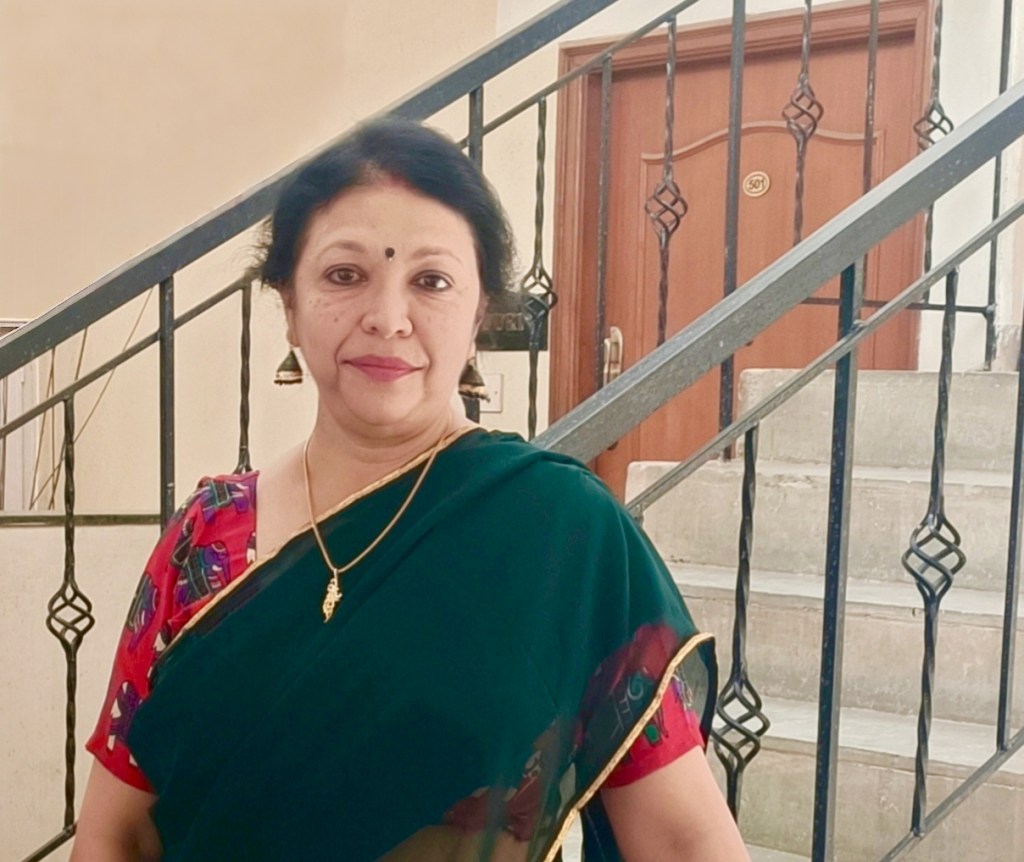
Urmi is a freelance writer-reviewer-translator living in Bangalore. An English literature educator, her prose and poetry have been widely anthologised across India, the USA, UK, Africa, Canada, UAE and Singapore. She’s also had bylines in The Hindu, The Times of India, Deccan Herald and Outlook Traveller, among others.
Urmi has won awards from Rupa Publications, the University of Hawaii, Women’s Web, Tell Me Your Story Review, S7, Wordweavers, and Bharat Award for Literature.
Travelling, photography, and spending time with her community dogs keep her sane and stimulated.


Leave a Reply