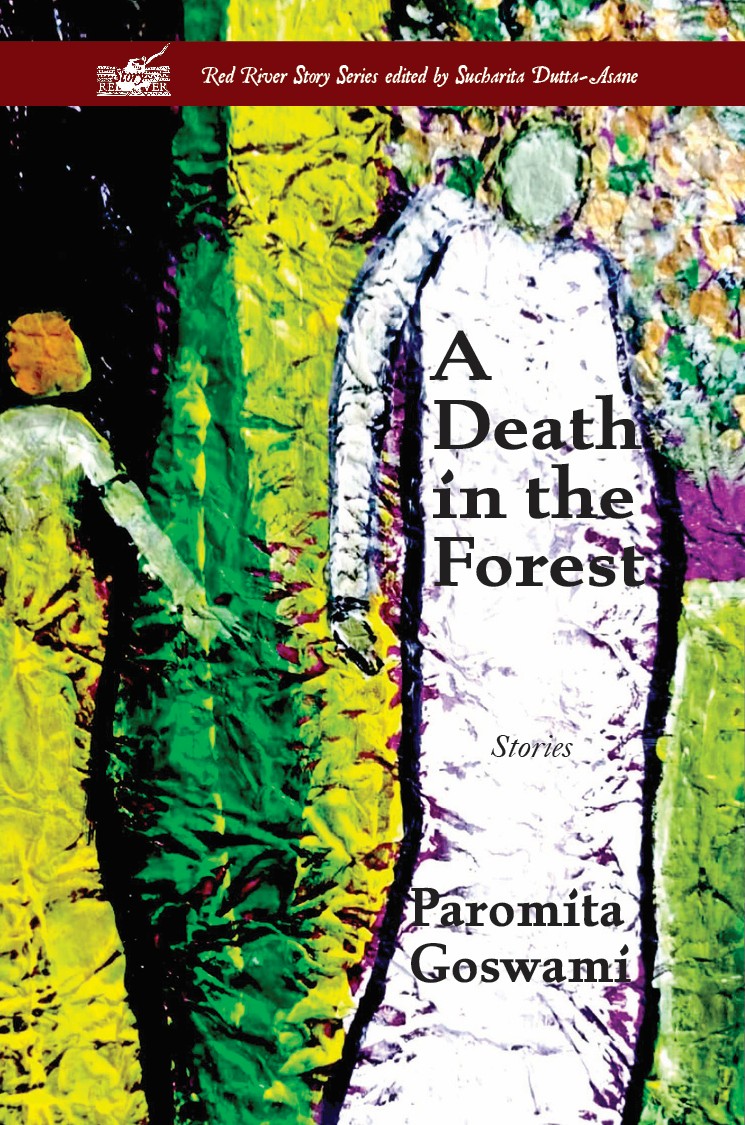
Ruta Dharmadhikari reviews Paromita Goswami’s collection of Short Stories.
Paromita Goswami’s short stories are resplendent, each shining in their own light of local language and deep cultural sensibilities of the native and indigenous population of the forests of Chandrapur, Maharashtra. Goswami’s work as grassroots activist on issues pertaining to the violence inflicted upon women, land, and forest has shaped her craft and aesthetics as a writer. The collection of short stories is an important documentation and mirror to our times and lives where each story is the quietly controlled anger of a lived experience, the narration alternating between a first and third person.
Goswami captures the plight of people who are fraught with anxiety, submission and defeat—their lives are most times without hope and the prospect of any redemption. When read with an ear and eye to the details, the reader is always left uncomfortable about she/he has just read. Goswami’s prose is unsentimental, yet she has us weeping for Motiram Kodape, and cheering wildly as Deu escapes the clutches of his tyrannical supervisor and catches the bus with the work register clutched to his chest. Her prose takes us on a journey across the entire spectrum of moods and feelings and because of her experience and time spent being and working as an activist, she has the readers living through the context of each story, helping them experience the same emotions that her characters feel. Her protagonists are the people of the jungle, people of their own tribes- who have since time immemorial have been persecuted in myriad ways. The advent of modernity and capitalist enterprise has only brought them to the edge of extinction, leading to an erasure of their culture and history—all in the name of development and progress.
A Death in the Forest is a collection of 11 short stories, adding richly to the existing body of Adivasi literature in English. Without being a native Adivasi of the wooded lands surrounding Chandrapur, Goswami has managed to get under the skin of each of her characters, and the stories should be read for the author’s gentle understanding of the communities she portrays in her fiction, conveying with a poetic prose interspersed with the local Varhadi dialect, the Kolami or Madia or the Gondi.
Goswami uses her sharp observational skills to infuse her storytelling with just the right amount of Adivasi tonal inflection; her descriptions are replete with minutiae of village life in the hamlets, in the main street of an election day, in the dark of the night, where lone souls succumb to Nature’s furious rant against men’s pillaging of her resources. She captures the reverence of the people for their forest deities and spirits. She understands the hesitant steps of the Asha workers herding the women away from life-threatening customs, heralding modernity via medicine into tribal patriarchy.
The eponymous story Death in the Forest is a heartbreaking account of how a young Adivasi lad loses his life while out with his uncle and brothers on a regular day’s work. Under the Tamarind Tree engages the reader in a grim understanding of governmental corruption. The forest contractors are swindlers; the Adivasis may be illiterate, but are not without an understanding that they are being robbed in broad daylight. Reminiscent of the last scene in Shyam Benegal’s Ankur, Goswami’s story ends with the young boy, rebellious, but not destructive.
Heartbreaking and rooted in reality, Motiram’s Day in Court reminds us that so many Motirams will be “unaccommodated” men; they will not be understood in modern contexts; that they have no language which is comprehended by the government machinery. A story like The Golden Trident underscores the nature of the deep faith and belief of the Adivasis in their ancient myths and nature worship. Supernatural and steeped in local myth, it is the perfect midpoint in the collection, demarcating the modern and the ancient ways of life. Ghanshu of A Mouthful of Coaldust, Pushpabai of The Last Witness, Tulsiram of The Saheb’s Verandah are unforgettable witnesses to the complexity that is life in India.
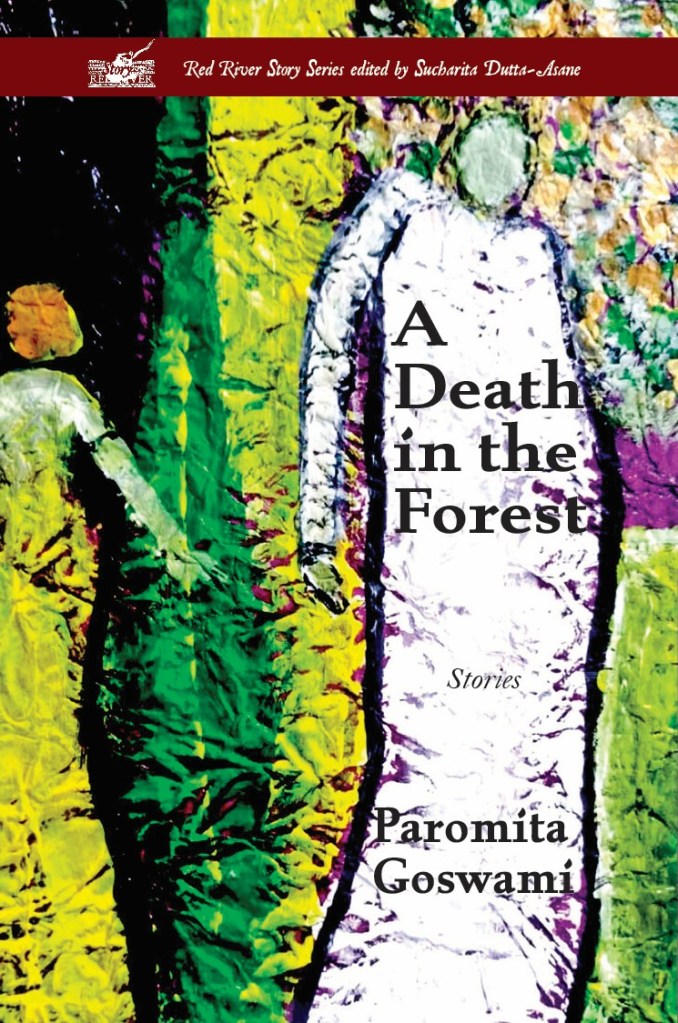
These stories are us, whether we like it or not. Set far away from our Instagrammable (un)realities, these people are our people, torn and tortured, tough and resilient, given to despair and hope. The collection is superbly illustrated by the Marathi poet, writer and artist- Pramod Kumar Anerao. The traditional Gond art brilliantly complements the evocative verbal imagery- the production is a feat in melding the word with the image, to create meaning for ecology. The stories stay with us long after we have finished with the collection. And even though it might be a cliched thing to say, but Goswami is a writer to watch.
Title : A Death in the Forest
Publication year: 2025
Publisher: Red River
No. Of pages: 156
Price: Rs. 299
ISBN: 978-9348111098
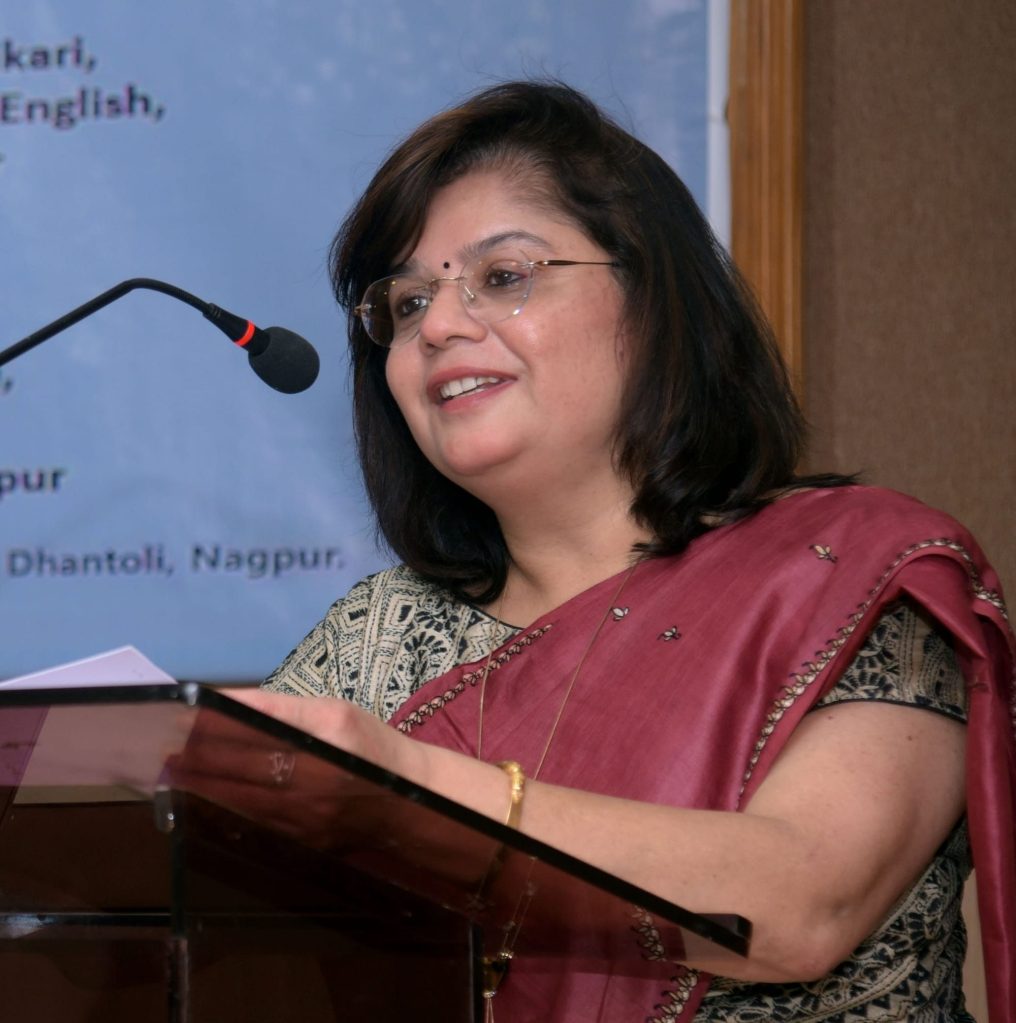
Ruta Dharmadhikari is Head, Department of English at L.A.D. College for Women, Nagpur and Vice Principal of the College. Her areas of academic interest and research are Literature, Film, Media, Gender, Culture
Studies, Higher Education and Quality Assurance.
She has delivered academic lectures at multiple forums and chaired Conference panels at several International Conferences.
 Parcham Online
Leave a comment