Poet: Ramchandra Pramanik
Translator: Sreejata Paul
Publisher: Antonym Collections
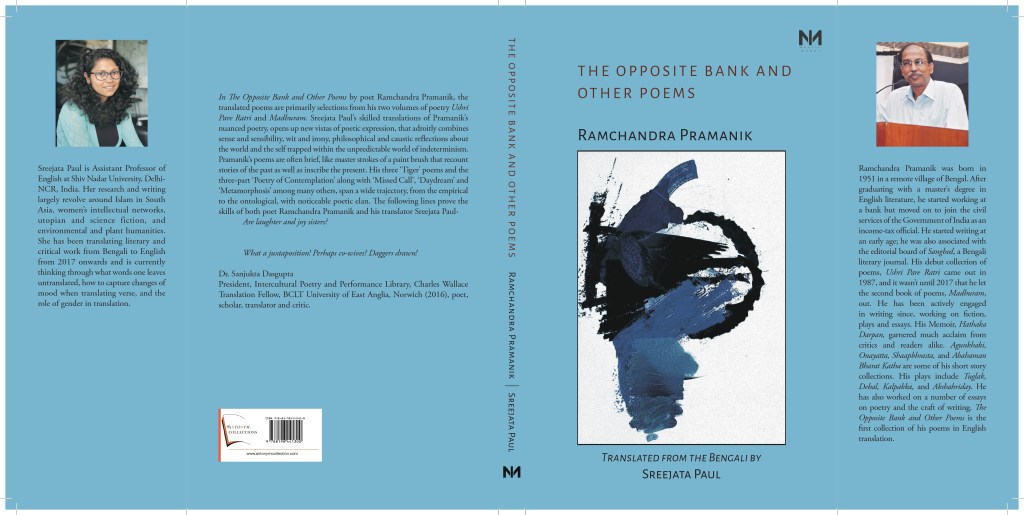
Poetry often emerges from two impulses. One is deeply personal, where the poet dives into their own experiences, bringing forth pearls of wisdom from an intimate well, placing the self at the heart of the poem. The other is observational, where the poet turns their gaze outward, chronicling the lives and struggles of others with a discerning eye. This collection belongs to the latter tradition. It offers a wealth of observations that invite slow absorption and reflection, for these poems are layered and not meant to be read in a single sitting.
Delicious wet skin torn open by the sun, its nails and teeth,
Bloodstained sacred efflorescence on white bones,
Accept these offerings, the fruits, the flowers; devour all, oh
carnivorous god!
An old braided Benarasi still hangs from the ceiling,
A gaunt pipe urinates torpidly into a broken bathtub. (Deserted Brothel)
The poet employs imagery as a powerful tool, weaving together the force of words with visual evocation to create a lasting impact on the reader. The interplay between language and image sets off a series of thought processes, often leading to ideas that are not what they first appear. It is in this delicate tension between surface and depth that the power and beauty of these poems reside.
Colossal body laid out over the gleaming table,
abrasive back, distended white abdomen.
Are you scared? My dear, soon you will be contrite;
Mouth watering, breathing smooth as butter.
Open your mouth. Soon as the words were uttered,
people crouched, plates were met with knives,
Oh god! What is this mass of black scum crawling out?
Run away, sister! Ghoshal, the wise one, stares with mouth agape.
Leaving the table, the room, in one big leap over the balustrade
onto the asphalt, about to make a break for it —
He is swarmed by baby crabs. Was the abdomen swollen
all this while with these creatures then? (Crab)
Beneath the calm surface of daily life, there are muffled noises, disturbances waiting to be heard. The poet drags these to the fore, allowing them to scream. This collection is not for those seeking comfort or serenity in verse. Rather, it compels the reader to sit up and reconsider their understanding of life and its many layers.
One staggers around, drunk off his kilter,
the other navigates through clouds to the cosmic land.
Whom does the fire burn?
Who sleeps on bare ground, nothing to cover oneself with?
The one who soars over the kingdom of light, or the one who
laments falling into quicksand?
(Whom does the fire burn)
One is reminded of the visceral ways in which we move through our days; without shortcuts, without easy halts. Life, these poems suggest, is not simply about flowing smoothly but about the fault lines and blockages that create chaos both within and without. Or perhaps it is the chaos outside that infiltrates the self. It is with such unresolved questions that the book leaves the reader.
A sense of loss and foreboding permeates these pages. The central thematic concern is loss, but loss here is not presented as a definitive end. There are glimmers of hope to be found even in the darkest corners. The collection is not merely a realistic portrayal of life’s fractures; it also offers a philosophical gaze.
The pages of a pair of dusty books
rustle and thrash around;
On nights secured off tutoring jobs,
Is it but a storm that bangs its head against the door?
A passionless, feeble hope — what if
better days are around the corner?
Does he ever raise his eyes
and see the jasmine blooming over there?
(Poem for Better Days to Come)
In several poems, a delicacy of perception creates a quiet balance amid the tumult. Amidst the debris of loss and chaos, the poet points towards the rising sun. Darkness does not only signify despair; it may also herald the beginning of something new, perhaps a phase infused with hope.
What a sight thereafter! A flight of swans occupying the sky
and a deluge of light. Such a tingling delusion in the air!
Paddy fields and jute fields shimmering for joy.
Ash can then scatter so much life. How astonishing! (Ash)
Sreejata Paul’s excellent translation of this book has brought to life a work that feels urgently necessary for the times we inhabit. It captures both the nuances and the vagaries of what life is and can be. The translator’s discerning eye gives new breath to these poems in another language, allowing them to resonate widely. The book stands as a beacon for our current moment, inviting readers to sit with its storms, to understand and relate to the tempests within; not to suppress them, but to acknowledge them collectively.
Semeen Ali has four books of poetry to her credit. Her works have featured in several national and international journals as well as anthologies. She has been invited to literary
festivals to read from her works. She has co-edited four anthologies of poetry/prose that have been published nationally and internationally. Apart from reviewing books for prestigious journals, she is also the Fiction and the Poetry editor for the literary journal Muse India.
 Parcham Online
Leave a comment