THE ALBRECHT FAMILY DISAPPEARANCE- CARLSON DETECTIVE
Rain had been falling since morning, and the power was out again. In Levington, that was nothing new—winter storms came and went, and people had learned to live with the dark. Now and then, a crossbill called from somewhere unseen, but mostly the town lay quiet. Time felt slow here, as if each day simply repeated the one before.
The steady sound of rain and her mother’s gentle voice pulled Elina from her daydream. She’d been imagining a different life—one where she’d left Levington behind and made a name for herself as Detective Elina Carlson.
Lost in thought, she didn’t notice the small rubber ball until it bounced off her hand. Her younger siblings were at it again, arguing over something trivial. Elina sighed, more amused than annoyed. For once, it all felt oddly peaceful—and thankfully, she wasn’t part of the chaos.
Elina’s gaze lingered on the windowsill as the radio warned of an incoming snowstorm. Her family had already settled in—storms like this demanded caution. As the eldest, she carried the quiet expectation to be composed, even when she faltered.
Her hand rested on the cold glass. She’d once dreamed of becoming a detective, but her parents’ caution had steered her toward botany instead. Upstairs, she told herself curiosity was harmless; downstairs, life moved on—her mother cooking, siblings squabbling, grandmother knitting, father tuning the old radio.
When the local news mentioned the Albrecht Family Disappearance, the room froze. “Thirteen years ago, the family vanished overnight,” the anchor said before the signal cut. Elina turned. “Wait—was that real?”
Her grandmother didn’t look up. “Old news. Gone without a trace. Their house was untouched. Rather… never mind.”
Later, her mother confirmed it happened on a stormy night much like this one. “Mrs Albrecht was a kind woman,” she said, then met her daughter’s eyes. “Don’t go looking into it. Some things are better left.”
That night, while the wind rose outside, Elina searched old articles. No clues, no struggle, nothing stolen—just silence. By morning, the storm had passed, but the town buzzed with gossip again. Whispers followed her through the snow—rumours, half-truths, and the same unending question: where did the Albrechts go?
One question clung to Elina’s mind: where did the family go?
Back home, Elina dug deeper. Old articles and printed photos covered her desk like puzzle pieces that wouldn’t fit. In the muted light, everything looked drained, the years pressing through the paper.
Her fingers brushed a photo of the Albrecht porch—the warped boards, the half-open door, that unsettling stillness. Too neat. Too staged. She tapped her pencil, noting: No forced entry. Door open. Lights flickered. No packing. Odd behaviour for a week. Then, softly—“Rather… never mind.”
The house was quiet—her siblings asleep, her parents busy downstairs, her grandmother’s chair creaking faintly.
She zoomed in on another photo, the hallway wallpaper misaligned, patched and uneven. Hidden space? she scribbled. Another image showed a half-folded quilt, scissors, and an untouched teacup. All so ordinary, yet wrong.
Outside, snow drifted through the still air. Levington’s quiet never felt heavier. One question lingered—where did the family go?
Elina opened her notebook to a clean page and began sketching out a plan.
Step one: Gather firsthand accounts.
Step two: Review local records.
Step three: Determine the location of the Albrecht house.
Step Four: Observe from outside. (DO NOT ENTER yet)
As Elina finished writing step four, she felt how tightly curiosity had taken hold. Her grandmother’s half-spoken words echoed in her head, broken only by a faint thump in the hallway—too much like the creak of her chair. The old kept their secrets, she thought. Perhaps her family did too.
The photos on her desk urged her on. The next morning, she was at the library.
The air inside was colder than outdoors. The bell’s muted chime faded into stillness. Mrs Desmond looked up from her knitting, pausing mid-stitch. “You’re early today,” she said softly.
“Had some free time,” Elina said with a small smile. It wasn’t really a lie, just not the whole truth.
The library felt older than its walls, dust thick on shelves heavy with forgotten records. Elina went straight to the archives. The drawers groaned as she searched until, thirteen years back, she found it—a faded clipping from the early 2000s.
Only three short articles.
The first: Albrecht Family Missing. Cops Investigating.
The second, four days later, mentioned no signs of forced entry, the open door—nothing new.
The third made her pause.
It was brief, hurried, but one line stood out: Neighbours claimed to see Mr. Albrecht outside late that night. No one agrees on what he was doing.
“Late? Doing what?” she muttered, folding the page to take notes.
A shift of movement behind her made her turn. Mrs. Desmond stood there, her face steady but hard to read.
“Old news?” the librarian asked quietly.
“Just curious,” Elina said.
Mrs. Desmond’s eyes flicked to the folder, and her face tightened. “That case… people still talk, but memories twist over time.”
“You remember?”
She nodded slowly. “The boy—Matthew. Quiet, always reading beyond his age. And the night before they vanished… I saw Mr. Albrecht outside.”
Elina leaned forward. “Doing what?”
Mrs. Desmond’s voice dropped. “Digging.”
“In the snow?”
“No.” Mrs. Desmond’s voice was firm. “In the backyard, near the trees. He was digging—or burying—something. Close to midnight.”
Silence settled between them.
“Did you tell the police?” Elina asked quietly.
“I did,” the librarian said, her face hardening. “But the storm came the next night. Snow covered it all. After that… it didn’t matter.”
She hesitated, then nodded toward the corner. “If you’re still curious, the old microfilm works. You might find what the new records don’t.”
As she left, Elina’s pulse quickened. Her notebook waited open beside her. In the shifting light, the forgotten machine hummed, dust rising as she reached for it.
She switched it on—its light flickered, then steadied into a pale blue. Sliding in the reel labelled LEVINGTON GAZETTE – WINTER ARCHIVES, she turned the dial and watched the past move in grainy frames of black and white.
Weather reports. Church notices. Town fairs. And then—she stopped. She’d found it.
A small article hidden beneath an advertisement for snow boots: “Residents Report Strange Lights Behind Albrecht Property.” Another line below it states: “Police confirm light flickering at the residence but attribute it to wiring issues.”
Elina frowned. The reports explained the flickering lights but not the digging—or the heavy silence that had followed the disappearances. She jotted quick, slanted notes in her small notebook. As she switched reels, a quiet shift of movement made her glance up.
Noah Ellsworth stood nearby—a familiar face from school, her age, now a history major at the local college. Snow still clung to his hair, melting into damp streaks across his jacket. His cheeks were pink from the cold, eyes bright with curiosity.
“You’re here during break?” His voice was low, matching the library’s calm. He nodded toward the microfilm machine. “Researching the past the old-fashioned way?”
Elina brushed a stray strand of hair behind her ear. “Something like that—local history.”
Noah took a step closer, not enough to crowd her, but close enough for her to feel a hint of warmth between them. “You know,” he said lightly, “I’m fluent in historical technology.” The corner of his mouth lifted.
She couldn’t help returning a small smile. “Thanks. I might take you up on that.”
“Please do,” he replied, settling at the next table. He didn’t speak again, just stayed there—quiet, steady, and close enough to make the air between them feel a little less cold.
Continuing her examination of the spinning reel. She had identified a New Year’s Eve date.
Past homeowners.
The location of Levington 14 years earlier.
Elina sifted through town records, finding zoning documents about the Albrecht property. A faint crease formed on her nose from hours of focus. The data showed that only a few longtime residents still lived near the old house—one stood out: the Ellison Residence, two doors down and still occupied. Maybe, she thought, someone there remembered.
Beside her, Noah paused his notes, his quiet attention steady on her. She closed her notebook. Step Two complete—names, addresses, clues.
Outside, snow drifted softly over Levington, calm on the surface, hiding what waited beneath. Tomorrow, she’d visit the neighbours and ask who still remembered.
Morning settled over Levington in a pale, breathless quiet. Snow dusted the rooftops, and Elina tightened her scarf, her notebook hidden in her pocket. Her mother thought she was off to the library—but her path led to the Ellison House.
The house sagged at the end of Maple Street, smoke curling from its chimney, rose bushes clawing at the porch like spider legs. Two doors down had once stood the Albrecht home.
Elina climbed the worn steps and knocked. The door opened to a sharp-eyed old woman in a cardigan.
“Yes?”
“Good morning,” Elina said softly. “I’m Elina Carlson. May I ask you a few questions about the neighbourhood?”
Mrs. Ellison took an extended period of time to look at Elina. Her eyes moved from Elina to the notebook that was protruding out of her coat pocket, before finally resting back on Elina’s face.
“You are the Carlson girl from the third house past the church,” Mrs. Ellison said very quietly.
“Yes,” responded Elina.
Mrs. Ellison opened the door wider and said, “Come in; you’re going to lose your fingers to the cold.”
Inside, Mrs. Ellison’s house was warmer than Elina expected—wood floors, shelves lined with old photos, and the scent of cinnamon and tea in the air. The old woman gestured toward a cushioned chair by the window and sat across from her.
“I’m Mrs. Ellison,” she said. “What would you like to know?”
Elina gripped her notebook. “The Albrecht family. I’m trying to understand what happened before they disappeared.”
Mrs. Ellison’s expression didn’t change, but her hands tightened. “People still talk about that?”
“Not the same way,” Elina replied. “No one remembers it clearly.”
After a long pause, Mrs. Ellison sighed. “I recall three things. The lights flickered in patterns. One night, I heard whispers outside—slow, rhythmic, like a chant. And Mr. Albrecht came by for a flashlight. His hands shook. He kept looking behind him.”
“Did he say why?” Elina asked.
“No. But he looked… followed.” She took a breath. “I gave that flashlight to the police. They never returned it.”
Her voice softened. “You remind me of him—curious, determined, and blind to danger.”
Elina closed her notebook. “Thank you.”
“Be careful,” Mrs. Ellison warned. “Some doors stay open once you look.”
Outside, snow drifted through the pale light. Back at the library, Elina’s hands still trembled. Noah glanced up as she entered. “You’re back quick.”
“I found something,” she murmured, explaining what Mrs. Ellison had told her.
When she finished, Noah’s face darkened. “That doesn’t sound like a family that ran away.”
“No,” Elina said quietly. “It doesn’t.”
He regarded her for a moment, something protective in his eyes. “Then don’t do this alone.”
She nodded, grateful and restless all at once.
That evening, at home, her grandmother’s hands trembled as she recalled Mrs. Albrecht’s last visit—her talk of voices from the woods, calling her son by name. “Leave it, Elina,” she warned. “Before it finds you, too.”
But later, Elina read the old police logs: reports of whispering, snow without footprints, Mr. Albrecht’s last request for an officer to follow him into the trees.
By nightfall, she was standing at the treeline herself, breath fogging in the cold. The world was silent, unnaturally so. Her phone buzzed: a message from Noah.
Something I found—you should see it.
The woods stared back, patient, still.
“This is where they disappeared,” she whispered.
The darkness did not reply.
Elina met Noah outside the bakery at ten. The morning was pale and brittle, snow brushing the quiet streets. They spoke little on the walk to the Albrecht house, its fence sagging, its windows clouded like the place was merely paused, not abandoned.
In the backyard, fragments remained—a rusted swing, a blue toy car half-buried and faintly warm, a stuffed bear torn open and filled with bark and leaves. Near the trees, uneven soil marked the spot where Mr Albrecht had been digging.
At home, her grandmother’s face turned grave. Those were Matthew’s toys—none should’ve been outside. Spreading an old map, she traced a trembling finger along a faint line beneath the house.
“A service tunnel,” she murmured. “If it didn’t collapse, they went down.”
Elina looked to Noah. “Tomorrow.”
Her grandmother’s voice shook. “You’re chasing what this town buried.”
Elina nodded. “We have to.”
Because the falling action had begun.
Because the ground beneath Levington was no longer quiet.
The next morning, clouds pressed low over the town, snow hanging on branches like brittle lace. Elina waited outside the bakery at ten, fingers numb, eyes on the street.
Noah didn’t come.
Ten minutes. Fifteen. Twenty.
Her phone stayed blank until, finally:
I’m already here. At the Albrecht house.
I found something.
Her stomach dropped.
Wait for me, she typed. Don’t go in.
A pause. Then:
Okay. I’ll stay right here.
The unease in her chest refused to fade. She ran.
The Albrecht yard was silent—the swing’s shadow stretched long across the snow. Fresh footprints led to the far corner, straight to the exposed metal hatch. The tunnel. Noah’s tracks ended there.
Her phone buzzed: At the back of the yard. You’ll see me.
But she didn’t.
A slow, deliberate knock rose from below. The ground wasn’t just ground anymore. It was a door—and Noah was on the wrong side of it.
Elina dropped beside the hatch, fingers gripping the cold ring. “Noah,” she whispered. “If you’re down there, answer me.”
Only snow stirred. She pulled. The hatch groaned open, exhaling air colder than winter. Her phone buzzed again.
Don’t open it.
Her chest clenched.
Where are you? she typed.
Behind you.
She turned. Empty yard. Still trees. Her skin crawled.
Noah, that’s not funny.
You’re almost there.
She clawed more snow from the hatch, widening the dark seam. Another buzz:
Stop. Don’t open it yet.
Something in the tone felt wrong—too flat, too calm. She typed:
If you’re really Noah, name the book we found two days ago.
Silence. Then:
I know where Matthew is.
Her lungs locked. The hatch shifted on its own, the ground giving a slow, deliberate shudder.
I hear you above me. Don’t leave.
“Elina—don’t touch it!”
She turned. Noah was running from the side of the house, snow flying around him, panic written across his face.
“I never texted you,” he gasped, grabbing her arm. “Whatever’s down there—it isn’t me.”
A stretched whisper rose from the crack. “Elinaaa…”
The hatch jerked beneath them, then tore free with a deep, hollow thud.
“Noah!”
He slammed his weight onto it. “Help me—hold it!”
She dropped beside him, pressing down hard. Something pushed back—steady, powerful.
A childlike voice drifted up: “Elina… you’re heeere…”
“That’s not Matthew,” Noah rasped. “It knows your name.”
Cold, rotting air surged up as her phone began to buzz.
Don’t fight it.
It wants her.
“Noah,” Elina gasped, “you didn’t send that.”
“Of course I didn’t.” His face had gone pale. “We can’t hold it much longer—”
The hatch jolted once, twice—then went completely still. A heavy silence settled.
“We run,” Noah breathed.
On three, they pushed back and sprinted, snow spraying beneath their feet as something struck the hatch behind them with a metallic roar. They didn’t stop. They didn’t look back.
When they finally stumbled through Elina’s front door, both shaking, her grandmother stood waiting—eyes sombre, knowing.
“Which voice did you hear?” she asked.
Not what. Which.
Elina’s voice failed her. When they finally managed to speak, her grandmother’s face went pale. “It mimics,” she whispered. “That’s what the Albrechts heard—voices that should never have come from beneath the ground.”
Elina’s phone buzzed again.
I see your house.
Let me in.
Sent from Noah’s number.
The real Noah’s hand clenched on her arm. “Elina,” he breathed, “we’re not alone.”
The lights went out.
Every hum, every glow, gone in an instant.
Outside: crunch. A slow step in the snow along the porch. Then a soft tap at the window.
Tap. Tap. Tap.
New message:
Why did you turn the lights off?
A shadow slid past the frosted glass—humanoid, moving too smoothly to be human.
“It’s tracing the walls,” her grandmother whispered. “Listening.”
The door handle began to turn.
Noah and her father shoved a sideboard against the door. The handle jolted once, then went still.
Through the wood came a voice.
“Elina…?”
Her own voice. Perfectly mimicked.
“Elina, why are you hiding?”
Noah froze. “That’s you,” he whispered.
Tap. Tap. Tap.
“Elinaaa… open the door. You don’t have to be afraid.”
Her grandmother whispered an old prayer.
Outside, her voice broke into a plea—now joined by a second, higher one.
Matthew’s.
“Elina… please… open…”
Nails scraped slowly down the door. Long. Patient. Waiting.
“It’s trying to make you answer,” Noah whispered. “Don’t speak.”
Her grandmother’s voice shook. “It only needs you to answer it, child. That’s how it enters.”
Elina’s phone buzzed in her hand.
Elina
Let me in.
I’m cold.
Not just her voice. Her name. Her words. The thing wasn’t imitating Noah anymore. It was imitating her.
The tapping stopped. Silence pressed close, thick and heavy. Then came a breath—slow, steady—just beyond the door.
“I can wait, Elina,” her own voice murmured. “I always wait.”
Noah’s grip tightened on her wrist. Her grandmother’s hand trembled on her shoulder.
“Elina,” Noah whispered, “it’s trying to get in.”
She shook her head slowly. “No, Noah… it doesn’t need to. It’s trying to get into me.”
Her grandmother’s face went white. “You answered it, didn’t you?”
Elina’s mind flashed back—to the hatch, the cold air, the whisper below.
Noah? If you’re down there, say something.
Outside, her voice laughed softly.
“You spoke to me first,” it crooned. “You answered. You’re mine now.”
Her phone buzzed hard in her palm.
Elina
You don’t need to be scared.
I can be you for a while.
You can rest.
“I can live your life for you,” her voice promised through the door. “You don’t even have to leave the house again. You want to get out of Levington… don’t you?”
“Elina isn’t yours,” Noah snapped, moving fully in front of her.
Her voice giggled. “She already agreed.”
Elina’s pulse stuttered.
Her grandmother’s whisper was barely audible. “Oh, child… that was enough.”
The phone vibrated again, more violently this time.
Elina
Switch.
The lights flickered—once, twice—and a sharp pop snapped from the bulb overhead. The whole house seemed to flinch.
Her grandmother screamed, “Noah—hold her!”
Noah grabbed her just as a cold whisper slid through the house, threading every wall at once.
“Elina… let… me… in.”
Her voice—but hollow now, stretched, layered with a thin child’s echo. Matthew’s.
Everything went still.
And Elina understood: the Albrechts hadn’t vanished. They’d been replaced.
Her phone buzzed. She didn’t look. Outside, her own voice sighed, softer, hungrier.
“Elina… I’m almost you.”
Terror rose—but beneath it, something clearer did too.
It could mimic her sound. Not herself.
It knew her rhythm—her tone, her breathing—but not the quiet places of her mind. It could only mimic what it was given.
Her grandmother lifted her chin gently. “Guard your thoughts,” she murmured. “Anchor yourself to something it cannot take.”
Elina’s voice faltered. “What can’t it mimic?”
Noah’s answer was steady. “The truth of what you want.”
She closed her eyes—thirteen, gripping the Albrecht article; sixteen, writing I don’t want to be ordinary; eighteen, vowing to solve what others couldn’t.
That want—her dream—was hers alone.
Outside, her voice coaxed, “I can be you better than you can.”
Elina opened her eyes.
“I want to be Elina Carlson,” she said, steady now. “And only I know who she is.”
Something slammed against the door, frantic. The lights stuttered. Her phone glitched in her palm, her name on the screen warping—Elin… El… E—before freezing.
The voice outside broke.
“Elin—… E… ELI—”
Noah gripped her hand tighter. Her grandmother pressed her palm over Elina’s heart. Her parents drew close behind.
“You can’t be me,” Elina whispered.
The house seemed to exhale.
Outside, a warped cry rose—then another, each fainter, fraying into silence. The tapping ceased, the breathing vanished, and the voice dissolved into nothing.
Her phone went utterly cold.
Then—silence. Deep, unbroken, complete.
When Elina turned to the window, snow drifted down in slow, soft flakes. No shadow. No footprints. Only winter—and the steady rhythm of her own heartbeat.
That year, the snow melted early. Levington’s winters usually lingered, but this time, the thaw came as if the town itself was ready to release the cold. Elina felt it too—a slow warmth returning.
The Albrecht case, once buried and whispered about, was now an accepted ache. The truth stayed mostly quiet, guarded within her family, but the loss—human, haunting—belonged to the town at last.
A small memorial plaque was set near the old Albrecht house:
“In memory of Matthew, Laura, and Emil Albrecht.
Gone, but no longer forgotten.”
Elina stood at the unveiling with her family and Noah beside her. The cold bit through her gloves, and when Noah’s hand brushed hers—barely touching, yet steady—it was enough.
Her grandmother’s voice was soft. “You gave that family peace, child.”
Elina said nothing. Peace still felt fragile. Some nights, she woke to faint echoes—taps on glass that weren’t there—and had to remind herself the silence was only silence. On those nights, Noah appeared with two steaming mugs and quiet company, his presence enough to steady her.
Her parents grew gentler, her grandmother prouder. When Elina announced she was changing her major from Botany to Criminology, they simply helped—her father driving her to campus, her grandmother gifting a green scarf for detective things.
That spring morning, Elina walked alone to Levington Library—not as a girl haunted by curiosity, but as someone who had faced the unknown and survived it.
Inside, the library was as it had always been: dust in the beams of pale light, shelves leaning quietly, the old microfilm machine waiting in its corner. Elina sat in front of it and pulled out her notebook. The pages were worn now, filled with scribbled timelines, maps, and shaky sketches of footprints and trees.
She flipped to a blank page.
At the top, she wrote:
Case #02 — (Untitled)
“You’re starting another one already?” Noah’s voice came from behind her.
Elina didn’t look up right away. A faint smile touched her lips. “There’s always something hidden in this town,” she said. “And if I don’t look for the truth, who will?”
Noah took the chair beside her. He didn’t reach for her hand, but his quiet presence filled the space.
“I’ll be here,” he said simply.
She didn’t ask if he meant this case or everyone to follow. She preferred to believe it was both.
Lowering her pencil, Elina drew the first line of her next investigation. The weight she carried stayed with her—soft, steady, no longer hollow. It was hers now, no longer something borrowed or stolen.
As winter light spilt through the library windows, Elina Carlson finally understood—what was supernatural had changed her, but it no longer defined her.
But it had also started her.
Not as a girl dreaming over detective stories, but as a detective stepping into her own.
She turned the page.
And began again.
End.
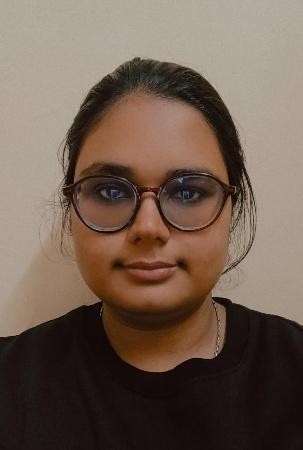
Riya Dubey is a Postgraduate Student (3rd semester) in the English Department of Triveni Devi Bhalotia College (Raniganj). She has a Bachelor’s degree from Durgapur Government College. She enjoys writing academically and telling stories, and that helps her develop her analytical abilities and point her toward a literary scholarship career.
 Parcham Online
Leave a comment