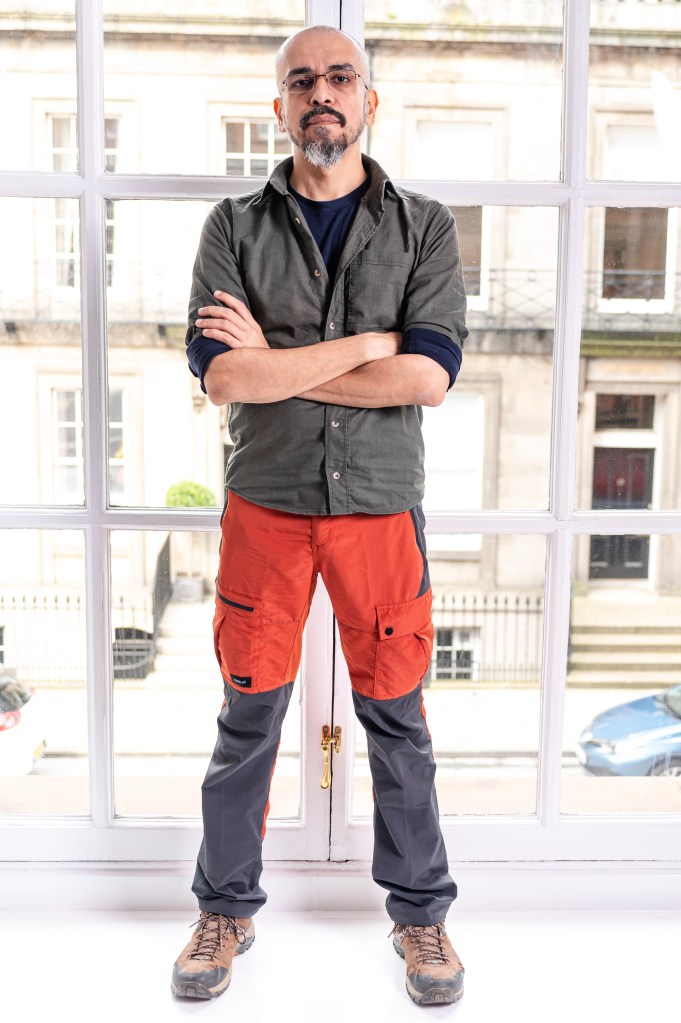
Filmmaker and Writer Devashish Makhija’s New Book Bewilderness is a Homecoming to Poetry
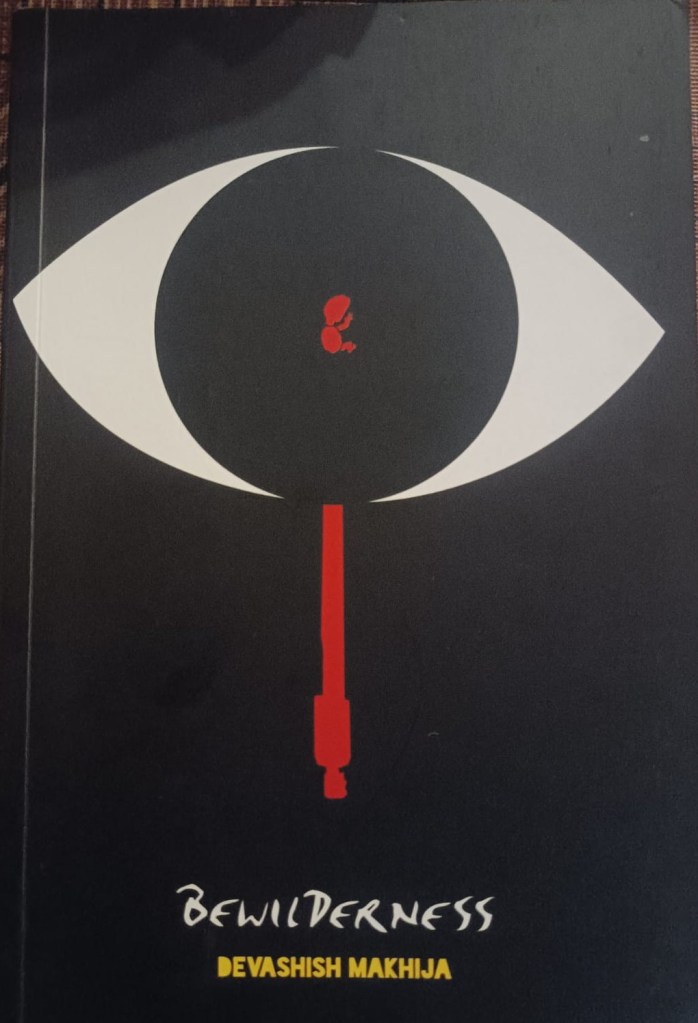
‘ My poem would like to greet you the way a furious matchstick greets a river of oil,’ is Devashish Makhija’s quiet assertion in Bewilderness, (Paperwall Publishing), his second book of poetry, which arrives seventeen years after Occupying Silence, his debut book of graphic art and poetry, published in 2008.
He is an award-winning filmmaker (Ajji, Bhonsle, Joram – his full-length films, and a slew of exceptional short films – Taandav, Cheepatakadumpa, Cycle among others), an author (Forgetting, a book of short stories, Oonga, a young adult novel), and a prolific and award-winning writer of children’s books (When Ali became Bajrangbali, Why Paploo was Perplexed, Go Go Flamingo). While Makhija’s mastery as a storyteller is evident across mediums, an innate poetic sensibility infuses much of his work, extending viscerally in the visual syntax of film, and conversely in the cinematic tenor of poetry.
An intriguing aspect of Makhija’s creative output lies in its intersections; Hanuman-like, ideas, characters, even whole poems, swoop in and out of his work, often in recursive loops, that suggest the exploration is never quite done, the curiosity never fully satiated. Not everything is said all at once, so there is always something more to say.
A deliberate and arduous cutting out of the superfluous, to the last stray thread is seen most clearly in the tight construction of most of his poems. Thirty-two out of the fifty-six poems have single word titles. To extend the metaphor, given the expanse of his engagement with the world, it is not fanciful to wonder about the scraps, mounds of discarded fabric, as it were, that are left over once a film, a poem has been fashioned to exaction. Perhaps all ragged imprints of memory, of imagination, are collected into a bag of possibilities and new stories emerge; something new from something old.
Bewilderness is a collection of moments and movements—of stillness and flight. Attention spirals outward into the world and retracts into inner spaces.
‘Zero-watt bulb hangs
by an unseen wire behind a cloud centred
on the forehead of insomniac sky’.
For those who have followed Makhija’s oeuvre over the years, it is no surprise that the political is never far from the surface in all his work; in fact, it is often the primary impetus – to make a political statement or ask a political question through a story. In Bewilderness it is ‘The name of the town is hidden by green camouflage print’, in a small Adivasi town. It is poems that
‘ Stand silently like rifles in corners
like their shadows
like their cold long iron penises which spray angry hate
into the women they kill when their bullets run out.’
And yet, while the political occupies space, there is an allowing in, and an exploration of, other worlds. There are fathers on scooters– ‘waiting at right angles to the sun,’ there are trains called Gyaneshwari, there is Van Gogh and Hussain, there is Durga and her wet hair, there is sex and desire, the curiosity of light falling on skin, a searching for a pulse within the ‘cold drizzle of metropolitan numbness’.
There is intimacy in these poems, a recounting of days and nights, some solitary, others with lovers and their shared longing. We witness them as him, with him. We must be quiet because he speaks softest when he speaks as here:
‘And as our breaths turned over and fell in step
a flower
bloomed between us.’
Makhija has said that in in his poems he goes into spaces he cannot explore in his films, evident in the erotic tension in ‘you are the kiss of a blade my blood is your hunger,’ and the surprising playfulness in ‘Drunk on wine, we intertwined.’
While everywhere there is economy of expression and distilled thought, there are moments of visual delight –
fish gnawing at the nets with eyes like marbles that possessive little boys lock away in their oyster fists.
It is amusing to note ‘fish’ appear thirteen times in the book, perhaps a subconscious nod to the city of his birth, Kolkata, and the centrality of fish in food and culture. Incidentally, ‘watch’ appears sixteen times, a fact that made me pause long enough to wonder about the nature of the creative process itself. Does it require total immersion, or is there something, even in the depth of lived experience, that is forever watchful, forever an observer?
In the poems on intimacy, there is certainly observation, immersion even, but rarely surrender. This is most acutely felt in ‘I don’t know if I love you.’ It is a poem of negotiation, an opening of palms, and a simultaneous closing of fists. Will it suffice to say, he ventures, ‘I don’t know if i love you but I want to find out.’
As a poet, Makhija incessantly draws his needle through inner and outer worlds, a pinpricked tapestry emerges; the conscious, the visible on one side, the subterranean on the other. ‘Mud’ with its imagery of clouds and roots is a fitting closing poem. This is the poet chasing clouds within closed eyelids, the dreamer and the dream, the eternal journeyman, on an endless quest. At the very end he invokes Plath and her somewhat fatalistic, ‘I desire the things which will destroy me in the end.’ For me, having engaged with his work with some depth over time, I find equal resonance with Hemingway who says with some exasperation, born out of an enormous, insatiable hunger, perhaps akin to Devashish’s own, ‘Go all the way with it. Do not back off. For once, go all the goddamn way with what matters.’
And with Makhija’s work, time after time, he does.
In India buy Bewilderness here and here.
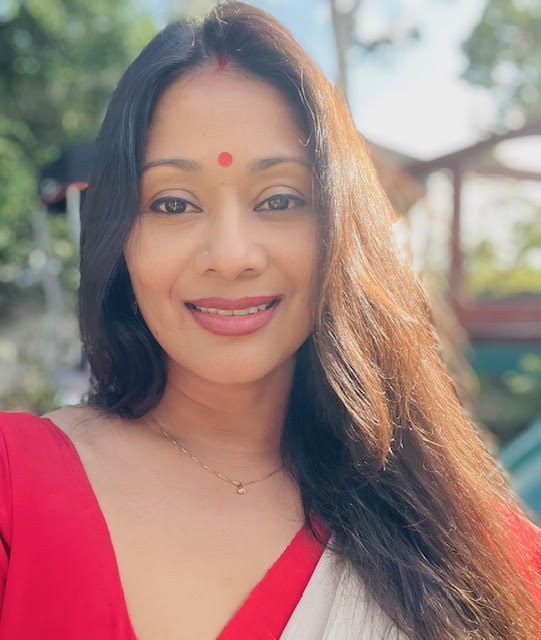
Nandini Sen Mehra is a Brisbane-based poet and writer. Her debut book of poetry Whorls Within (Amaryllis, 2021) was followed by the co-authored Unburden, Playful Principles for Joyous Living,(Penguin, 2022). Two of her poems were included in the Penguin Book of Poems on the Indian City in 2025. She has been published in the poetry anthology, We Will not be Silenced, and in Scroll, Outlook, Usawa Literary Review, The Punch Magazine and NRI Affairs.
 Parcham Online
Leave a comment