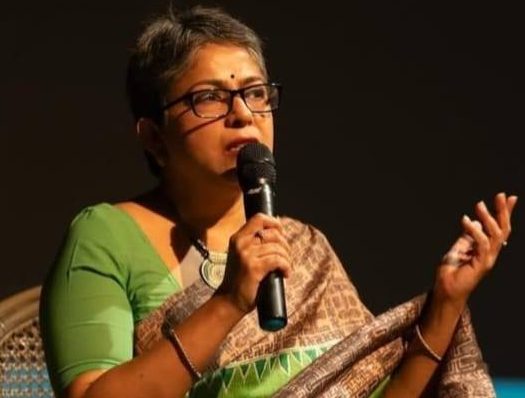
Book Title: Coming Out Solo
Author: Rituparna Roy
(Clever Fox Publishing, 2025)
Reviewed By: Paromita Goswami
Why should women, solo or otherwise, read this book? Because Rituparna Roy writes for all of us, ordinary women – we who are not celebrities, who are helplessly watching our parents age, who are unappreciated at our workplaces, spiritually unfit for the rat race, who want to write and yet cannot find the time to put pen to paper, and those who ache for their absent mothers’ touch – for whom, every word of this memoir resonates. Coming Out Solo is also about finding the resilience when faced with losing people to disease, death and in relationships.
The book begins with the author returning to Kolkata after her mother’s death. Much of the book deals with the author’s coming to terms with this unbearable loss and finally being able ‘to stand firm’ again through the tremendous love for her young daughter. The unshakeable mother-daughter bond is at the centre of this book – it provides the emotional tethering when everything else seems to spiral out of orbit. As Roy succinctly puts it, ‘I have realised that, to be a mother – in the iteration that I am living out – is to stand firm on slippery ground. By a sheer act of will. And that will can never be forsaken, at any cost.’
The title of the book Coming Out Solo plays with an unresolved tension – ‘coming out’ is associated with making publicly known, while ‘solo’ by contrast, stands for being or going alone, sometimes by choice and sometimes by compulsion. It is almost a declaration – let it be publicly known that I hereby claim my right to be. The book’s calm, unhurried pulse holds the dichotomy. It is at once a memoir of personal transition and a cultural political text that redefines what it means for a divorced woman with a young daughter to live alone, midlife onward, in India.
Roy returned in 2017 after nearly two decades of marriage, giving up her life and work in the Netherlands to start life again in Kolkata. However, she finds that the city she had left behind is not the city she has returned to. The family of her childhood has disintegrated with the death of her mother and uncle, she struggles professionally, her sibling and many friends have moved away. Yet, Kolkata is a co-narrator who mirrors Roy’s own divided condition — affectionate, sceptical, resilient. She walks its monsoon streets, enjoys Dhunuchi Naach and Noboborsho with both nostalgia and critique – women, she asserts, have strength but not power. Kolkata of the past belonged to a youthful person on the threshold of professional success, now it is the space of middle-aged introspection. And yet, there are the poignant moments of urban life – the child expressing music in colours, the author keying in 400 words a day, the butterfly on the balcony – the Wordsworthian “spots of time” that nurtures and heals.
Roy’s introspection constantly confronts the physical/material/logistical dimensions of the journey of crossing over from grief into grace. She writes of the frustration of domestic drudgery, the irritation at maids who don’t show up when they ought to, the guilt of possibly hurting a daughter too young to grasp unpleasant truths. She feels ‘caged’ and rages at life’s unfairness, ‘Dhik, Dhik Dhik’ she condemns the corruption that swirls all around. She hides the real and metaphorical pain in her heart, while accompanying her beloved father to a dementia care facility.
Coming out Solo is about examining life one day at a time, finding the ‘inviolate, pristine’ inner space that is the ‘ultimate refuge from the onslaught of the world, and of life itself.’ This duality, belonging and estrangement, of energy and exhaustion structures the entire memoir. Like many women of her generation educated abroad and rooted in India, Roy’s geographical moorings are split. Her narrative unfolds at the threshold of multiple cultures, languages, and expectations. Yet she resists easy binaries of East and West, marriage and freedom, exile and home – the slow movement she charts is one of inward resolution. ‘My chief ‘doing’ … has been a profound questioning of and renewed confrontation with the self, both the personal and professional self. ….’
To recreate life’s meaning from its remnants requires great courage, and then some more to write about it. Roy joins the rank of authors like Kamala Das in My Story, Ismat Chughtai, in Kaghazi Hai Pairahan, and Amrita Pritam in Rasidi Ticket who embrace the challenges of life, yet she writes with her own distinct tone and expression. First written as a series of blog posts titled Kolkata Diaries, the book reads like entries in a journal of discovery after disintegration. Each meticulous entry offers unflinching opinion on a wide range of topics from myriad films, books to jhorjhore bhat (rice) cooked to perfection and finally to mental illness. Although written in the direct, confident tone which is the hallmark of today’s social media posts, her compassionate voice sets her apart from all others.
Take for example her blog post titled ‘When Home is Not Home’ dated 23 March 2020, where she lists the categories of people for whom home did not mean love and belonging and who, therefore, were subjected to greatest suffering during the Covid lockdown. Her list includes ‘closet homosexuals, they are the closet homeless,’ unloved, unwanted children, youngsters who are denied the campus life they love, couples who live wholly separate lives even under the same roof, and the elderly who feel out of place everywhere.
In Autobiographics, Leigh Gilmore argues that women’s self-writing always negotiates social risk – the danger of being judged, dismissed, or erased. Roy’s response is composure itself. Her stillness becomes an armour; her restraint, a form of eloquence. Mridula Garg, whose Anitya and Kathgulab explored female selfhood through the minute negotiations of daily life, once said in an interview, ‘My kind of feminism is that every woman is different.’ Rituparna openly embraces her femininity: ‘I am innately feminine. … I like clothes and jewellery and cosmetics.’ Yet, she refused to accept that femininity was antithetical to ambition, ‘that one could not desire family life and aspire for one’s place in the world with equal intensity.’
While authors like Kamala Das and Ismat Chughtai wrote autobiographies to declare their freedom through bold sensual and social candour, Roy writes to claim her freedom. And she does so through restraint and clarity. There is neither bitterness nor spectacle when she says, ‘[I]t has been tough to retain my right to choice … but I did not, for a moment, stop believing that that right was mine. That is, in fact, the only legacy I want to bequeath to my daughter – never to give up on the right to choose. Not even when, but especially because it is the hardest thing in the world…’
If much feminist writing of the 1970s and 1980s sought to make women’s anger visible, the new feminism of writers like Rituparna Roy performs a subtler task: the politics of quiet persistence, neither apology nor aggression. She pursues persistence to its lair through the act of writing, finding the time to write, sharing her thoughts and engage with her readers.
Roy’s writing is not about the healing; it is the healing. The act of writing ensures that circumstances do not overwhelm her, that she remains in touch with herself and in touch with the world. Through her frank, lucid prose she is giving us a window into the process of healing as it happens, in real time. It is the rawness of her pain captured in urgency of her voice which draws the reader to her in an intimate connection, and ensures we remain invested in her survival right up to the last sentence – and beyond.
Seen against the larger history of Indian women’s life-writing, Coming Out Solo extends a tradition that began with the Elder Nuns of Therigatha, to Rash Sundari Devi’s Amaar Jiban in the nineteenth century and continued through the candid modernities of Kamala Das, Ismat Chughtai, Amrita Pritam and many others. However, Roy’s memoir belongs to a newer phase of this tradition — one shaped by global mobility, midlife reinvention, and the nuanced politics of contemporary feminism. Her story of a woman returning home, not as victim but as voyager, speaks to a generation that must reconcile choice with consequence.
Coming Out Solo is ultimately a book about giving love its due – love that is not of the romantic and marital variety, but the love of friends, siblings, parents and children. This is the love that builds itself in loyalty and solidarity and yet is not ‘eulogized obsessively in poetry and song and film.’ Rituparna Roy’s book is the heartfelt tribute to such relationships which sustain us with freshness and hope.
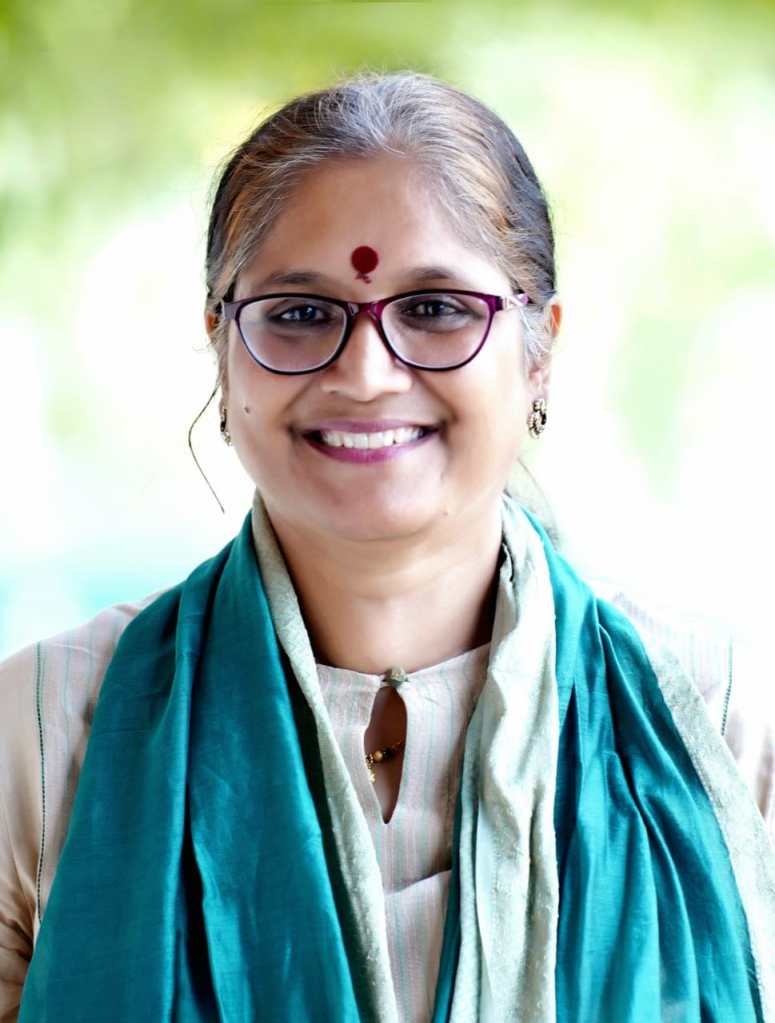
Paromita Goswami is a grassroots organiser working in Chandrapur district of Maharashtra. Her short stories and poems have been published in magazines such as Out of Print, Samyukta Fiction, Himal Southasian, Meanpepper Vine, Muse India, Parcham Online and Eclectica. Her anthology of short stories titled A Death in the Forest was published by Red River (2025). She won the Rama Mehta Writing Grant in 2023.

Rituparna Roy is a writer based in Kolkata. A literary scholar of Partition, she is the author of three academic books (a monograph and two co-edited volumes) and a collection of short stories, ‘Gariahat Junction’. Writing has remained a constant in her life, which is now devoted to a child and a museum project. She can be reached at royrituparna.com.
 Parcham Online
Leave a comment