All The Things Music Can Make Happen by Kaushik Hazarika and Anindita Kar
At Guwahati’s Sarusajai Stadium, where Zubeen Garg’s body lay in state for two days, we were among lakhs of grieving admirers standing in serpentine queues for hours for a final glimpse of their beloved icon. Poor arrangements, waterlogged grounds, broken railings, rain and stifling conditions did little to deter the sea of mourners. At intervals, the crowd erupted in applause when his songs played from the loudspeakers, especially when Mayabini played on loop— the fantasy song Zubeen had chosen for his own farewell.
For many in Assam, Zubeen was more than just a singer; he was the harbinger of hope in a time of despair. In the early 1990s, the state was gripped by insurgency, shutdowns and the trauma of secret killings. Fear was a banality—the sudden crack of gunfire at night, the pounding of army boots during search operations, and the ever-present uncertainty of who might disappear next. An entire generation grew up under this shadow, longing for a voice that could cut through the darkness. Zubeen arrived with his own brand of music, blending tradition with modernity and global influences, and transformed the Assamese cultural landscape. Zubeen Garg’s repertoire spans 40 languages and over 38,000 songs, covering not just modern Assamese songs but everything from Borgeet, Lokgeet, Dehbisar Geet, Rabha Sangeet, Jyoti Sangeet to gospel music. His breakout album Anamika, featured a song ‘Gaane Ki Aane’ that captured that yearning, questioning the meaning of music even as it proved the healing power of songs. To a people trapped in fear and silence, his melodies brought hope and healing, the promise of rainbows and proof that art could still illuminate the darkest nights.
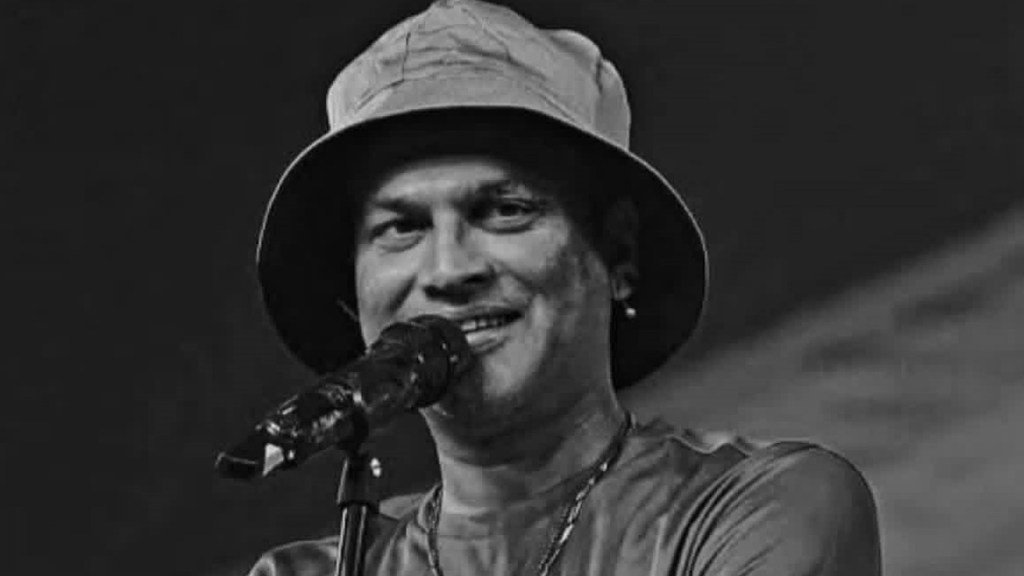
If his songs gave hope, his persona embodied defiance. Zubeen was a rebel who never minced his words and could never be dictated to, whether by political powers, organisations, or social conventions. At the height of ULFA’s diktat forbidding Hindi songs in Bihu functions, he openly defied the ban, declaring that music knew no boundaries. On another occasion, when an organiser asked him not to sing in Hindi, he walked off the stage, remarking bluntly, that he didn’t sing to please anyone. From his unconventional sartorial choices to his refusal to conform to established norms of conduct expected from a celebrity, Zubeen consistently broke stereotypes. His raw honesty, sometimes abrasive but always authentic, made him a cultural figure who stood apart—not polished or packaged, but fearless and unfiltered, a mirror of the restlessness and independence of his generation. For him, verse was never casual—he took his art, his voice seriously. He wanted his voice to wrestle with power, never to be bound in chains.
Xobdo aji bakruddha, Xobdo aji kararuddha, Xobdo aji nijei nijot abadhha


The Word lies silenced,
The Word lies chained,
The Word, imprisoned in its own cage.
As soon as Zubeen’s body was brought to Sarusajai, the sky seemed to join the mourning—a brilliant rainbow arched across the stadium, many said the brightest they had seen in their lifetime. In the days since his demise, countless images of animals bowing before his photograph or touching it—dogs, cows, birds, even oxen—at impromptu tribute programs across Assam have circulated on social media. Sceptics may dismiss these as mere coincidences, but for those who knew his life and work, it was hard to ignore the deep connection he shared with nature, as though the natural world itself was bestowing its last, wordless blessing to its favourite son. An environmentalist not by words alone but by action, he adopted rescued rhinos, birds, monkeys and numerous other animals, transforming his home into a safe haven for creatures in need. In 2018, he invited the ire of priests at Guwahati’s Kamakhya temple for advising them to stop animal sacrifice in the name of religion. He never missed an opportunity to use his status and following to ask people to plant trees, often joining plantation drives himself, spade in hand, as though to set an example. Last year in November, Zubeen joined forces with environmental activists and local residents and sat down in protest against a government proposal to cut down trees surrounding Dighalipukhuri, an iconic heritage site in Guwahati, to make way for a new flyover. One of the most enduring images of Zubeen is him embracing a tree his mother had planted in their ancestral home. His songs too reflected this philosophy—filled with rivers, rain, forests and birdsong, they painted a vision of a greener, gentler world. To Zubeen, protecting nature was inseparable from protecting life, and the harmony in his music was the same harmony he longed to see between people and the earth. Xeuj diya xasya diya/ Sirokal phulibole (Give us greens/ Give us grains/ the seeds of eternity)
Zubeen was never the kind of artist to remain distant from the struggles of his people. At the height of a blooming career in Bombay, he often chose to return home, placing Assam above personal ambition. Whenever disaster struck, he was at the forefront—whether floods, ethnic conflict, or social unrest. Through the Kalaguru Artiste Foundation, he turned sport into hope, organising charity football matches for flood victims. Year after year, he joined relief efforts along the Brahmaputra, mobilising his vast fan base to gather aid and deliver essentials.
Mori mori baso amaro je kopal/ Keonphale gujori gumori ban/ Utuwaai nile gaonkhon, sukhore ghorkhon/ Polokote uti gol gohali re garuhal/ Polokote niyotiye mok korile kongal
(Dying yet living on, such is our fate/ the floods roar and surge/ the village, the happy home, swept /In a blink, the cattle, the cowshed, washed/In a blink, destiny stripped me bare)
Beyond disaster relief drives, he extended his support to education, funding scholarships and helping students displaced by ethnic conflicts continue with their studies. For Zubeen, art was never removed from responsibility—it was a call to action, a way to stand with people in their most vulnerable moments. In November 2008, when a series of bombs ripped through Assam, plunging the state into fear and grief, Zubeen once again rose as a voice of conscience. Flying back from Bombay the very next day to stand with his people, Zubeen led the protest with many other artists of the state. On the streets and on stage, he sang against indiscriminate killings, his voice carrying both rage and compassion, demanding an end to the cycle of bloodshed.
Burhi aair juhalote sokulu xukai/ deutar o eke dosha poduliloi sai/bohudin hol xorubopar mukh dekhanai/ senehir aakaxot aji jon tora nai/haalor goru gohalite potharu xukai/ rati holei gulir xobdoi rajanjanai/ xonere sajuwa poja johi khohi jai/ kune ahi sajibohi paribo dunai
(The mother dries her tears by the hearth,
The father stares into the empty courtyard.
So long since they last saw their son.
In the sky of affection no moon or stars remain.
The plough-oxen rest in their sheds,
The fields lie fallow,
And when night falls,
bullets shriek in the dark.
Once a golden land,
now falling apart,
Who will come to rebuild it
all over again?)
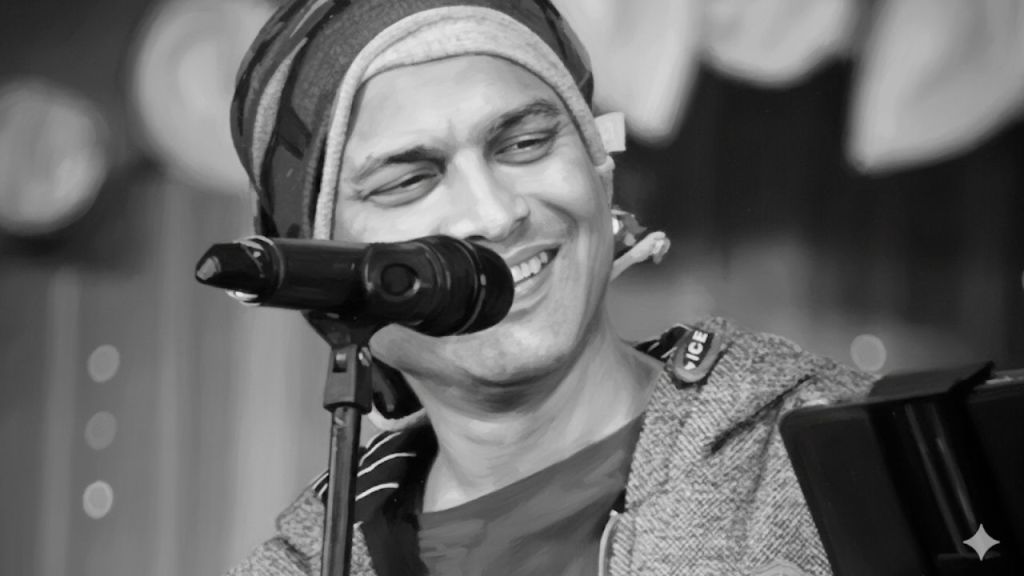
This was not new for him—throughout the years of terror and factional strife, he had composed and sung a string of hauntingly beautiful songs that reflected the dark spell over Assam. In those lyrics, he laid bare the futility of violence and the emptiness of revenge, while urging his listeners to choose xantir subhro rath (the chariot white of peace) as the only path forward.
The same leadership was evident during the anti-CAA movement, when Zubeen became one of the most visible cultural figures on the streets. At protest sites across Assam, his very presence seemed to lift the spirit of the crowds—whether through fiery speeches delivered from the stage or through songs that turned overnight into rallying cries. He refused to stay silent in the face of what he believed to be an existential threat to Assamese identity, and in doing so, reaffirmed his place not just as an entertainer but as a leader inseparable from his people’s struggles. Zubeen had never shied away from talking truth to power. Calling himself a “leftist-socialist,” he often laid bare the corruption, injustice, and exploitation that he felt were destroying the system from within. He spoke in the tongue of the ordinary, the restless and the marginalised, convinced that the role of an artist was not merely to soothe but also to question, to challenge, to defend.
Assam will miss not only the singer but the fearless personality who dared to cast himself as the conscience and guardian of his land. His words may not have always been measured or correct, but his intent was never in doubt. He knew the power of his voice and the weight it carried among his fans, and he wielded it with a rare confidence. Political parties, too, knew this—his authenticity made him unpredictable, his popularity made him formidable. It was this combination of art and moral authority that made Zubeen Garg impossible to ignore, and it is this that Assam will miss most deeply in the years to come.
Philanthropy for Zubeen was never a performance—it was a way of life. He often claimed to donate more than half his income, and those who came to his doorstep rarely left empty-handed. Disabled people, patients in desperate need of costly treatment, struggling families—he helped them all. He promised prosthetic legs to some, funded heart surgeries for others and extended quiet, consistent support to many who never spoke of it publicly. Yet this generosity came at a price. To keep up with the demands he had taken upon himself, he worked harder than his body could bear, performing endlessly, composing, recording, until exhaustion became routine. Those close to him often claim that in the later years, he was surrounded by people who lived off his name and riches, exploiting his stardom for their personal gain. When doctors urged him to rest, he instead flew to Singapore to attend a music festival at the insistence of organisers—an act that symbolised both his tireless commitment to his art but also the relentless exploitation of artists as commodities in a world driven by profit. In many ways, the very stardom that made him beloved may also have hastened his end.
Luwa luwa aru luwa/khuwa khuwa aru khuwa/ Eko nai/ mara mara aru mara/ sepi sepi tez khuwa/ xunya haye…(Take, take, keep taking/Eat, eat keep eating/ nothing remains/ Kill, kill, keep killing/ Squeeze out the blood and drink/ the end is emptiness…)
In his songs, Zubeen turned his voice into an exhibition against the chains of materialism and the insatiable greed that corrodes human life. He stripped existence down to its raw essence, reminding listeners that no matter how much we consume, hoard, or exploit, nothing escapes the finality of death.
Lakhs poured into Sarusajai Stadium to bid him farewell, and again at Sonapur where he was cremated—a spontaneous surge of humanity that spoke louder than any obituary. Embracing Zubeen, they had forgotten caste and creed, refusing to be split by communal lines. With a song turned into prayer and “ Jai Zubeen da” as their slogan, their mind had escaped the snares of divisive politics and thus in his death too he has united us all.
He was flawed, impulsive, sometimes reckless, but always authentic, and perhaps that is why, even in death, he drew one of the largest gatherings the world has ever witnessed. The darkness may be long, the gloom may feel permanent, but his voice will reverberate through the silence, singing through a million voices, shattering despair, continuing to embolden, enlighten and endure:
Mur gaanot ase boroxar anol/ xemeka xeetor rodali kumol/ mur gaane dibo notun bhasha/ notunor jonak notun disha/ klanta bukujuri bobo sristire amol botah
My songs are the flame of rain,
the tender warmth of a winter sun.
My songs will give a new idiom,
a new moon, a new direction.
It will blow through weary hearts,
like the primordial wind of creation.


Kaushik Hazarika teaches English at Guwahati College.

Anindita Kar is a translator and occasional poet. She teaches English at Jagiroad College.
 Parcham Online
Leave a comment