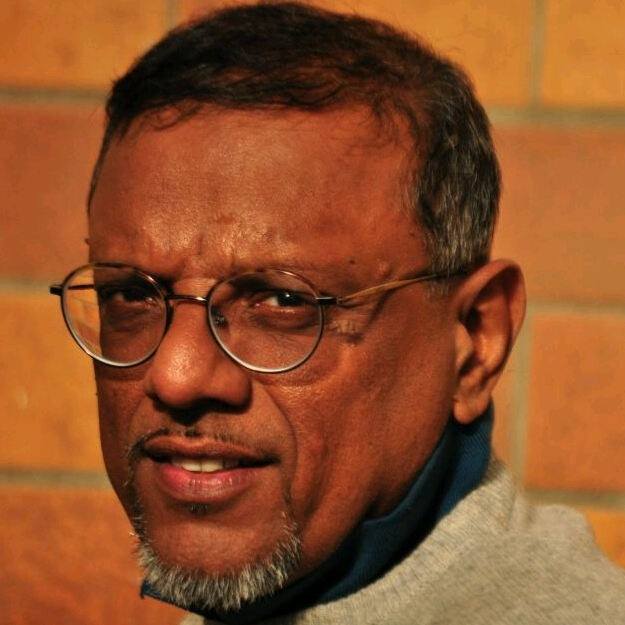
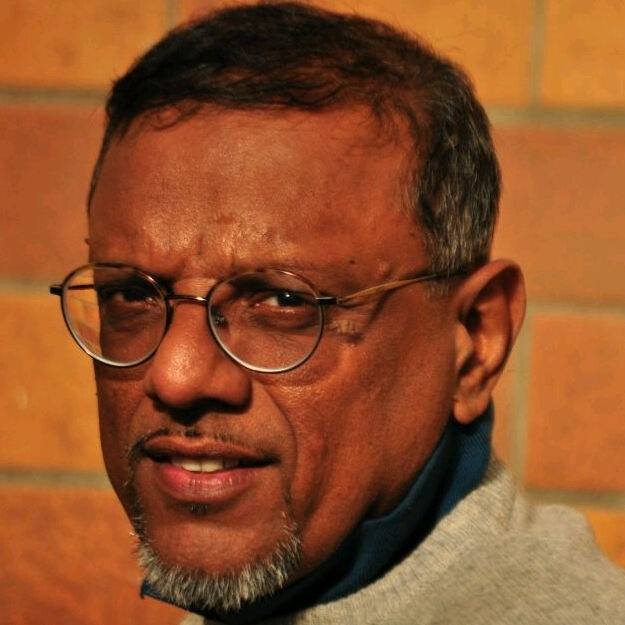
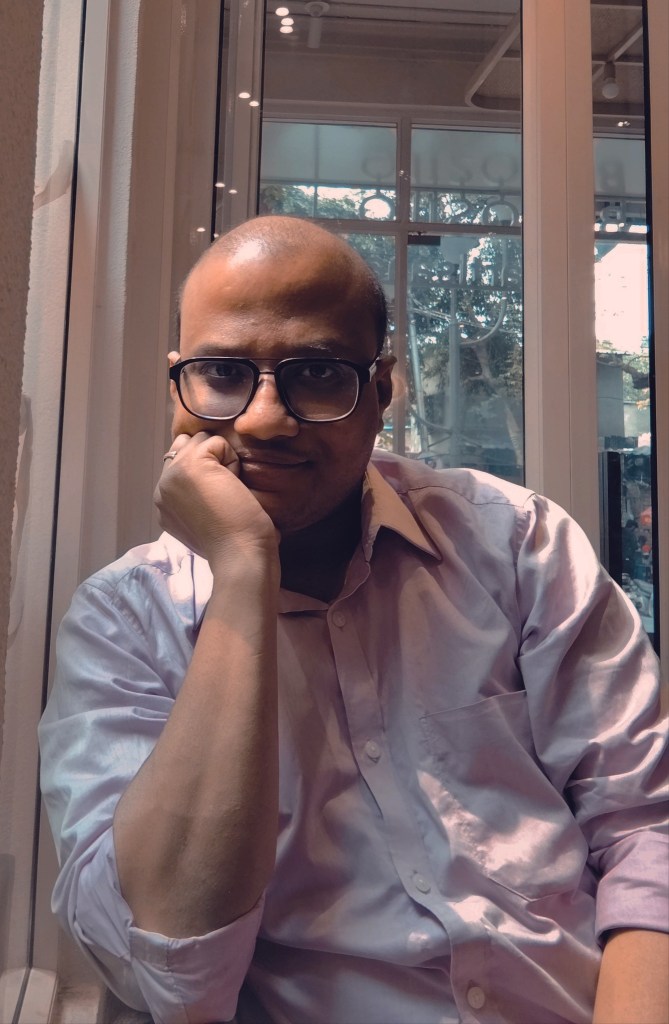
Mudar Patherya on the city he loves and breathes, on the restoring and the re-storying of Calcutta. Here he is in conversation with Parcham’s Sayan Aich Bhowmik
SAB: As citizens of the city and the country we are going through a trying time, with aspersions cast on identity, belonging and nationality. As someone who has known and loved and lived Kolkata in his veins, have you felt the pulse of the city changing or going through a transformation in the last few years or so?
M.D—You ask me about the pulse of the city. It is very difficult to arrive at answers because we don’t have credible numeric. So, I did feel the pulse of the city change, but it changes more in response to specific events and circumstances. I definitely saw it change last August onwards, with the protests against the R.G.Kar rape and murder. But these are circumstantial events. These are events that happen on specific occasions. To ask or to find out or explain whether the change in pulse is an ongoing basis, that is difficult to say. I really have no answer. Maybe we are just like everybody else and we respond to specific events out of a sense of anger and disgust but apart from that we are fairly comfortable living our humdrum or maybe even our routine existences.
S.A.B: Staying with this, Kolkata has seen moments, since the beginning of the millennium, momentous in themselves– the breaking down of the CPIM bastion, the sit in at the Park Circus Maidan to protest against the CAA/NRC and more recently the “Reclaim the Night ” movement. What according to you has been the watershed moments in the city’s history in the last 2/3 decades– something that you think has shaped/ altered the social/ cultural and political fabric of the city?
M.D: I will name possibly three instances. Starting with the Rizwanur incident which interestingly I was instrumental in building that movement, that public protest movement outside St. Xaviers College was started by my wife and I. I think that turned into an expression of public anger. It is the first time I saw in years, how the public opinion could be very responsibly aggregated and expressed.
The second seminal event has been the coming in power of the Trinamool Congress, because they broke a sequence of 34 years of C.P.M rule. Initially people saw it as a people’s movement which is very justified and it came out of a sense of anger and again a sense of disgust at how the political class had descended into some kind of laziness, slothfulness, and inaction.
The third seminal event happened last year. The response of the common people to the R.G.Kar incident. So, there have been instances in the interim where the students of Jadavpur University had protested, a couple of occasions I have seen protests happening in College Street – they are all part of the same genre and cannot be overlooked or dismissed. But if you ask me, my personal point of view, three seminal moments, the third one of course being the one that started in August 2024 with the response to or the anger against the rape and murder at the R.G. Kar Medical College.
Now whether one can say whether they have altered or shaped the cultural and political fabric of the city, that is tricky. Because at that peak moment to get down to a certain routine has been swift. So, whether this has altered the consciousness or whether this is indicative of a changed body language – difficult to say. Whether it represents an anger at a moment of time, Oh definitely, yes! Whether we are going to do it all the time? No idea. Whether this is indicative of a long-term trend, difficult to fathom. And obviously it cannot be part of a long-term trend because if you keep doing it, you get consumed. So, this is done momentarily or circumstantially, but it is an affirmation and validation of an existing identity. It may not be shaping it; it is only kind of re-affirming it. So, this is the small difference of perspective I have with your second question.
S.A.B: You have been associated with some significant restoration and preservation work related to the city. How did this all start and when and if you could kindly talk about some of the support or obstacles that you have faced, if any, on this journey.
M.D: The Restoration was born out of a personal level. The personal level was existential. And the existential was, “Am I worth anything to anyone in the city?” It came out of a feeling of insecurity and hopelessness, that I don’t matter. So, to make myself matter I have been trying to do things at a public level for the last 25 years. This restoration thing is everything at achieving a critical mass and there is no one else doing it. Effectively I become a visible point person, for this kind of intervention. The starting point was just trying to begin with just a couple of buildings.
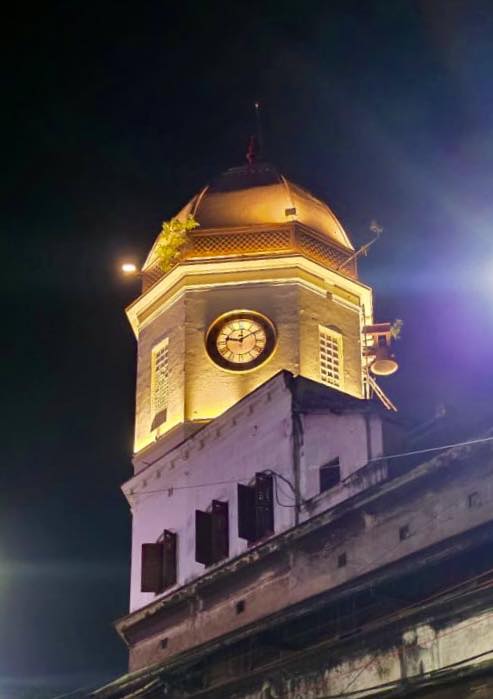
The challenge in this endeavour is normally money. The standard Kolkata line is “Taakar Obhaab.” (Lack of money). There is no lack of money in this city. There are so many people willing to fund, provided you are in a good game, big game, enduring game. In fact, I have never felt any shortage of cash. To be very honest, I have more cash for such project than I need at the moment. That is also important to have more cash than you need at any given moment because it transforms your body language. So when you talk of whether movements that have shaped and altered a city, I can tell you that these Restoration projects have shaped and altered my body language. I have become far more of a risk taker – I can take risks and have the stomach to fail. Some buildings won’t work out. Some permissions you will never get. Some buildings will be illuminated and the lights will be switched off. Which means a complete loss to me. So that, I think, the success of my fund raising has given me the capacity to be a good risk taker for the benefit of the city and the support has come from my donors. This is the biggest thing that has happened. 241 donors have funded me over the last 19/20 months. Most N.G.O’s don’t even get even 5 people to fund. And I have got amounts ranging from 40 lakhs down to 1000 Rs/. And all their indiviual identities have been subsumed under one name – The Kolkata Restorers. No individual names will be or have been focussed upon or highlighted.
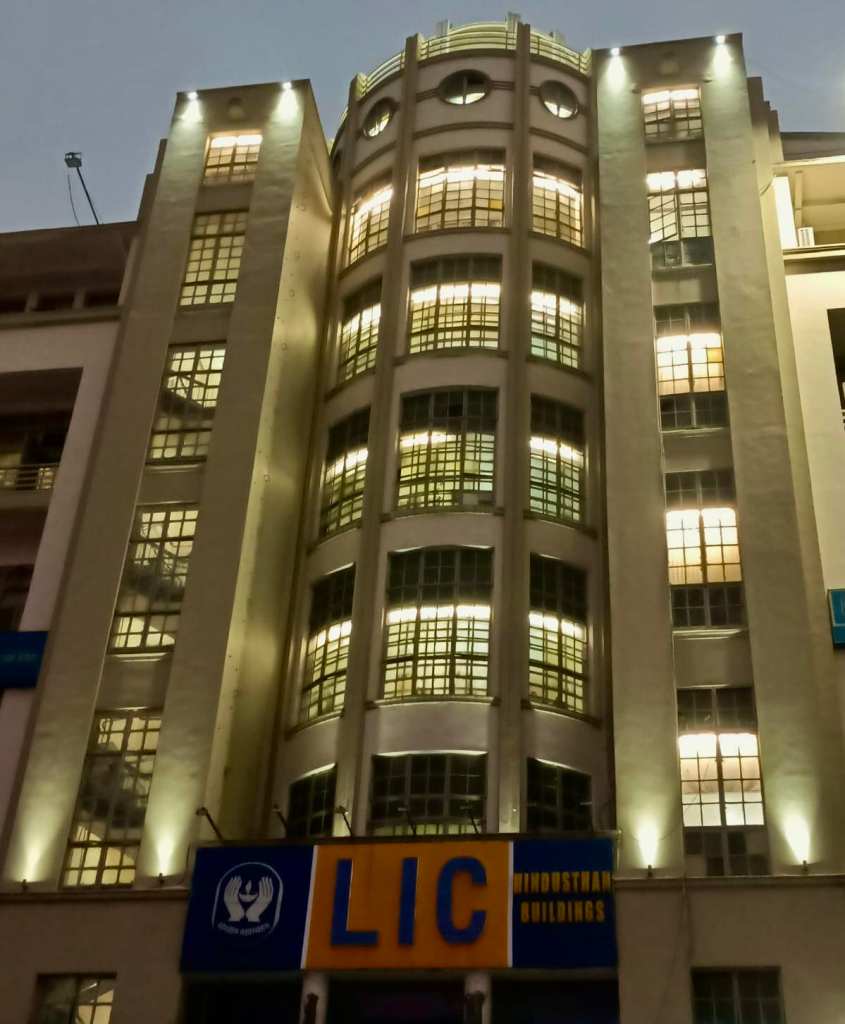
This is a very powerful thing to have happened. This is completely citizen funded, crowd inspired, crowd supported. I think this is the new model for the city. Because in our city, the general response is “ Government ki Korche? Government er kach theke taaka nin” (What is the government doing? Take whatever funding you require from the government.) Here public is paying its own cash. And remember this cash is coming in virutally overnight. If I ask for funding tomorrow, the contributions will come in from the day after and within a month the finances will be taken care of. That is incredible. Otherwise, what happens is that we have to wait for the Government money or the official money to come in. Which also means that restoration turnarounds can be quicker. Restoration confidence can be more…higher. Can extend to more people. I had started with just painting a dome, but that is now gradually becoming a heritage movement. It is rolling. And I think to a certain extent this is historic. I am not connected or associated with any building. I consider these buildings to be mine, a kind of spiritual kinship has been there with these buildings in the city. These buildings to be mine is an emotional idea, not a physical or financial idea.
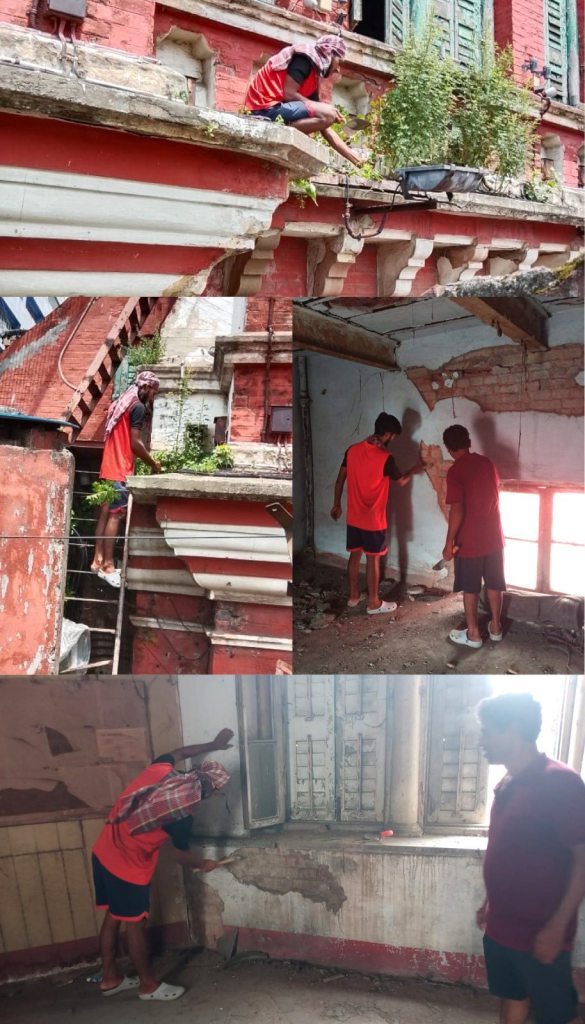
The fact that there is a huge headroom of work to be done. And to be present in a historic location like Kolkata, with such a large headroom with sizeable cash is an excellent opportunity and it happens once in a lifetime to someone. It is happening in my lifetime and I do not intend to give up the opportunity.
S.A.B: Geoffrey Moorehouse wondered why Calcutta is “Strangely Beloved.” Lapierre enviosned it as the “city of joy”. Contemporary writers like Indrajit Hazra think of the city as having “grand delusions”. How would you describe Kolkata? Or would you argue that the city is so Protean that ideally it resists such categorisations?
M.D: I haven’t really thought of what Calcutta means and can be labelled. I only believe that it is a great city living on some remarkable historical background, not like Noida or Gurgaon which has no evident historical landscape to speak of. We are blessed to be in Calcutta—I am blessed to be in Calcutta. I am extremely blessed to be born here, I hope to die here as well. And I consider this.. You know there is this lovely word in Urdu which I keep using with reference to the city—it is my watan. I feel deeply about it. It has given me everything. I have made a very comfortable living for myself. I have never had to migrate, I was never severed from my roots. My roots go back seven or eight generations. I am probably an older Calcuttan—my antededents are far more enduring than most others in the city. In 1843, my ancestors came from Surat, in a bullock cart. So for me, I don’t have terms like “grand delusions” or “strangely beloved” or “city of joy”—these are all borrowed terms and not mine. My term is more functional, my term is “life purpose”. Calcutta is my life purpose. I exist because of Calcutta. I don’t only live inside Kolkata; Kolkata lives inside me. And that is something I hold with a lot of pride.
S.A.B: The country has seen a severe assault on its secular fabric in the last decade or so. What are your views on the way it has responded to the crisis? Considering the rise of the Right-Wing forces, what could we do more as a civic society to counter such propaganda and communal divisiveness?
M.D: What people will say about what could be done about the civic society might become some sort of didactic gyan and the topic for an adda session. But what I will say is that Calcutta is one of the last great hopes. Calcutta is fundamentally liberal. This zameen of Bengal is syncretic. We have had the intermingling of cultures, not just Hindus and Muslims, but intermingling of cultures, going back at least 200/300 years—that’s the extent of the city. And to that extent, Calcutta is not a city at all, it is a concept. We define Calcutta within a physical marker which is limiting. Calcutta is an ideology. Now what is this concept? What is that ideology? Very simple. The city stands for the liberal world. Calcutta stands for the equality among different races and cultures. It stands for a fraternal and peaceful species of all kinds, which is why I think—I have said this before and I have said this in Urdu, that some of the financial centres of India could be referred to as Jism-e-Hindustan, the body of the country, some of the software hubs could be spoken of as Zehen-e- Hindustan , or intellect so to say. But the soul of the country, i.e Rooh-e- Hindustan, that is Calcutta. Calcutta represents a balance of all cultures. It doesn’t have to be as big a financial centre as Mumbai, but Calcutta’s its balance and fusion in culture and races is unique. If Calcutta were to disappear from the world tomorrow, the world would be a poorer place. And it would be poorer because of the secular balance that we have here. There are times when the secular balance appears to be tipping over on the far right side, but I still believe that the average Kolkatan, the general Kolkatan is a human loving individual, has great respect for people from different cultures and communities. Possibly the last Englishman you will find in Calcutta and I know this is at times said with some hint of derision but I find this very sweet. Nobody celebrates Christmas with more fervour than people in Calcutta. Why? It is not supposed to be a Bengali festival. But it is a Calcuttan’s festival. And hence it is a Bengali festival. I find this great. The city has its own character unlike some of the others.
S.A.B: Your love for poetry and sports is evident in the books you have edited and published. Is there anything you are working on currently or plan to take up in the future? If you could tell our readers a bit more about it.
M.D: Love for poetry is very personal. We have our own Urdu WhatsApp group, so that’s where that is restricted. With regards to sport, nothing much is happening. But one keeps curating content on Calcutta—books, posters, different kinds of things. And that will continue. I will keep celebrating the city through various forms and formats.
S.A.B: and finally, what advice would you give to the young generation of the city– those who would look to represent the next generation of Kolkatans in the coming decade or so.
M.D: You know this thing about advice is sometimes I believe that it sounds very patronizing. Nobody today needs any kind of advice. Today’s new generation is Instagram friendly. We in the times gone by would say that we know everything. Similarly, today’s youth know everything. But there is one thing I would definitely say. If you have not gone to North Calcutta and got lost, if you don’t know where you are getting into and where you are going to get out of, the conversation cannot start. The first conversation in reacing one’s destination in Calcutta is essentially to get lost. I have done that. I have done nearly 400/500 kms of walking through Calcutta’s by-lanes. It is only when you have done that, will you start understanding what the city is about. People have lived 40/50 years in Calcutta and think they have done their PhD on the city. They can become PhD’s provided they have gone to school and done their B.A and M.A in the by-lanes of the city. That is where the real Calcutta resides. So, my advice to people would not be that you should do this or one should do that. Nobody today needs that kind of advice. My only advice would be, “Go, get lost.” If they get lost, they might find themselves. And in having found themselves, they might discover, the essence of the city.
 Parcham Online
Leave a comment