Concept Note
Theme: Justice
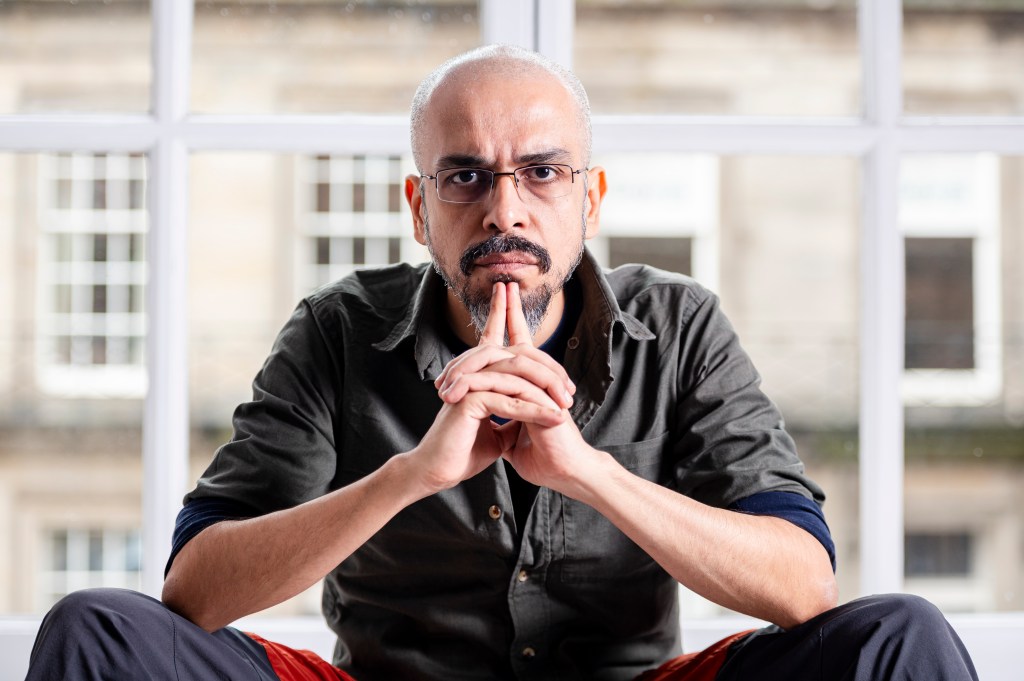
Guest Editor: Devashish Makhija
Many years ago, as a little child, from my first floor balcony, I watched a man being chased. The man’s clothes had been ripped away. He was bleeding. And the two men chasing him had swords in their hands. I was 8. Barely high enough to peek over the verandah wall. The man being chased was stumbling. The men chasing him slashed at him with their swords.
Most of it is sort of blurry to me now except for one thing. Every time his pursuers turned to check if they were being watched, I would duck. I remember not wanting to be seen. I remember being cold and clammy. I remember feeling the urge to piss in my shorts. I remember my throat so dry I couldn’t gasp. I remember my heart thumping. I remember feeling very very afraid. First for myself, and then for the man being hacked.
I never forgot that… that I felt afraid for myself first.
The man was pleading, screaming, begging, as he ran, tumbled, fell, got slashed, got up again, ran. After that everything is a blur. I cannot remember if his attackers killed him right there. Or if he managed to run down the street and out of sight around the corner where he screamed one last time. I don’t know now if I imagined some of the details. Or if they even managed to kill him. But I do remember my fear. And I carry that guilt.
I did not respond to those pleas for help. I did not raise an alarm. I did not show myself. I remember going down on my knees, shielded by the verandah wall, and crawling back into the house on all fours. I remember crawling all the way into my bed, and trying hard to erase what I had seen and heard. I couldn’t.
I’ve carried this guilt inside of me all my life. If that man died that night, he did not die because of his pursuers. He died because of me. Because of people like me.
We don’t like to confront violence because we don’t like to acknowledge it.
I use the word ‘violence’ because if I said ‘injustice’ I’d run the risk of alienating some of us. What appears unjust to one might seem like ‘justice served’ to the other. But ‘violence’? We can all agree on what that entails.
What matters more – An individual’s Right to his/her life? Or a social sense of Justice?
Is death-for-death fair trade?
Is Society greater than the sum of its many Individuals?
Why is it that when an individual metes out death it is seen as Murder, but when a social institution metes out death it is considered Punishment?
Humans are merely one of Earth’s many species. Then how did Humanity become a synonym for Compassion?
Franz Kafka (in ‘The Trial’) said that the Law presupposes guilt. It makes no distinction between voluntary and involuntary crime. If you’re suspect you’re guilty until proven innocent.
Friedrich Nietzsche and Fyodor Dostoevsky (in ‘The brothers Karmazov’) said something similar: if God is dead everything is permitted (‘God’ here must not be taken literally – it stands broadly for a collective sense of morality). This seems to be at the heart of crime in the modern world – that the evil – in a larger sense – almost has no explanation… it proliferates in the Death of God.
Academic Sunipa Das Gupta says, “Justice, in its broadest sense, is the principle that people receive what they deserve. But in a top-down political hierarchy, it is the apex that decides what the bottom deserves, and more importantly, gets.”
Can Justice then be relied on to be Fair?
What really does Justice mean? To you? To me? To us?
Tell us through short stories, Flash Fiction, Poetry and Editorials.
The world is standing on its toes at a dangerous precipice today. If we need to tip-toe back from our collective annihilation, some difficult conversations must be had.
This could be one of them.
~ Devashish Makhija
We invite previously unpublished Poems, original Short Stories (In English), translations of Short Stories, Non-Fiction pieces, Editorials on the above theme for our December 2025 Issue.
Photo-Stories and articles on Films and Popular Culture are welcome on themes of the contributor’s choice. We are keeping the thematic concerns flexible only for these two sections.
Send in your submissions for the December Issue by the 10th of November 2025 to parchamonline@gmail.com. Please follow the guidelines below and in case of any queries please write to parchamonline@gmail.com or WhatsApp 6289935412.
Submission Guidelines
Poetry: Please send in your previously unpublished poems (not more than 3) in a single MS Word document to the email id mentioned above with the subject line Poetry Submission- December 2025.
For Fiction/ Short Stories (Originally in English and in translation): Please keep in mind that short stories should be no more than 4,000 words. Send in the short story to parchamonline@gmail.com with the subject line Short Story Submission- December 2025. The submissions should be in MS Word format. In case of a translation, the contributor should send in an Acknowledgment/No Objection from the original author so that we at Parcham know that the translation is being done to the knowledge of the author.
For Editorials/ Opinion Pieces/ Interviews and Book Reviews: For Editorials and Opinion Pieces, please ensure that your submissions are free from unparliamentary language or religious or cultural bigotry. The editors have complete authority to reject a piece if they feel that they are not upholding the spirit of the magazine. Please send in your submission with the Subject Line Editorials/Opinion Pieces-December 2025.
Book reviews should be no more than 1500 words. Send in your submissions to parchamonline@gmail.comwith the subject line Book Reviews- July 2025.
Photo Stories: Please send in your photographs (not more than 7 and not less than 3) to parchamonline@gmail.com. The photos must be accompanied by a short write up/ captions and should be in the Jpeg format.
For Articles on Films and Popular Culture: Please send us a short pitch before sending us the complete article to parchamonline@gmail.com the subject line Films and Popular Culture. We are hoping to look beyond run-of-the mill film reviews and delve more into the contact zone of films and society/culture in general. We’re particularly interested in articles on Non-Hindi and Independent cinema.
Photo Stories: Please send in your photographs (adhering to the theme of the Issue and not more than 5 and not less than 3) to parchamonline@gmail.com. The photos must be accompanied by a short write up/ captions and should be in the Jpeg format. This section is an OPEN SECTION where the submissions can range across a diverse subject field not restricted to the theme of the issue.
Copyright for articles, artwork and photographs published in this magazine shall rest with the authors, with first publication rights to Parcham. As the magazine follows an open access policy, articles or extracts from articles may be used by others, with proper attribution, for academic and non-commercial use. We reserve the right to publish the work in print in case we go for a print edition later.
Please send in a short bio (no more than 40 words) and a recent picture of you along with the submissions.
Note: If your submissions in any of the above-mentioned sections have found a place on our platform in the previous two issues, we request you to please wait for another cycle (One Issue at most) before submitting again.
Devashish Makhija has written the award-winning novel Oonga; the collection of short-stories Forgetting; two poetry collections Occupying Silence and Bewilderness; several picture books for children; the international, National and Filmfare award-winning films Joram, Bhonsle, Ajji, and several widely-acclaimed short films. You can read more about him on http://makhijafilm.com/

 Parcham Online
Leave a comment