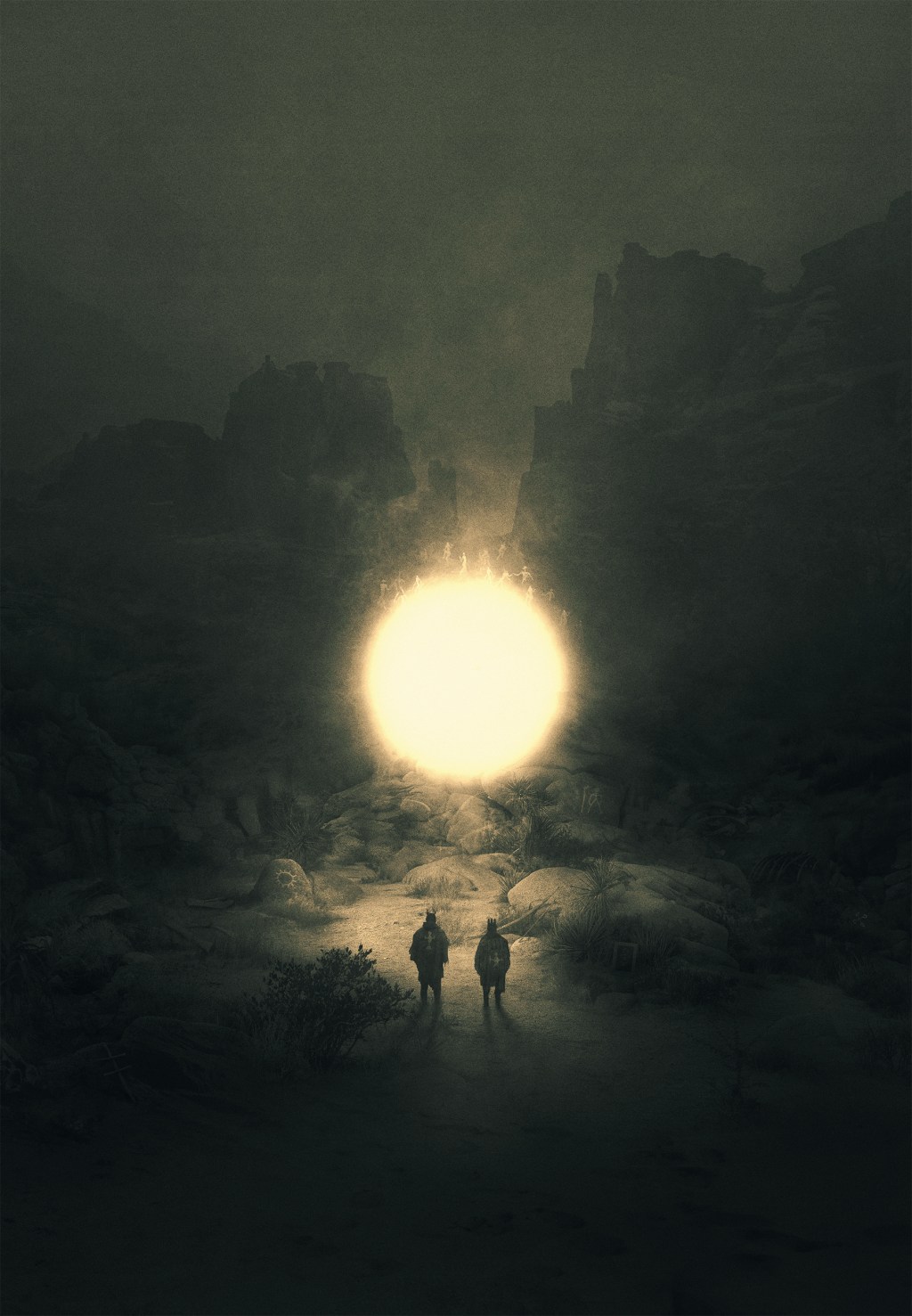
Virus : Manju Bala (Translated by Surabhi Jha)
Krishnendu’s speech ended with a thunderous round of applause. He speaks remarkably well these days. His central message was clear: that all human beings are equal, and that everyone deserves to live with dignity in this world. This sense of conviction has won over the hearts of ordinary people in villages and remote towns. He is now a committed foot-soldier in the struggle for equality. The sharpness of his intellect is evident in his eyes and expression. After stepping down from the stage, Krishnendu gulped down a glass of water. Atanu walked steadily toward him.
“You spoke really well today.” Krishnendu turned around.
“Where were you all this time?” A smile spread across his lips.
“I had gone somewhere. Walked a long way to get here. I heard your entire speech. It was really good.”
“But a speech alone isn’t enough, Atanu. The real work has all but come to a halt. Just yesterday, a Harijan was burnt alive in Karnataka—and there are so many other brutal incidents happening, most of which we don’t even get to know about.
Have we been able to do anything to stop any of it?”
“But truly, Krishnendu, how will this ever be remedied?”
A deep sigh escaped from Atanu’s chest. Composing himself a little, he said, “One day, the doors of consciousness will surely open for the marginalized in our society. And they will no longer die in neglect. They will no longer live as someone else’s slaves.”
“For this, we need revolution—we need struggle. Some people have already awakened. They are fighting for equal rights. And not just in our country—the fight has begun across the world.” Krishnendu paused.
Atanu first met Krishnendu at his maternal uncle’s house. Krishnendu was a close friend of Atanu’s cousin, Subimal. Both of them were medical students at the time. Krishnendu would often visit Subimal’s house, and so would Atanu. That’s how they got to know each other—and later, grew close.
“Have you ever seen a village, Atanu?”
“No, I haven’t really had the fortune to see a village properly.”
“Would you like to come and see one?”
“Where?”
“Our home, in Bardhaman.”
“Sure, I’ll go. Just tell me when.”
“Let’s go tomorrow.”
“Tomorrow? Alright then.”
“Pack a few extra warm clothes—it’s colder there in winter.”
“But it seems to be warming up now.”
“No, no—that’s not the case over there. In fact, it’s quite cold.”
The train came to a halt at the Bardhaman Station. They get off. The platform is crowded with countless people. Pushing through the throng, they make their way out of the station.
“I didn’t tell you one thing, Atanu—our house is thirty kilometres from here. And after that, there’s a two-mile walk on foot.”
“No bother at all. Just tell me where the bus is coming—let’s get on.”
“The bus should arrive here only. But I don’t see one yet. Come, let’s grab a cup of tea first.”
Just as they took a step forward, the sound of a bus reached their ears.
“There, that must be our bus.”
Glancing at the number, Krishnendu said, “Looks like we won’t be able to have that tea after all—that’s our bus.”
Krishnendu had a bag slung over his shoulder and a large suitcase in his hand. Atanu had the same. The luggage was a bit heavier than usual because of all the warm clothes they had to pack.
Getting off the bus, Krishnendu looked around, as if searching for something.
“You can occasionally find a rickshaw here, but not always. They sometimes go away to help with farm work.”
“Hey, are you having trouble walking? Give me the bag, I’ll carry it.”
“No, no, I can manage. You’re already carrying a suitcase and a bag.”
A narrow path ran through the middle of the fields, with farmland stretching on both sides. These days, crops are grown year-round on almost every piece of land. And Bardhaman is known as a prime region for paddy cultivation. Everywhere the eye travelled—it was endlessly green. Atanu had never known paddy fields could be so rich in colour and variety. Patches of mustard fields interspersed the paddy, painting the landscape with soft strokes of yellow.
Atanu was thoroughly enjoying the view. He had seen paddy fields before, from a distance- while travelling by train- but never this close. Suddenly, overwhelmed with joy, he exclaimed:
The sharpness of sight draws in
The pulse of life
Deep eyes seek
Your mystery.
“Atanu, I had no idea you were a poet”, Krishnendu said, astonished. Atanu simply smiled.
As they walked, evening slowly descended. Krishnendu stopped in front of a large house and said- “This is our home.”
On the way there, Atanu hadn’t noticed any other building that was as grand. Most of the houses were made of mud — the walls all earthen, the roofs thatched or tin. Krishnendu’s house was two-storied. As they entered through the gate, a boy of about eighteen or nineteen came up and took the bag from Atanu’s hand. He looked at Atanu with shy eyes and said,
“Please come upstairs.“
While climbing, he added, “Your room is upstairs- right next to Dada’s.”
On the way there, not a single house seemed to have electric lights. But Krishnendu’s home was brightly lit with electricity, glowing warmly in the evening.
Krishnendu said, ” The road may have looked dark to you, but that’s because you couldn’t see properly. These days, in villages and rural areas, the panchayat handles development more or less however it pleases.” He continued walking as he spoke. The electric poles along the road leaned to one side—half-broken, neglected—a still image of ongoing deception. Sometimes the electric lights flickered and disappeared, like a faint, mocking smile. Krishnendu added- “That’s why I’ve kept a generator. We switch it on now and then. Since you’re here today, we turned it on. Otherwise, the whole village mostly stays shrouded in semi-darkness, lit only by kerosene lamps.”
He turned to Atanu and asked, “Want to wash up? Come, I’ll show you the bathroom.”
“Just going to wash my hands and face- and splash a little water on my body.”
“In this cold? Will you need hot water?”
“No, cold water will do just fine.”
From the ground floor, his mother’s voice could be heard. “What’s going on up there? Are you two done washing up? The luchis are getting cold!”
It was mid-February. Kolkata hardly saw a winter season this time. But here, the cold was quite palpable. Atanu wore a full-sleeved sweater, yet it still didn’t seem enough to keep the chill away. It had been even colder at night.
Atanu and Krishnendu came down the stairs. After having breakfast, the two of them set out. They walked along the narrow paths that ran between the paddy fields.
“Look over there, Atanu. You see that? That’s our mango orchard. I’ll take you there later. We have a big pond in that direction too. You know how to swim, right?”
“Yes, I had learned.”
“Then let’s take a dip in the pond this afternoon. What do you say?”
Krishnendu walked along the village path. It was a narrow, unpaved road. During monsoon, it must get muddy and waterlogged, adding to the struggles of the already poor villagers. .
Sensing what Atanu was thinking, Krishnendu said, “Most villages live in this condition. The monsoon, with all the mud and water, is truly a difficult time.”
Looking around the village, Atanu felt it was home to extremely impoverished people—those living below the poverty line. All the houses were made of mud, with roofs of thatch or leaves and wooden planks.
Krishnendu stopped in front of a house and called out, “Masima, oh Masima!.”
A voice came from inside the house, “Who is it?”
“It’s me, Krishnendu.”
“Krishnendu! Come, come inside.”
“Oh, don’t worry, I’ll just sit here on the veranda.”
“Labani, spread a mat in the veranda, will you?”
A girl of about fifteen or sixteen came forward with a mat.
Taking the mat from her hand hand, Masima placed it on the veranda floor and said, “Satyen has had a high fever for many days now. My mind is not feeling well at all.”
“Are you giving him any medicine?”
“Yes. Gurudev came yesterday and gave him holy water, so I’m giving that to him. I collected the water after washing Gurudev’s feet and kept it aside. I’ve even made my son drink some of it.”
“What are you doing, Masima! You made him drink the water collected by washing the guru’s feet! Where is Satyen?”
“He is lying on the veranda of that room on a wooden cot. His fever is very high now. He was talking incoherently a little while ago. Come, let’s go see him.”
Labani lifts the blanket up high and holds it tightly.
Satyen’s eyes were closed. A faint moaning sound reached their ears. Krishnendu stepped forward slowly and placed his hand on Satyen’s forehead.
“Oh no! His body is burning with fever. We need to bring his temperature down with water. Masima, did you pour any water on his head?”
“If we pour water, he might catch a cold — that’s why I didn’t. Besides, Gurudev told me to give him the holy water. He said that alone will heal him.”
“You’re making a big mistake, Masima. Pouring water on the head during a fever doesn’t cause a chill — it actually helps reduce the temperature. It brings relief to the patient. Please pour some water on Satyen’s head.”
Labani brought a bucket of water and using a small bowl, began gently pouring it over Satyen’s head.
“I’ll write down the medicines and leave now. Please send someone to get them, Masima.”
“Alright, dear.”
“I’ll come again tomorrow to check on Satyen. Let’s go, Atanu. Make sure he takes the medicines properly, Masima. Don’t worry- there’s nothing to be afraid of.”
Krishnendu spoke those words while walking across the courtyard. He glanced at his watch—the sun had already tilted westward. It was past two o’clock. He hadn’t eaten much since morning. Now hunger churned deep in his stomach, making his insides feel hollow.
“Hey, are you hungry, Atanu?”
“Yes—I’m feeling a bit hungry, Atanu said in a quiet voice.”
Hearing the sound of the gate opening, Krishnendu’s mother came out and said, “You two left early in the morning, and I haven’t heard a word from you since. Do you even realize you’ve kept Atanu hungry the whole day? What must he be thinking, I wonder?”
“Please don’t think that way, Masima, Atanu said softly, his voice filled with modesty.”
“Ma, we’ll take a bath right away. You start serving the rice.”
Holding Atanu’s hand, Krishnendu stepped onto the stairs to the first floor.
What happened yesterday was a completely new experience for Atanu. He had only heard such stories from his mother or grandmother before. Atanu had never imagined he would witness something like that firsthand in this very century. At a time when humankind was dreaming of settling foot on other planets, the poorest in villages were still being deceived and in the clutches of the same old ways.
The two of them walked on silently, side by side.
At that moment, two men passed by them, talking to each other. One said to the other, “Even Gurudev’s medicine — that divine cure — didn’t work? Satyen collapsed in such a state of delirium. Surely something unholy has taken hold of his body?”
As soon as the words reached his ears, Krishnendu turned to look at them.
“Did you hear what they just said?”, Atanu whispered softly.
Krishnendu walked up to them and asked, “Have you just come from Satyen’s house? How is he doing?”
“He’s not doing too well”, one of them replied.
Then, looking closely at Krishnendu, he said,
“Aren’t you Krishnendu?”
“Yes, I am.
“When did you come from Kolkata?”
“Just two or three days ago.”
“Who’s with you? I couldn’t recognize him.”
“Atanu, my friend.”
“Are you two going to Satyen’s house?”
“Yes.”
“Go, go—hurry up. You should see Satyen. You’re a doctor, after all.”
They hurried towards Satyen’s house.
“Why is there such a crowd? Everyone, please move aside. Clear the area around his head. How is Satyen doing, Masima?”
“Not well, dear. Since last night, he’s been having repeated bouts of diarrhea.”
“What! That’s serious!”
Krishnendu placed his hand on Satyen’s body—there was no response. He quickly prepared an injection.
“Atanu, hold up Satyen’s arm for me”, he said.
At that moment, someone came forward, attempting to place a consecrated flower on Satyen’s forehead and pour a spoonful of holy water into his mouth.
“No, please don’t put that kind of water into his mouth.”
“What do you mean?”
The woman looked at Krishnendu in astonishment.
T”his isn’t just any water- it’s charanamrito from the temple of Goddess Sheetala. Satyen will get better if he drinks it.”
“Alright, please take that somewhere else or throw it away. That kind of stuff is harmful.”
“We’ve treated illnesses with these remedies all our lives, and now you’re telling us to throw them away? “Someone said in disbelief.
Without reacting to the remark, Krishnendu calmly replied,
“Give him only boiled water, Masima.”
Satyen still hadn’t regained consciousness. A streak of concern crept into Krishnendu’s expression. After giving the injection, he kept glancing at his watch. A dark shadow spread across his face, growing deeper by the minute. Satyen’s wife came and sat beside him. Her eyes were half-closed, as if she were trying to say something — but only through gestures, without words.
“Looks like he might drink some water now. Give him two spoonful of that boiled water.”
Satyen’s wife carefully fed him the water with a spoon. A little trickled down his cheek, which she gently wiped with the end of her saree. Krishnendu looked a little more at ease.
“Now I’m relieved! There’s nothing to worry about anymore. Satyen really gave us a scare.”
Masima came and stood in front of them. Her face was still pale and weary.
“I brought these medicines with me, but we’ll need to buy some more, Masima. Please send someone to get them. Don’t worry — he’ll recover soon.”
Tturning to Atanu, Krishnendu said, “Come, let’s spend some time swimming in the pond today. My head feels so heavy. Science has come so far, yet people remain trapped in such primitive beliefs. Do you get it, Atanu?”
Atanu said, “The truth is, some people have been kept that way—trapped like this—for generations.”
“But I feel differently, Atanu. I think it’s their own lack of awareness that has brought them to this condition.”
“It’s certainly a failure of understanding—but not of cunning or cleverness.”
Krishnendu didn’t quite grasp what Atanu meant. He said, “We’ll talk more about this later. For now, let’s swim in the pond.”
They stepped down the stairs, one step at a time and let their bodies float in the cool, clear water.
Earlier, the villagers used to drink water from this very pond. But now, the government has installed hand pumps along the roads. So, these days, everyone comes here just to bathe and wash clothes.
At night, after dinner, they were getting ready for bed. Drowsiness had already started to take over when suddenly, a muffled sound woke Atanu. Krishnendu was not beside him. Atanu sat up on the bed.
“They’ll follow my rules, do you understand, Krishnendu?”
Atanu’s ears perked up. Even though the voices spoke in whispers, the words were clear.
“No, Baba, you can’t keep misleading them like this anymore. Why did you go to Satyen’s house again today? I had told you not to.”
“Just because you told me not to, do you think I won’t?”
“No, you won’t. Why did you forbid them from giving him the medicines I prescribed?”
“You also told them not to give him the holy water.”
“Yes, I forbade it—because it’s poisonous.”
“Listen, Krishnendu, that’s how they’ve always lived—they’re used to it.”
“Do you know that the same water—yes, the one you used to wash your feet—that very water was given to Satyen to drink? He got a stomach upset because of it. He could’ve died!”
“So, what if that happened? That’s how they’ve always died—and always will.”
“I’m telling you, Baba—please don’t keep pushing them toward death like this anymore.”
“What I will or won’t do—that’s for me to decide. I don’t need your wisdom to guide me.”
“If needed, I will have to step in. I can’t let you continue doing what you’ve always been doing. I’m a doctor, Baba.”
“Go spread that kind of knowledge in Kolkata. Don’t bother worrying about these people—they’ll manage just fine without your concern.”
Then, lowering his voice a little, he said, “It’s quite late now—go get some sleep.”
Krishnendu didn’t say another word. He walked slowly back to his room. While gently lifting the latch on the door, a faint sound escaped. He lay down beside Atanu, and resting his head on the pillow, fell asleep almost instantly. But sleep did eluded Atanu. Until then, he had been lying still with his head on the pillow. Now, he sat up on the bed. He glanced once more at Krishnendu, who was fast asleep, then quietly stepped down from the cot. Pouring himself some water from the jug on the table, he drank deeply. The night grew darker. A thick silence wrapped the world. Atanu pulled a cigarette from the pack in his pocket, lit it, and slowly unlocked the door. He stepped out onto the veranda and stood there.
Outside, there was dense darkness, yet within it, Atanu could see a strange glow of light. The shadows of the night seemed to cast a hypnotic spell on him. A black owl flew in and perched on the window’s cornice, only to fly off again the very next moment. This world, he thought, is truly full of contradictions—it never stops, never stands still. Atanu lit another cigarette. After a while, he went back inside and drank another glass of water. His throat felt constantly parched, as if drying up from within. Again and again, echoing in his ears, came that single line,
“It’s not right to keep deceiving these people like this, Baba!”
“Deceiving, you say? Who are we deceiving? This is the very business that was passed down by our fathers and grandfathers. It’s because of this that I could afford to send you to medical school. All this land, this property, the zamindari — all of it is built on that.”
After pausing for a moment, he spoke again—”If they become too wise, our comfort will be ruined. Their ignorance is our greatest asset.”
Atanu’s head began to throb with a strange, numbing sensation. A sharp, unbearable pain surged through him. Meanwhile, the sky of dawn gradually lightened. From a distant tree branch came the cawing of crows. Atanu climbed down the stairs and walked straight out through the gate. He started walking down the road. Two dogs began to bark at him, but he calmed them with a gentle wave of his hand. The entire surrounding was shrouded in mist, limiting his vision. Pushing through the fog, he kept walking. Soon, the sharp rays of the rising sun would not only clear the mist from the fields—they would begin to lift the heaviness that had long settled over this land.
Translated from the Bengali short story “Virus” by Manju Bala, originally published in the collection Chorabali (2005), Chaturtha Duniya, pp. 7–26.

Dr. Surabhi Jha is an ICSSR Postdoctoral Researcher at Aliah University, West Bengal, India. Her Doctoral Research focused on feminist perspectives in Holocaust literature. She has published several scholarly articles in National and International journals. Her research interests include Holocaust studies, gender studies, cultural studies, and Dalit literature. She is a social activist who has organized gender awareness programs in schools. She also founded All Gender Squad, an organization dedicated to combating sexual abuse. Her monograph, Repression and Resistance: A Feminist Interpretation of Select Holocaust Novels, is set to be published by Peter Lang, Switzerland, in 2025.


Leave a comment