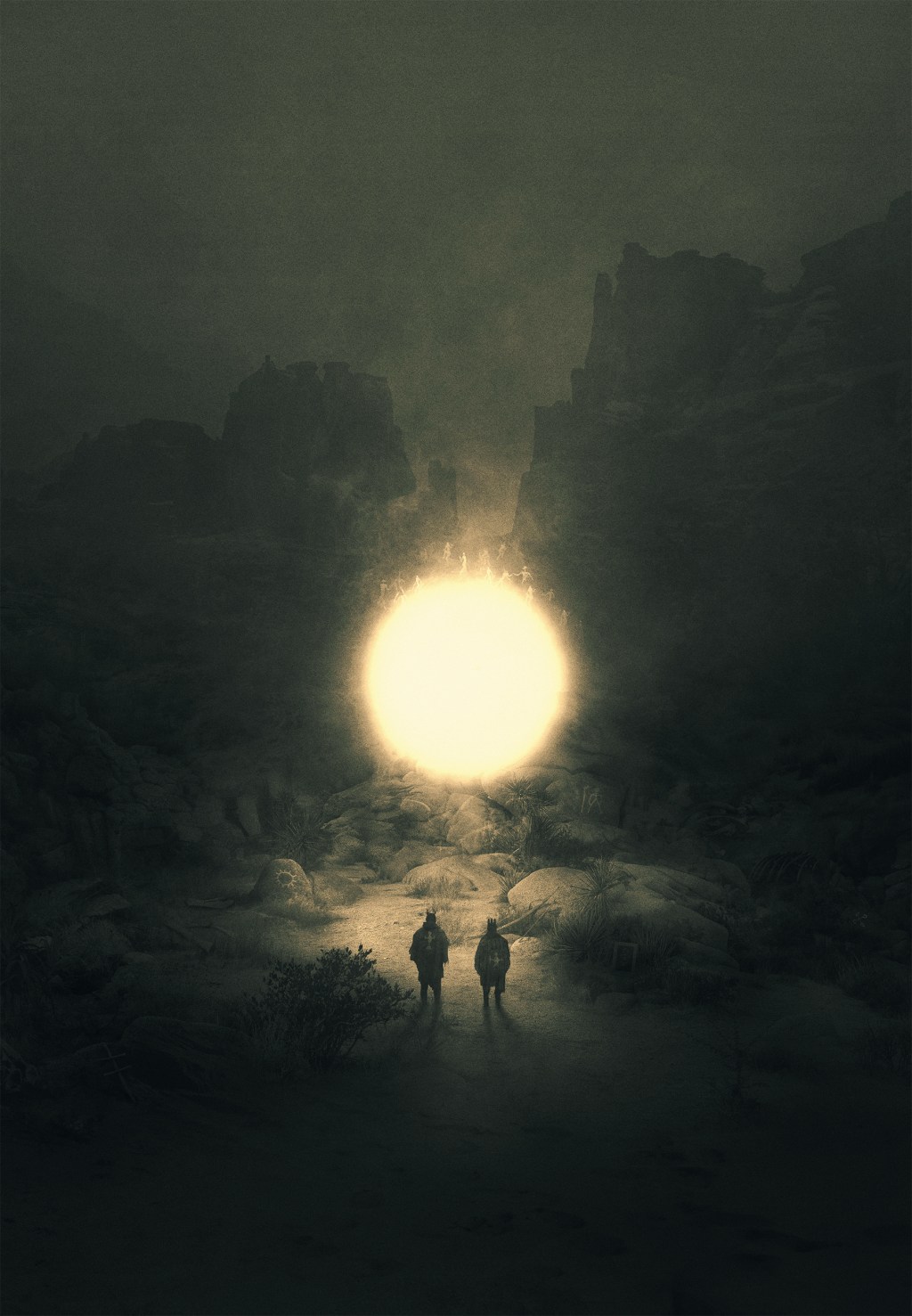
The Awakening : Sharon Berg
When the change came, Elke felt it as a shift in the pattern of stars she was born under. She knew at once her star song had altered. Some switch was thrown, affecting the whole pipe organ. Ideas and beliefs that once were central now rested a bit off centre. I’m not the same. Things have changed for me, is what she took from it.
That was three months back, when she’d first joined The Federation. Joining a national writing organization was part of her goal for progressing toward the professional side of writing. She looked forward to this AGM, knowing it was her chance to meet other professional authors, face to face. She knew from the moment she joined her life would change for the better. That was confirmed when, just two weeks later, she was accepted to a six-week Writers Workshop at the Banff School of Fine Arts. The problem was, the dates for Banff overlapped with The Federation’s AGM. Consulting with office staff at The Federation, she was assured they’d fly her to the AGM in Toronto from Alberta, even though she was an Ontario resident. Things like that cemented her sense that joining the Federation was a step toward being a full-time professional. She’d already received benefits beyond what she’d imagined.
Still, Elke remained nervous about crowds. She’d been that way all of her life. Learning her condition’s name—agoraphobia—she pushed back against everything her diagnosis meant. She was determined to conquer anything that got in the way of her development.
I’m not the same, she thought. She felt a vague discomfort catching the bus from the mountains in Banff to the plains around Calgary to board her plane. She even smiled shyly at a few fellow passengers. She believed her discomfort in crowds resulted from being raised in isolation on the private Girls School property where her father was caretaker. She decided her nerves spoke to her origins, but they’d no longer describe her daily circumstance. Her fear of being in public places—where someone could watch her undetected—didn’t grab her as it used to. Only a hint of the old acid ran in her veins. It wasn’t overwhelming. She was beginning to conquer her daemons.
The Federation’s AGM was in Toronto, an incredibly busy metropolis Elke left three years before. Arriving at the hotel where authors gathered for the AGM, she visited a well-marked table in the Lobby. First, volunteers from the Federation crossed her name off a list of people they were waiting to greet. She accepted a welcome package and was directed to the hotel’s reception desk to get her room key. She took her belongings up to her room, a space she’d share with another woman author. She’d recognized the name on the forms she received, but couldn’t picture her face. She only knew her poetry, accomplished but witchy and not to her taste. Entering her temporary abode, Elke was obviously the first to arrive.
It took some effort to build her courage for the next step, but she reminded herself she was stronger and more independent with every decision she made. Sponging the detritus of travel from her face, changing into fresh clothes—a skirt instead of the jeans she wore on the bus and plane— she brushed her hair and touched up her make-up. Finally she braced herself to meet some of the hundreds of Federation members attending the AGM.
The elevator she travelled in was empty, but it was only three o’clock. Some people attending, like her roommate, hadn’t arrived yet. They had later flights, buses, or car rides. She smiled passing the volunteers at the table, and made her way to the Meeting Room identified in the Welcome package.
Pulling open the heavy door, the room buzzed with the conversations of at least 100 people. They stood in small groups by the windows, sat at tables, or perched on couches with their beverages. She recognized several faces from the photographs on book covers. Still, most were people she didn’t know. She fought down a rising panic, still having difficulty with her social awkwardness. Standing just inside the door, she didn’t avail herself of a drink from the bar though almost everyone else carried a glass.
This was her first AGM. She was glad things like this existed, but didn’t know what to do or expect. She knew gatherings offered a chance to interact with others who wrote. Her occupation tended to separate people over great distances, writers often leading lonely lives. She knew most could relate with her own circumstance. Yet, standing by the door, she felt alone and isolated. Her discomfort rose. Her shoes bothered the baby toe of her left foot. Rather, she felt certain the seam in her stockings would create a blister on her toe. She had checked this, adjusting her stocking in her room, but the residual discomfort was suddenly overwhelming.
Looking around nervously, two women—one tall, slim and blonde, the other a pale brunette with brown eyes—were deep in conversation to her left, just out of earshot. She thought she recognized Emma Pope. They seemed to be long time friends the way they smiled and laughed as they talked. The blonde touched the shoulder of the brunette, who smiled first, then put her head back in open laughter, responding to something the blonde one said. Elke noticed their glances in her direction, which sparked a nervous anticipation. A few minutes later they approached her, introducing themselves.
“Hello, I’m Emma Pope,” the tall blonde woman said, shaking Elke’s hand.
“Olivia Chambers,” the brunette said, following Emma’s example.
“Oh, it’s nice to meet you both. I’m Elke Brix. I recognize you from your book cover photo, Emma,” Elke admitted. “I love your work.”
“I thought I recognized you from your photograph, too,” Emma laughed.
“I’m sorry I’ve only read a few of your poems, Olivia. There was no photo, so I didn’t recognize you, but I do like your work as well.”
“Thank you,” Olivia responded. “You have strong facial features, which suits your work. You’re not a shy person either, are you?”
“I wouldn’t say that,” Elke laughed, thinking, What you don’t know about me! “But I was just realizing how many people in this room I recognize from their book jacket photos! It makes one realize how important they are!”
Elke knew she presented a bit of a conundrum to people who didn’t know her. Her nerves spoke to her insecurity, but she’d learned to develop strong boundaries, putting up lines few people got past. She was glad these women approached her to share pleasantries in the midst of a crowd. Everyone else seemed too busy visiting friends to pay her any attention.
“I read three of your poems in Malahat,” Olivia shared. “I liked them all. That rarely happens.” She chuckled, “Liking all the poems offered by one author, I mean. But they were really strong.”
“Yes, I saw some of your work in Waves,” Emma said. “It struck me that you’re a feminist.”
“Oh, I’ve never adopted that title. I mean, feminism is a huge mantle, with many different folds. Though I will admit, I lean that way.”
Olivia and Emma exchanged glances. Emma twirled her glass between extended fingers, clearing her throat before she continued.
“Well, sometimes people don’t recognize their power to stir up an idea. Listen, Olivia and I were trying to think of how to solve a big issue for the Federation before you came into the room. We’re both wondering if you might be the one to help us out of a tight spot. Would you consider standing for a leadership position that’s coming free in the Federation at tomorrow’s elections?”
“Leadership?”
Elke was shocked by this request to assume a public leadership position in the organization. She didn’t feel ready to take on that sort of responsibility.
“Yes,” Olivia continued. “I’d like to nominate you for Chair of the Feminist Caucus when the voting takes place. Emma will second my nomination.”
“Chair? Me? Wow!” she shook her head.
Anyone who studied human behaviour would recognize Elke’s reluctance to commit to the idea from the expression on her face. She was scared silly by the notion of leadership.
“Don’t worry, most of what you do involves writing a column for the quarterly newsletter,” Emma offered. “People send you information about events held in different parts of the country. You just create a report to share that information. We only gather for meetings once a year, at the AGMs. You’d be responsible for chairing a meeting then. You know, ask a few people to speak to an issue and chair the dialogue. At this year’s meeting you could ask the audience to share their concerns around the backlash to the Feminist Caucus. The Federation has been an old boys network for too long. The Feminist Caucus was founded to provoke a positive change in both our policies and behaviours.”
“I thought you would ask me to vote for one of you,” Elke replied. “I only joined the Federation this year—about three months ago. I’m not sure I know enough about the organization to do that job. I sure don’t know what’s expected of the Chair for a committee.”
Their suggestion had her mind spinning. She possessed an odd facility for recognizing the tone of her life. She’d known before she attended the AGM she would face some big changes. Still, she didn’t have a strong reading of her own future yet.
Imagine me, she thought,a person with strong agoraphobia, Chairing a meeting. I can’t bring myself to walk to the store sometimes. My baby goes without milk for half a day—and they want me to lead a committee!
She accepted her behaviour in the past with a level of shame, not knowing her future. At this point, she was only noting things as they developed.
Will accepting that position lead to future complications? I can’t tell.
Not knowing made her hesitate to accept Emma and Olivia’s request. Emma pulled a face in response to Elke’s initial reaction to their query.
“I don’t think anyone knows what’s expected in a new position, Elke. I mean, beyond the fact you’ll be expected to write a page in the quarterly newsletter to keep members updated on developments. Can you Chair a meeting at this AGM tomorrow afternoon? Don’t worry, we’ll be there to support you and offer advice. I’ll even take notes for the meeting. We also need to elect a Secretary,” she said to Olivia.
“We just need to be sure that someone takes up this position,” Olivia added, “or the whole Caucus will fall apart. People know our views. Several of the men told us we’d be too radical for their taste. We thought you can take a more moderate view, without squeezing us out. Most of the other women in the Federation have been scared off by the Old Boys Network.”
Emma put her hand on Elke’s shoulder.
“The woman who had the position this past year is resigning at tomorrow’s meeting. They really hurt her with things they said. Your poetry tells us you’re not afraid of the Old Boys.”
“It sounds really challenging, actually.” Elke smiled. “I need to think about it before I make a commitment. I used to be on the Residents Committee at my Housing Co-op. I’ve never backed down from speaking my mind when I see injustice toward women. I know I can support others, and how important it is they have the opportunity to speak for themselves. I’ll let you know tomorrow morning. Okay?”
Olivia and Emma smiled wryly.
“You’d be perfect for this,” Olivia said. “Your writing packs a punch when you want it to.”
“Yes, think about it, please,” Emma continued. “We believe you’ll do fine. It’s important we don’t let the Feminist Caucus die.”
This changes everything, Elke thought as Emma and Olivia departed, saying they needed to refresh their drinks. Already I’ve been accepted—at least by Olivia and Emma. I’m seen as an author, but also as someone who can support other women.
At that point, she recognized another face across the room. George was hard to miss, being so tall and loud. He was holding court, surrounded by several men whose faces she recognized from their book covers and some who were unknown. She started a letter correspondence with George Hardy a year before, exchanging ideas about writing and news from her family. He was her half-brother’s father. She’d been raised knowing about him and enjoyed receiving his short, hand-written letters when they came. They were brief, but sensitive and candid. Once, George sent her a postcard he received from a local company that picked up dead animals from your farm. Writing across the postcard, he wondered if they knew about the body he’d stashed in the garage. That was his dry sense of humour, something he was as famous for as his poetry. She made her way across the room, planning to introduce herself. Perhaps he’d introduce her to the others in the group that surrounded him.
She didn’t want to interrupt the story he was telling, so she stood close, but not too close. She didn’t want to crowd him. Being so tall, almost giant, it seemed unlikely he’d read her presence as an intrusion. His gestures were large, his voice booming by comparison to everyone else. When he noticed her waiting. he stopped himself mid-sentence. Then he simply stared at her. To cut the tension, she spoke first.
“I’m sorry to interrupt, George. I just thought I’d introduce myself to you outside of a letter. I’m Elke Brix, Weylin’s half-sister.”
His face was overtaken with an expression she could only think of as glee. She recognized the way his mouth moved because she’d seen that expression in her brother so often. But he did something so unexpected next, she was shocked. Instead of speaking to her, his great arm swung around her back, his hand in her armpit. He lifted her in his grip so she stood on her tip toes, off balance and pinned to his side. In his great, booming voice, he let loose once more, addressing his cronies instead of her. A rumbling chuckle started in his nether regions, erupting above her head.
“Ha! This is Elke Brix, boys. She’s my ex’s—the daughter I never had.” With a slight pause, he finished, “I guess makes it alright, eh? Har-har-har!”
Elke was so incensed by his crushing embrace and the implications of what he’d said, she struggled hard to break from his embrace. She saw the lewd smiles some men in his company sent in her direction, and the open-mouthed shock on other faces. George had done his best to embarrass her with this chauvinistic puffery. When she managed to escape, she stood just out of his reach.
“Excuse me, George!” Her voice was loud. “That sounds like you’ve got some unfinished business with my mother. I suggest you deal with her and leave me out of it. I’m sorry that I bothered to introduce myself.”
She turned on her heel and walked away, knowing some men surrounding him remained puzzled, while others were beginning to wake up to who she was as a person. There was one thing she’d prove from this point forward. She wasn’t a doe-eyed girl. He couldn’t embarrass her like that. She wondered, for a moment, what her mother had ever seen in such a crude man.
Elke had learned early in her life that her mother married George Hardy when he was a nobody. His was legend in the literary circles of Canada today. People often linked his name with Charles Bukowski, only partly because they were friends. They had a similar approach to the world, speaking openly about their disgruntlement with their finances, lusting after young beauties. Their poetry often took root there. George added a tender treatment of the territory around the cabin he and his wife built with the assistance of young men who admired his work. George was the one Canadian poet everyone knew. His wife, Margaret, had once been her mother’s good friend, but she was the reason George deserted her when Weylin was ten-months-old.
Elke thought about her relationship with her older brother and best friend. Somehow they’d managed to feel more like twins than simple brother and sister, despite a six-year age difference. Living on the private estate of the Girl’s School her father was caretaker for had forced them to value each other’s company and support, as human beings and artists. It wasn’t likely to have happened otherwise. Their inherent isolation on private property meant they were unlike any other brother/sister team they knew of.
I would never, Elke thought, shivering with disgust as she shook off the lasting impression she’d received from George’s arm squeezing around her. The suggestion he’d sleep with her was insulting not only to her and her mother, but to all women. George saying she was the daughter he never had, so that makes it alright, disgusted her. It demonstrated his complete disregard of family connections. Clearly, he’d never behave couthly toward her in the future.
She began to search the room for Emma and Olivia. She would assure them that she was ready to accept their nomination to Chair the Feminist Caucus. The other people in the organization would either know her work from reading it or not. Emma and Olivia could either talk to enough people to arrange her election or not. But, as of now she knew she’d Chair The Feminist Caucus with dedication if she was elected.
Let George and his Old Boys Club deal with that, she told herself.
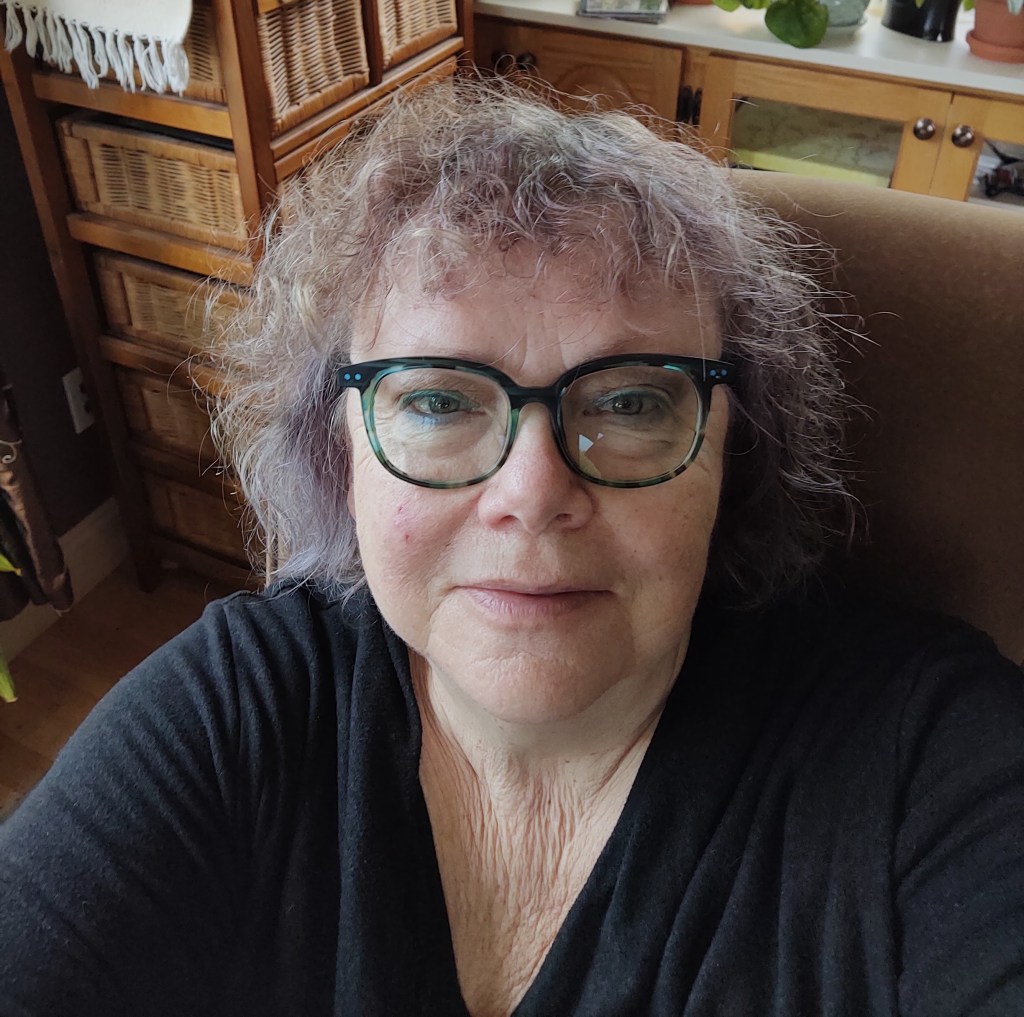
Sharon Berg’s work appears in Canada, USA, Mexico, England, Wales, Amsterdam, Germany, Romania, Siberia, India, Singapore, and Australia. Her poetry includes Stars in the Junkyard (2020) an International Book Award Finalist. Her short fiction is with Porcupine’s Quill (2019). Her nonfiction The Name Unspoken (2019) won a 2020 IPPY Award.
SCROLL. SKIP. STAY : Aarushi Dutta
She was done.
After finishing a year in college, she had perfectly wrapped all her goals in a tiny corner of her journal- the perfect summer she named it with hopes that would soon be crushed. It was supposed to be perfect, learn to love kathak again, pick up the dust laden guitar, drive, draw, find her younger self who lived and lived just for herself. Summer promised that love to her, the morning light making her smile, the occasional rains she twirled in growing up, the breeze that calmed her down even in her worst of her anxieties. Summer to her was everything she loved and so much more.
But, after weeks of procrastinating, failing to even get out of bed, cheeks hurting from pretending everything was alright, she was truly and utterly done with her life.
After endless hours of scrolling through social media trying to look into people’s life, she had long lost touch with, she threw her phone aside. The AC hummed above her while the quiet of her dark room felt suffocating.
How did she even get into this position?
She was everything. The perfect student. The perfect daughter. The perfect friend until the same perfection drained her and now, she was just a shell of a person she once was and the worst part was that she wasn’t brave enough to let the world see. To everyone else she was still thriving but she knew how much of it was pretending and for once in her life she wanted to breathe. Just once.
After fifteen more minutes of contemplating her entire life, she pulled up the anonymous app that saw the worst of her days. It was either scream into her pillow and spiral once again or frustrate a stranger. Hiding behind the screen she could be herself and not care of what the other person would think, if she said too much, or not enough, if they would like her or would she have to chip pieces of herself again to fit in. She didn’t have to care and that was the liberation she wanted.
Most of the people frustrated her before they even began but could she really blame them? Afterall it was nearly two and the only people she could find were lonely or creepy. What could she expect? Anonymous app, late night she nearly walked into all this herself.
Five more people then I am out.
She decided. She won’t skip, give a proper chance and then stalk her ex best friend once again.
One started with the same question m or f she skipped, another skipped before her, with the next the conversation died out mid-way or maybe she didn’t try.
Two more to go, she prepared herself. Be social, talk, for the love of God pretend you have basic conversational skills.
The idea of her reunion with her school friends hovered over her like a storm cloud. She could already imagine the questions forming, their voices merging into one until she couldn’t breathe anymore. How have you been? We haven’t seen you for the past year? You are barely there. It’s like you’re a ghost. Her grip over her phone tightened for how could she tell them that she was so tired that somedays she felt it would better if the world ceased to exist. Once.
How could she tell them that after years of being invisible in school to suddenly being invincible in years close to high school graduation, she didn’t know how to thread the line between the person she was and the person everyone expected her to be.
She deleted her social media on whim one night but now after weeks she could no longer avoid the ghosts of her past. She had to smile. Talk. Be okay. Live and smile as if she wouldn’t prefer drowning.
Another m or f broke her chain of thoughts.
She hit skip. One more m or f or asl to go before she could go back to looking into lives she didn’t belong anymore. Four done, the last one to go.
Stranger: Good evening
Her phone lit up brighter in the dark. Who in the world? It was two in the morning. She pushed her glasses up, her fingers tired. Another night. Another shade of weird. She desperately wanted to skip and give up on everything but this stranger was the last thread she promised herself. No judgements. No skips. So, she wrote back.
Her: Good evening
Her: How are you this fine evening?
Her crusty British gentleman accent voiced her words out in her mind as she typed her text. The stranger didn’t know her maybe she could successfully weird him out. Payback for the times she was driven to the edge of insanity by strangers in the internet in desperate times she needed to feel something.
She was way past caring if the person behind the screen liked her, well aware of the fragility of the digital connections. There were so many nights when she connected with people talking to them for hours who later, fizzled into nothing but thoughts she rarely went back to. Each so fragile, each leaving something behind. Never whole but always lingering usernames which blurred into one.
Stranger: Good.
When that message popped up, she didn’t care. She was sleep deprived driven by nothing but the anxiety and existential doom.
Stranger: Tea or Coffee?
Why wasn’t this person skipping or weirded out? She needed to get back to her life not be roped into a conversation that will leave her with nothing but a headache.
Her: tea. Though I want to like coffee it fits the dark academia vibe but always tea. You?
She regretted the word vomit the moment she typed the text out. She expected a skip. It was supposed to be nothing, yet she forced herself to interact, preparing herself for several more conversations that would come the very next day. Be social, try she whispered as she answered. Don’t skip, not be annoyed. Talk for once.
Expecting the voice to be another stranger telling her something or drifting off obnoxiously before asking her socials.
Please skip.
Stranger: coffee
That’s it. No elaborate explanations, no sign of awkwardness just a simple word that seemed to strangely relief her of something she couldn’t quiet explain.
Her: Rain or the sun?
Stranger: I play football so I would say the rain.
A boy.
She wanted to roll her eyes or curl up in a ball. She was positive she disliked men; her ex-boyfriends and countless hinge interactions indeed left a very shiny path for the male interactions.
Stranger: Do you play?
Her: I can’t. I am the least athletic person you’ll ever come across.
A minute passed. Then another. She expected the conversation to fizzle out at some point but it didn’t. Somehow it never really did. Instead of moving into something else, someone more boring pretending to exciting for the night something made her linger just enough, one more second, stretched into minutes she couldn’t weave together. With every word, she found waiting for the guy who spoke as if words were too heavy to hold, always came up the weirdest that pulled her out of her mind.
An hour later, she was curled to her side, a reluctant grin hurting her cheeks.
It started with her romanticized version of Mumbai rains fueled by wake-up Sid and his appreciation for Calcutta sweets stretching onto mutual love for milk chocolates and the slander of dark.
After weeks in the dark of her room, her phone screen glowed a bit brighter and her heart felt a bit lighter. She didn’t know what it was about him or if there was anything special to begin with, if he was just someone who knew exactly how to charm someone, but that night he was comfort wrapped in anonymity.
The humor she never knew where to place even with her closest friends, he seemed to effortlessly bounce off as if it was never truly that difficult for her to exist freely, be lame, be happy, even if it existed for a second or a minute. He never quite judged for who she was and that wasn’t easy for her to comprehend.
Minutes passed and he spoke unlike anyone she had ever known. Quiet but sharp. Softness wrapped in sarcasm and wit. He seamlessly threaded the soft line between their shared isolation, the feeling of never quiet fitting in and the fact that chole Bhature and rajma chawal were the embodiment of comfort foods for both, effortlessly breaking the tension with a something unexpected whenever the veil of anonymity threatened to reveal too much.
Be it his long-time crush on a fearless classmate or his disdain for braces making him look like Priyanka Chopra, her high walls she spent years and years crafting seemed to break one GIF at a time. She wanted to know him or just hear him speak she didn’t know.
This one is weird but different, her heart whispered at 4 am when stifling her laughter became a task and her cheeks gave up at something that made her made her break into a grin at something extremely random.
Random.
That was what he was. Something utterly random and childish but beneath all the jokes he knew exactly what to say that made her roll her eyes but make her heart full at the same time.
They spoke of everything but nothing at the same time. She knew him but she knew absolutely nothing of him. He spoke of childhood cartoons with wonder and love she had long forgotten, how they shaped them and the quiet loneliness clung to the years that followed, quitting class reunions groups within minutes, of a girl who’s eyes he couldn’t quite forget and a strange but adorable interest over word games.
And she?
She for once just listened. She could just exist because somewhere in him she saw herself. A quieter but happier version with a spark the world couldn’t yet dim, someone she would like to be or be friends with.
Stranger: I think I wanted someone to pull me away and just hug me and tell me it’s alright. I don’t know why I said that
She could imagine him peering into his phone, shoulders a bit tense, smile faltering just enough, a bit afraid, a bit unsure and almost real.
Her: You hugged yourself. I did too. That makes us better than the rest
There was a pause, she felt like backtracking everything maybe skipping wouldn’t be so bad after all. She could sleep it off like she always did.
Stranger: you’re…
Her: What
Her heart fastened, defenses rose. Maybe she should’ve given up on the idea of socializing. She wasn’t meant for people. No one liked her until she became who they wanted. She should skip. Scroll. Never stay. Never.
Stranger: How do people do that?
Her: Do what?
Stranger: Compliment?
Her: Please don’t. I get awkward when people try. Don’t.
Stranger: No…I want to
Her words got stuck. “You’re nice,” he typed after a pause. An unexpected laughter bubbled inside her.
Her: That’s the best you come up with?
Stranger: You pretend you don’t have feelings. You act all cool but you FEEL
Said in half joke, half seriousness it managed to undo her within seconds. No matter how many romantic relationships or entanglements she had and God she had some. She always prided herself for falling hard and fast but within a few days she always picked up her heart selfishly, never giving the other person anything other than the mask that stayed on always.
No one tried to look past and she never let them but that boy never asked. He walked in and immediately knew his way around and something in her was completely and utterly undone. Her heart once locked in within doubts, questions, guilt, anger, soared before she could tie it back.
The conversation moved to dogs, her hatred towards kids and his soft defense, relationships complicating even the simplest of bonds and how being labeled different shaped your entire life into something you never signed up for.
Stranger: You know what I think
“What?” she asked half drowsy, half drunk on happiness.
Stranger: I think one day we will meet in blue and pink chrome restaurant eating cup noodles with bruises on their faces
Her: Sure
She had laughed back then but long after the sunlight filtered through the window bringing in a new day, long after he said his goodbye at six in the morning leaving her with a lingering happiness and feeling she couldn’t explain. She would sit by the window, watching the sun color the sky pink and tuck the soft image of her and a boy she would never meet sitting across each other in the same blue and pink chrome restaurant laughing freely over cup noodles as if the world could never touch them.
In that world, nothing would quite exist but them. The world would just be them, talking, laughing, existing beyond everything.
Years later when someone would ask her why she always smiled whenever someone wrinkled their nose at sambar or why her eyes softened when someone quietly mention how coffee healed or dark chocolates were a crime on humanity, how Calcutta sweets reigned supreme or how chole Bhature were comfort personified. Her smile would stretch, she would shake her head and always change the subject, but her heart would always pick up pace and drive her back to the night a stranger completely saw her and never once flinched. She would hold onto the promise of sitting in that specific diner with that guy laughing over instant noodles.
Somedays late in night when the same app would blink, she would wonder was she ever in love with someone she knew only once?
She would know for sure. It wasn’t love. it was never love for she never knew him enough to love him instead it was the fear of him not seeing the version she pretended to be but not flinch at the version she didn’t think was worth seeing, the comfort in knowing and the quiet unspoken yearning to be seen again.
She wouldn’t tap on the app again instead turn to her side because maybe in some universe they didn’t skip. They stayed. Maybe in that universe she indeed is sharing cup noodles with in or maybe fate was the cruelest trickster of all with it’s what ifs.
Until then he would only exist in a scribbled corner of her journal next to her perfect summer. For her the perfect summer never came in terms of dance or art, it came as a boy who smiled like the sun and knew exactly how to hold her without flinching. Maybe for once that was enough. Maybe for one night her breathing again was enough and that was all he would be to her – A breath she never knew she was holding, one once released had forever undone her.
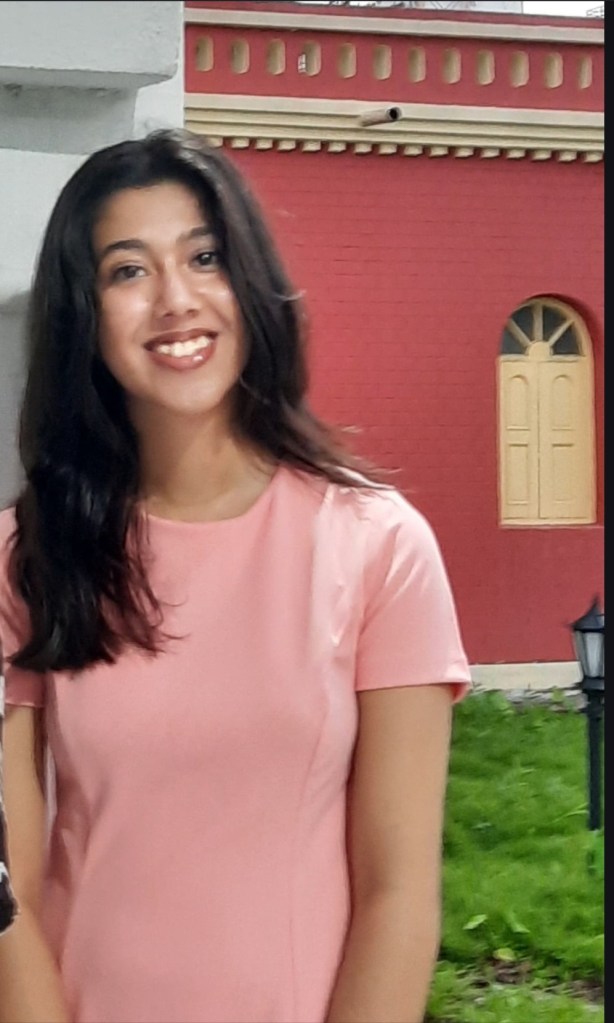
Aarushi Datta is an English literature student who writes about girlhood, loneliness, and the ache of
almost. Her work hold grief, softness, memory living between what’s said and what’s not. Words are how she stays when nothing else does.


Leave a comment