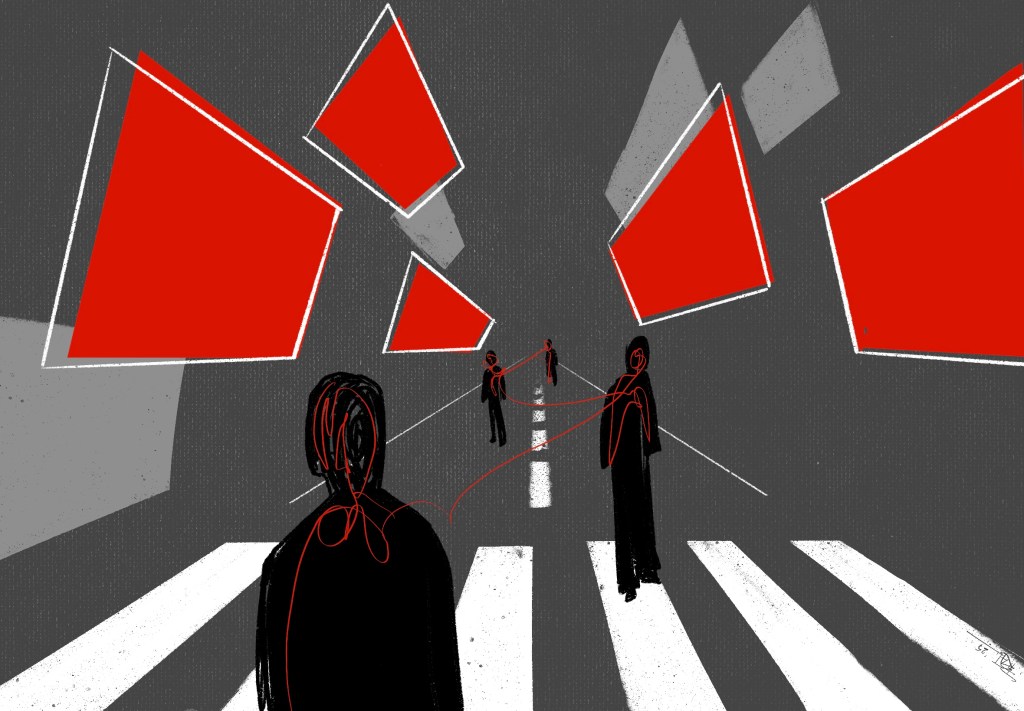
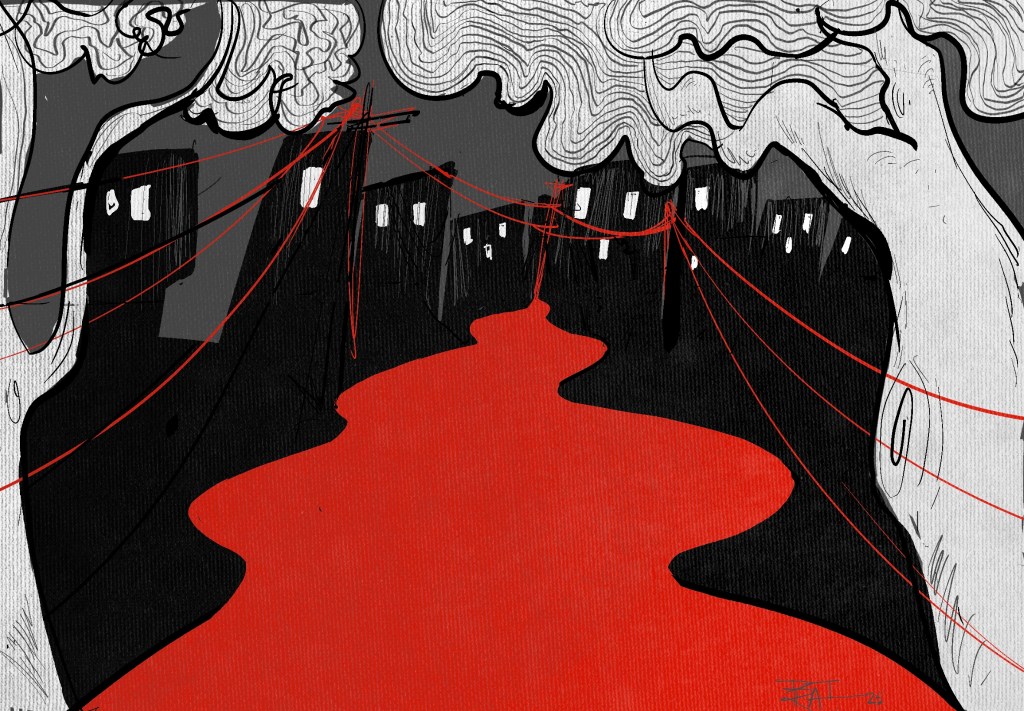
When the Bullets Fell by Nnedimma Okoli
I sit in this city bus, staring at the twin babies opposite me; both in their carriers and fast asleep. They appear feminine—since their tender heads have a bow of ribbons encircling them. Their mother’s face seem to have this faraway look with furrows of worry etched over her forehead—like a warrior in a battlefield trying to fight and win a war that never ends. That is how I see life; constantly fighting, and when you’re almost winning, a new battle emerges. It never ends.
My gaze lingers softly on the babies but I am not seeing them anymore.
As the bus turn to a corner, I feel the early summer sun from the window, seeping in its warmth to remind me of home—somewhere so very far away. Somewhere lying in the middle of the equator; where neither cold nor hot gets to the extreme. If only home was blessed with good and thoughtful leaders who were guided by wisdom and not greed. Leaders with eyes wide open to the sorrows of despair scribbled deep in hollow faces, serving not themselves; but the expectations from their promises.
I wouldn’t have had to leave my roots if home could afford my child the opportunities and prospects she deserved. We wouldn’t have left home if the systems worked.
Home. I miss the life I had there. I miss the friends I made and the family I left behind. I remember the day I made the decision to go far away as clear as snow. My daughter was almost three years old the day I returned from dropping her off at school and my best friend visited. Ngozi had come to remind me that we would join the other protesters that morning at Lekki, Lagos State, to protest against the government’s insensitivity to the plights of her citizens.
“Don’t tell me you won’t come,” Ngozi had said. “Dress up fast. This country killed my mother because that government-owned hospital didn’t have enough ventilators. If I don’t protest, the government will continue not to care about us.”
“Are you sure it is wise for us to go, Ngozi?” I asked her. “We have been protesting in the past and nothing has been achieved. The prices of foodstuffs are still going up and there are more hungry people on the streets.”
“Is that why we should relax, eh?” Ngozi asked, and I felt the fierceness in her voice. But she softened before continuing. “If we don’t tell them we are unhappy, my friend, they will continue to steal our money, stash them abroad, and do nothing for us. We must go. Look at you, taking care of your daughter alone without her father’s support. Chibuzo just left you to suffer alone, and you don’t even know his whereabouts. See, if this country starts working, you can sue him for child support, no matter where he is hiding. Go and dress up. Put on light clothes; it will be a hot day.”
The mention of Chibuzo’s name, and the anger I still felt for him was enough to convince me. I dressed up and followed her. We took the bus to Lekki and dropped when we sighted the other protesters. Ngozi bought us two placards from one of the protesters who was chanting with the others and selling her wares. Mine screamed – Enough is Enough. Ngozi’s own read – The suffering is too much, all in red capital letters.
We, and may others, walked round the market under the hot sun, chanting in the loudest of our voices to be heard. We marched on the dusty roads filled with potholes before proceeding to the government offices. When we finished there, we finally headed to the State Government Complex.
That was where we met the resistance. The Government House was surrounded by the police, and as we approached, we heard a deep male voice from a megaphone ask us to disperse.
“You are advised to leave this premises! You are not allowed to be here! This is breach of security! Disperse at once!”
The warning kept coming, but how could thousands of angry Nigerians turn and leave? How could we turn back like cowards when those that would give us listening ears were hidden behind those magnificent houses lined behind that tall and elegant barbed-wired walls in front of us? It wasn’t going to happen. Ngozi stood by my right with her placard raised high above her head, she was chanting and sweating. The placard raised by an elderly man on my left screamed – Reduce the fuel prices, we cannot afford it anymore. We stood there, with the crowd getting thicker with each passing minute, lifting our placards and voices, and chanting for a better country.
When I heard the first sound and the first cry, I became confused. Something was happening, because people began to bring down their placards. Some let their placards drop to the ground.
“Run! Move! They are shooting at us!” someone amongst us screamed, and the crowd responded by trying to flee.
The police were shooting at us. At peaceful protesters. Or weren’t the placards and chants peaceful enough? From the shots, screams, and commotion happening all at once, I knew for certain that if we don’t leave here fast enough, the bullets could hit us.
I grabbed Ngozi (she no longer held her placard) by the arm and made to run with the others, but it was difficult trying to get past the thick crowd. While we had been among those standing in front, more people had joined from behind as we chanted, thickening the crowd. And we didn’t go far together. We couldn’t go far. We couldn’t have taken more than five running steps when Ngozi screamed and fell beside me. I wanted to scream at her to stand so we could keep running. I wanted to ask her if she wanted to be shot. When I looked at her to say those words, I stopped. Ngozi’s blood-stained hands were clutching to her chest as she writhed on the ground. I screamed and made to scrunch down beside her but the thought of my daughter pushed me away from the ground, from my dying best friend, and I resumed running.
We only wanted a better country, a working government. That had been our crime. But instead, I lost my friend that day. Those dead bodies I had seen littered on the road still haunt me, and I broke when weeks later, the state government gave an address and denied that anyone had been shot during the protest. I watched on the television as the reports claimed that people had merely been wounded when the protesters started running for no reason. I will never know who gave that order for Ngozi, and tens of innocent others, to be shot.
But I knew one thing; I was broken. The country had broken me and I could not belong there. I would not raise my daughter here.
I would mourn Ngozi for the rest of my life, but I would not raise my daughter here to become another Ngozi.
***
Two years later, when we stepped outside the Calgary Airport, I had felt surprised at the chilly air of the late January. Instinctively, I looked around in search of the source, as if the cold was a breathing entity standing just in the corner. As if something had been placed somewhere around blasting out cold air outside the airport. But it wasn’t so. It was just the air; the normal temperature of the season. How foolish of me to have turned three hundred and sixty degrees in search of what could never be there. My five-year-old daughter had asked me what I was searching for, and I had simply lied to her. It would have been embarrassing to admit to her that I was searching for the air-conditioner placed somewhere around in the open air, as though I shouldn’t have known about the cold. I did know. But I had thought that the chill would be similar to the chilly harmattan season we had back home, but instead, it was a lavish flattery to the static and controlled blast of cold that the air-conditioner in my Nigerian apartment produced. What I felt was like what I would have felt if I had been bundled up and placed inside a deep freezer meant to preserve food.
That first night had been both an uncomfortable and a memorable one. We both got to the rented basement apartment that had a separate entrance, only to find out that the heater wasn’t working. We were vibrating from the harsh, biting cold, as we shed the clothes we had worn for the two days flight and put on fresh ones. But changing clothes did not stop the chill from getting to us. So we layered up. We layered up some more till we couldn’t anymore. But we were still cold. My girl’s skin felt cold and her body occasionally quivered. So I boiled water and made tea and she drank. When she was done, I placed her on the bundle of clothes I had piled up and buried her under two blankets.
As I laid beside her that midnight, it felt like the cold seeped through the walls and the tiled floor, settling in my bones like a curse. I remember being too afraid that night, it was in that fear that my tired bones worn out and I slept off and had a nightmare where my daughter froze to death.
Waking up that morning saw me screaming from the nightmare. I scrambled through the blankets I had wrapped her in and felt her, to my delight, her body felt warm as she slept on. Thank God it was only a dream. But the panic I woke with didn’t leave me. It was that panic that immediately sent me into the street’s shopping stores in search of a mobile heater.
I was walking briskly, half running as I walked on the sidewalks. All the time I hurried, my mind was littered with scenes of my daughter waking up and screaming her lungs out because she couldn’t find me there. The more it littered my mind, the more I put steps forward towards the direction of the stores. I had seen those stores last night when the Uber driver drove past it and stopped us in front of the house we had rented its basement from rentfaster.com.
My feet kept shoveling through the snow, and I felt it seeping through my footwear and socks into my legs, but it wasn’t something I should worry about at that moment. I needed to get to those stores in good time. For my daughter who was all alone.
In my brisk walk, I came onto a path with no snow on the sidewalk. Maybe someone had cleared that path, probably those who owned the house in front of it. I was glad that my feet didn’t have to shovel through the snow on that path. Even with that gladness, I didn’t slow my steps. I put the first foot forward on the cleared path and lifted the second behind to bring it forward but felt my body moving on its own instead. Dear Lord! I knew I was slipping but there was nothing to hold onto. Everywhere was white with snow.
I was panicking and thinking fast on what to do. Maybe landing on my backside would cause less damage than landing on my hips or front, so I tried to do just that. But before I got to the ground, I felt someone catch me. I didn’t know where he had come from but I knew he ran towards me to catch me. I knew it from how he panted as he did so. No one had been on the sidewalk as I walked, though my mind had been full and I hadn’t looked. The young man barely caught my shoulders from behind just before I could reach the ground. The effect? I did land on my backside slower than I should have. I haven’t felt the level of gratitude I felt then in a long time.
“Thank you,” I said, and made to continue my hurry when his words stopped me.
“No worries,” the man said. “You should be very careful where you step, those are black ice.”
“Black what?” I asked and willed him to answer fast.
“Black ice. They can be very slippery.”
I looked down to where he was pointing and saw it. But it wasn’t black in any way. It was like a transparent layer of ice sticking on the sidewalk. The type of ice you see sticking inside your deep freezer when it’s in the process of melting. Then he pointed at my shoes.
“You shouldn’t be wearing those too. They don’t have much grip on the snow,” he said.
I looked down at my legs. I was wearing the canvas shoes I had arrived with the previous day. In my hurry to get to the stores, I had forgotten to put on the winter boots that was still tucked somewhere in one of the travelling boxes. I had forgotten that we bought different foot wears for the different weather.
“Thank you, I have to go now.” I ran on the snow now as fast as I could.
“No worries, just be more careful.” I believed the wind must have been blowing my direction to bring his words to my ears.
When I got back to the apartment with the mobile heater and placed my daughter in front of it, my body relaxed at last. I kissed my little one on the forehead and hugged her. We were ready to tackle the city of Calgary and whatever it would bring our way.
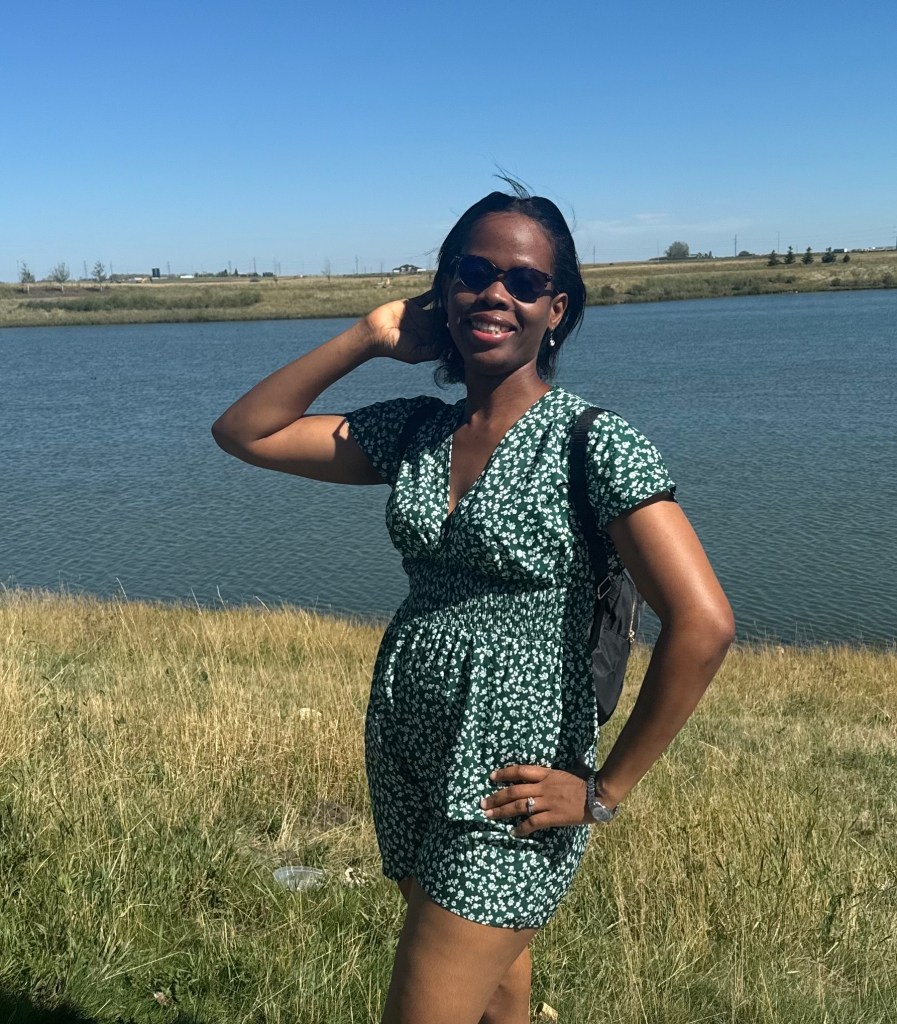
Nnedimma was born in Germany, grew up in Nigeria, and currently lives in Canada. Her short stories have been published in the International Human Rights Art Movement Magazine, CultureCult Magazine, Storyhouse.org, and elsewhere. Her story was chosen as one of the six finalists for the Barry Hannah Prize in fiction. She is working on her debut novel.
Rearview by Smita Das Jain
Screech.
The sound of squealing tyres tears through the silence. My foot slams on the brake pedal with all the force I can muster. The seatbelt digs into my chest as I lurch forward — almost hitting the roof — before settling back into my seat, heart hammering.
A speed bump. Another damned invisible one.
I exhale sharply, gripping the wheel. Speed bumps weren’t on my mind when I packed my bags and decided to swap the wooden stillness of my bed for the constant motion of my car. I’d factored in traffic, unpredictable weather, even the risk of getting lost. But not these relentless jolts, shaking me out of my thoughts at every turn.
The road ahead was never going to be smooth.
I just didn’t realise it would be this jagged, this unrelenting, this uncertain.
Four hours in, and already I am having second thoughts!
I glance at the rearview mirror. The city is behind me now, its towering buildings reduced to silhouettes against the evening sky. The roads I once knew, the routine I once followed, the world I once belonged to… all fading into the distance.
I tighten my grip on the wheel.
Going back is not an option.
If I do, PowerPoint will be the death of me.
The thought makes my stomach clench. I can already picture the swanky glass building swallowing me whole, trapping me in a maze of cubicles where ambition is measured in slide decks and font sizes.
A place where brilliance is dimmed by bureaucracy.
Where days blur into nights under the artificial glow of laptop screens.
Where the question, “What do you think?” is always followed by, “Put it on a slide.”
No.
I refuse to go back to that.
I press down on the accelerator, ignoring the car’s protest as it rattles over another bump. The wheels grip the tarmac with determination, carrying me further away from the past I’ve chosen to leave behind.
I don’t know where this road leads.
But anywhere is better than where I was.
The road ahead splits into two.
To the left, a path snakes towards civilisation — buildings, streetlights, human voices. To the right, a highway stretches into the unknown — vehicles surging forward, each one a story moving at its own pace. No attachments, no expectations. Just motion.
I take the right.
The sunroof opens, and for the first time today, I breathe. The wind rushes in, tangling my hair, carrying the scent of warm asphalt and petrol. The summer heat prickles my skin, but it feels different out here, less suffocating than the stagnant air of the metro city where I live.
Lived, I correct myself.
The radio crackles to life. I don’t recognise the song, but the rhythm fills the silence, matching the steady thrum of my thoughts.
My father’s voice drifts into my mind, uninvited.
“Study hard, score well, get a six-figure salary job, and you’ll be set for life.”
A blueprint for success. One I followed to perfection.
For years, my life was a straight road. No detours, no second guesses. I studied relentlessly, topped my school, earned a place in a prestigious college, sacrificed sleep and friendships for books, then made it to a top B-school.
Landed a coveted job on Day Zero at a Fortune 200 company.
The dream, wasn’t it?
I thought so, the first day I stepped into the office.
Then, I met PowerPoint.
A Skoda brakes suddenly ahead of me, snapping me out of my thoughts. I swerve right, just in time to avoid a collision. But behind me — Boom.
Tyres skid. Metals crunch. Horns blare.
A minor accident, but a pile-up is inevitable.
I don’t look back.
Instead, I focus on the road ahead. Vehicles surge forward — blue, red, yellow, white. Trucks of every size, their cargo swaying. Buses painted in a jaded blue, worn yet dominant, owning the street despite their age.
The city may be behind me, but its chaos travels with me.
I should feel liberated. Instead, I feel… conflicted.
Relieved. And anxious.
In the crowd, yet alone.
It was much the same back in the office. I was surrounded by people. Bright minds, driven professionals, each absorbed in their own world. We existed together but interacted in bullet points, connected through slides more than sentences.
I remember my first week.
The cubicles stretched endlessly, packed with employees hunched over screens, their eyes flickering between spreadsheets and unread emails. I was given a laptop and told to find a seat — wherever I could.
A sour-faced manager assigned me a project, handing me an immediate problem to solve. I worked through the night, poured my ideas into a well-structured solution, eager to present.
Midway through my explanation, he cut me off. “Put this on a ppt, and we’ll discuss.”
“Wouldn’t it be better to…”
“Slides first, discussion later. And make them look elaborate. Clients should feel we have put in a lot of work.”
I learned quickly.
It wasn’t about depth. It was about perception.
Style over substance. Flash over insight. Aesthetics over thought. The number of slides mattered more than their content.
Day after day. Month after month. Year after year.
Four years of playing along.
Until I couldn’t anymore.
Ahead, the road narrows.
Construction work on the left has forced all traffic into a single lane, slowing everything to a crawl. The highway, designed for speed, is now reduced to a trickle of movement.
A bottleneck.
Just like my career.
Four years of stillness disguised as motion.
A stagnant life, measured in revised decks and unread emails.
I tap my fingers against the steering wheel. Come on. Move.
The car jolts forward, then stops. Then jerks ahead again. A cycle of false hope.
This is what a millennium city looks like — dreams built on speed, motors moving like bullock carts. A place forever in motion, yet always stuck.
The air is thick with exhaust, the horns relentless. I exhale and shake my head.
You have left it all behind, a voice in my head whispers.
Yes.
Today is a new day.
I take a deep breath.
But the past isn’t just a place. It’s a weight. A presence. A shadow that lingers within you, no matter how far you drive.
How do you leave the past behind when you carry it inside you?
I have left everything I had.
A three-bedroom bungalow. Loving parents. Good friends — one of whom could have become my girlfriend. A seven-figure salary. A comfortable life. Everything I built in twenty-seven years.
For what?
A question with no answer. A search with no direction. A pursuit of meaning.
“You have everything,” my parents said. “Good education, great job, decent salary, us. Soon, you’ll have your own family. What more do you want?”
I didn’t know. I still don’t.
But the feeling had been there — quiet at first, then louder, clawing at the edges of my mind. Mondays blurred into Fridays, Fridays dissolved into Sundays. Every promotion felt like a tighter chain, another lifetime sentenced to PowerPoint. I drowned it in deadlines, in promotions, in power-packed weekends where I convinced myself I was happy.
Until one day, I wasn’t.
The day they gave me the latest title and a fatter paycheque, I wept.
That night, I opened my laptop. Entered my resignation. Closed the lid. Walked out.
At dawn, before the world awoke, I threw my duffel bag into the car and drove away, leaving nothing but a note.
Was that just yesterday? It feels like another life.
Anyway, here I am. In search of something.
Where? What? How? I wish I knew.
But for the first time in years, I don’t have that dreadful knot in my stomach, the one I would have had if I’d gone to the office today.
Thank God for small mercies.
The engine hums beneath my hands. The wind rushes in through the open window, tousling my hair, bringing with it the scent of dry earth and distant rain. A lone truck looms ahead, broken down in the middle of the highway. Cars weave past it, left and right, inching through the bottleneck.
One stuck vehicle, and an entire stretch of road is brought to a crawl.
The root cause.
Funny how it all comes down to a single thing. The root cause of my frustration, my resignation, my departure? PowerPoint.
I shift gears, press the accelerator, and finally pass the obstruction. The road opens up. The chaos disappears behind me. Other cars surge ahead, each driver chasing a destination.
I have no destination.
“You will get what is destined for you,” my father’s voice echoes.
I remember the first time he said it. I was in the tenth grade, my stomach twisted in knots before my board exams. These words had left me confused.
All my life, he and Mum insisted that hard work led to success. If destiny decides the outcome, why strive so hard?
I studied. I worked. I pushed myself beyond exhaustion. But was my white-collar job a product of my effort or merely fate?
If making PowerPoint presentations is my destiny, will it chase me no matter where I go?
A shiver runs through me. I grip the wheel tighter. No. I refuse to believe that.
But what do I believe?
What is my dream?
When will I find my purpose?
The road stretches ahead, unending, merging into the horizon. I need answers. But how long will they take to arrive?
“As long as it takes,” my conscience whispers.
“That doesn’t help,” I mutter.
“Why? Do your dreams have a sell-by date?”
A sudden honk snaps me back. In my distraction, I’ve slammed the brakes instead of the accelerator. Angry drivers swerve past, some throwing glares, others mouthing words I don’t need to hear.
I don’t care.
This is important.
I fumble for the notepad beside me, scribbling down the thought before it escapes.
“Dreams don’t have a sell-by date. They arrive and depart at their will. They take as long or as short a time to be realised as we allow. What matters is the journey.”
A rush of energy courses through me after penning this. I flick the ignition, press the accelerator, and speed forward.
This is going to be an adventure.
A familiar tune crackles through the speakers.
Zindagi ka saath woh nibhata chala gaya…
I grin. It’s been years since I heard this song.
Work stole my time. No moments for music, for books, for laughter. Just an endless treadmill of tasks. Only yesterday did I have a chance to check my bank balance properly. The figure stunned me. I had been earning, saving, and hoarding for years, without ever pausing to live.
I look to my right.
A red Creta cruises alongside. The woman behind the wheel is dressed in matching red. Jet-black hair. Oversized sunglasses. A picture of effortless elegance.
A strange flicker of recognition.
She reminds me of her. Aditi.
We never labelled what we had, but it could have been something. It should have been something. If only I had taken the time. If only I hadn’t been consumed by work I abhorred!
Before I can dwell on it, she accelerates. Her car becomes a streak of red, then vanishes into the distance.
Life moves forward. Always.
On my left, a blue Punch carries a family of four. A little boy and girl chatter excitedly in the backseat, their mother turned towards them, listening, smiling. The father drives, silent but present.
A pang of something. Nostalgia? Regret?
I have never driven with my parents. Not once.
The memory rises, sharp and sudden. The day I bought this car — Mum, beaming, a coconut cracking open on the driveway. The oil staining the ground, the scent of camphor thick in the air. An aarti thali in her hands before I could even step out.
“Congratulations, son,” Dad said, his voice steady, proud.
They were beaming. Both of them.
“Would you like to go for a ride?” I asked.
They exchanged glances.
“You must be tired,” Mum said after a pause. “Some other time.”
I nodded and walked inside. Didn’t insist. Didn’t look back.
Now, I wish I had.
If I had turned, I would have seen the disappointment shadowing their faces.
I grip the wheel. A lump rises in my throat.
I have been selfish. Always thinking about my frustrations, my ambitions, my purpose. Never pausing to acknowledge theirs.
They gave me everything. Their time, their love, their sacrifices. And I left them behind without a second thought.
Sweat beads on my forehead. The sunroof feels too open, the air too heavy. I shut it and glance at the dashboard clock. 12:00 noon.
By now, they must be frantic. Their only son, gone without warning.
And I — I hadn’t even considered their pain when I flung my bag into the car and took the road to nowhere.
“That’s not fair,” I mutter, slamming my fist against the dashboard.
Not fair to them. Not fair to their dreams for me. Not fair to the years they devoted to my happiness.
Dad still works, though age is catching up with him. Mum has spent a lifetime looking after us, never asking for anything in return. They should be thinking of rest, of ease.
Instead, I have pulled the ground from beneath their feet.
I am a deserter. A coward.
I glance at the dashboard mirror. My eyes stare back at me, filled with questions I don’t want to answer.
The road ahead is long. Inviting. Uncertain.
The road behind is filled with people. My parents. My friends. People who care.
Do I care?
A sharp turn ahead forces me to slow down. My fingers flex on the wheel, restless.
I had only one person in mind when I left home — I, me, myself.
I left for me. For my happiness. My search. My purpose.
But can purpose be found in self-obsession?
The song plays on. The road stretches ahead.
And I keep driving.
The road ahead is clear, but my vision blurs. Not with tears, but with thoughts — fragments of moments once forgotten, now demanding attention.
I loosen my grip on the wheel, flexing my fingers. The rhythmic hum of the tyres against the tarmac is oddly soothing, a steady contrast to the turbulence in my mind. The air, thick with the scent of damp earth from a distant drizzle, rushes in through the half-open window, filling my lungs with something close to relief.
Still, the unease lingers.
A neon-lit billboard flickers on the roadside. Home is where the heart is, it says.
I scoff, but my fingers betray me, drumming an uneven rhythm against the wheel.
Just an ad. It shouldn’t mean anything.
My phone buzzes.
I glance at the screen — Mum.
My grip tightens. I let it ring. Once. Twice. Five times.
The call disconnects. A second later, a message pops up. Where are you? Please call.
My chest feels heavy.
I exhale, clear my throat, and then crank up the radio volume.
I should call her back.
I don’t.
A horn blares from behind, snapping me back. I ease onto the accelerator, pushing forward. Ahead, the city lights fade into darkness, and the road stretches into obscurity. But images flash before my mind, unbidden and vivid.
My father, running alongside me, gripping the back of my new bicycle so I don’t lose my balance. The warmth of my mother’s hand on my forehead as she places my favourite dish beside my books. Laughter echoing in my living room as my friends burst in with a cake, knowing I wouldn’t be home for my birthday the next day. A voice at midnight — my closest friend, picking up my call when I needed her the most. My boss, firm yet understanding, urging me to leave a crucial meeting because my mother had fallen ill.
So many moments. So much love. How had I lost sight of them?
How had I convinced myself that leaving was the only way to move forward?
The road ahead remains unchanged, but the weight in my chest shifts.
A familiar tune crackles through the radio, breaking my trance.
“Zindagi ek safar he suhana…”
I smile, just a little. Some songs never go out of fashion.
And then, the DJ’s voice cuts in.
“Funny, isn’t it? How we chase something for so long, only to realise what we were looking for was right where we started.”
I inhale sharply.
The words settle inside me like a long-forgotten truth. No grand declaration, no earth-shattering revelation. Just a quiet knowing. A gentle nudge where I need it most.
The road ahead remains open, stretching into uncertainty. But something else comes into focus. A signpost. A U-turn.
Serendipity occurs when you keep your eyes open.
I slow down, and the decision is formed before I fully process it.
Cars rush past me on either side, headlights streaking into the distance. I watch them, knowing they won’t stop. Life moves forward, whether I do or not.
A breath in. A breath out. My hands hover over the gear shift.
The engine hums, steady and waiting.
I take the turn.
The road home is long, but it could have been far longer.
Thank God for music. For memories. For the chance to return. For having it in me to take on the speedbreakers and Powerpoints.
With feet on the accelerator and eyes on the road, I move forward.
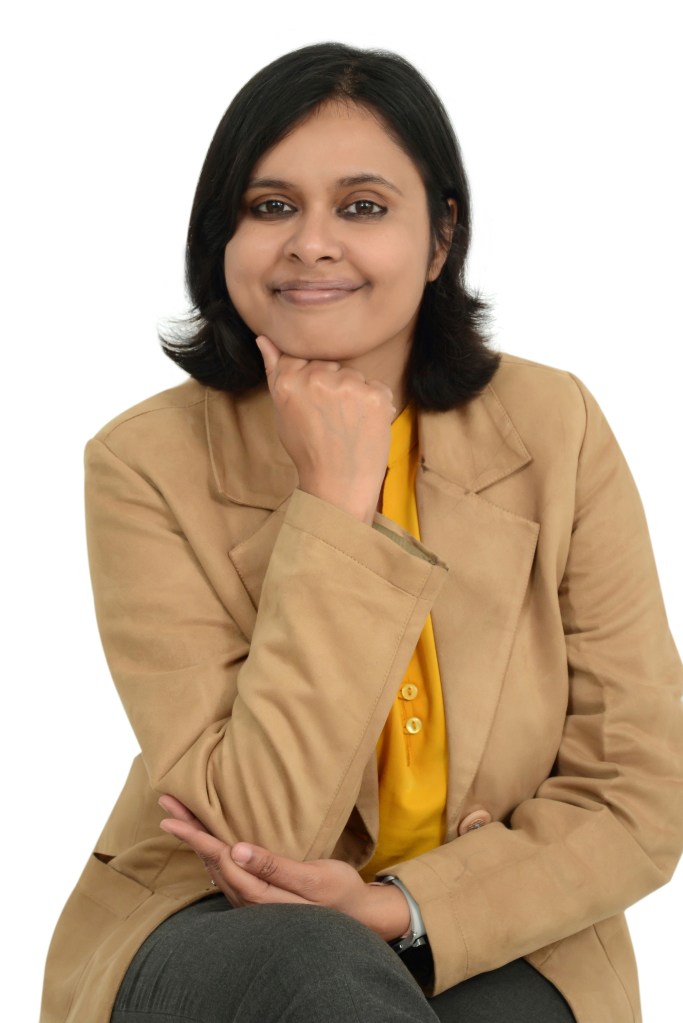
Smita Das Jain is a writer by passion and the author of four fiction books. Her short stories have been published in Muse India, Kitaab, Auroras & Blossoms, Wordweavers, Red Rose Thorn Journal and Unleash Press. She has also been recognised with the Bharat Award for Literature. A 3X TEDx speaker, Smita lives with her husband and daughter in Gurugram, India.
Chain of Events by Gary Beck
Joe Darby was a scammer. He used many social media tricks to make money. His favorite scam was on the telephone. He’d buy senior citizens telephone lists from a big company, then phone and say:
“It’s your grandson.”
One time out of fifteen he’d get a positive response and a loving grandparent would send $220 for a plane ticket to get home.
One out of 25 he’d hit for more money.
On one call, Grandma said:
“But you’re rich, Tony. Why do you need my money?”
For some reason Joe decided to find Tony and get some of his money. He visited Grandma who got suspicious and wouldn’t tell him anything. He forced her to talk and she had a heart attack. Then he found Tony who was a lot smarter than he was and recognized a con man. He forced Joe to tell him how he found him, turned his back for a moment, Joe hit him with a lamp and killed him. Then he stole his wallet, watch, money and diamond ring.
Tony’s associates saw what happened on video in his office. It took time and patience, but they identified Joe, went to his apartment, he was out and they questioned his girlfriend. She swore she didn’t know what he did or where he was. They didn’t believe her, got a little rough questioning her and she died. Joe came home as they were leaving his apartment, saw them, ran and they chased him. He carjacked a car stopped at a traffic light, threw the driver to the ground who was hit by a truck and died.
Joe sped off, the associates followed, a police car joined the chase. Joe hit other cars and a pedestrian. The associates hit other cars, shot at Joe and hit a child in a playground. The police car dodging wrecks, lagged behind. The associates ploughed into a car Joe clipped, spun around and stopped. The police arrested them. Joe kept driving until he got to the train station. He boarded a train going to Minneapolis, bought a ticket, sat down and started figuring out where he’d go from there to build a new identity and resume his scams.
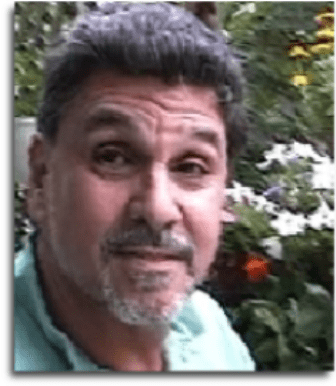
Gary Beck has spent most of his adult life as a theater director. His original plays and translations of Moliere, Aristophanes and Sophocles have been produced Off Broadway. His poetry, fiction, essays and plays have appeared in hundreds of literary magazines and his traditionally published books include 43 poetry collections, 18 novels, 4 short story collections, 2 collections of essays and 8 books of plays. Gary lives in New York City.
 Parcham Online
Leave a comment