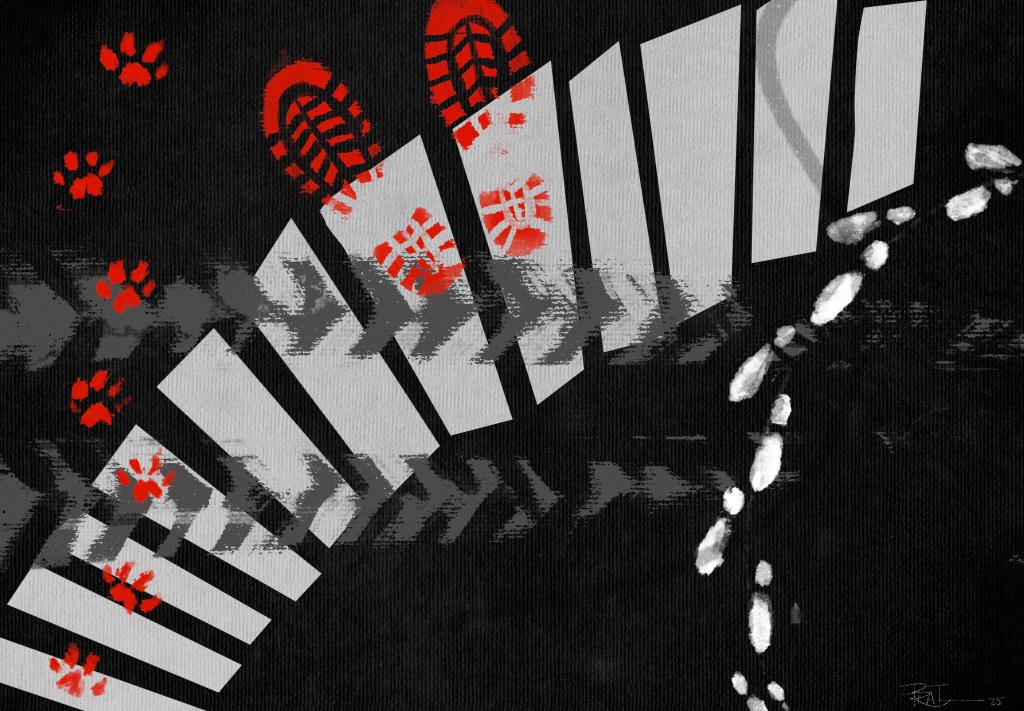
Yesterday’s Tomorrow by Sarah Price
January 26, 2020
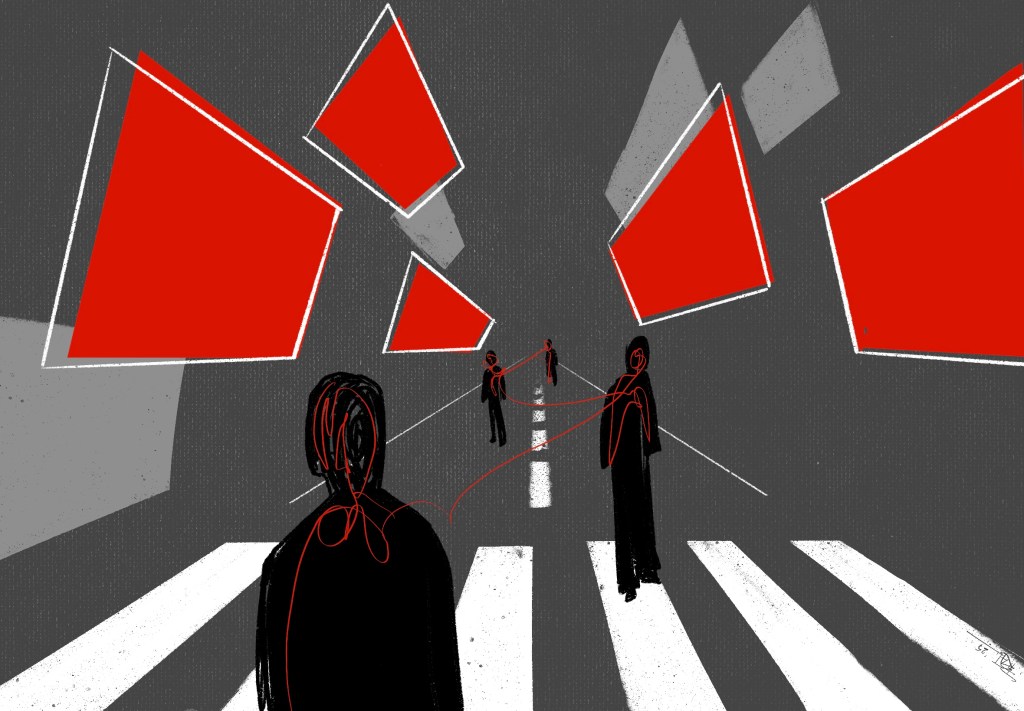
When I stopped to call the hospital, it was at a small convenience store off a dusty Texas side road, generously called a highway, in the directions. I had run out of windshield washer fluid, and needed to check in with my Aunt Kathy to see what was happening with my father. I parked in the side lot, in front of a pay phone. It was neither functioning nor ornamental. Just there: picked at and neglected, until it resembled a vague memory of a long-past era, one that, were someone who remembered such things when they were actually needed, would pass it and chuckle to himself, those are still around?, as he scrolled through an app on his phone.
I popped the hood and dialed her number on my cell with one hand, while splashing wiper fluid into its reservoir with the other.
“I didn’t want to call you while you were driving,” she said, “but we’ve decided to take him off of life support. We’re gonna wait until you get here, honey.”
The news itself wasn’t shocking: I had known it was a possibility since we had spoken the day before. He had been diagnosed with pneumonia, but they were going to see how he did, overnight. I had told her I would leave early the next morning and make the six-hour drive south. I would be there, regardless of the outcome.
But absorbing it as it morphed from a chance possibility to its now inevitability, felt uncomfortable. Especially as now the length of time he had left depended on how long it took me to complete this unfamiliar, side-roads journey.
I had moved back to Dallas from Los Angeles two years prior, and my mental picture of hospitals was of sprawling, multi-building operations that could qualify for their own zip code. So, when I asked her how I would find them when I arrived, she paused.
“It’s Beeville, honey; it’s not that big,” she said, in her raspy Texas drawl. “Just call me when you get here. I’ll come out and meet you.”
#
When I arrived, I saw what she meant: if someone had told me it was the Beeville DMV, I wouldn’t have questioned them. She met me outside, and held my arm as she guided me through the halls to the ICU, and then to the small but private room he was in. I felt my body tense, as we walked toward his room. I had no idea what I was going to see, or what the rest of this day was going to hold. Except that I was pretty sure I was going to watch my father die.
I hadn’t seen him in years. I would like to say our relationship had been fraught, but that would be giving it too much credit. After decades of trying to be visible to him, much less important or wanted by him, I had accepted this was never going to be the case, and I had stopped. Stopped agonizing over it. Stopped trying to fix it.
So, seeing him intubated and sedated, and hooked up to beeping machines was not as unnerving as just seeing him there, at all. He had suffered several strokes a decade earlier, which began the slow decline to where he was now: his hands crippled by arthritis, unable to care for himself, partly due to the strokes, but also a more recent fall that had resulted in a broken back, and several teeth now missing. Such a long way from the funny, popular, charismatic life-of-the-party version of himself he had enjoyed his whole life.
Yet, despite this frailty, this complete vulnerability, there was still an energy from him that made me feel nervous and tense, in his presence.
There were several people with us at the hospital, in the beginning. Kind friends of his, but mostly unknown to me. They gathered with me and Kathy, and her son Gary, whom I also hadn’t seen since he was a child. Seeing him now, as a grown, responsible adult was strange. Not strange in that he was a child who somehow grew up over the past 30 years, but in that he was a visual representation of how time can jump, while you’re not looking.
Nurses were in and out of the room to monitor his machines and his morphine, and then explained to us how the process of discontinuing life support would play out: they would remove the intubation, but continue the morphine, so that he would be comfortable. They would monitor his organs, as they gradually shut themselves down, and at some time – probably this evening, they thought – he would pass away. Gary reached over and rubbed my back as she described the coming events, in the warm but clinical way only nurses do.
Kathy led everyone out of the room, so I could have some time alone with him, first. It wasn’t something I would have asked for, but it also wasn’t something Kathy was checking with me about. She knew I needed it, and it was just going to happen. She herded everyone out of the small room, and shut the door behind her.
I sat back down on the chair and watched him. Everything about this was strange and uncomfortable, and although everything had been explained in such a logical way, it still felt surreal. I was too nervous to speak, so the communication was all telepathic.
“I’m terrified,” I thought. “I don’t know what to say to you. I have never known what to say to you. It seemed like you always preferred anyone else to me, and you showed me that all the time. You weren’t self-conscious or maybe not even cognizant of doing things that so clearly expressed that to me. And now you’re dying, and what am I supposed to do with that?”
I had envisioned some kind of poetic closure accompanying death. Something that made it make sense. Not the death, but the life: Why we were together. But then, not really together. Not really ever.
My thoughts eventually faded into a jumbled mix of confused emotions that I didn’t know how to express. So, I just sat with them, and let them experience this in their own way. This had been their journey, too.
Then, I began to feel an energy filling the room. A gradual glow, like a lightbulb that needs to warm up to its full voltage, when you switch it on. At its full energy, the warmth filled the room and moved through me. Peace. A reassurance that everything was, and would be, alright. Better than alright. There was peace at the end of this strange, crooked road. But in the meantime, I still had to navigate it.
I leaned back and let the energy move around and through me. When it had subsided, I went back to the waiting room to let everyone know we could go ahead, now. The nurse asked us to stay in the waiting room while they took care of removing the intubation. They said the process would take a while, but they would be back to get us.
#
In the waiting room, I felt a migraine starting and realized I didn’t have any Excedrin with me. Gary thought it would be good to get some food and drinks for everyone and said he would take me to the CVS, a few blocks away.
The CVS drugstore was almost empty. A few people wandered the aisles, but mainly, it was just Gary and me and the brightest, happiest employee I think CVS has ever hired. As I found the pain relief and we gathered soft drinks and snacks for our hungry, waiting family, she asked brightly if there was anything she could help with and then delivered a monologue about what a fantastic day it was and how happy she felt, in general. Gary and I looked at each other and measured the irony of this encounter on this kind of a day. We didn’t say anything. Why dampen her mood. As we left, she wished us a most wonderful day.
I washed back the pills with a bottle of Minute Maid lemonade in the truck on the way back. When we got to the hospital a few minutes later, the nurses were ready for us. But, I wasn’t ready for the sight of him, nor my reaction when we got to his room.
#
The intubation had been removed, but he was thrashing, gasping for air and looked panicked. Fifteen years of study at the University of Grey’s Anatomy had never shown me this side of it. I instantly burst into tears and reached for a nurse who was passing by me.
“Could you please talk to me for a few minutes,” I asked. “I’m not ready to go in there.”
She stayed with me and talked to me about where it would go from there and that he was OK, his body was just reacting to the change. He would be calm soon. He could breathe, she had explained, his windpipe may have just narrowed due to the intubation. They would give him more morphine, which would relax him and help him not panic, and by extension, help him breathe better.
Once his body relaxed, he was mostly out of it, but did have some vague awareness. Kathy fed him ice chips and he was reacting somewhat to what she was saying – his eyelashes fluttering and his head turning slightly toward her voice – but not to the point of being capable of a conversation. When she told him I was there, I saw a burst of awareness in him and he seemed to look around for me, for just a moment, before the morphine took effect and he was again subdued.
We stayed with him for a while, with everyone telling stories about him – most of which I had never heard. As they talked, my head filled with visions I felt sure were being sent by him. Intuition and psychic studies were something we had in common, and I could recognize when something in my mind was coming from me, or from somewhere else. My head was flooded with photos of him in his twenties, the time he seemed to enjoy the most and then, for some reason, his love of barbecue. I was fairly sure I was just picking up on his soul wanting to contribute to the stories, or maybe it was a pre-life review. A moment of reflection on the happiest parts.
I considered sharing them with everyone, but then thought, this is the last nice moment I would have with him, After a lifetime of trying to have those moments, I was going to keep this one for myself.
The nurse came in to tell us that they were starting a shift change and needed us to go to the waiting room while they completed the changeover duties. Some of our party left at that point and it was down to just a few of us. The television was on in the waiting room, and the news of Kobe Bryant’s plane crash was being broken. He had died with his daughter. As my mind shifted from one stunning situation to another, I was aware of how outside of reality I was feeling.
When we were able to go back into his room, he looked much more relaxed. His bedding had been changed, his morphine had again been increased and he looked very comfortable. I was still tense, but much more at ease.
By then, it was just Kathy and me and we sat in his room with him and talked to each other, to him, about him. His breathing had slowed and sometimes he wouldn’t take a breath for 10 or 15 seconds, and when he did, it was a sharp, high-pitched sound that made us jump – another side effect of his windpipe having narrowed due to the intubation. We teased him about it, as if he were doing it on purpose. Teasing was his favorite form of communication, and we were nearing the end of our time to have that with him.
#
Whenever I had asked him what he wanted for Christmas or his birthday, he had always answered, socks and underwear. I could think of few things creepier than buying my father underwear, so I went to his unspoken favorite thing: arguing politics. For all the things we had in common, we were diametrically opposed, politically. But those arguments were the funniest conversations we had, teasing each other for our beliefs and views of what the truth was, on any matter. Never delving too deeply into any of those topics.
During one particular conversation, he went off on a familiar rant about his dislike of Martin Sheen and his activism. I had recently learned they shared a birthday with six years’ difference and delighted in sharing this news with him. He was quiet for longer than I had ever heard him be quiet, then declared, “Well, I have the first half of the day, and he has the last!”
His humor had helped him keep an emotional distance his whole life. It was a great help for him in his successful career in sales, but not so much in the relationships that needed a little more from him. But that was as much as he could offer, sometimes, so it became the memories we held onto. My brother and I once asked him what a redneck was. He finished the beer he was drinking, crushed the can and tossed it over his shoulder. “That’s a redneck!”
Funny responses – but not really answers – were his strong suit.
My efforts to have a more meaningful relationship with him often resulted in unresolved, unsatisfying arguments. There was no recognition from him about what I was talking about, much less an effort at improving the situation. He had an obvious preference for, and attention toward, other people in the family over me – even non-blood family – so I distanced myself from him, for my own mental health, and because I wanted to stop attracting so many situations and relationships into my life that mirrored this one.
My attempts at sharing things that were happening in my life were met with vague acknowledgement; asking to have a visit with him, whenever he was in town, resulted in me going to the airport to meet him for a few minutes before he flew back home. During one airport visit, I had to call out to him several times, because he was walking back and forth past me, not recognizing me.
#
I didn’t bring any of this up to Kathy, because things like that were always swept under the rug with the disclaimer that he wasn’t perfect. So, we talked and laughed in those last hours, after everyone else had left and it was just us with him: his only sister and his only daughter.
I kept waiting for a feeling of closure, of everything making sense finally, even in the chaos of this day. He had deteriorated very quickly: Twenty-four hours earlier, he had been sick, but functioning and conversational. Now, we were just waiting with him, for the end. We discovered later this had been an early Covid case – partly because of the speed of his decline, but also because more than twenty other patients from his nursing home had also died, in quick succession, after him.
His breathing gradually slowed, and the high-pitched gasps were longer between. Finally, a gasp of air, and then the delay. The nurse came in, after a minute or so; we told her this one had been a lot longer. She checked his pulse, but knew he was gone; she was just following protocol.
She took us out to the nurses’ station and explained the next steps: she would make the pick-up arrangements with our designated funeral home to allow us to plan the funeral with them. Out of curiosity, I asked her what the recorded time of his passing was. She answered, 8:03pm. His date of birth (August 3) had become his time of death.
#
Gary had taken Kathy’s truck home, so I drove us back to her place, in mine. It was at least 9 pm by the time we left the hospital, too late for me to drive back to Dallas, so my aunt insisted I stay at her place for the night, and head back in the morning. When we arrived at her home, enough of a distance from the hospital for the roads to be void of any street or ambient light, I realized just how much in the country we were: the world was pitch black, but the sky was a canopy of infinite stars. The kind of sky perfect for watching a meteor shower, or waiting for that one shooting star to make a wish on. Or a sign to be received at just the right moment.
But there were no shooting stars, no magical signs from my father to let me know he was OK. Just the universe, illuminated before me. A billion astral stories completed, long before we could see they ever existed, but the remains of their history so spectacular, above us.
The night had welcomed us home with a candlelight vigil.
While we were in the hospital, we talked about music for the funeral, and I requested that they play “The Dance,” by Garth Brooks. It had been a recurring song for me, with regard to death,
And now, I’m glad I didn’t know
The way it all would end
The way it all would go
Our lives are better left to chance
I could have missed the pain
But I’d have had to miss the dance
#
At least, that’s how I hoped I would end up feeling. But at the funeral, the song choice had been left out of the service, and I, somehow, had been left out of the list in the program, of his surviving family members. I had been his first born. I had survived him. But I hadn’t been noted.
Driving home from the funeral, I thought about things that I would have thought about, had this week not unfolded this way: Tomorrow. What I was going to do tomorrow, and what I needed to do at work next week. The things you think about when life just continues. No resolutions, no tied-up loose ends, no magical revelations, no great declarations of love. Just… a tomorrow.

Originally from Sydney, Australia, Sarah Price is an acclaimed writer and journalist recognized by the Dallas and Los Angeles Press Clubs. She is currently working on her debut novel, The Promise of Broken Glass, which explores themes of hope, doubt, and resilience in the experience of life.
Funky Road by Abdulrahman M. Abu-Yaman
It was agreed upon that other roads surrounding Funky Road would send a delegate to meet and discuss with Mother Tabitha—one of the first generations to live in Sogal.
Dr. Smith led the group of delegates to Mother Tabitha’s house in Funky Road where she lived with one of her grand daughter, Tamara.
“After so many years, what took you people so long?” the old woman asked in a husky voice. Her hairy hands shook as she lifted the mug to drink the hot tea prepared by Tamara.
“Well, let’s just say things went from bad to worse,” Dr. Smith said.
Mother Tabitha chuckled and said, “Or maybe Funky Road dwellers only became concerned when it got to them.”
Speechless.
Delegate of Pain Road broke the silence. “Ma, we beg of you, all we need is the key to solve the mystery of all the bad things happening to us.”
“Have you heard the story of the exorcist?” she said, and removed her round glasses.
All the delegates looked at each other in surprise.
“Only a rumor, we weren’t sure if it was true,” Hell Road’s delegate said.
“Well, it is true. Find him and you shall solve the bad omen surrounding the places you live,” Mother Tabitha clapped twice and Tamara appeared to help her up from the rocking chair.
“How and where do we find him please?” Dr. Smith asked.
She turned and smiled, “I thought you would not ask. But, now that you have, find him in the fringes of Sogal, living in the oldest building by the west side of Pain Road.”
“What?” Dr. Smith raised his eyebrows and continued, “Ma, why the long silence? I mean, either of you could have said something when the misfortunes started.”
She tapped him on the left shoulder and said, “That is because people who say, don’t know, and people who know, don’t say, unless they’re asked.”
# # #
She was soft and smooth like silk. She was narrow and slim. Above all, she appeared calm and collected on the surface, but concealed her turbulence underneath. This was Funky—the famous road surrounded by chaos that struggled to maintain peace with the dwellers.
The construction workers came dressed in blue overalls with yellow plastic hats. They crushed many plants and fell down trees with bulldozers—save a few that were spared on both sides to form a boulevard. They created a pathway with mixture of liquid black substance mashed with other elements. Despite the pain she suffered from the hot semi-liquid substance splashed on her surface, she endured—for they were kind to spare some of her children even though it was out of their vested interest. Other roads around her weren’t so lucky. All their children were ripped off. Their roots were not spared and the mothers were left barren.
She was named Funky Road. Back then, roads were named by the bull collar workers based on their experience on the site of the road constructions.
Peculiar names like Heist, Hell, Fatal, Pain and Wild were given to some roads located in close knit streets of Sogal. Funky was the only name that had some positive beacon attached to it. Unlike some others like Wild road that tormented the workers with reptiles as they deformed her surface with their bulldozers, or Pain road that literally inflicted so much pain on them. Some workers died by accidents using the heavy equipment and machinery.
Funky Road was also the easiest to transform. Her soft texture and calm temperament saved their time and energy. Even Funky’s children (bamboo trees) took after her in appearance—they bended easily to their will. She gave her intruders a smooth ride. Her surface was plane and flat. There was no need to build bridges to close gaps. Birds sang symphonic melodies on the bamboo trees while they worked. She obeyed to their commands in the process of her new transformation and configuration. These gentle reception they got from her made them elated. They had fun working on her everyday, so they called her Funky!
This was a clear contrast to Fatal Road’s baobab trees. The intruders thought they were demonic because they resisted to be cut them down. The workers that struck the baobab trees with cutlass woke up with similar traces of marks spotted on their skins. Next day, they found the trees healing and recuperating themselves back to their nature state. Only scars of strikes from the day before we’re left on the bark. It took the summoning of an exorcist to tame the resistance of the baobab trees. Because of adversities the construction workers faced building the road, they named her Fatal.
All these happened six decades ago.
# # #
Sogal was developed with social amenities the new millennium could offer, but the road’s with strange names remained true to their peculiarities. At first, some dwellers by the road sides thought the bad omen they suffered them were just by coincidence. Not until everyone in their neighbourhood began to experience the same thing.
Heist Road’s inhabitants were often terrorized by armed robbers. Historically, the workers that made Heist road were occasionally robbed by hoodlums whenever they overworked late in the night. The robbers knew they worked for the biggest construction company in town and money was involved. Eventually, they had to switch back to working only when the sun was out.
Even in present times, there was no telling when the robbers would descend on the thresholds of the dwellers. The armed robbers came in the wee hours of the night. Many wealth and fortunes were lost. When Chief Badmos got fed up and decided to move out of Heist Road, the same jinx of robbery followed him there. It was heard that he was the only one robbed in the whole of Duncan Estate the day he moved in.
Similar thing had happened to Boboye—the Corp member that served in the community. After the third robbery in twenty-one days since he arrived, he also moved out of Heist Road.
“What is this place? No! I can’t live here anymore. This place is cursed,” he said before a taxi drove him off to the Corper’s lodge in another area. News later got to us that he redeployed back to the region he came from after he was robbed of his January salary and precious items in the Corper’s lodge. He was the only victim too.
These haunting tales of misfortunes made others living in the streets of Heist Road discouraged to leave. Many preferred to stay put than risk being haunted elsewhere.
The special security forces they hired made no difference. The Chief security officer apologized to the people for their inefficiency. “I apologize on behalf of my team once again. However, I suspect the robbers must have spiritual back ups to support themselves. We were awake all night and patrolled every corner but we didn’t see anyone or hear anything.”
Some people in the crowd the officer addressed held their chin with their palms, others stood with folded arms, shaking their head in disappointment. The landlady with the biggest house in the area, Madam Grace—a robust woman wearing a white laced blouse and red wrapper on her waist cried out, “Officer, aren’t you ashamed of using spiritual forces as an excuse to defend your poor performance? I’m totally disappointed in you. After all the money we paid you for protection, this is what you have to say?”
“Madam it is not like that. Me and my boys did everything we could within human capacity. Spiritual services are not part of our job description. We are not trained in that aspect. Besides, we are only responsible for what we can see, not what we can’t see,” the Officer said.
The crowd gathered around Madam Grace— murmuring in agitation. She was also fuming in anger. She studied the Officer and his four boys—looking at them like a filth. Half of the money spent on hiring the security officers came from her purse.
“Shame on you Officer kpangolo!” She booed and clapped in their direction.
“Be careful Madam, I could arrest you for harassing a police officer,” the Chief security officer warned her, touching the handcuffs attached to his belt. Madam Grace and the officers exchanged unpleasant words as they left.
Fatal Road and Pain Road were neighbours. The two roads intersected at a junction that led straight to Hell Road. The two roads brought misery to the people and houses on their streets. The people of Sogal called them Disaster twins for their notoriety.
The Disaster twins were the finest roads in Sogal. Their surfaces were very smooth like no other. But they were too narrow to carry all the vehicles plying on their surfaces. They were also the busiest based on their location.
The problems of the Disaster twins started with the trucks. The original routes for the trucks were closed down temporarily for renovation, so they followed a new route. The heavy trucks threw their weight on Fatal and Pain Roads. The roads were disfigured and severely fractured into potholes and dilapidated into broken fragments. The aftermath was many fatal accidents, especially to the residents of the two roads—directly or indirectly.
The first fatal accident happened early in the night around eight. It was raining heavily. Mrs. Helen lost her only son, Daniel, when a truck on a high speed smashed him on the ground as he was crossing over to the other side. She cried her eyes out until she ran out of tears. Her hair was disheveled, grief and sorrow darkened her fair complexion. Everyone living around gathered to mourn and sympathize with her.
“What did he do to deserve this painful death?” she asked her comforters, “Daniel didn’t hurt anybody, no. He was an innocent child only ten for heaven’s sake. Ten!”
Jelani touched down in the country to celebrate his debut appearance for Zamalek football club in Egypt. He signed for them at the beginning of the season and had to wait for three weeks before getting a start due to injury.
He flagged a yellow taxi with two black horizontal stripes and hopped in. The driver was speeding as if he was chased by the Police for a crime.
“Please driver, the roads ahead are not good. You need to slow down,” Jelani said.
The driver used a hanky to clean his sweaty face. He had three giant tribal marks on both sides of his cheeks.
“Mr. Man, you no see say night don dey do? You no even pity me sef wey carry my moto put for dis road. Abeg allow me concentrate o,” he said.
As they approached the Disaster twins, the driver hissed and grumbled.
“This una road fit kill person o,” he complained to Jelani on the back seat—he was wearing the jersey from his first match.
“Oga driver I warned you earlier about this, just take it easy, you don’t need to speed on this kind of road. I’m not in a hurry. Please be careful. The potholes ahead on Pain Road are worse.” Jelani said.
The driver passed through Pain Road taking directions from Jelani. It was past nine o’clock and he increased his speed to avoid the usual gridlock. The taxi sped into a deep pothole and lost its balance. As the driver struggled to stabilize the car, the bus from behind which was also moving at top speed collided with it again. The taxi somersaulted several times, changed its course off the narrow road before it was stopped by a tree nearby. The driver didn’t survive the accident. Jelani managed to live after spending three months in the hospital. His legs were seriously damaged and he was confined to the wheelchair for the rest of his life.
When Amanda—the tall fair fashion model of a popular beauty magazine was fed up with the tragic incidents on Fatal Road, she decided to park from her rented apartment and move to her sister’s place in the metropolis. Three days after she left, her obituary was announced in the middle pages of some newspapers. She had died in an accident on her way to work.
The dwellers of both Fatal and Pain Roads became more frightened to leave after the abrupt end of the departed. The faithful ones among them fasted and prayed as a shield against the mysterious accidents on the roads. Others that were less faithful in religion put on their lucky charms and talismans for protection.
And there was Hell Road. It often reeked of smokes because things got burnt easily. Bushes around remote sides of the road were in flames when the temperature was high. Even the houses along the streets of Hell Road were not left out flames.
A man was once trapped in a fire outbreak in his house. It was at mid night. Before the thick smokes penetrate his neighbours’ houses to alert them of the outbreak, it was too late. He died in his bedroom—completely burnt to ashes. Other part of his house like the parlour and kitchen were partially destroyed by the flame. The cause of the inferno was unknown.
Another time, a tenant almost exploded the tenement he lived as a result of gas leakage. The landlord, Baba Fatade banned the use of cooking gas in his building. He also declared anything inflammable like lighters, petrol and even generators as contraband. When another occupant left his candle on and slept off— the fire burned the rug and curtains in the parlour and the landlord also banned use of candles thereafter.
Other house owners also took similar safety precautions but it didn’t stop fire outbreaks from happening frequently.

Funky Road was directly located in the middle of all the incidents in Sogal. She was surrounded by all other roads with peculiar names. But despite the mysterious calamities that bedeviled Sogal, Funky Road was undamaged. The other dwellers from other roads were still skeptical about moving to Funky Road.
Many years passed and Funky Road retained her purity from any calamity. The inhabitants only heard tales surrounding Sogal but it never happened to them. Despite passing through other roads like the Disaster twins or Wild Road, they came back in one piece. They never witnessed any fire and fatal accidents or robbery in Funky Road. The dwellers died under circumstances that were not connected to the calamities suffered by other roads.
After some time, dwellers from the other roads started moving to Funky Road. Many from Fatal and Pain Roads were the first to arrive. They were closely followed by dwellers of Hell and Heist Roads. Not long after, some others from Wild Road came to seek refuge too. They occupied new houses or some left by tenants that moved elsewhere. Funky Road became densely populated.
A month later, strange things started happening to the main dwellers in Funky Road.
First, Lola was hit by a bus on her way to school. Luckily, she survived after a brain surgery.
There was an inferno on Blueprint Supermarket—the biggest in the whole of Sogal, jointly owned by Civil servants and Business Cooperatives in the neighbourhood. Almost every household had a share in the supermarket, so the loss was felt by many.
Wild animals like cobra snakes and scorpions came out of the blue and settled in Funky Road— what they had never experience in more than five decades. At night, the reptiles snuck into their houses and left venom in the body of their victims.
Frequent robbery attacks became nightmares to the inhabitants. Armed robbers broke into their houses at midnight and took away fortunes. This left many of the people in huge debt.
The bonafide dwellers of Funky Road held a meeting among themselves to address the issue.
“Let’s just send them back to where they came from. We didn’t have all these crisis until their arrival,” Alao, the gate keeper said.
Yohanna nodded in agreement to what Alao said. He stood up, “How come we are now the victims of the calamities happening from where they came from?”
The chairman of the local meeting, Dr. Smith, repaired his monkey jacket, as he rose to address the people. He was respected by everyone in Funky Road. He had contributed immensely to the education and economic living standard of the people.
“Ladies and gentlemen, you see, it will be ill-advised and even difficult to chase them out when they rightfully paid and bought where they reside now. It was not an illegal migration,” he said. He removed his cowboy hat and continued. “Nevertheless, we must look for a solution to this menace before it becomes the death of us all. Time and tide waits for no man.”
# # #
The delegates headed straight to where Mother Tabitha described.
When they knocked, a young man came out. He was short and plump— wearing a white kaftan. He smiled and made way to let them into the small hut. White garments covered some parts of the walls. Strange symbols were drawn on them. Clay pots and some leaves from certain medicinal plants were scattered on the floor. Incense was burning in the air. The smell had a flavour of lemon. They sat on white and brown mats made from dry skin of goat.
“I know why you are here,” he smiled again before they could say anything. “My master told me of your coming before he passed on,” he said.
The delegates were surprised and speechless.
“You have come to seek solution for the road calamities in your area, right?”
They nodded together, still surprised by his clairvoyance.
The young man remained silent for a while. He looked up to them and said, “I don’t have any answer to your problems, mine is to deliver the message my master left behind.”
“We are ready to do whatever it is,” Dr. Smith said.
“In that case, you are all advised to temporarily relocate out of Sogal for one year to let the land fallow. You may then come back to live thereafter.”
“But…,” one of the delegates from Heist Road wanted to speak but was cut short by the young man again.
“Like I said, mine is to deliver my master’s message. I will not say more than that.”
The delegates left with heavy hearts. But they decided to do as they were commanded.
When the people were informed about the solution plan, they were reluctant to follow through. Days passed and strange things kept happening. Next day, another house was engulfed in flames and ruined to ashes. At that point, the people of Sogal unanimously agreed to stick to the plan.
It was a massive movement out of Sogal. Those that could afford renting apartments did so. Others that couldn’t went to squat with friends and families in some parts of the city. A few left the city completely. It became obvious that some never had the intention to return again no matter the outcome of the fallow.
Dr. Smith inform the State Urban Management Board about the temporary movements of all the residents of Sogal—he sited mutual decisions by the people to leave under difficult circumstances as reason for their departure.
Sogal was placed under total lockdown and blockades were placed round the roads and streets as recommended by Dr. Smith.
After a year, the same delegates that sought solution to end their problems visited the area for inspection. They were shocked by what they saw. They couldn’t recognize their houses anymore. All the roads surrounding Funky Road had grown into a forests. The houses on Hell Road were burnt out of shape. Wild Road became a small jungle.
One thing all the roads had in common was the tress that grew out of the houses. Thick branches penetrated through their windows. The rooftops were blown open by top branches that reached for the skies. All the roads with peculiar names linking to Funky Road were broken into molecules, and plants grew on their surfaces. More trees grew in the middle of the roads.
Only Funky Road managed to maintain the houses left on her surface without any blemish. No trees deformed their original structure. She wasn’t broken like the other roads. Funky was the only habitable place left in Sogal.
Dr. Smith removed his hat, gave a deep sigh and said, “Now that Loki and his children have colonized our territory, leaving us with a loophole in Funky Road to lure us back on track, shall we fall for it?”
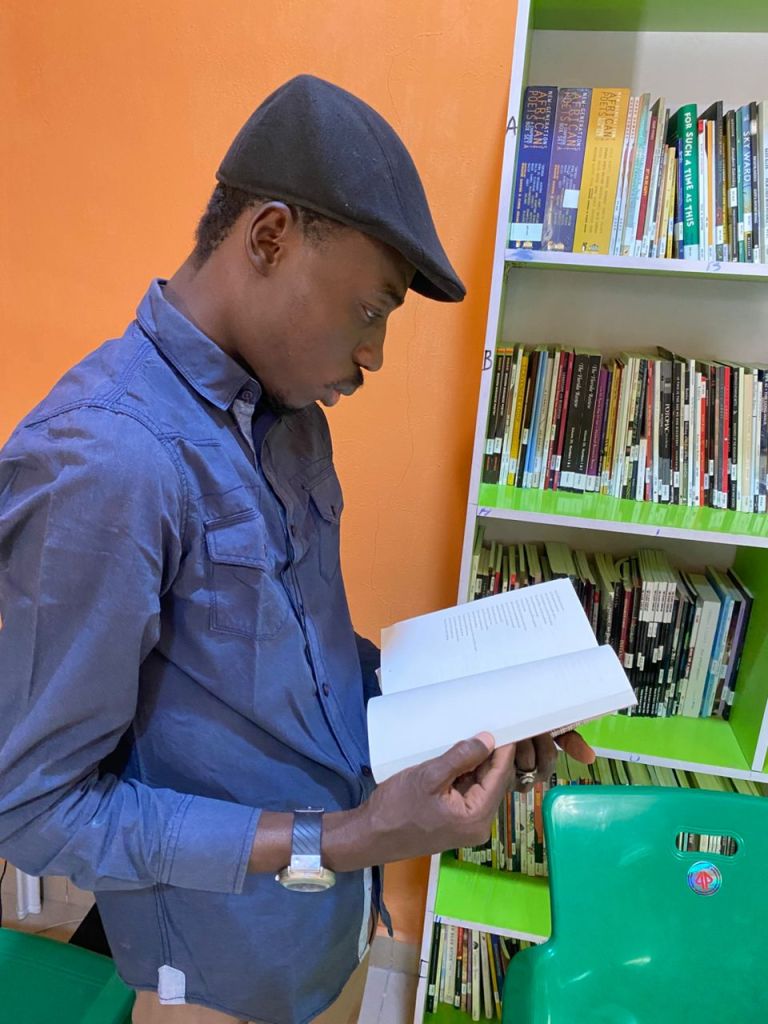
Abu-Yaman is a writer and poet from the Sub-Saharan African region who blends arts (poetry, prose & painting) with other creative endeavours (public speaking, calligraphy, social commentary). He has works published in Asian Signature, Antarctica Journal, London Grip Magazine, Ann Arbor Review and of course, African Writer. He is a co-founder of Minna Literary Society (MLS) and lover of purple hearts (kindness and sarcastic humour in people), Wushu principles, and thought-provoking films by creative Indian directors from Bollywood. He tweets @abuu_yaman on X.
Roses on the Roadside by Jarin Tasneem Shoilee

~ Chapter One ~
“Two roads diverged in a yellow wood,
And sorry I could not travel both”
– Robert Frost
She brushed her fingers over the flowers from a roadside flower shop. It was a chaotic weekend evening in January – when the urge to spend the weekend outside seems more important for the Dhaka dwellers than napping quietly at home. But she had a different purpose. She stepped outside for two personal agenda: firstly, to get some sunlight out of her eternally dark room, and secondly, to tame her untamed mind.
She decided to halt for a while, feeling drawn to the floral ambience. The small shop was adorned with colourful flowers of a few common species. Roses, yes. One of the most ‘common flowers’ with its special, romantic symbolism. The flower seller was a young girl, probably a school dropout struggling hard to earn her bread. She was constantly instructed and insulted by another middle-aged woman – possibly her mother or aunt – for not selling the flowers within accurate time with convincing price.
She looked at the flowers again. The chilling air of the winter evening was trying to crush the youthful glow of the flowers. The aged woman glared at the young girl with utmost fury – as if it was her fault that the roses were already half-dried; and why the young girl failed to sell all of them when they were comparatively fresh. All the blame went to the young seller, not to the rough weather. Did the middle-aged woman care to understand that the roses on the roadside also had a life of their own? Perhaps, who knew, did those roses lose their youth from the very moment they had been cut out from the garden?
The vulnerable, the beautiful always has a language of its own. Be it a floral species, be it a human being.
For a fracture of moment, her mind drifted through the vacuum of her heart. Usually, when a person tries to live on this earth, there is only one road to take – the linear direction from birth to death. That is supposed to be the universal road. Still, people try to adopt alternative roads towards immortality – competing to be famous, doing something memorable or significant, creating something new, or touching the sky even at the cost of life. Denying the alternative routes to death can lead towards unforeseen troubles. Humans have posthuman possibilities, but flowers do not have ‘post-floral’ options – unless they are artificially preserved with formalin or any other chemical elements.
On this incomprehensible yet undeniable journey, who takes the lead?
What if nobody else has taken that path before? What if that path is absolutely unfamiliar, daunting, impeccably new to others? How much courage would it take to leave a few concerns, upset a few people and then, mercilessly venture on that uncommon journey? When the human creates the path, at least the universe should guide that person. Nothing is permanent. No law, no custom, no rules. If the human is offered the gift of life, it is certain that the life itself should be the utmost gift.
So, it is safer to stick to one simple road. The road from birth to death. Yes, and there is one simple formula – if you cannot create something new, avoid the existing roads and make your own road in the process. Possibly that was what the young girl was doing – beautifully unaware of her power that she chose an alternative road before death, towards death.
How would it feel to live in a world without roses?
She walked forward, leaving the decision to buy any rose. The winter air kept thrashing on her messy hair, face and forehead.
——————————

~ Chapter Two ~
“Sometimes the greatest journey is the distance between two people.”
— The Painted Veil, W. Somerset Maugham
Sometimes, you have to walk alone to remind yourself of your independence.
Roads have a significant connection to human identity. Sometimes it is a reminder to never settle, to never rely on unreliable shoulders, to improve yourself instead of waiting for a savior, and accepting yourself with your flaws and imperfections. Many roads – like adult experiences – have crushed emotions, romance, the beauty of the soul, and the capacity to love. Yet, roads matter. Roads matter because in the end, it provides sunshine on a lonely path after so many darkest nights.
She felt an unknown, sharp pain inside her chest. They said, physical pain could be a sign of danger or misfortune. Any type of mental pain was okay because it was usually invisible to the public eye. But when the pain manifests into physical forms, you cannot always visit a doctor.
She reflected on deeper life concerns, standing aimlessly on the pavement of Dhaka-Aricha highway. Unlike her, busy buses, trucks, bikes, and cars were moving with an aim. Or maybe, she did have a purpose of standing there like that. Roads would be of two kinds – she thought; the chosen one and the discarded one. Submitting oneself to one single human would symbolize taking the chosen yet unpredictable road; where fear of not reaching to the destination would torment more than enjoying the journey at present. It was crazy. Or, was it? What if that journey also felt like being stuck on same spot forever? In those moments, should you burn bridges or let the ship sink? Practically, nobody should think of multiple roads while walking along one road. It would either break the pedestrian’s concentration, or result in violent road accident.
Even the most dishonest person on the street required to be honest. For the sake of safety.
Thoughts, too many thoughts. They jumbled up inside her head, trying to transform her soul into multiple, divided roadmaps. She crushed the dried leaves near her with the right foot. Pedestrians were busy with their own cartographic agenda in the half-evening light. Her absent mind failed to notice how the fast-paced bus headed towards her from the opposite direction. She froze, unable to move or scream. She closed her eyes. The momentary peace was too precious to avoid. It was more important than asking/ calling for help.
She lay on the road – partially wounded, crimson with blood. For a fraction of moment, she felt peace. Like a rose petal – carelessly and impossibly blooming on a road covered with dried leaves.
——————-
~ Chapter Three ~
“And now good-morrow to our waking souls,
Which watch not one another out of fear;”
- John Donne
Can you exist in the same platform or dimension simultaneously – like the metaphysical oneness of lovers’ souls?
According to the ancient formulas of transmigration, metempsychosis was one of them. It was believed, you could take temporary or permanent shelter in other non-human forms of life – e.g. plants, flowers, water, air, animals etc. A few famous Renaissance literary pieces have often tried to explore this implementation. Yes, in various ways, you can challenge the dominant narratives of human existence. The road of life is definitely not linear. But, can you realistically exist in other modes of life, especially when the earth rejects you as a human?
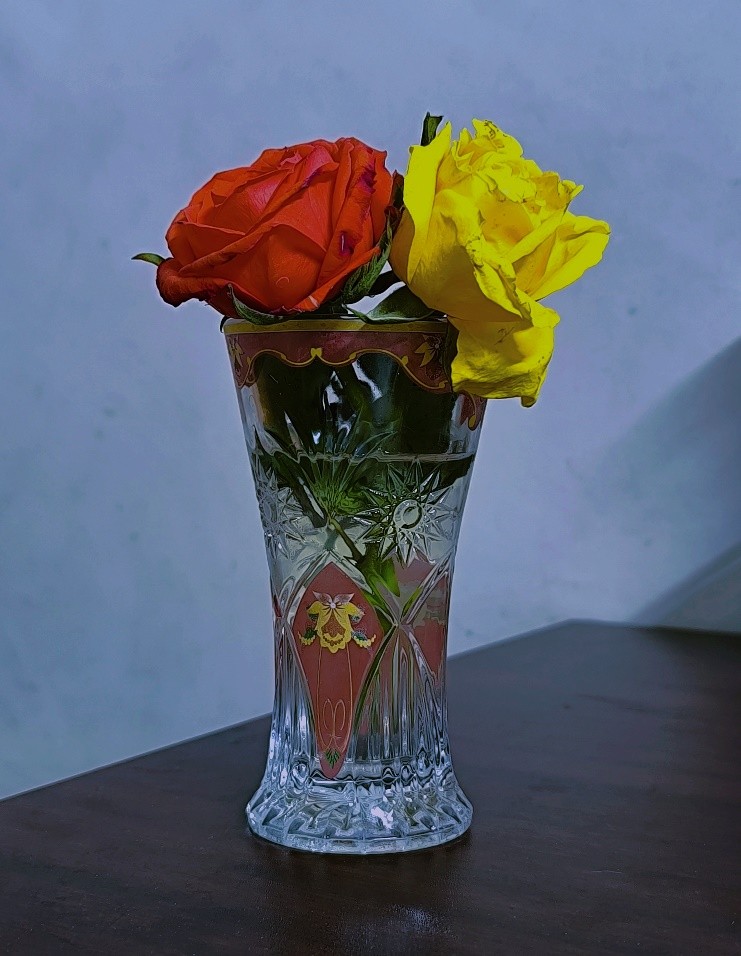
She lay quietly on the hospital bed. The noise, the bustle of city life was back. The hospital bed was a cage where her body was chained, but her soul was not. It drifted insanely towards alternative options and possibilities of existence. Her sunken eyes poised on the tea table. Someone had kept a bunch of roses on a small flower pot. They were vibrant, probably fragrant too. She tried to recall the earlier memories. Roses. Flashbacks, more flashbacks. They kept recurring like a motif in a novel, like a repeated vision in a dream. These were comparatively fresh than the roses that young girl was trying to sell. Then the mysterious time frame of a road accident where no roses were involved, where she herself turned into a scarlet rose. Something else was missing too. What was that? She tried to rationalize the whole situation. The presence of another human being to walk side by side. No safety plan can work absolutely, unless there is another human being is present to accompany you on the road of life.
The roses were back.
Her soul was back, too – if not through metempsychosis, at least through love and intention.
———————————————-

Jarin Tasneem Shoilee is working as a lecturer in Department of English at Jahangirnagar University, Dhaka, Bangladesh. She has published a good number of research and conference papers based on wellbeing studies, gender and sexuality studies, trauma studies, postcolonial literature, comparative literature, disability studies and psychology. Shoilee is also a creative writer, literary enthusiast and an idealist. Many of her articles, short stories, flash fictions and poems have been published in reputed national dailies from Bangladesh and abroad; such as The Daily Star, The Daily Observer, Ekushey Book Fair, Lulu Press Inc. and the like. She has also participated in various literary events, including creative writing workshops, psychology seminars, international conferences and Dhaka Lit Fest. She enjoys teaching and passing time with her students. In her leisure time she writes, listens to music and goes for solo dates.
 Parcham Online
Leave a comment