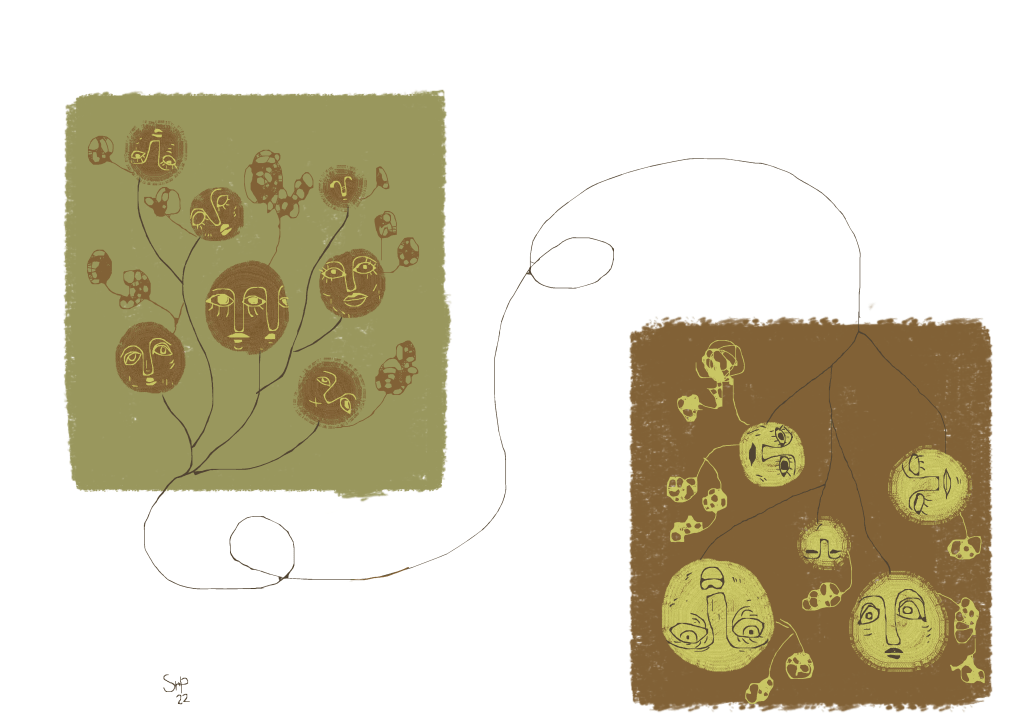
Editorial by Gita Viswanath
It is with great pleasure that I write this note as the newly appointed editor of the film section of Parcham Online. Ever since the institutionalization of film studies by University departments around the 1990s in India, academic interest in cinema has grown by leaps and bounds. The interest has translated into hundreds of PhDs being produced every year; seminars and conferences in cinema happen all the time and edited volumes of essays are aplenty. Not to be left behind, the digital medium is full of videos on film theory, theorists, film analysis and lectures. What may be the reasons for such a development?
The sheer numbers of films being produced in the 20th century and its affordability made it the dominant form of entertainment. Soon, films began to influence the public sphere from fashion to cultural expression. With the rise of filmmakers gaining recognition as auteurs, the medium of cinema competed with older forms of art for the status of a legitimate “art form.” To paraphrase Andre Bazin who famously said in “What is Cinema?” (1967) that cinema has always sought to represent the world. However, in its attempt to reproduce reality, it has also become a major art form, capable of analyzing, raising questions, and altering our understanding of the world. Further, the very nature of the medium, with its combination of music, drama, painting, technology, history, sociology and commerce enabled scholars to study cinema as an interdisciplinary field, thus expanding the scope of the discipline of Film Studies.
Soon, the total takeover of cinema by the digital medium in the mid-20th century led to easy accessibility of films from all over the world, resulting in what may be called cinema literacy. Academicians were quick to catch on to these trends and thus began a serious and sustained engagement with cinema. In the words of David Bordwell, “Film Studies is not just about watching movies; it’s about understanding them as complex texts that reflect, challenge, and shape the world around us” (Bordwell, David, and Kristin Thompson. Film Art: An Introduction, 2016).
It is in the light of such insights on cinema that I wish to shape the film section of Parcham Online. Without the use of excessive jargon and the compulsion for elaborate citations, we will enjoy perspectives on individual films, genres, movements, critical turns, etc. in a way as to enhance our enjoyment of the medium while also considering it as a serious intervention in our thoughts and the formation of our consciousness.
This edition has Sana Shah reviewing Three of Us: The Mirror of Memory. Shah’s is a moving, personal response to the much-acclaimed film Three of Us (2022) by Avinash Arun. Eschewing the task of critical analysis, Shah would rather contemplate on the many questions that arise for her from the film’s narrative that revolves around the themes of memory, childhood, time, space, and forgiveness.
Happy reading!
Gita Viswanath
Three of Us: The mirror of Memory by Sana Shah
There are ways in which memory works and then there are things that memory demands when it is failing. Perhaps, this approach set out by Maria Stepanova for her book In Memory of Memory ( 2017) is one of the many that we may employ while raising the questions that the movie Three of us leaves us with. This is not a review of the movie or the book. There have been several adept reviews of both the movie and the book, and I can do no better than what already has been done.
I therefore take the liberty of foregoing the task of critical analysis here. I am content to sit patiently for some time with the questions that emanate from the movie: questions that we invisibly grapple with in the ordinariness of existence, questions that we have stopped asking for want of serious answers, questions that we know have no answers, questions that mundanely writhe our souls, flounder our minds and agonise our hearts. This essay then should be taken as an umbrella of questions under which I shelter a piece of dry land, which in turn sheaths a chest of questions. We must dig together.
As Shailaja, making peace with her newly discovered affliction, a neurological condition called dementia, gives into the pull of revisiting her past by undertaking a trip to her hometown. I am compelled to brave the question: what is one expected to do in the face of a close-inching realisation that memory might be the ultimate mirror? A mirror that is held unto us by others, that one’s being, and identity is contingent or dependent upon the memory of others as they remembered us through the years. In the wake of dementia, as in Shailaja’s case, when one is gradually losing one’s memory, the question of self-identification, identity and existence is reduced to the memories that others have of us. Who are we, if not for our memory? What is the difference between our being and our person, unless the life we lived is in harmony with the life we remember to have lived? Perhaps, the work of memory is laid bare through these questions, as many a philosopher would know.
However, what about the demands? Perhaps, the simplest answer would be that of a return. A return, a retracing – to the origins, to the source, to that where one belongs: udgam. A place, a person, a memory, a poem, a root? As Shailaja faces Pradeep, her childhood love, after twenty-eight years, I was compelled to ask: What does it mean to countenance someone who shared the sweet ache of coming of age with you, after so many years or may be eras, especially when they were left without answers on so many counts?
Is there no bitterness or does the hurt dissolve into the past which now appears as a figment from another life? Distant, and unreal for the maturity which grows into our being, that nothing but the return matters as the quiet innocence of being distils the clamour surrounding human existence, effortlessly. What does it do to us as individuals and to the person within us who had withdrawn quietly over the years, only known to that person from our past that can no longer be?
As Pradeep agrees to revisit old places with Shailaja, I do not just see sites and places but also a door that can only be accessed by Pradeep. In the winding paths, in the viridescent lanes, through the rugged terraces gently sauntered together, leaching with shared yet exclusive memories, I see the remnants of a remote past, the disturbed creases of a letter, folded with care, hidden and preserved from visitations all these years, then opened again by a new, jilted lover. I cannot help but ask if the process of revisiting might hold a meaning different for someone on the verge losing her memory, as opposed to someone for whom all that this is about is a return, and a sudden one: the return of her long lost, childhood love.
When Dipankar, Shailaja’s husband, asks her if she remembers when the last time they were happy together was, I sense also the submission of memory. What do we consider as the defining moments of life that we deem worthy of preservation as memory – not the everyday life lived, of ordinary moments, unless threatened by the claws of erasure and forgetting?
Why do we pin our defining moments on the ones ripe with the fragrance of the extraordinary? Stepanova (In Memory of Memory, 2017) frames memory as the last form of real estate, available to even those who have been denied all else, but would this even hold any meaning for Shailaja?
Dipankar humbly reconciles with the human condition of many facets to individuals that may remain undiscovered even within intimacy. He realises that there are parts that can never be known, given the fact that humans live a life not in continuum, but also as disjointed, and that past, as much as it is taken to be a foreign country, can always be travelled to, with the passport of memory. That human beings are strangely capable of inhabiting not only contradictory moral universes simultaneously but also paradoxical chronoception or time perception. Kuch to hai jo mujhe pata hai aur aapko nahi (There is something that only I know and you don’t). This is perhaps a facet of life that cannot be emphasised enough and yet is not spoken about. That, as we grow as humans, our relationships with each other, with our memories, our past and with time evolves too. Perhaps, what stands out are not simply the lucid conversations in the movie but also frames – frames of ruminative silences, of the unspoken, the almost spoken, the understood, the presumed, frames of the brave and the suppressed smiles, and the stolen glances bleeding in poignancy. One such frame is one when Shailaja meets Pradeep the first time after years. Her gaze – is locked at Pradeep as if she is trying to read and remember him, a preparation essential to freezing a memory forever in her mind and heart, perhaps.
Bhoole ga dil jis din tumhe, vo din zindagi ka aakhri din hoga, ( Roughly translated, it would be something like The Day I forget you would be the my last day) goes the song Kya Hua Tera Waada, from the film Hum Kisise Kam Nahin, which to me is brought to a life of its own in this movie. How does one deal with the great fear, looming over us in a dark sky, of waking up to non-recognition, of forgetting the faces, the voices, the laughter, the fragrances of the ones we love and hold dear, of forgetting love as one would have experienced or known of it the first time? In this case, the fear happens to also be a real possibility staring Shailaja right in the face.
Stepanova’s (In Memory of Memory, 2017) struggles with her family remains suddenly animate this fear that broods over Shailaja, the possible inability to gather herself up from the splinters of someone else’s past and memories. I remember, therefore I am. Shelved away from the ravages of time, safely preserved in the crevices of the heart, remembrance and being remembered, then becomes an act of gratitude. Pradeep remarks– Is liye waapis aane ke liye thank you Shailaja, mujhe yaad rakhne ke liye ( I thank you for coming back and for remembering me) to whichShailaja responds with a heart-rending smile Zyada din nahi rakh paaugi ( I won’t be able to keep the memories for long). Koi nahi, mai rakhluga (Doesn’t matter, I will keep your memories in mine)Pradeep promptly assures.
The ache, the longing, the resignation, the quiet and the submission characterise this conversation exchanged between Shailaja and Pradeep, seated on the ferris wheel, which stopped mid-air to start again, as life comes to a full circle, but the condition of origin also satisfied. When the old witch by the sea says, ‘tune yaad rakha isiliye zinda hoon, phir aana ( I am alive because you remember me. Come again)…’ , the possibility of a return is under question because here, her life is hung on the altar of Shailaja’s memory. That she remembered the old lady also fuelled the longevity of the woman’s life and now as she inches close to forgetfulness, what of this life? What of the sites of memories that she revisits, like her school and the technological aids of memory, like the memory card to store pictures running the risk of falling out of storage or of forgetting passwords? Stepanova reminds us at this stage that perhaps both, the photographer and the photographed, once gone, have no wish to look us in the eye.
Time-perception and distances dissolve into each other, unless held in order through memories, that holding onto memories of the past may be one of the ways to travel through and across time and distance. The everydayness of remembering, or mundanity of forgetting imbibed through delays or urgency – as in this case, is perhaps best understood by Pradeep’s wife, Sarika who had more to say and did not, and yet the unspoken conveyed better than the spoken would. Perhaps then in the end, the whole of life simply does not become an act of letting go, but also an act of forgiveness.
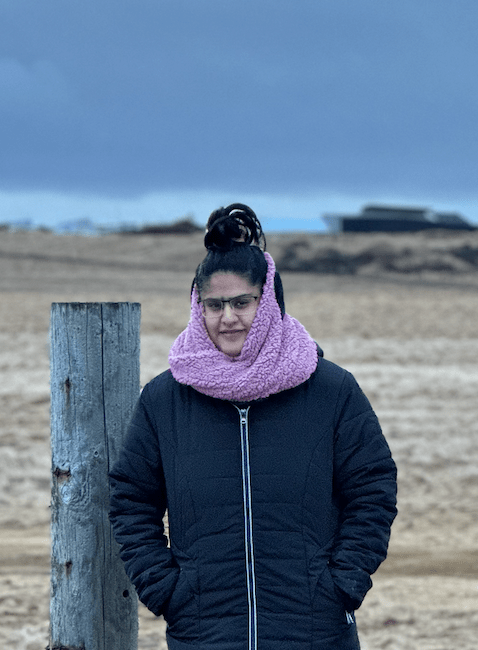
Sana Shah is a research scholar at the Faculty of History, University of Oxford, United Kingdom. Her research interests span questions of memory, history and identity, bordering on the fields of political theory and philosophy of history.
 Parcham Online
Leave a comment