Stalking Nature : Photo Essay by Purabi Bhattacharya
Save memories. The grey is overtaking all that is left green.
Caged living. What once was natural is now pushed out of the margin. Lions, tigers, rhinos present a spectacle on demand.
Pristine nature in most urban conversation is an illusion.
The recent cloudburst or landslide stories reaching us from every corner this monsoon are symptoms of a lethal malady. So-called development can no longer douse the discourse on climate change. And no, this isn’t exclusive to green modernists.
In the Anthropocene age Earth is seeking the price of our tyranny.
India’s North-East still retains the pretence of virgin nature albeit in puny pockets far between, with New York and Gurgaon casting their tantalising shadows that grow darker by hours.
A tinge of moss on a rock or a heavily rained hill, a dainty little oxeye daisy, the opening of a little cottage fringed with green patches, lilies with ladybirds visiting… a picture perfect town of yesteryears to walk around still exist in my birthplace. Wilderness has otherwise largely been domesticated in the margins of our gardens – designed and managed to serve our “tastes” .
It is high time to open the window to wild. Thoreau, one of my favourite nature writers had found ‘a civilisation other than our own’, and proposed that ‘in wildness is the salvation of the world’.
In between stolen walks or little drives on my way out to detox from the regular schedule, I have always looked for a light green, peach soaked or a deep dark shade created by closed canopy of surviving trees.
On one such walks I stumbled upon this screaming tree. It was a discovery.
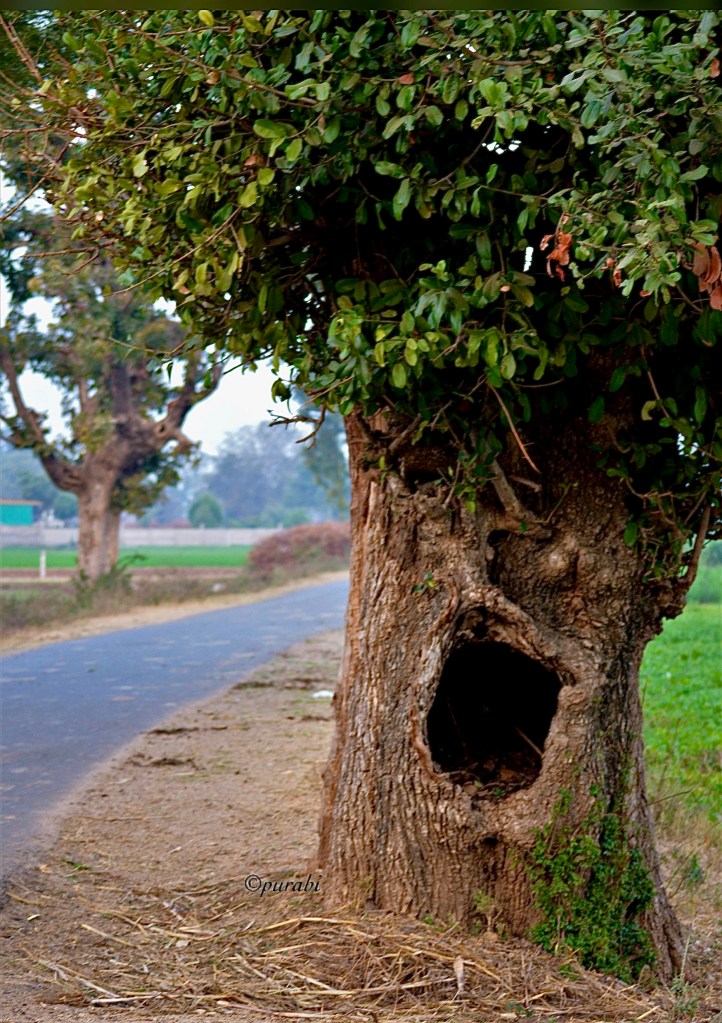
A Screaming Tree
I was driving around a remote village in Gujarat on a scouting expedition for a particular story. Miles and miles of arable land absorbed me in a strange unanchored emotion of entering into a nondescript poetic land. After a while, the shades of green linked my chaotic inner world to music. There was a pastoral symphony at every turn. Yanni came alive. And then suddenly in one of the road turns, this huge tree almost screaming: “don’t stalk me”, appeared.
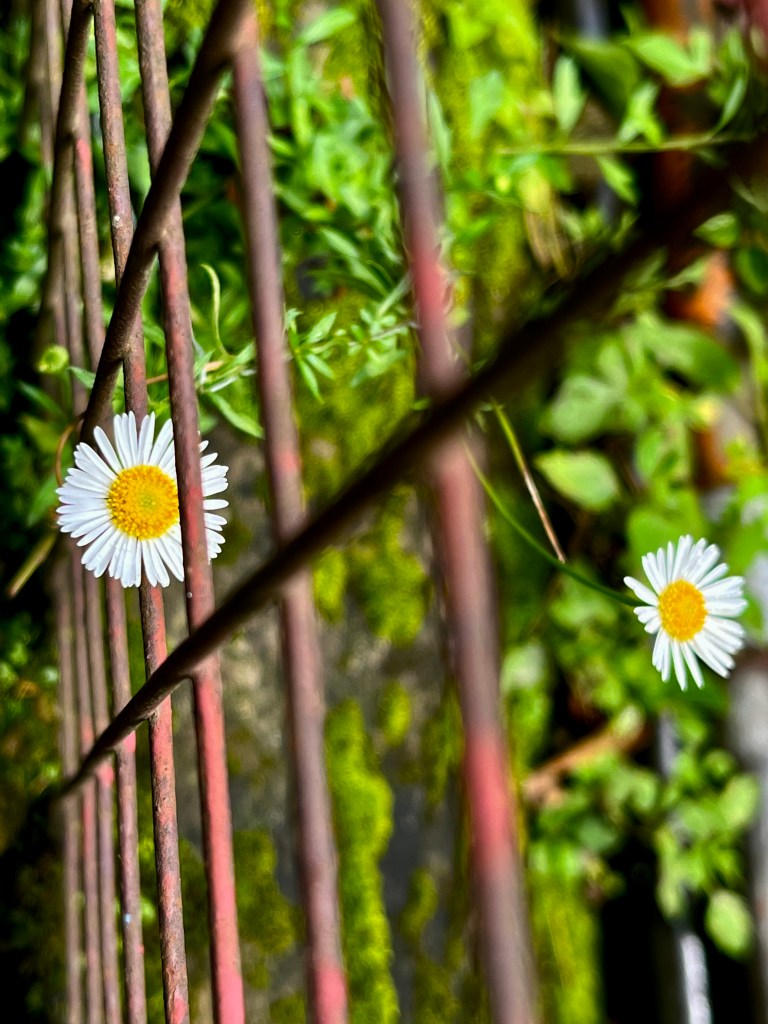
Fences t’ween the Daisies
This archetypal daisy wildflower, also known by other names like the English daisies or Field Daisy scientifically called Bellis perennis are everywhere in Shillong. Springs and summers they take over the lawns, sprout along city drains, walls, perfect garden paths and sometimes smile at a nature lover from a pine tree too! These flowering plants often have a fate of being trampled upon and ignored. My fondness for these lovelies led me to this little two divided by fences.

Yellow Fungi by River Siang
On one of my travels to Arunachal Pradesh in search of my childhood memories, I stood by the majestic Siang river. While monsoon was at its peak and I stood witness to landslides and tree felling, I bumped into this log of tree causing road blockade. These yellow thrives threw a sight. As children we were always advised to stay away from mushroom like growth, as children we always wanted to go against advices, the whole idea of touching fungi always kept us curious. As adult the curiosity stays on bringing in fond memories and little poems.
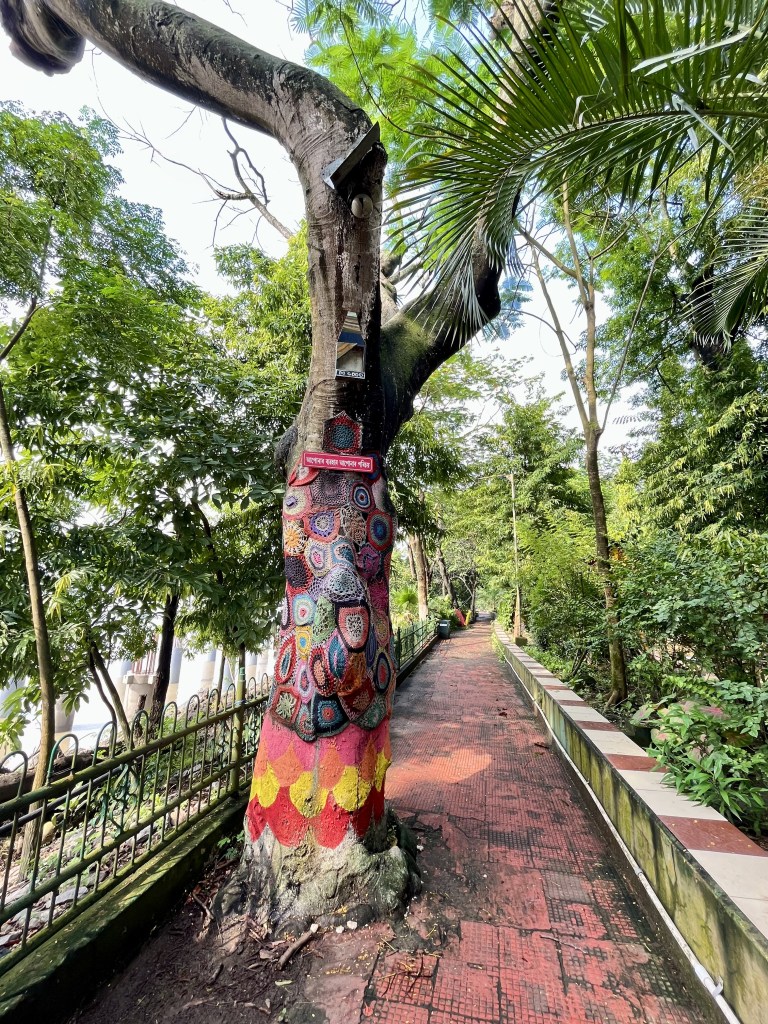
Wrapped around crocheted women work, stood this tree with two sayings: 1) “Your behaviour is your identity” in Assamese and a little above it “Do good”. This tree I knew was waiting for time. An Inland Water Transport project was uprooting all the trees in queue. The banks of Brahmaputra we know hold the secrets of myriad tales of migration, complaisance, carnage, and dreams that it has silently witnessed over the centuries. The tree felling signals recurring flash floods and soil erosion. Standing on one of such banks I imagine a few good samaritans coming together to send across strong messages. This is heart wrenching to witness deforestation taking place at a very large quantum and forests almost looking deserted.
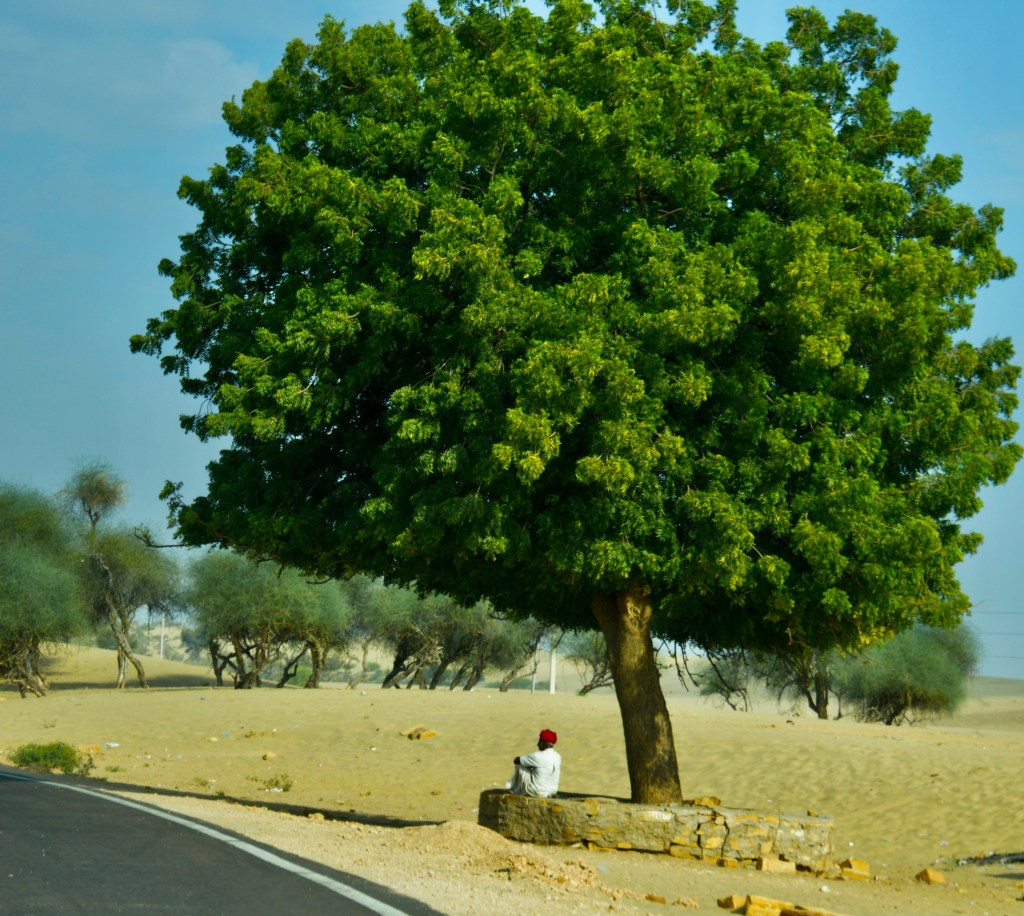
A Folklorist’s Tree
Trees hydrate our imagination. They provide habitats, nourishment and shade for fairytales to flourish in our mindscape, for poetry to bloom, for songs to discover freedom. In mythologies, trees home tree spirits.
This photograph taken somewhere in Rajasthan was of a folklorist who was singing to himself with no audience around. I wanted him undisturbed and it was at this moment I remembered Hermann Hesse, the novelist, poet, painter: “For me, trees have always been the most penetrating preachers. I revere them when they live in tribes and families, in forests and groves. And even more I revere them when they stand alone. They are like lonely persons.”

Purabi Bhattacharya writes from the granular ground of Gujarat, guardianed by the prickly cacti and hot air, pining for the rains, the pine fragrance and the undulant Khasi hills of Shillong where she was born. The serenity, simplicity and serendipity of the serpentine alleys that saw her growing up seeped into the very core of her being. So much so, even two decades of stay in “developed” India has been barely able to urbanize her, an essentially cerebral nomad.
A Writers Workshop author with three collections of poems, Even birds go home (2023), Sand Column (2019) and Call Me (2015), Purabi teaches and frequently reviews books as a panelist for the literary e-journal Muse India. Her first photo essay found a place @Zubaanproject “Through her lens” Reframing the Domestic:Exhibition(2020).
 Parcham Online
Leave a comment