
- Editorial by Bhaswati Ghosh
- The Ustad Connection by Shruthi Rao
- Sindhubhairavi by Nandan K. Prasad
- MUSINGS OF A RAIN DRUM by Ishika Chakraborty
- The Sangeet Sammelan by Reenu Talwar
- You’ve Already Won Me Over, In Spite of Me by Shuktara Lal
- The Sound of Life by Takbeer Salati
- Kecharhe: A Music that Guides the Soul to the Otherworld by Mainu Teronpi
- Morning Lieder by Zary Fekete
Editorial by Bhaswati Ghosh
On those nights when sleep eludes me, which, unfortunately aren’t all that few, I turn to Spotify’s Calm station. As if they were a mother’s hand stroking my head, soft, kindhearted notes glide me into sleep.
Our world is insomniac now too, one might argue. Sleep has long been eluding children in Palestine, mothers in Ukraine, vegetable sellers in Lebanon…the list is exhaustingly long.
Music, from Old French musique (12th century), is defined as the science of combining sounds in rhythmic, melodic and harmonic order. When conceiving this issue of Parcham, I thought of the many situations — other than sleeplessness — when music has rescued, kept a vigil on and even cured me. I thought also of the world’s insomnia, not so much a helpless condition, but a stubborn refusal to rest. I wondered if the “harmonic order” — not merely of the octave’s notes, but of gurgling streams, a thrush’s song, the low crackle of keyboard clicks at work — could be the hand that led us back to repose.
While reading the submissions we received, and we’re grateful for the love with which so many contributors sent us their work, I delighted in joining fellow travelers on that road to repose. Reading through this issue, you’ll soak in the ‘therapy of occurring rains,’ find a lonely violin’s night speak to yours, perhaps hear whispers of ‘the songs lovers silently sing in their dreams’ and notice ‘a melody sit on the edge of an eyelash.’ Here we find stories of an accompanist’s indispensable contribution to classical performances, of seeking and finding freedom at a live concert, reconciling with a poet through a woman’s voice and finding music in the unlikeliest of places — the chaos of a metropolis’s university campus, and things — the sound of a siren calling factory workers.
I hope you’ll enjoy the notes and rhythms of this issue as much as I did.
The Ustad Connection by Shruthi Rao
Pandurang Rao slid the photo album out of a thick plastic bag, and nudged it gently onto the table. There was a time when the album lived in the almirah, but he was finding it increasingly difficult to lift it out onto the table. Now it just sat on the table, for easy access.
He brushed aside a bunch of flyers – one about a senior home, one with instructions on how to exercise the neck, and several of them advertising local events — and set his album in front of him.
He ran his fingers across its cover, and flicked away a non-existent speck of dust.
His daughter, with whom he lived, liked to tease him about it. “I’ll buy gloves for you to wear to handle your precious album,” she said. Pandurang Rao just chuckled, but didn’t tell her he always washed his hands with soap and dried them well before he touched the album. It looked absolutely new; not at all like it was decades old, and thumbed nearly every day.
Pandurang Rao opened the album at random, holding his breath to see what page would fall open. Yesterday, it was a picture of Pandit Jasraj in concert. The day before that, it was Gangubai Hangal on stage. Tomorrow it would be some other stalwart of classical music. There were close to two hundred photos in the album – vocalists, instrumentalists, percussionists. Bright-eyed musicians at the beginning of their musical journeys. Stars at the height of their careers. Legends past their prime who now needed supporting artistes to carry them through gruelling three-hour concerts.
But all of the photographs had something in common – Pandurang Rao himself. He sat with these musical giants, just a little behind them, cross-legged, accompanying them on the tanpura, the round base of the tanpura on his lap, and his fingers plucking the strings on its long vertical neck.
Each time he opened the album, and it fell open to a picture, all he had to do was close his eyes for a moment and the memories came flooding back. That it was a rainy Saturday evening in August of 1987 at Chowdaiah Memorial Hall, and that Pandit Bhimsen Joshi had sung Raag Durbari, that the compere had been a slender lady with hennaed hair, and that the organizers had arranged samosas and kaju katli after the concert.
“He can’t remember where he left his glasses,” his daughter told visitors. “But he can remember the compositions someone sang forty years ago!” She said it in a complaining tone, but she couldn’t hide that note of pride. Pandurang Rao just chuckled.
Today the album had opened onto Kumar Gandharva’s photo. Pandurang Rao stared at it with fondness. He had heard Kumar Gandharva’s golden voice on his father’s radio as a child, and he had got an irresistible urge to learn singing himself. He started hiding behind the door, an eight-year-old boy in shorts, listening as a music tutor taught his sisters to sing early in the morning every weekday. He listened, trying out the notes at a volume close to a whisper, keeping a lookout for his father in his office. If his father saw him, he would get scuffed on the ear and sent off to his room to study. Girls could learn music. It would put them higher up on the ladder of matrimonial suitability. But boys had no business learning music.
But there were no rules about listening to music. So Pandurang Rao listened to the radio whenever he could.
After he finished his studies and landed a prestigious bank job, he bought a second-hand tanpura with his first salary. Every morning, he woke up at 4 and sat for two hours trying to sing. It wasn’t a problem as long as he was single, but after he got married, his wife put her foot down. “Your voice makes me feel like I’m cleaning my ears with sandpaper,” she told him. He resorted to just sitting cross-legged and playing the tanpura, the drone of which filled the little house and proved to be a pleasurable accompaniment to his wife’s chores, drowning out the early morning noise of the neighbourhood – steel vessels clanging, water running, the milkman being shouted at for diluting the milk.
Waking up to the sounds of the tanpura was among the first memories for all his three children. Years later, even after they moved out, they wrote to him from hostels or their new homes to tell him how much they missed the sound of the tanpura. His son, on one of his visits home, even recorded two hours of Pandurang Rao playing the tanpura, to take back with him.
As for his wife, as she lay in hospital taking her last few breaths, she clutched his hand and asked him who would play the tanpura for her in heaven.
Pandurang Rao’s eyes misted over as he looked at the photograph that had set off this chain of thoughts. He hadn’t been able to believe his ears when he was asked to accompany Kumar Gandharva in concert. He nearly fell off the stage when the great man walked onto the podium, smiled at him, patted him on the back, and delivered the concert.
Pandurang Rao smiled, flipped the pages of the album, and as the thick, photograph-heavy pages fell upon each other in an arc, glimpses of the past came to him, one after the other. So many concerts – so many accompaniments.
And it had all began by chance. It was nearly forty years ago that his colleague at the bank had invited him to go along with him to a flute concert. They went early – Pandurang Rao wanted good seats. But when they arrived, they found the organizers in a bit of a dither. The lady who was supposed to play the tanpura had been delayed.
“We’ll find someone to replace her,” one of the organizers said, “It shouldn’t be difficult to find one person who can play the tanpura in an auditorium full of music-lovers.”
Most days, Pandurang Rao hardly ever spoke without being spoken to. But today wasn’t one of those days.
“I could play,” he said. And as everybody turned to look at him, he continued, his words tumbling over one another. “I can sit cross-legged for a long time. I play the tanpura every morning.”
The organizers handed the tanpura to him. Wasn’t a big concert anyway. Just a new, young flautist. What could possibly go wrong?
Wishing he had worn a kurta instead of a shirt, Pandurang Rao stepped onto the stage for the first time. He felt completely at home.
After the concert, the organizers thanked Pandurang Rao, and said, laughing, that they now knew whom to call when they needed a tanpura artiste.
If it was a joke, Pandurang Rao did not get it. In the next month, he called the organizers a dozen times to ask if they had any more concerts scheduled.They invited him to play for the next one, and the one after that, and that’s how it began.
He was always punctual. Never dropped out. He put on no airs. He gave nobody any trouble whatsoever. And during the concert, he sat absolutely still and played the tanpura with a steady hand. He was Mr. Dependable.
Pandurang Rao became a fixture at concerts. Other organizations invited him too, for their concerts, and he moved to higher planes. He played at the best auditoriums, with the greatest musicians.
And he always ensured that the organizers sent him photographs of the concert after the event.
People who knew him would’ve expected him to shy away from the spotlight, but instead, Pandurang Rao thrived. It was euphoric for him, sitting next to the great musicians he had long admired, sharing the stage with them, being garlanded after the concert, his name being spoken into the microphone in dulcet tones. The lights, the sea of faces, the thrill of hearing velvet voices from renowned throats, and golden notes from instruments, all this sitting two feet away, in the aura of these great people …
Eventually, he retired from the bank job, but not from the tanpura. But as he aged, a worry gripped him – what if his body failed him? Would he be able to sit for three hours without moving, with the heavy tanpura on his lap? Would his fingers turn arthritic? Would they be able to strum the strings gently, providing the sonorous drone that creates the atmosphere and provides the shruti for the concert?
Pandurang Rao trained for his “profession” with the same diligence with which athletes train their body. He sat cross-legged every morning for three hours, not two, and played the tanpura. Anyway, there was no hurry to go to work any longer.
He exercised his fingers several times a day, clenching and unclenching his fist, pleating and un-pleating a length of silk cloth, practicing the pincer-grip using mustard seeds. As he entered his seventies, he watched with pride his peers choosing to sit on chairs, and walking with canes, while he sat comfortably cross-legged for as long as was needed, even standing up from the cross-legged position without any support.
But finally, it wasn’t arthritis or creaky bones that proved to be his undoing. At a concert of Ajoy Chakraborty, Pandurang Rao sat between him and the harmonium player. Halfway through the concert, as the singer launched into a slow and soothing alaap of the raaga Jog, Pandurang Rao dozed off. It was for just a moment, but it was enough for him to lose hold of the tanpura. The tanpura swung uncertainly for a second, and its long neck fell in an arc. For Pandurang Rao, it seemed to happen in slow motion. He reached for it, still in the clutches of that brief nap, but his fingers just grasped air. The harmonium player, though, caught it and straightened it.
Pandurang Rao took charge again, and Ajay Chakraborty continued singing as if nothing had happened. For the rest of the concert, Pandurang Rao sat with his left thumbnail digging into his thigh to keep himself awake.
But that did it. Invitations to play dried up overnight.
Sympathetic friends and well-wishers still asked him to play for home-concerts and informal gatherings, but it was clear that his days in the spotlight were over.
Pandurang Rao, though deeply disappointed, took it in his stride. He was 75, and it had to end someday. He only wished he had quit on his own terms, but then one can’t have everything.
***
Pandurang Rao closed the album gently, and slid it back into its plastic sheath. Did anybody else in the world have this kind of treasure? Was there anybody else who had accompanied so many music greats on the tanpura? Definitely not.
Several times he wished that his accomplishment would get some recognition. But though people had expressed awe and surprise at his good fortune and achievement, there hadn’t been any formal recognition of him.
Someone had once told Pandurang Rao, “You should apply for the Limca Book of Records!” The thought had taken root in his mind. He mentioned it to his children, pretending it was a joke, and hoping that the thought would grab them too, and they would do something about it. But they’d just laughed it off. But the thought had grown into something he couldn’t ignore. He obtained the address of Limca Book of Records and wrote to them in his rounded handwriting, explaining his achievements and telling them that he had proof in the form of photographs. But all that came of it was a politely worded reply from them stating that they didn’t have that category of records at the moment.
He told himself it didn’t matter. That he had got the opportunity to play for these greats was an award in itself.
As he put the album back into its bag, his thoughts, as they so often did, turned to Ustad Bismillah Khan, his favourite musician, the strains of whose shehnai were an unguent for both mind and body. He was the only top musician Pandurang Rao hadn’t accompanied on the tanpura.
The Ustad always played with his own troupe, and even though Pandurang Rao had heard him at close quarters, there was no connection he could claim with the Ustad. He had hoped he could at least get a photo with him sometime, but now it was too late. The Ustad was no more.
Pandurang Rao clicked on the YouTube playlist his daughter had made for him on the iPad, and strains of the shehnai filled the room. He smiled. Beautiful. What a musician. So what if he had no connection with the Ustad. He had a connection with his music. A small smile started on his lips.
He made sure the volume wasn’t too loud – he didn’t want his daughter’s family to get disturbed — and he went around the room, clearing it, and getting ready for bed.
As he examined the flyers on the table, trying to decide where to put them, one of them caught his eye, and he frowned. It advertised the opening of the Bangalore Music Centre in the neighbourhood.
Pandurang Rao knew the story behind this place. A few years ago, a music enthusiast, Mr. Ravi Mathad, had bought a piece of land in their area, and proposed building a music centre and auditorium. Enthusiastic donations poured in, big and small, Pandurang Rao’s among the latter. The building took shape. It had a conference room, a workshop hall, a lounge, green rooms, a canteen, and most importantly, a large, acoustic-friendly auditorium, capable of seating up to 300 people. Mr Mathad decided to name the centre Ustad Bismillah Khan Memorial Music Centre, and he put up a makeshift board outside the building under construction.
Immediately, local goons showed up with hammers and crowbars and threatened to take down the building brick by brick if they went ahead and named the Music Centre after a Muslim, given that the building was located in a Hindu-dominated area. Pandurang Rao shook his head as he remembered. Of all the people, they were protesting against the name of Ustad Bismillah Khan – a practising Muslim who always invoked Maa Saraswati at the beginning of his concert – a man who lived in the holiest city of Hindus – Benares, and was proud of it. Music was his religion, as with so many others of his generation of musicians. The irony!
But muscle power won. Mr. Mathad and other stakeholders decided upon a bland “Bangalore Music Centre” as the name of the music centre but Pandurang Rao heard from his son-in-law that they were planning to name the 300-seat auditorium after the Ustad. “Anyway,” said the son-in-law, “Those culture-less goons are never going to step inside the compound, and will never realize what the auditorium is named.”
They were thinking of names for the small workshop hall too. The popular opinion was that it should be named after a musician too, but who should it be? None of the current crop of musicians wanted to play second fiddle to the Ustad, and have a smaller hall named after them. Ego issues. Tch, thought Pandurang Rao. Big musicians, small minds.
Pandurang Rao sighed, threw the flyers away, drank some water, and got ready to go to bed.
The mattress was lumpy. It needed to be turned. His son-in-law had said he would do it today, but he had come back from work with a back ache, and Pandurang Rao thought better of asking him to turn a heavy mattress. What is one more day, he thought, and found a comparatively comfortable niche in the general lumpiness of the mattress. He closed his eyes, and to the strains of the Ustad’s shehnai, he fell asleep.
***
The parked cars stretched a kilometre long, and choked the roads and bylanes. Pandurang Rao’s son-in-law scratched his head as he directed another mourner inside. Who could have guessed the old man was so popular?
There were musicians, concert organizers and music aficionados, all come to pay their respects to Pandurang Rao. His daughter wiped her eyes with a handkerchief from time to time as she nodded at people she had never met.
Yes, it was sudden. Yes, he had had a bypass surgery two years ago, but he had recovered well. No, he didn’t seem ill last night. Yes, he had played the tanpura for most of the stalwarts. Yes, that is his personal tanpura. No, he couldn’t play it much lately, his fingers were too stiff. Yes, he has an album of all the pictures. No, she couldn’t show it to everybody. Please, could she have some privacy.
Mr. Ravi Mathad was there too, standing in a tight group with some other organizers. Pandurang Rao’s son-in-law was walking around, seeing to the arrangements, calling relatives, giving directions, but he paused for a moment near Mr. Mathad’s group, listening to their conversation.
“Has anybody felicitated the old man?”
“No, nobody thought to.”
“He was a fixture in concerts at one time, wasn’t he?”
“Yes, he was an institution of a kind, you know.”
“Say, what if we name the small hall after him?”
“The workshop hall?”
“Yes yes. A way of remembering him. Ustad Bismillah Khan Auditorium, and K.V.Pandurang Rao Hall. What do you say?”
“Hmm. Good idea. Wasn’t he a devout Hindu though? I hope he doesn’t mind being associated with Ustad Bismillah Khan!”
“Shush… shouldn’t matter really, anyway he’s no more …”
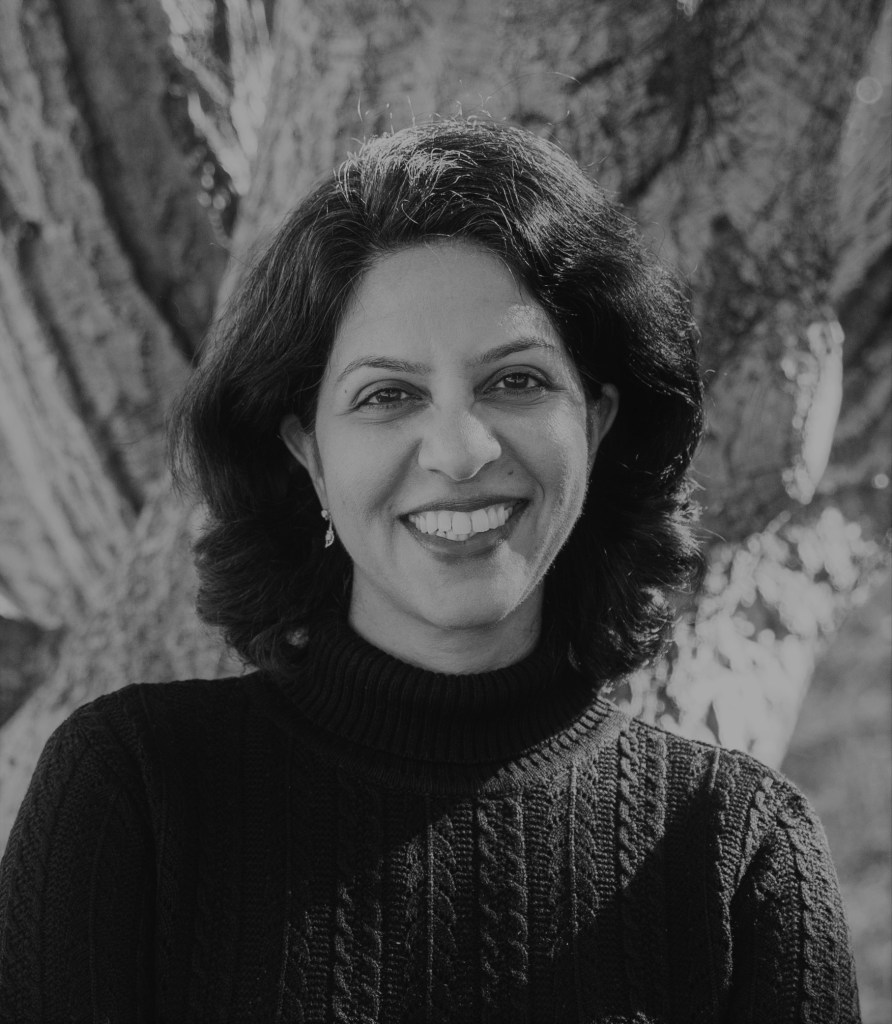
Shruthi Rao (read more about her here )writes for children. Her books, both fiction and nonfiction, have been published in India and the USA. If she wants to learn more about a topic, she writes a book about it. Originally from Bengaluru, Shruthi now lives in northern California, and loves books, trees, benches, desserts, science, and long walks.
Sindhubhairavi by Nandan K. Prasad
The man shifted nervously from one foot to another. He stood with his back to the enormous audience, smoothing out non-existent wrinkles in his lime green kurta, adjusting his new white dhoti. A boy hurried over and handed him a microphone.
He took it, careful to not let it slip from his sweaty palm, and tapped the head. Answering taps sounded from multiple places around the room. Satisfied, the man stepped in full view of the audience, at the foot of the stage, where a violinist and mridangist were setting up their instruments.
“Greetings to one and all present here,” he began, his voice trembling a little. “I am honoured and grateful beyond measure to have been chosen to deliver an introduction to… to this illustrious personage who is performing for us today. He is someone whom I have admired very, very much since I was a young boy, a sentiment I’m sure most of you in this room share. Without further delay, I’d like to introduce the man who needs no introduction: Dr. Vikramaditya Sharma!”
The room burst into applause, some of it emerging from even outside the hall, where people jostled for a good view of the stage through the windows.
Dr. Vikramaditya Sharma was not an imposing man; physically, at least. He was of average height and build, with close-cropped hair and a large spot of vermillion on his forehead. He wore thin rimmed glasses placed slightly too low on his nose. He uttered a short prayer before stepping onstage, joining his palms to acknowledge the cacophonous applause.
He waited a full minute before he gestured to the man in the green kurta, who cleared his throat into the microphone; only then did the applause die down.
“Before the programme commences, I would like to say a few words about our esteemed performer.” The man in the green kurta cleared his throat. “Dr. Vikramaditya Sharma’s parents first realised their child’s prodigious ability in music when he was around two years old. He was catching full songs he had heard on the radio or TV within seconds. He could listen to a complex piece of music and in just one minute he would be able to sing the entire piece from memory.
One day, when he was six years old, his parents were startled to find he had got one song wrong. But young Vikramaditya Sharma only smiled and told them, ‘I know this is not what you have heard, but the actual melody was too simple. So I thought I will make my own.’
Dr. Vikramaditya Sharma’s mother began to cry at that. They enrolled him under Vidwan Dr. Parvati Iyer, one of the leading lights in modern classical music, and within two years, she confessed that his ability and willingness to learn had far surpassed hers to teach.”
At this the applause picked up again, dying down quickly so as to allow the man to continue the story of their god in mortal form.
“Dr. Vikramaditya Sharma completed his PhD in music at the tender age of seventeen, and since then he has opened his own school and toured several countries around the world, singing for the President of India, at the International Environmental Council and for the Pope, among others.” Here, he paused to take a deep breath and flipped the page.
“It was around this time, though, that Dr. Sharma, in his own words, found his true passion. He was-“
Someone cleared their throat softly, melodiously. It could only be one man. Four hundred pairs of adoring eyes turned to the centre of the stage. Four hundred bodies held their breaths as they waited impatiently, eagerly, for their object of adoration to speak.
“Do you mind if I explain this part myself?” It had the tone of a question, but deep down everyone knew there was no refusing Dr. Vikramaditya Sharma. Not that the thought crossed their minds for even a second.
“Of course,” said the man in the lime green kurta, smiling genially. “Our audience would love to hear it from you.”
“Thank you.” The singer cleared his throat for a second time. “Eight years ago, my quest for music and knowledge of music was at a peak. It was unquenchable, insatiable. I would run here and there like a madman, with not a care for the expenses, trying to fill my mind up with all the music I could. I was touring the Western Ghats once, trying to learn as much as possible of the music of the Irula when I came across a singularly interesting shrine. By itself, it was nothing of note. Small and isolated at the edge of a forest; it didn’t look like it had been visited in a while.
I stopped my entourage and we sat down in the shade of the trees for lunch. And we sat there for a long while, enjoying the call of the birds, amusing ourselves by singing different songs. I remember feeling tired and walking to the shrine, noting, in some curiosity, the cleanliness of the carvings.
“As soon as my foot landed beyond the threshold, something changed. It was like the place itself was charged with electricity. Power flowed through the air, through me, and my chest was constricted. It got tighter and tighter, till I opened my mouth to cry out, but what came out was not a cry of pain, as my mind willed. It was song, pure and filled with unadulterated devotion, as the Divine willed. I forgot the tightness in my chest, forgot the forest around me; my only thoughts were of the idol in front of me and the greater being it represented.”
He closed his eyes, reliving the experience in all its glorious detail.
“My entourage said the space around me was sparkling, my voice and expression completely different from normal. They had never seen anything like it. I had never experienced anything like it.
“At that moment, I knew why I had been put on this Earth, why I had been given the gifts I had. It was to summon God.” He raised his voice. “The single highest ambition of my life is to summon God from the heavens onto this mortal plane of existence! And I have no other weapon other than my voice and my music and my devotion, and I have sworn to achieve it in this lifetime, and I will not – no, cannot – stop singing before it is done! Only then will I consider my career, my life, to be complete!” He stopped, breathing hard. “I suppose I should start.”
He adjusted the volume on the shruti box and took a sip of water. He began with Revathi raga. Slow and soft at first, cautious. His voice strained to break free, but he kept it in check, the frown lines deepening on his face. Then, little by little, his resistance cracked. His voice got louder, more expressive, and the audience got what they had come for.
His voice burst out on the landing of the taara shadja and the air around him shimmered. He held the note and the shimmer slowly began to spread. A full minute passed but his voice didn’t let up. A shower of sparks burst into life a few feet from the nearest listeners and they gasped and shifted away.
Dr. Vikramaditya Sharma was caught up in the stream of devotion now. He appeared to sing from somewhere outside his own body, the music entering the body of the listener, sending shivers up their spines. More and more crackles began appearing, but it seemed like no one was afraid anymore; or they didn’t notice. And how could they? There was nothing in their minds except the pure euphoria of sitting in front of this man, this mortal with the voice of God, and watching him capture the raga Simhendramadhyama like a fisherman would a fish, and spin it into divine liquid music.
He sang for two hours without pause, smoothly transitioning from one raga to the next, from one song to the next. The sparks got more frequent, louder and brighter. Sometimes, people stirred, blinking uncertainly at the sights before them, but soon enough, they’d get dragged by the music again; as a tide carries away the unaware one. To an outsider, the glassy-eyed expressions, the rhythmic swaying of their bodies, everything about the listeners would have seemed eerie. To them, it was the only natural course of action.
When Dr. Vikramaditya Sharma finally ended his performance, the room fell deathly silent. The singer laid his head on his chest and closed his eyes. There was no God, no cracking open of the heavens, no fearsome bolt of lightning. Only mere crackles continued; and even they fizzled out soon. By his markers, the performance was a failure.
It was said that the applause deafened six people and left several more with a prolonged ringing in their ears. It was also said that Dr. Vikramaditya Sharma left the hall almost immediately, only stopping for a minute to thank his accompanists and pray with folded hands in front of the idol in the corner of the hall.
Dr. Vikramaditya Sharma was not unused to failure. He closed the door to his hotel softly, sighing as he did so.
Five hundred and twenty-four concerts in the past five years. Five hundred and twenty-four attempts to execute the highest target of his life – the very purpose of his existence.
Five hundred and twenty-four failures.
Dr. Vikramaditya Sharma lay on his bed, and for the five hundred and twenty-fourth time in five years, let the tears slide.
“Why?” he sobbed into his pillow. “Why don’t you appear before me? What have I done to you? What have I not done for you?” He lifted his head and threw the pillow across the room. “I have dedicated my entire life!” His fingers scrabbled around on the table, grabbing hold of the lamp and flinging it to the opposite wall. “My entire life to your service!” The ceramic cow paperweight followed suit. “And not a single message in eight years!” A miniature glass horse was next.
“I-” Dr. Vikramaditya Sharma paused. There was music coming from the next room. He rose and walked carefully past the shattered glass and ceramic to the other side of the room, pressing his ear to the wall. Faint sounds of mridangam emerged, followed by a melodious female voice, and snatches of a beautiful violin accompaniment. But he recognised the song. Composed in raga Sindhubhairavi, a wonderful, wonderful raga, used for expressing sorrow. He couldn’t think of a more fitting raga at the present moment, and he soon found himself humming along. His humming grew steadier, louder. He strode back to the bed, stepping on the glass in the process, but he barely noticed. Red lines followed his path, and smeared the bottom of his pyjama as he sat cross legged on the floor, at the foot of his bed.
Dr. Vikramaditya Sharma sang as tears ran down his cheeks, mixing with the blood on the floor. Eight years of resentment and sorrow was poured into his voice, siphoned straight from his soul.
His voice broke in several places as the sobs became harder and harder to suppress, but he couldn’t stop singing. The barrier holding back his sadness was broken and he could not stop till the reservoir emptied. As he choked back yet another sob, there was a thunderous roar, emerging from somewhere to his right and Dr. Vikramaditya Sharma turned his head just in time to catch the bright flash of light burst into life.
He was instantly blinded.
With a cry, he fell to his knees, clutching his head, scratching at his eyes, willing the flash to stop. It did, leaving him in pitch darkness. Angry red lines blossomed where he had clawed at his now unseeing eyes. Although he could not see it, he was suddenly aware that an entity had entered the room through the flash, and there was no doubt in his mind as to who it could be.
Entity. Entities.
There were more than one. Their presence grew stronger, their numbers growing and growing, streaming through the crack of light still remaining. Dr. Vikramaditya Sharma tried to picture them in his mind’s eye; gods of all shapes and sizes, gods with lion’s heads and crocodile bodies, gods with five eyes, gods with long dark hair wrapped in layers around their entire bodies, gods of pure energy floating along. But the images were fleeting, fragile; and he had no way of confirming them.
He fell back, sobbing like a baby as the last of the gods emerged. It took him a while to be able to raise his sightless eyes towards the concentration of beings and try to form a sentence. “Wh… why? After… after I served you for so… so long.” Here he burst into tears again. The gods only watched silently; or if they did say or do something, the tearful dishevelled man on the floor did not notice. “Why take it away?” he asked. “I did all this… only to see you.”
And as one, the gods spoke, their voices covering the entire spectrum of sound, in all tones and timbres, “There is something amusing about the pursuit of perfection among you humans. You toil and wonder at your own hard work for barely some years before you are forced to stop and take rest. But every once in a while, there comes along someone, someone who has just the right amount of luck, just a bit less wonder at their own struggles and a bit more strength in their perseverance, and we are forced to sit up and take notice. We meet and we talk and we think and we watch and we watch and we watch, and the human dies. And then we go back to our own godly businesses wondering at the incessant stream of people trying to attain the same unattainable goal.”
Dr. Vikramaditya Sharma sniffled loudly and raised a trembling hand to touch his eyes.
“You asked us,” continued the gods, “why we took away your eyesight. Your highest goal was to see us.” A tense pause. “Is not hearing us enough?” The rebuke stung. “Is not sensing us enough? Is not us appearing to you, something we haven’t done in centuries enough?
You climb on the cart and fill your head so much with thoughts of the marketplace at the end of the road that you fail to notice the driver and the journey for what it is. There is no end of the road, there is no marketplace; there is only the journey. And here we must commend you, doctor. You refused to alight and we were forced to turn around and see our passenger for ourselves.
You asked for perfection but perfection always has a price. We took what we felt owed, and now you think it too much.”
By this time, Dr. Vikramaditya Sharma had stopped sniffling – only sat listening quietly. And now, in a broken hoarse voice, he begged, “What would you have me do? What – what do I offer in return for a glimpse? I am ready to bargain.”
He could not see it, but he felt the beings smile sadly before speaking, “It is paid now. There is nothing you or we can do about it.”
There was a wail. It took a moment for him to realise it had emerged from his own throat. A fresh bout of sobbing.
“We are not done yet, doctor.” There was gentleness in that voice. “We are yet to sell you your fruit. Ask what you shall have of us. Ask, and you shall receive. Only a small word of warning: choose wisely and carefully. We don’t exactly have a return policy.”
Dr. Vikramaditya Sharma was silent for a moment. What to ask for? It wasn’t everyday one was given anything one wished for. World peace, eradicating hunger or poverty – all commendable unselfish desires. Unlimited money, power – licentious selfish wants.
Dr. Vikramaditya Sharma considered carefully. He had never thought about actually what he would ask for. All his life (at least the part of his life worth remembering) was spent in calling forth God.
“I want…” His voice broke. He took a shuddering breath.
“Speak,” urged the voices gently, but firmly.
“I- I don’t know.”
There followed a silence, only punctuated by Dr. Vikramaditya Sharma’s ragged breathing.
“Choose your next words carefully,” said the gods finally. “We give you another chance.”
“I have dedicated my life only to summoning you. Now that I have done it…” Dr. Vikramaditya swallowed. “I- I don’t know what else to do. I have achieved my life’s purpose.”
“Then let it be so,” the gods replied. “We will take your leave.”
A chill descended in the room. Dr. Vikramaditya Sharma felt a great pressure against his back, as though he was being sucked forward. “Wait!” he cried suddenly. “You still haven’t answered my question! Why appear now? Please!” He stumbled forward and fell to his knees, the sobbing from his blind eyes renewed.
There was no reply, only a constant whooshing of the air. Dr. Vikramaditya Sharma sat down heavily on the floor, unable to stop his tears.
Then silence.
No, not quite.
The sounds of Sindhubhairavi still penetrated the thin walls of the room. Softer than before, more muffled, but unmistakable to Dr. Vikramaditya Sharma’s keen ears. There was a long procession of swaras, improvised to land perfectly where the lyrics started. Dr. Vikramaditya Sharma smiled. The violin picked it up and played for another minute. And as the music returned to the lyrics, Dr. Sharma cleared his throat and joined in again.
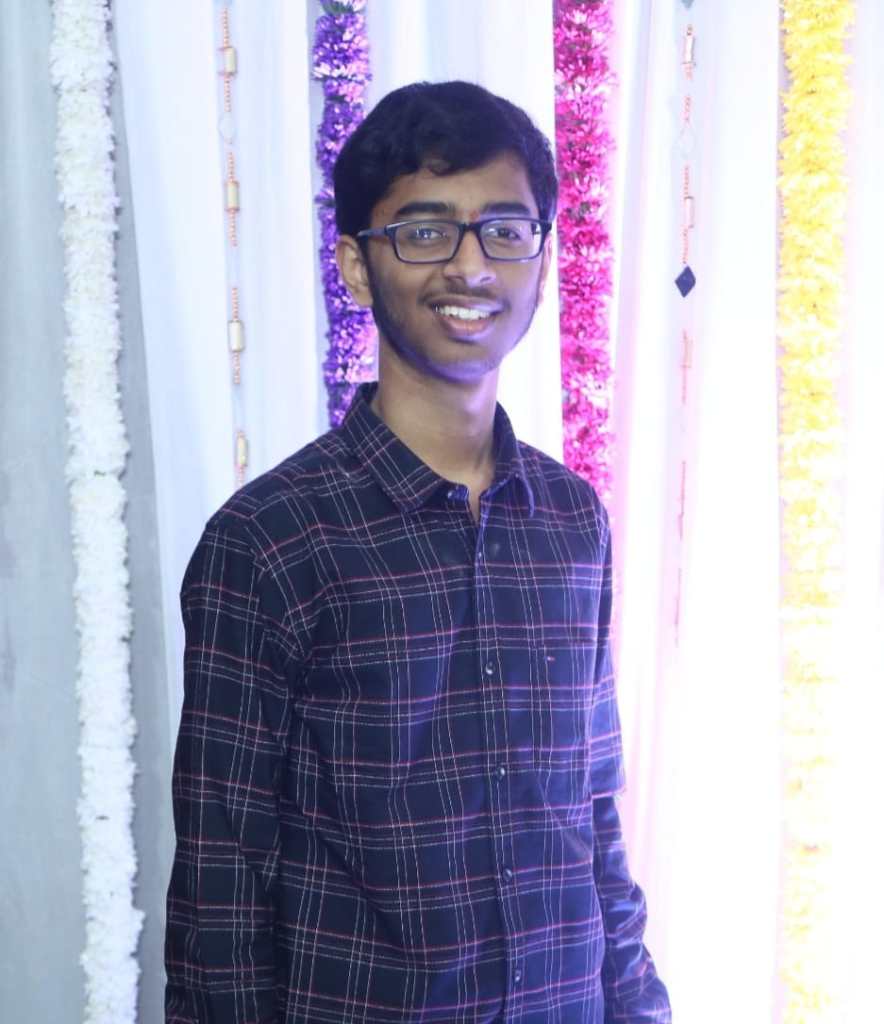
Nandan K Prasad is a 19-year-old student from Bangalore, currently pursuing an Engineering Physics degree at IIT Indore. He enjoys writing, singing and playing the piano.

 Parcham Online
Leave a comment