
The Urge to Sing with Joni by Nadja Maril
The piano needed a few new ivories, but it was almost in tune. At age twelve, I could sit for hours puzzling out melodies and singing old songs. Folk songs. Sing-Out Magazine, printed on thick white paper, published lyrics and music alongside artist interviews. This one, by a Canadian songwriter, had intervals that landed on unexpected notes.
I followed the tune and saw the tall oak tree in the meadow from the previous afternoon. Dusk turning the sky a blue gray. The arrival of a V shape flock of geese, honking to one another as they glided down to earth, their distinctive chinstraps, white against black. The orange leaves of autumn. The end of summer.
Once they’d eaten their fill of clover, grass and grain, the geese would fly south when they got the urge to go. I stared at the song’s title, “Urge for Going.”
I sang the lyrics. The boy I met on the beach was the man with summer colored skin. I got a sunburn waiting for him to return the next day. Someone else’s song. My memory.
My skin still tender, I helped my parents pack the car for the return trip home. Three quarters of a year to wait for summer to return.
In college, I started listening to the voice of the composer, Joni Mitchell. Collected all her albums: Song to a Seagull, Clouds, Ladies of the Canyon, Blue, For the Roses, Court and Spark, The Hissing of Summer Lawns. The sting of rejection, the loneliness of another lover gone rogue, the quest for fame, despair for a dying earth, all painful and familiar. Singing along with Joni was a comfort.
It still is. Today, Amelia” is my favorite song. It shifts from F Major to G Major and back again, never settling down. A woman in search of something fresh and new. Just like those restless geese, just like Amelia Earhart. I dance and croon along. When you have an urge to explore uncharted places, you ascend to the clouds and go.

Nadja Maril’s prose and poetry has been published in literary magazines that include, Lunch Ticket, Spry Literary Review and Across the Margin. Her chapbook of poems and memoir. Recipes from My Garden, (https://rb.gy/9hkrk5) is scheduled for publication by Old Scratch Press in September (2024). A former journalist and editor, Nadja has an MFA from Stonecoast at the University of Southern Maine and lives in Annapolis, Maryland USA. To read more of her work and follow her weekly blog posts, visit Nadjamaril.com.
An M. S. Baburaj Piece and a Stream of Quavers by Adish A.S.
1
In evenings desolate, over black tea, I would reminisce about the time I fell in love with a singer. We used to send each other songs every day. We sent each other a hundred songs, and on one sad night, she stopped talking. I don’t remember the first song she sent me; it was a Coke Studio rendition of some great song. The second song was ‘Drown in My Tears’.
“Into each life
Oh, some rain, rain must pour”
Sadly, it didn’t; the drought persisted, and I would never listen to Ray Charles again. But life made sure I understood the song, especially the part where he sang in a rather (brutally) simple fashion:
“I’ve cried so much
Since you’ve been gone,
I guess I’ll drown in my own tears.”
I have read somewhere about why one should never fall in love with a poet. This essay is about why we should leave the singers alone as well. I have never been able to return to sanity. If you’re writing about a singer, you can never make it about one song, either. It’s always about all the songs they ever sang and the ones they never did but you hoped they would. Yes, especially the ones they never sang. In the 2018 movie ‘96, the power goes off in Ram’s house during Janu’s visit. While he rashly searches for an emergency light in a different room, Janu breaks into Ilaiyaraaja’s Yamunai Aatrile, a piece he always wanted to hear in her voice. He knocks everything around him over and dashes to Janu. Perhaps he will be able to forget the song now. Since it’s been rendered by his Radha, Kannan’s heart can rest in pain.
I have been running around in the darkness for all the Yamunai Aatriles I was promised by my illusive heart. If I were to choose a song that reminds me of her, who would I go to? Ali Sethi, Ray LaMontagne, or Pradeep Kumar? Nina Simone, Lata Mangeshkar, or Nusrat Fateh Ali Khan? Or to every song ever composed about love and its consequences? But for the song that was forgotten, I’ll go local.
2
I have tried to imagine living without music. I made up a few scenarios. On some days, I confess, music vexes me. But it comes around later, the quench to throw yourself into a set of beats, asking them to do what they please with my heart, break or mend. Sometimes I secretly listen to the songs that I denounce in public. Sometimes I overlook the horrible parts of a song for a sublime 10-second portion. Sometimes I overstay at the front door of a stranger’s room to get the title of the piece being played inside. Sometimes I send a song to a friend, who then marvels at its randomness. While happy, sad, and even when I am both happy and sad, music caters. Much needs to be written about our lives as music listeners, as Murakami did when he named a novel after the Beatles’ track. When I first saw the cover of Norwegian Wood at the Chennai International Book Fair, I was taken back to George Harrison’s Sitar portion.
“I once had a girl
Or should I say she once had me?
…and when I awoke, I was alone
This bird had flown.”
Then there is Kazuo Ishiguro, whose utterly devastating work borrows its title from Judy Bridgewater’s love song: Never Let Me Go.
“Lock my heart; throw away the key
Fill my love with ecstasy.
Bind my heart with your warm embrace
And tell me no one would ever take my place.”
And, just like that, even when I attempt to do something other than listen to music, music comes in search of me. For I cannot sing, I listen. I listen and wonder how music manages to do what it does. When travelling on a bus, I shamelessly peek into a stranger’s phone sometimes to find out the song that seems to keep them immersed.
3
Half a century ago, meandering through the city where I currently reside with a heavy harmonium, M. S. Baburaj composed heartbreakers. Babukka, as he is dearly recalled in the romanticised yearly features in Sunday editions and occasional Instagram posts, always manages to take me back to my dreads, despairs, and defeats. I shall write about a Baburaj song.
When someone leaves, but they do not, at least a few images linger inside you—the album of their memories, their greatest hits. I remember her on a stage, from a video clip I saw years ago, singing an M.S. Babauraj song.
Thedunnathare ee soonyathayil eeran mizhikale
“Whom do you seek in this blankness, o moist eyes?”
Originally sung by the legend S. Janaki for Ammu (1965), Thedunnathare is a lament piece. All the hope has been buried, and the narrator is stuck in solitude. But they are waiting for someone nonetheless, like all of us, as if we were told they would come after all. When I heard the song, I longed for the impossible as well. Years later, the song would describe where I was standing with ironic precision.
Standing on the balcony with my heart shattered, I could see the night run its show. Like Neruda, I would have written the ‘saddest poem of all’ if I could. I realised that it was over. I could hear the wind and S Janaki’s voice in it. The song was on its way back to me.
Neelanilavinte gadgada dharakal
Neele thulumbumee raavil
“On this night, when the blue moon
Spills its stream of quavers…”
And then came the realisation that I was truly alone. I strated sensing my own ‘cosmic insignificance’; the ‘heavy humanness’ weighed me down.
Sokathil sagara theerathilekayay
Kaneeraninju njan nilpoo
“I stand here weeping, lonely
In the seashore of sorrow”
4
Thedunnathare was track number three in the mixtape that I sent her. That was the beginning of it all. Out of admiration, I collected a few of her tracks and merged them into a single mp3 file with a cover page. Mixtape was a romedy trope that appealed to me at that point. And I was hoping it would work. It did, partially; it got us talking. It got us talking until I learned that she was in a relationship. I had a bit of history with unrequited affections; I found comfort in its poignance.
I spent a vast portion of my day listening to music. But Thedunnathare would magically disappear from my playlists. I was exploring Jazz music while also returning to ghazals occasionally. While driving, I would have a Rahman song on the stereo—any track that was generally admired. I remember being called an uncle for playing obscure Ilairaraja melodies on the speaker during my graduation days. “Sad mood dampeners” remains my roommate’s short review of my regular playlist. Does anyone have confidence in their playlists? I never do.
On a Sunday that I did not want to wake up to, but I eventually did, I would come across the song again. By then, I had moved on but found something pointless again, and it was tearing me apart. I was sipping tea with my eyes hooked onto the long, endless highway, and a car stopped by. An old woman stuck her head out of the window to ask the shopkeeper for a snack that wasn’t there. Before the car left, I could hear an old song sliding out of its closing window. It was Thedunnathare. I wasn’t spellbound or thrilled, but rather felt slightly hurt. It was like running into an old friend who tormented you back in the day. But it felt better as I sipped the rest of the tea and walked into the dusty afternoon. After all this time, the song was still about me. Like all great literature, it was still painfully relatable. In the evening that followed, when the campus was empty, I sat on the stairs and opened Spotify on my phone. I was trembling; I understood what Yusufali Kechery meant when he wrote ‘the stream of quavers’.
Songs don’t get forgotten. They are hiding somewhere in some spooky corner of your mind to startle you when you least expect it. They are waiting to be nudged back into life by the gentlest of triggers. I couldn’t resist the temptation to write this colossal cliche of a last sentence since it’s probably true: I am the sum of all the songs I’ve ever listened to.
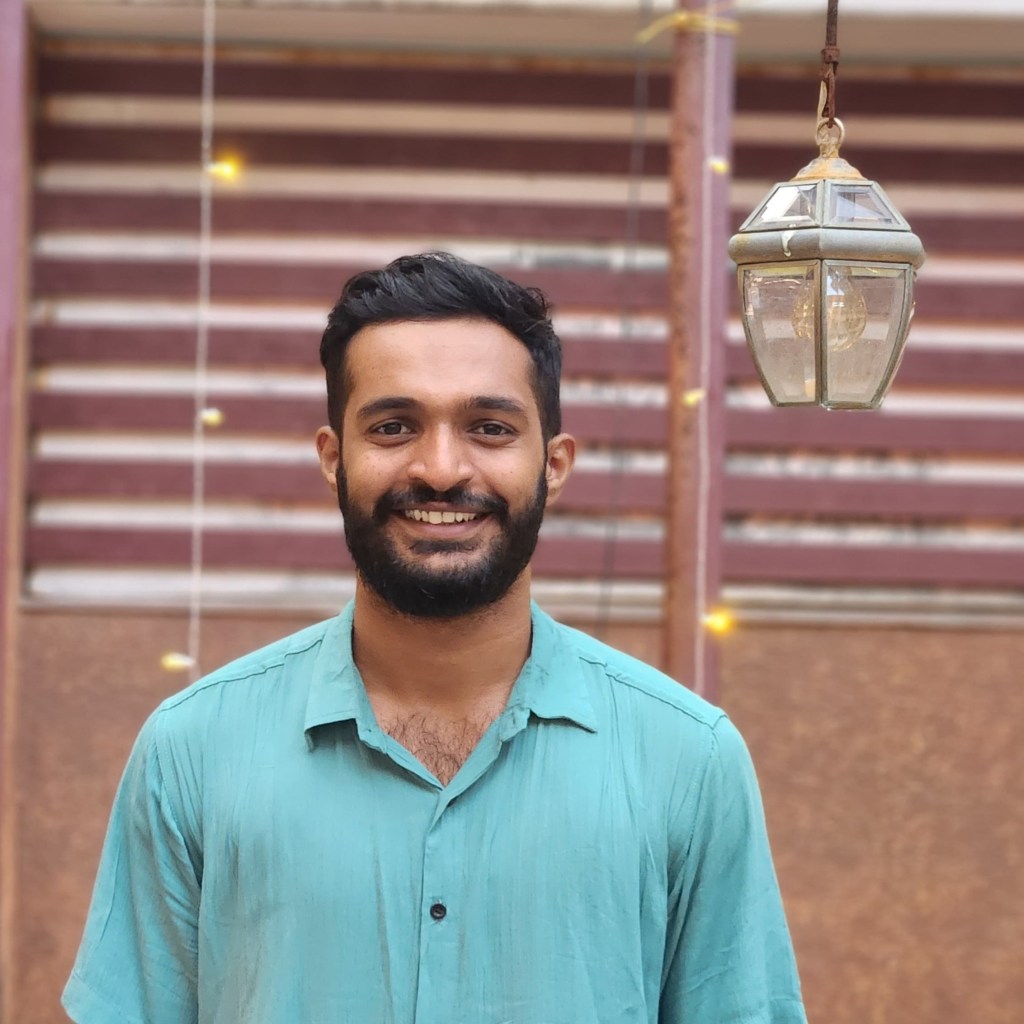
Adish A. S. is a Senior Research Fellow in English literature at the National Institute of Technology Calicut, currently working on the intersections between nation and fiction. He has presented papers at several international conferences. A postgraduate in English literature from the University of Hyderabad, he is a freelance translator and attempts poetry in both Malayalam and English.
Sounds of The City by Sharmista Sen Gupta
If one were to perceive something solely in terms of its sounds, then, for instance, would a city be a playlist or an orchestra? This abstruse question with no apparent answer has been pestering me since quite a while. When it first struck me amid my reverie, I had no clue how to answer it succinctly; in fact, I had nary an idea how to answer it at all. Howsoever, I resolved to dig deeper. As a budding academic, I decided to investigate and analyze what lay before me – the mundane, the regular – in hopes of arriving at a constructive conclusion. In this exercise, I employed my city, Delhi, as the subject, for it is the only place I have resided in during the onescore years of my life.
It is said that personal experience is among the best contributors in any study. Hence, I began with my routine as a young person living in the city. My day begins with the voices of my family members. An interesting aspect about our household is our engagement in active discussion on any topic under the Sun every morning, marked by the ramrod opinions and occasional laughs of my grandmother, the academic perspective and advice of my mother, the mischievous snickers and inputs from my uncle, and the humorous chimes of my aunt through a video call to Canada.
This soon segues into the beat of water droplets against my ear whilst showering, the constant click-clack of flip flops rushing up and down the stairs, the tick-tock of the wall clock and wrist watch in synchronization, the swish of the perfume, and finally the goodbyes and wishes of my family before I depart from home into the city.
The blaring of horns and zooming of electronic-rickshaws welcomes me as I exit the apartment gates. Most days, I am also greeted by the incoherent conversations and giggles of students walking to the nearby ‘Sarvodaya Vidyalaya’ with their parents or friends, their faces glimmering with the lustre of innocence. This is soon juxtaposed with the bilingual announcements in the metro station, which range from taking care of one’s belongings to ushering the upcoming metro; the most interesting one being a warning against crossing the tracks to reach the platform on the opposite side.
As I board the metro en route to Kashmere Gate, I feel swarmed by a sea of melomaniacs, UPSC aspirants, and devout worshippers, with earphones plugged in to listen to their choice of content – music, tutorials on cracking entrance tests, or devotional songs. This makes me wonder how the city is filled with lovers, be it the overworked wife who finds time to speak with her mother only during the morning commute, or myself, completely enamoured by the latest K-pop music or the timeless Rock classics. At this juncture, I extrapolate that the city is a culmination of playlists, moulded by individual tastes and preferences.
Right at the moment when I feel that I have finally figured out the answer to my pressing question, I am offered with a divergent viewpoint. As I alight the metro, I find myself at ‘Vishwavidyalaya’ – the metro station for the North Campus of the University of Delhi, which is characterized by the general squalor of vibrant students and enthusiastic rickshaw-wallahs who are willing to traverse great lengths to fill their vehicles with passengers. You see, there are days when the police carries out inspections, subduing these rickshaw-wallahs to silent deference. Although, one may feel washed by a wave of much-needed quietude; the environs do not quite feel the same.
What is an orchestra if not a symphony of several sounds, morphing into each other seamlessly, thereby creating a harmonious melody? The Vishwavidyalaya metro station and its chaos is ironically, an orchestra, similar to the atmosphere of my college. The moment I enter through its gates, I become a perplexed recipient of a plethora of sounds – the dogs howling (in greeting or agony, no one knows), the frantic voices of student-led society members clad in decadent attire organizing their fest, the buzz of the electronic bell signalling the end of the hour, and the general chatter of college students, living out some of the most memorable days in their lives. The music of collegiate life is what characterizes the institution, as I make my way to the classroom with my fellow mates.
The most awaited parts of my day are the short breaks between classes when my friends and I visit the canteen or leisurely promenade on college grounds chatting about several things. The conversations range from juicy gossip and trivia to heated debates on topics borrowed from current affairs and our syllabus. Amidst these, we often squeeze in recommendations of books, movies, or Netflix series which have consumed our time of recent, and even listen to music. Interestingly, my friends and I have diverse tastes in music despite our similar lines of thought. This becomes a source of laughter and light-hearted joking, affirming in me the age-old saying – music transcends differences and brings people together.
As I exit the college gates and make my way home, I still do not bear a clear answer to my question. Whilst looking outside the metro, the cityscape blurring past, I ask myself yet again – is Delhi a playlist or an orchestra?
One of the most fascinating things I learnt this year in philosophy was Derrida’s preoccupation with the concept of binaries and how he deconstructs them. Since childhood, we are made to consider things in a ‘this-or-that’ format – good or bad, black or white – but, is everything that apparent? Growing older is nothing but an expedition into the ideas we have been engrained with during our formative years and discovering that not everything is that simple.
Most certainly, a playlist and orchestra are not two sides of the same coin; they are two different things. But that doesn’t mean that there exits no patch of grey between them. Perhaps, the city is both a playlist and an orchestra; a coming together of the individual and the collective. While, an individual’s playlist is how they perceive, or how they would want an experience to feel like, musically; the continual amalgamation of all that reverberates throughout the city forms an orchestra, sensed collectively by its inhabitants. Although this may seem obscure, it merely scintillates that we are closer than we think. Even if we may seem ostensibly divided by our diverging playlists, we converge through our shared space – the city.
Instead of the terms ‘playlist’ or ‘orchestra’, perhaps the rudimentary ‘sounds’ would suffice. What we view as an absolute impediment may actually denote how there lies a method within the madness. My musings are interrupted by the metro voiceover, announcing the arrival of my station. As I alight my last metro for the day, I conclude my academic investigation; diving into the sea of the sounds of the city.
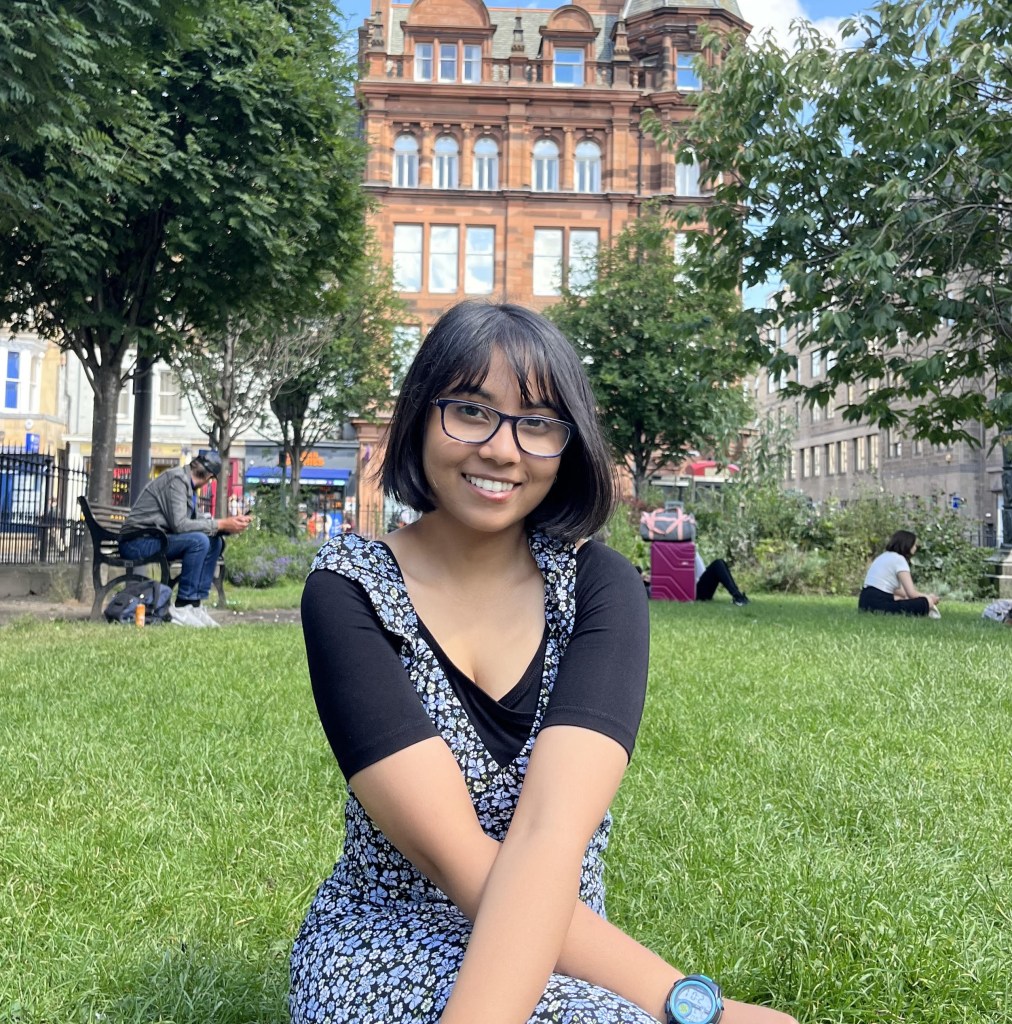
Sharmista Sen Gupta is a student of English Literature at the University of Delhi. She is an avid reader and is often found consumed in her thoughts. Apart from her fondness for the city of Delhi, she plays the guitar and loves listening to music. Her works have been featured in Youth Ki Awaaz, Yugen Quest Review, Café Dissensus, and the Rock Creek Review.
 Parcham Online
Leave a comment