
The Song of Home by Kartikeya Vikram Krishna
The shells hurled across the night sky like violent drums,
The sound of boots, like a procession of timpani across the muddy ground.

	The trees I called friends began to wail and weep tears of green,
		All I could do was wave them goodbye as we moved away and they began to shrink.

The song of the false stars that night was cruel, it made the earth weep tears across its countenance, the ashes of the emeralds lost in the land.

At night the stars were drowned by the songs of the encampment’s lights, shadows lurking around, looking for those who may have passed the border.

		I stood at the edge of this terrible orchestra hushed by cloth in my mouth,

			Haunted by the stories and fates of people I loved.

I went to other places, roaming the lands, searching for where the Simurg laid asleep.
Or did I go searching for the poet who rode their horse at the behest of their free runaway mind to paradise?

or perhaps where the nomads in their caravans filled with the songs that broke and mended hearts.
Joining those who played their kora and sang of the joy of living, and even the mercy of death.

	The songs that were sung by those who left the olives and oranges to wilt by the song of the mortar, they too would know the words for the songs those caravans sing.

	Even if the tower of babel twists their tongues into a myriad of shapes,

they would still sing their song of home…


But the songs I heard sung in a state of drunken merry,
 (the night when the rifles began to whirr)
 they were as irreplaceable as your embrace.
And as your eyes which shone like gems that would drive even the most stoic of men insane in envy and greed.

But at the break of dawn.

As I returned another day, back to the house that held memories of the past and of our future,

It was then I saw your shadow at the entrance of the ruins.

Only then I realized,
I wish to spend the morning kissing your forehead as tenderly as the angel did the child who was bound,
And hold you as gently as the man who held his crumbling wings as he fell to mortality.

I wanted to embrace you as intensely as the crescendo of the resistance,
Those who had a song left in them to sing one last time.

To write a song on your skin,
the same way the poet hung words on his lover's ears.

Kartikeya Vikram Krishna is currently pursuing his masters in Political Economy. He spends a significant amount of time collecting old and forgotten books, reading anything that comes his way, and writing on a variety of topics; many of which are mundane life. His poetry has been published in The Madras Courier and Muse India.
Two Poems by Simin Akhter
Songs of Love
In countries where love stories are censored,
lovers write to each other in codes.
And they call out to each other
from their graves,
and sing songs in the language of loss;
desperate whispers,
and hushed undertones,
and exasperated sighs;
to haunt the silence of the night.

Lovers, when they can't suckle
the sweet honey of desire
from each others bosoms,
they suckle it
from the bosom of longing,
unconcerned,
challenging the distances that be!
Like Humming birds,
on a lazy winters' afternoon,
feasting on the luke-warm nectar of honey-suckles,
leisurely,
in no hurry, no place else to be!

And so one day I'll write a poem about love,
and write it in unsparing metaphor
and brutal epithet,
and call it 'Pegions',
and write it down on my body,
and write it down in blood,
and hand it to you,
wrapped in a colourful Keffiyeh,
so that when you read it,
it plays in your head,
like the Requiem in D minor,
sad as hell,
yet as melodious
as Music can be!
Songs of the Silent Island
They say there's this island,
to the south of Andamans,
further away from
the territorial waters of India,
beyond the jurisdiction
of civilization,
as we know it.
An island very few know exists,
fewer still are known to have found their way to it.

The people there,
they say,
silence throbs.
They believe it's only a matter of who can hear it.
Those in love, do.
And to their peril,
for it sometimes gets maddening!

And they say you can hear the Earth's gentle moan,
just after a rain shower,
and the song of the Universe;
that incessant hum,
late at night,
often just before dawn.
And in the arms of the one you love,
you can hear your two hearts beating in unison.
Sounds only lovers can hear.

And so they don't sing songs,
when Spring arrives,
or Fall gives way to Winters,
or when the harvest is ready.
They listen.
In silent reverence.

The songs of birds,
The sound of the earth whirring on its axis,
The song of the rainclouds,
The thunder of waves crashing against the shore.
The rapid beating
of the human heart,
on sleepless nights.
The cooing of babies, clinging to their mothers' bosoms.
And the songs lovers silently sing in their dreams.

And they say every baby
on that island
is born knowing
all these songs,
but they never sing them.
For songs,
sacred as they are,
are meant only for the sacred sanctuary of dreams,
and the realm of desire.

Though she has a number of published papers in significant national and international journals and is working on a book on the Exclusion of Muslims in India’s urban labour markets, for Peter Lang, Simin Akhter primarily identifies as a poet and a writer. A number of her poems have been published in prominent national and international compilations, some have also been translated into other Indian languages. She is also associated with a number of Citizen Movements and is on the editorial board of three community based research journals based in Delhi NCR.
Slough by Binu Karunakaran
Kneel to the purple

of spiderworts

next to a candelabra

of mauve ironweed

florets blowing

in the wind

testing the yellow

mic of a tender

shameplant

against the shrill

of cicadas

mating in the sun

decadence

before it stops

like a fall

from the precipice.

Shed slough

stuck to a leaf

molted coat of armour,

golden sheath of

nothing.
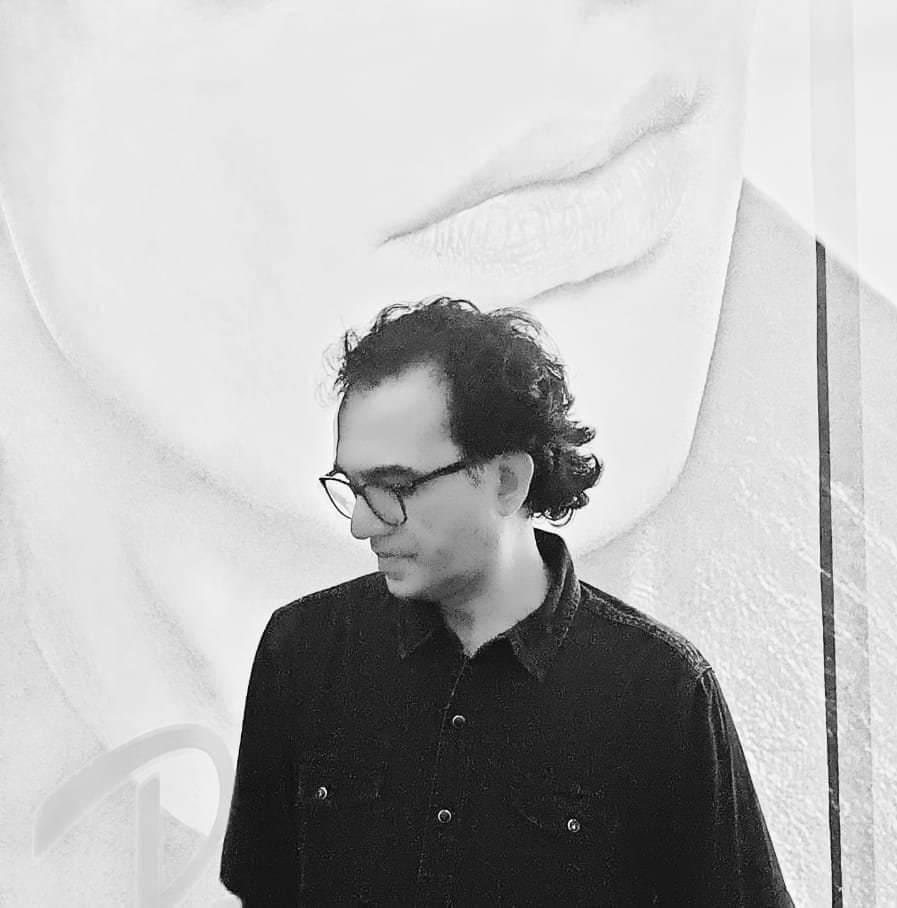
Binu Karunakaran is a poet, translator and journalist based in Kochi, Kerala. A winner of Charles Wallace India Trust Fellowship, his portfolio of poems Muchiri, was commended by the Michael Marks Awards for Poetry Pamphlets 2021 judged by a panel headed by Ruth Padel.
 Parcham Online
Leave a comment