
Children in Monochrome—PHOTOGRAPHS BY ANDRZEJ BIŁUŃSKI
Andrzej Bilunski in conversation with Ipsita Deb
IPSITA : What touches me always is the impeccable silences your photographs record. The absence they capture. Hence, I loved the series where the child subject is physically absent, it’s more telling. The way you turn your lens towards the spaces associated with childhood — abandoned toys, graffiti on walls, empty swings — everything is so telling. First of all, anything about child. Or childhood. What comes to your mind when you hear this?
ANDRZEJ: This is the time when everything around us arouses curiosity, delights, attracts with its mystery and often also invites us to have fun. Childhood is also associated with a carefree time, when problems and troubles quickly pass and only the here and now counts. Unfortunately, this is not true for all children. All over the world we see places where childhood is far from being carefree. Children in many countries live in conditions of war, poverty, domestic violence, lack of love and many other situations that do not allow them to discover the true charms of childhood.
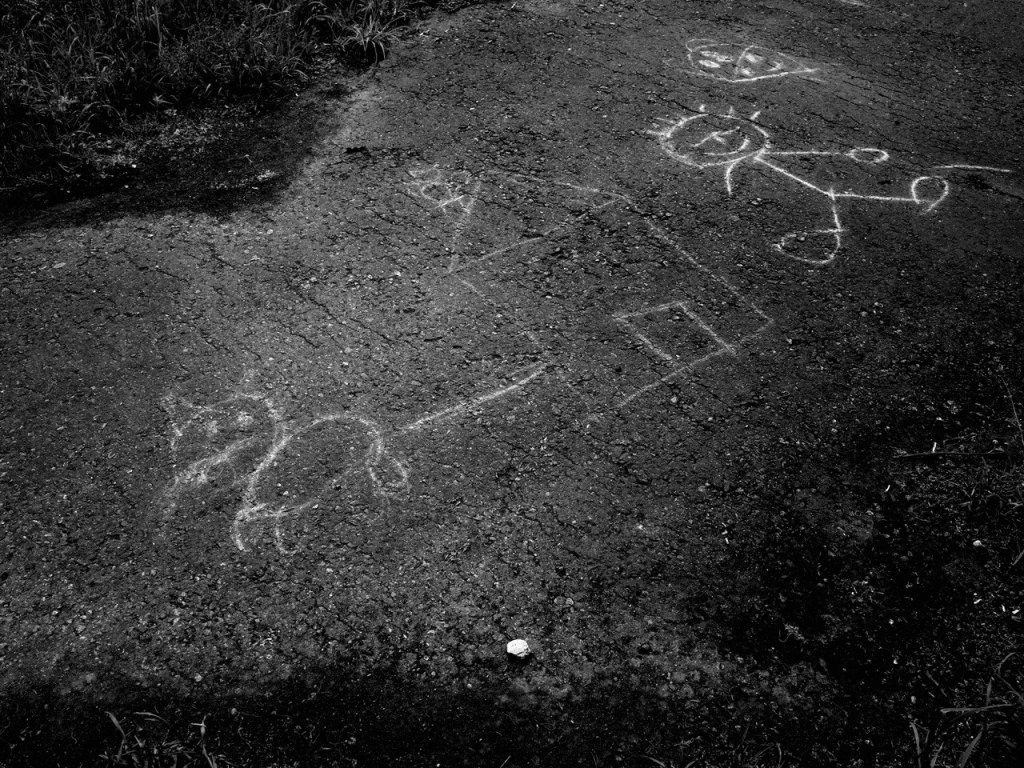

Ipsita : Your photography, as I have been watching over a period of time capture landscape, spaces in a way that one get to see a world even when they’ve never been physically to the place. If you could tell a few words about your place, the locality, the children of your place, your country.
Andrzej : My photographs mainly show the cities of Upper Silesia. This is a region of Poland characterized by very high industrialization. Hard coal mines, metal works, various types of chemical plants. This region has been changing a lot in recent years. Many heavy industry plants that are harmful to the environment are being closed down, new enterprises related to IT, design, scientific research in various fields are being established, and services are developing very quickly. Cities care about the development of green areas. Silesia is becoming more beautiful very quickly.
The places I show in my photographs are a world that is disappearing forever. Many of the buildings and squares that I visited four or five years ago no longer exist and have changed beyond recognition. The children’s worlds captured in the photographs had their own unique atmosphere, a note of poetry, and at the same time aroused sadness and regret. Such places are extremely rare in Poland (a country with one of the highest standards of living in the world).
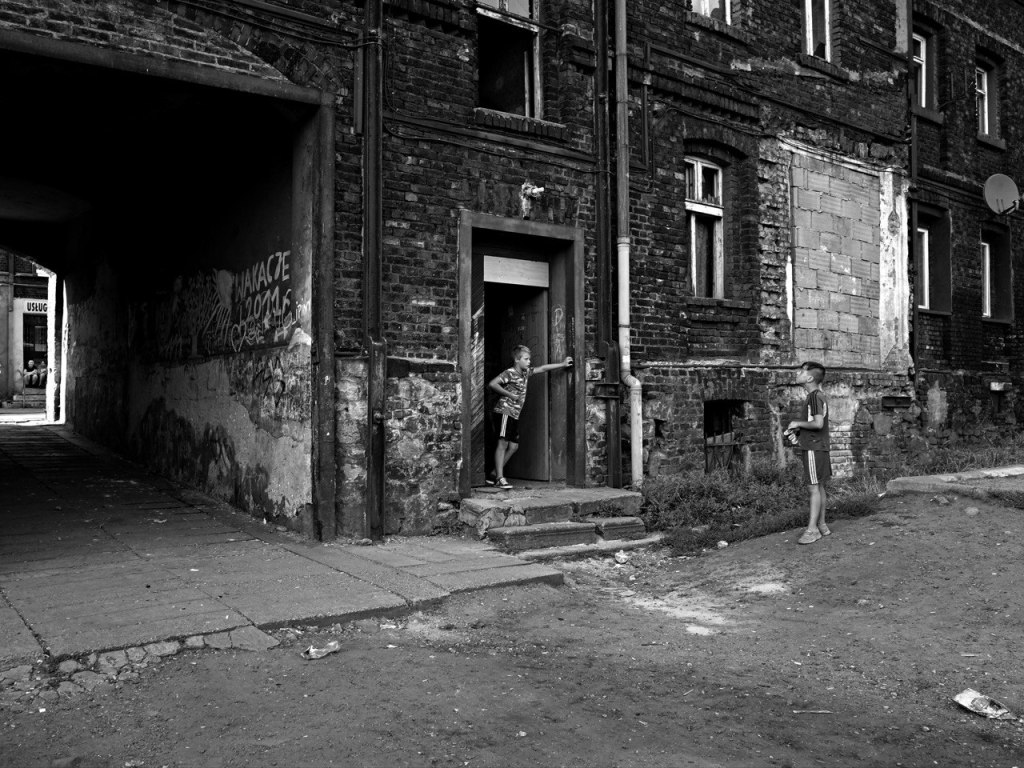
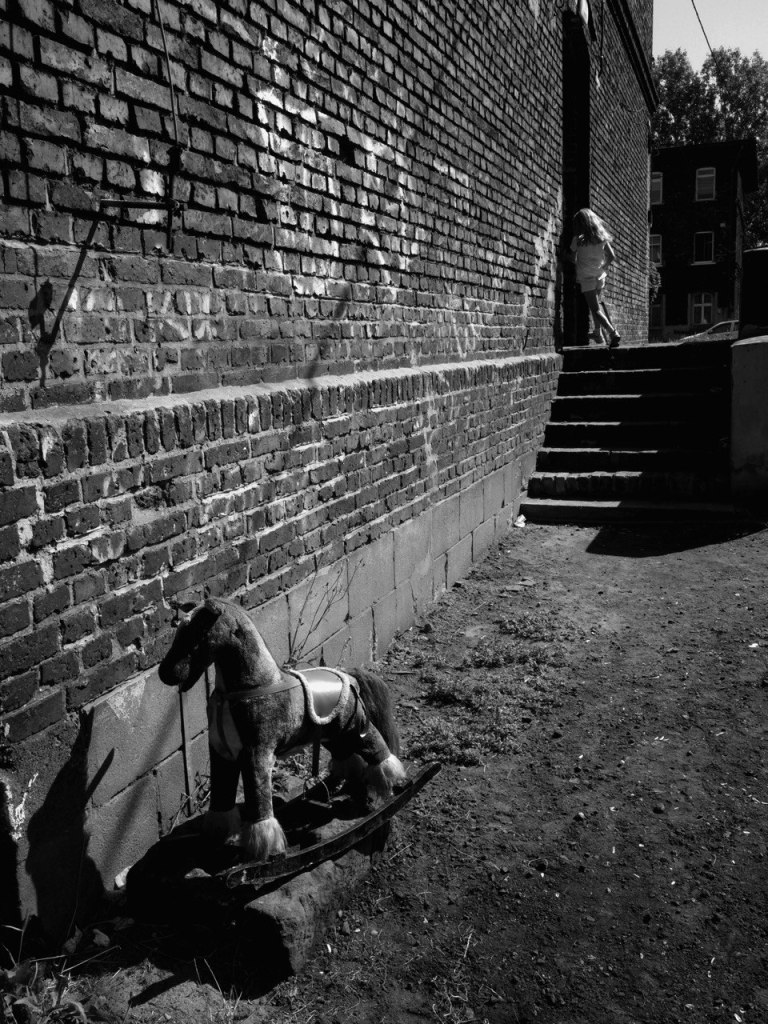
Andrzej: The main goal was to preserve places that are the history of this region, the history of Upper Silesia. Many old working-class neighborhoods are changing irreversibly. They were not the pride of the region, but they were or still are an important part of history. While working on this topic, separate worlds emerged, the worlds of children that I encountered at every step.
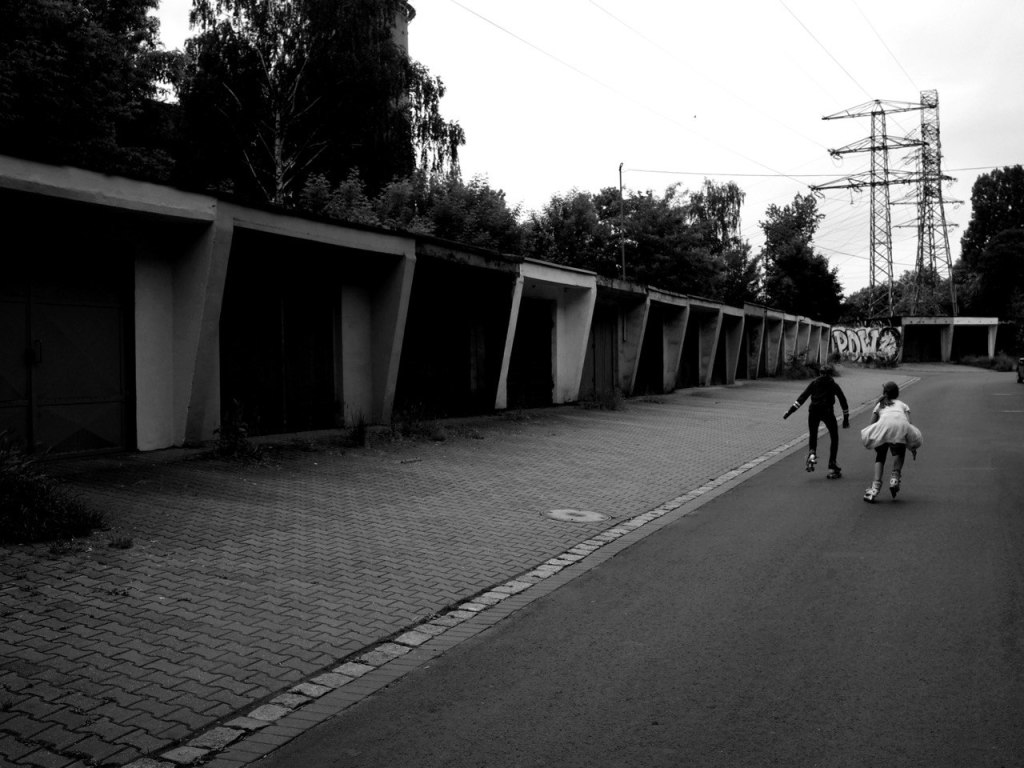
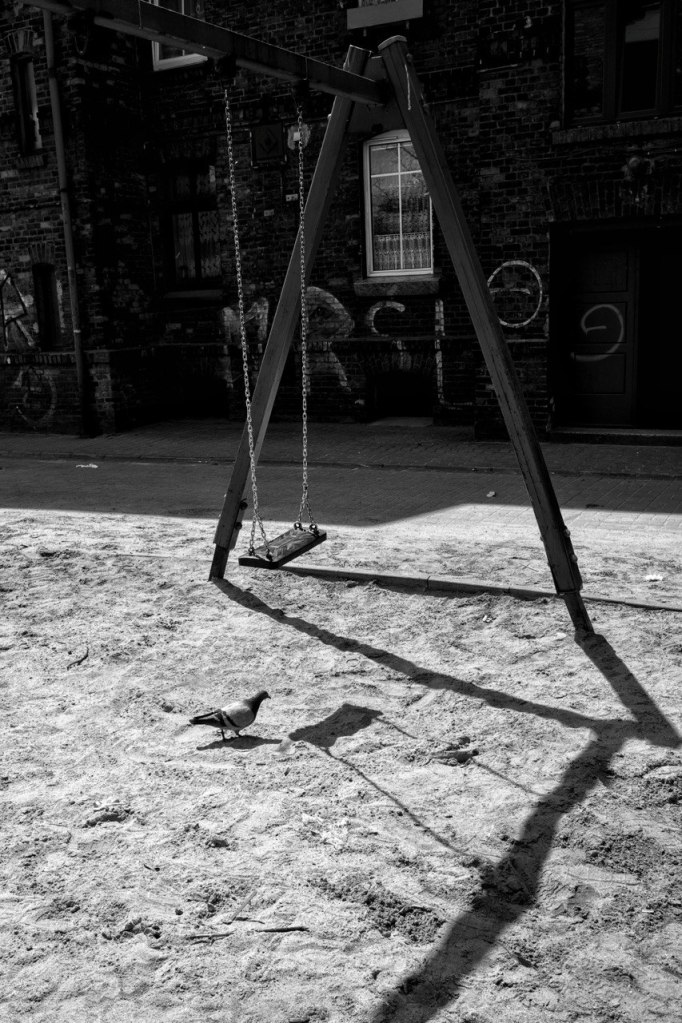
Ipsita . Your choice of monochrome for your photos gives them such a timeless feel. Especially, when a subject, like child or childhood seen in monochromatic shots, the effect is somewhat defiant of the popular stereotypes associated with childhood. Would you like to reflect on this?
Andrzej: The monochrome emphasizes the uniqueness of the environment in which children build their worlds. Color slightly distracts attention from the purpose of the message. Of course, what you noticed is also important, its timeless character.

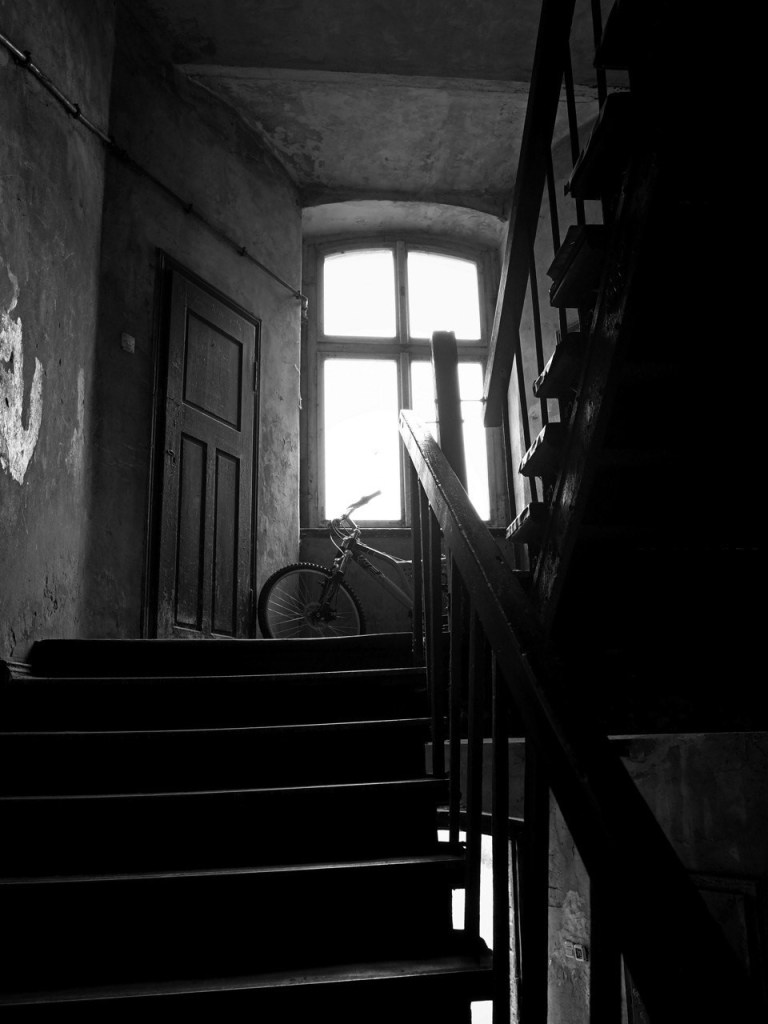
Ipsita: Many of your images feature everyday objects and settings transformed by the presence of children. These are seemingly mundane scenes. But when viewed as a cluster,
evoke a nostalgic, melancholic mood. The section of your work depicting deserted toys and empty playgrounds speaks to a sense of abandonment or loss. Could you share your thoughts on the significance of these images within the broader context of childhood?
Andrzej: The wind blows warmer. Open the window, open the door. Your little big world is waiting for you just around the corner… A sandcastle, a magical piece of chalk, bike trips, a little rocking horse. We return to our places, get used to
them, discover them anew every day.


Andrzej Biłuński is a Polish photographer. Born in 1955 in Warsaw, he has been living in the Silesia region since the 1980s. He is particularly fascinated by the street trend and the Silesian landscape. Winner of many awards and distinctions, including awards in the prestigious “Obiektywnie Śląskie” competition. Participant of numerous group exhibitions, including the Foto Art Festival and in Osaka (Japan).

Ipsita Deb teaches at the department of English in Rajganj college, a Govt-Aided college situated in Jalpaiguri. She has published articles in academic
journals and has contributed book chapters. She loves clicking photographs, sometimes with camera, sometimes with a phone. She looks after the photography section of Parcham. She can be reached at dev.ipciita08@gmail.com.
 Parcham Online
Leave a comment