JOURNEYS, BY THE MAIL
I stood on Platform 23 at around 11.25 pm waiting for the train to arrive on the platform. The weather had suddenly turned colder than what it had been a few days before. Cold by Kolkata standards. I had wrapped a shawl tightly around my head and neck to keep me warm. After waiting in the lounge for some time I decided to move onto the platform as I wanted to see the train trundle in. A few announcements, some audible, many not played out clearly, the signboards flashing some numbers and names. The activity at the station a little less than at the old section of Howrah Station.
Chennai Mail is to arrive on platform number 23 – this time I catch the announcement. I have been waiting at the end of the platform. I wait for a little while longer before I decide to walk down the platform. Before I do that I need to find out the position of the coach that I am to board. Google comes to my rescue. It is a long walk down the platform, to the other end. There is some activity on the platform as people begin to move, the huge laden carts and the men tugging them move a little bit faster, hollering and asking people to give way. There are several such carts at one point laden with food items, water bottles and the like. This must be where the panty coach would be positioned. I walk past all of that. The shed covering the platform has ended, the platform still continuing under the dark sky with dim lights. I am now standing below the darkness that is broken by a few dim lights. Across the tracks, on a wall on the platform just opposite I see some colour, a graphiti on the wall.

I am waiting to see the train come onto the platform. It is not just about the journey though. It has more to do with the train and several other journeys undertaken at aa different points of time, with loved ones. And there it comes, the Chennai Mail. Or was I waiting for the Madras Mail, at a different time, on a different platform, with a whole lot of people around me. Madras Mail was the train that we took when we travelled to Kakinada in Andhra Pradesh. Kakinada is not a station on the main line that took us from Howrah. We had to alight at Samalkot junction. The Madras Mail began its journey at Howrah station. Those days there was only one section in Howrah station, platforms 1 to 17, I think. The train left Howrah station at 9 pm and took 18 hours to reach Samalkot, at 3 pm the following day.

We took a taxi from Dunlop Bridge in north Calcutta to reach Howrah station. Appagaru, my father, insisted that we reach the station well in advance. That meant at least 2 to 3 hours before the train was scheduled to leave. Howrah Bridge was known for its traffic snarls. The approach roads to the station were also known for terrible traffic snarls. When we grew a bit older, we grumbled at having to spend so much time waiting at the station. Appagaru was insistent, he had seen people run to catch the train and some even miss it. There was no way he could see us run, with all our luggage. We would never be able to. Along with Appagaru there would be Sahu and Shibu who would come along to see us off at the station. Both of them worked with Appagaru at the Indian Statistical Institute in Kolkata and came home frequently and were very fond of us. Sahu had been with Appagaru for an even longer period. So, this big group would travel to Howrah station with all the luggage.

The suitcase that we carried was a huge one, its length was really long. I do not recall seeing suitcases of that length these days. Apart from that there was a holdall that would carry pillows and bedclothes needed for the travel. Some clothes would be put into the holdall too. We kids would be needing a change of clothes during the long journey. And quite a lot of food to last the long journey. We also carried an earthen pot for water. There were times when we carried an insulated container for water, but it held much less water. The earthen pot was bought specifically for the train journey. It had a narrow mouth that was kept covered with a small steel glass. It was difficult for Amma to alight from the train to refill. Co passengers would help her with it but she preferred to travel prepared.

Amma travelled alone with us most of the time. She made frequent trips to Kakinada to be with her mother and the rest of the family. I recall Appagaru saying that before I joined school she went home once in every two months. It was not easy travelling with a hyperactive, talkative kid but she did it often. Both my sister and I were born at Kakinada General Hospital. Not only was the family there, the gynaecologist was a cousin sister too. Appagaru accompanied her on her several journeys but could not manage to do it each time. When I began school, the frequency of the Amma’s Kakinada trips reduced. She could only travel during school vacations.
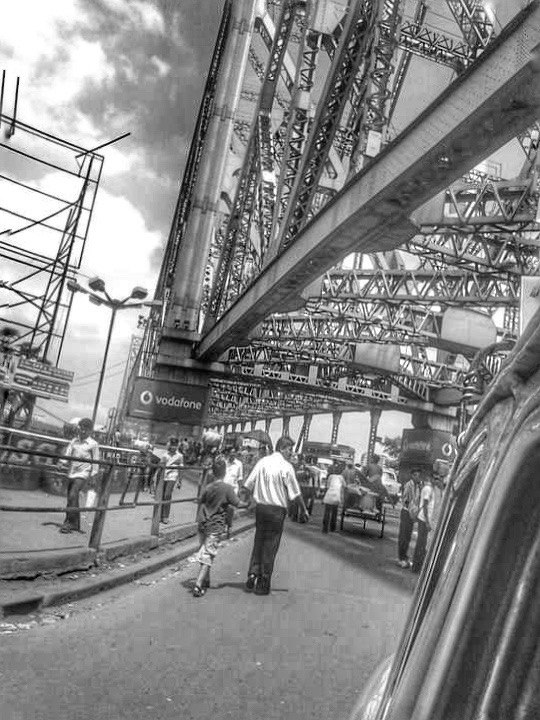
My sister and I enjoyed every bit of each of these journeys. The sight of the red building as the taxi travelled across the steel of Howrah Bridge was exciting. With all the luggage placed on the platform we would patiently. When the local train entered the platform there would be flurry of activity. Crowds alighting, people rushing and running. The green bogies looked distinctly different from the maroon ones that were characteristic of the long distant mail and express trains. A little before it was time for the Madras mail to arrive on the platform, the reservation charts would be put up on the boards at the designated platform. That was a final sign that this was the designated platform. Appagaru would look up our names on the charts, just to make sure. We would still be seated on the luggage or go along with him to see our names.
As the train moved in slowly, engine first and then the luggage van that displayed the train name and number, our excitement would increase. We had to be still for a little while longer, the train had to come to a complete stop. When it did, we began to move, to locate the compartment. We began the boarding, the humans first and then our luggage. Locating our seats was the next step. Once that was done, we rushed to occupy the window seat. The luggage was then settled under the seat carefully. Some years later, or maybe I recall that time only, we chained the luggage to the hooks provided under the seat to secure the luggage. Someone could pick up the luggage and walk away. Amma would always say that as long as we used that huge suitcase there was no way anything like that could ever happen. It was too large to be carried away that easily.
My sister and I would take turns at the window. I had to share the window with the little one, Amma would say. Promising that we would be well behaved Appagaru would alight a few minutes before it was time for the train to leave. Sahu and Shibu would alight before him. They would be standing on the platform near the window. The guard has waved the green flag, Appagaru would say, the sound of the whistle that he blew could be heard softly and the wheels set in motion. We kept looking back in the direction of the platform waving goodbye for as long as we could see Appagaru, Sahu and Shibu.
There was no one this time, I didn’t look back either. I was looking forward to the journey by Chennai Mail. Everything had changed. A different time, a different era, a different destination as well. In the midst of the absences there was still something that made feel nice as I boarded the train again, after several years. The excitement of boarding the Mail that would take me across the same route was still there. I was not travelling to Samalkot though but to Andhra nevertheless. Nostalgia, memories of different times, of people that made that time so nice, reigned supreme. It was five minutes to midnight as the mail train began its journey. I sat on the seat watching the sights outside the window till the lights disappeared. The noise of the wheels chugging along the tracks in a jarring rhythm kept me awake through much of the night in a kind of half sleep state. In the light of the morning I would be able to see the names of the stations, the familiar names that now were in the deep recesses of my mind, stations small and large, people rushing and vendors with their wares, the bridges across rivers, of sand flats and some water, the sight of the Chilika lake that kept company for some time along the tracks, the hills of the Eastern Ghats and the green in the distant, fields and bushes, the sights of long ago that would whizz by again.
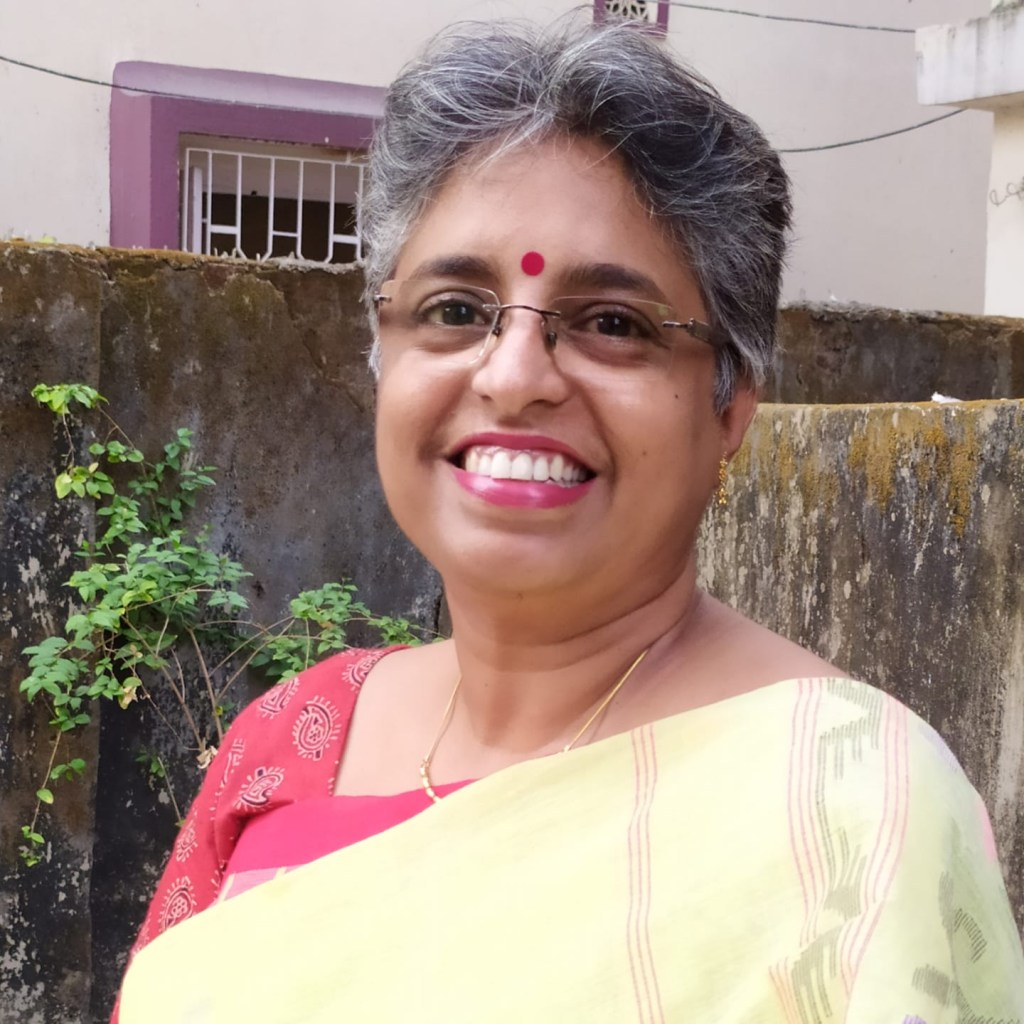
Nishi Pulugurtha is academic, author, poet and translator. Her publications include: Travel
writing – Out in the Open, Across and Beyond; Poetry – The Real and the Unreal and Other
Poems, Raindrops on the Periwinkle, Looking Poems; Short Stories – The Window Sill and
essays – Lockdown Times.
 Parcham Online
Leave a comment