
THE BAT TREES OF AADORPARA— Ipsita Deb
Attempting to articulate the child’s perspective, through lenses, or to write about it, is a daunting task. For me, I have always found myself, perpetually trapped within the child I left decades back. I can’t write ‘about’ the child. And so, I surrender to the intimacy of memory – impressions, images I left behind me, things that still keep haunting me.
This long stretch of eucalyptus vegetation in Jalpaiguri’s Adorpara serves as a sanctuary for countless bats for many years (“almost 200 years, there were mango groves before this and the area was not gated”, my father recounts). These are probably fruit bats, the common ones here. I was passing this area almost after decades. These “Bat trees” are very old, standing as silent sentinels. “Bat trees”, as I and Boni used to call them. We would often stop here on our way to tuition classes. Visible in broad daylight, thousands of bats suspended from the branches, resembling dark fruits hanging from the boughs. It was somewhat an unsettling scene (was it for its numerical enormity?) – one that felt strangely out of place despite its regular occurrence. Back then, we didn’t know much about the scientific research on bats and how important they are for our environment – and we have been much guided by the popular lore, myths, and stories that hold immense influence in shaping a child’s imaginative landscape.

“They sleep by day”, they said. “You mean, are they sleeping now? Just like that? Uncomfortably, hanging upside down?” – We were curious. So many tales we used to weave in our minds. It made us perpetually wonder where they did vanish to when night fell. Had anyone ever witnessed their nocturnal escapades? I recall our parents had bought us a somewhat cheap, local translation of “Dracula”. I vividly remember, it was the cover page that seized my attention with its exaggerated depiction of Count Dracula with his canines out, blood dripping, in the night with skeletal trees and bats silhouetted against the moon. This is the typical image – one that many children worldwide would readily recognise – thanks to the Eurocentric depictions and colonial stereotypes. That book, as if it was an unwritten agreement between us sisters, never made it to the bookshelf. It had a special place under our mother’s dressing table. The cover used to fill us with excitement as I’d stealthily take it out at night. I recall how we used to read the book, tucked under our blanket. Most often, it was Boni who took on the role of the reader. She was not only a fast reader but a good story teller. And we used to visualise this Bat grove as if the distant fantasy from the book pages had now drawn closer. Dracula became a name we readily associated with bats, even before we got to know of certain Bruce Wayne. Edward Cullen was a late entry.
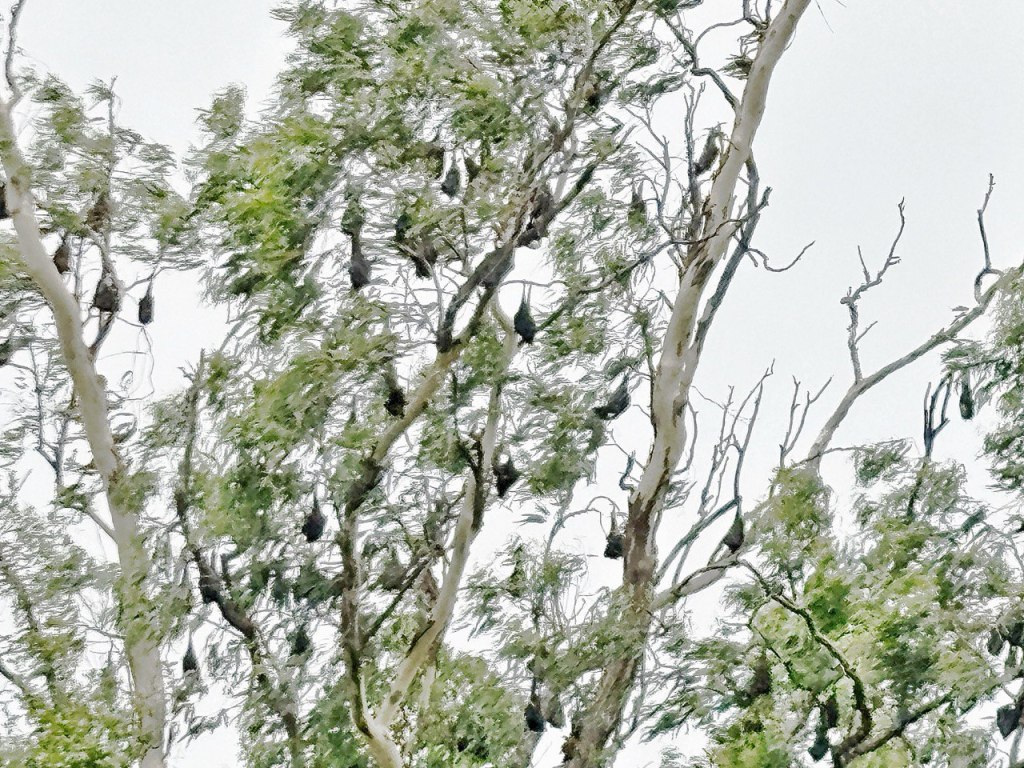
Despite their eerie reputation, there is something undeniably compelling about bats — perhaps their solitary nature, their nocturnal habits, their silent flights. In the shadowy realm between night and day, between bird and mammal, lies the world of bats. Neither wholly here nor there, mistrusted by both, misunderstood by most of us – there’s a Cameroon folktale – “Bat and Sun”– dwelling on this theme of dual identity. In fact, it wasn’t until the mid -18th century that bats were formally classified as mammals. Dante likened the Devil’s wings to those of a bat, devoid of feathers. The name of their order, “Chiroptera”, meaning “hand-wing”, may have bound their fate to associations with the devil. They don’t make nests like birds do. While birds perch on branches, bats seem to defy gravity – suspended from a height – an image so creepy and disquieting. There are numerous tales on why Bats hang upside down – and all these tales, the allegories meant for children, are enduringly sad tales of not belonging.

We become what we fear, they say. Boni’s Instagram handle is “the-Countess.” There are times when she finds herself identifying with vampires. I remember when school bullies made fun of the shape of her teeth, we used to fashion it as something only a superhero/villain could possess. It wasn’t just to cheer her up – I don’t really recall how – but we started genuinely believing in it. Boni would often say to me, “See, you can’t open your eyes in the sun, naa? Vampires can’t either.” That stayed with me, and I often joke that I fear the sun and was born on the wrong side of the globe. Just the other day, after getting a cut on her lip during a dental procedure, leaving behind a noticeable mark, I was filled with terror and anger over the video call. But she calmly reassured me, saying, “Have you forgotten who I am? The Countess. This mark only reaffirms it.” We had a world of our own – of books, magics, fantasies – often finding ourselves moving between the two. I chuckled, with a restraint, calling her “yeah, batty-brain!”, that’s what I call her often, teasingly.
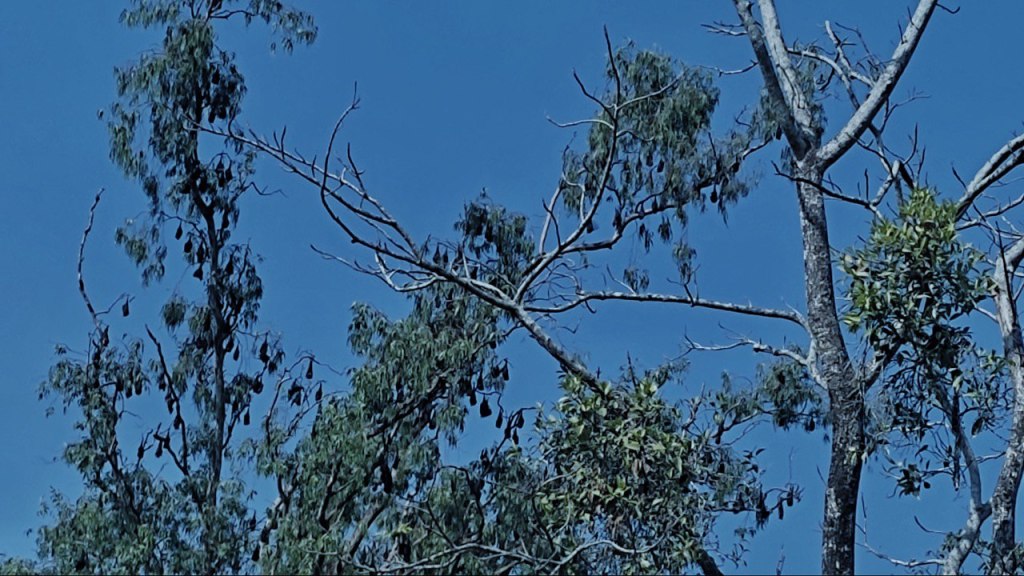
The bats of the Bat trees – where do they go at night? The place is not illuminated at nights – one can hardly tell. There has been no report of the locals attempting to scare them, not even in the face of bat rabies some years back. The people seem to mind their own business. But human nature is inherently wary of the unknown, and darkness only heightens this apprehension. Nocturnal animals, with their often cryptic behavior and adaptations for navigating in low-light conditions, may evoke feelings of unease or suspicion in people who are unfamiliar with them. (Just the other day, I and my friend were talking about Civets in our house. They have been living with us as far back I can recall. But I realised, I’ve ‘seen’ them only twice, although we often feel their presence. Sneaky folks). And thus stories flow, generations after generations, and there are numerous about bats. Every “Para”, I believe, has its own anecdotes about a forbidden territory with an ancient tree. I wonder what tales the grannies of Adorpara would tell their young ones.
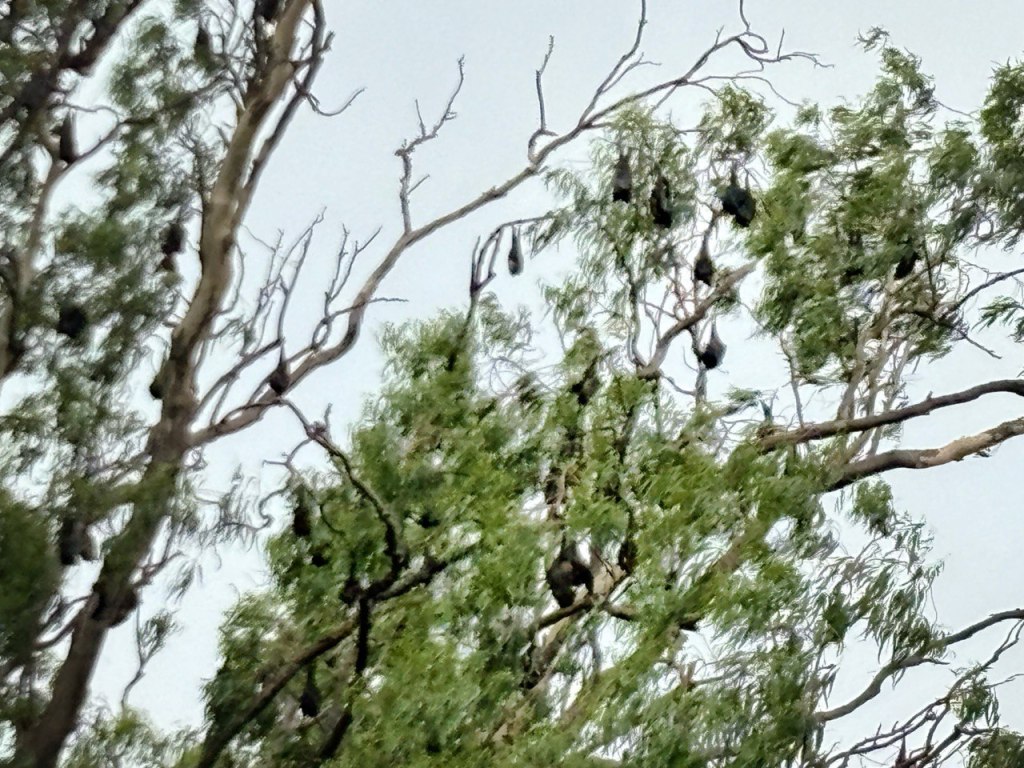
I recall, I and my sister were very curious and very scared of the bat trees. One day we were late and it was already dark as we were on our way home. Boni and I would scuttle past this area. Boni gripped my hand tightly, and I held onto her just as firmly, a natural instinct when fear takes hold (even today, as we live apart) and Boni began murmuring the protective chants taught to us by our Amma, a shield against the unknown evils – Boni still keeps these little pieces of our childhood alive. Boni told me not to open my eyes, lest I looked into that direction. “One should not directly look into their eyes”, she’d tell me. Maybe, something she’d read in the book: it’s Boni, between the two of us, who often knows things we are not meant to know and at times I find myself yielding to her discernment without a second thought. There is an inexplicable allure to experiencing fear, a certain intimacy.

It has been over a decade now, I passed Adorpara. It’s still the same, the old grove, with thousands of bats, hanging like black wind chimes. My thoughts keep drifting. There is an East Nigerian tale that speaks of a bat causing the death of its friend Oyot, the bush rat, and hiding by daylight to escape arrest. This story, with its disturbing parallels to human behavior, rings an eerie bell : what if some of these bats were actually people we knew, disguising themselves among us at night? Could they be fleeing some unknown trial, akin to the tale from Nigeria? What if? The heat is insane these days. A man walking among the crowd suddenly exploded into a thousand bats. The April Sun made me dizzy as my father’s voice cut through the haze of my thoughts. “Done with the photographs yet? Let’s go, we’re running late.” I believe I am forgetting something. I forgot something crucial. I forgot and I won’t ever know.
Ipsita Deb teaches at the department of English in Rajganj college, a Govt.-aided college situated in Jalpaiguri. She has published articles in academic journals and has contributed book chapters. She loves clicking photographs, sometimes with camera, sometimes with a phone. She looks after the photography section of Parcham. She can be reached at dev.ipciita08@gmail.com.
 Parcham Online
Leave a comment