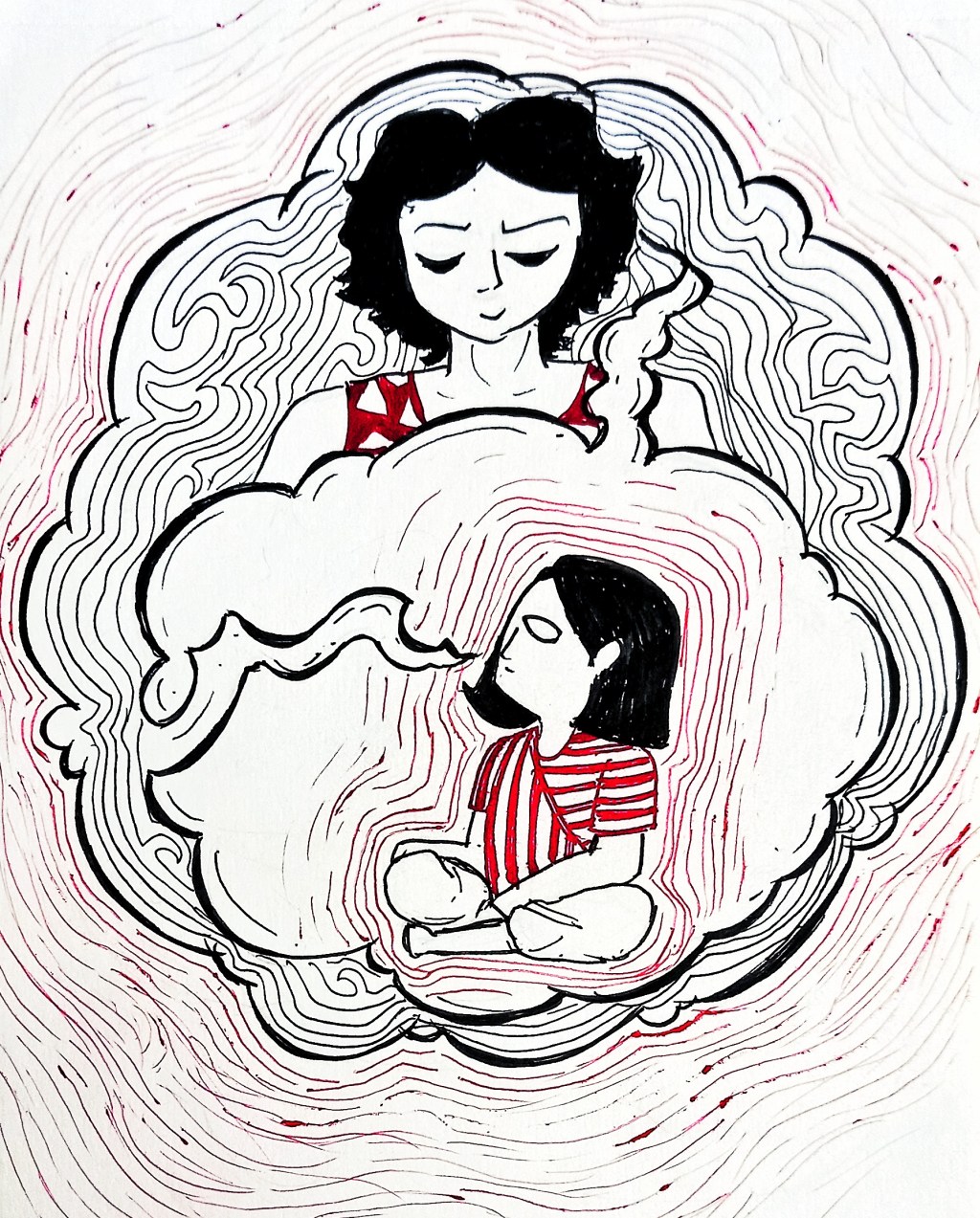
A Baseball Story— Kirsten Sis Byers
We didn’t have a bat. We didn’t have a ball. We did have a neighborhood baseball diamond. The dirt was near red and the grass that hugged the dirt a dry and prickly green. On occasion, bases were put out. But most the year the park district would pry them up and lock them away. All except for home base. That felt like it was part of the ground.
The diamond was in a huge park surrounded by a small residential neighborhood. Throughout the year different events would be held in this park. People came here to run, or walk their dogs, or shoot off fireworks on the 4th of July. Today, it was mostly empty.
All summer we had been bouncing around the neighborhood. Most days we liked to bike across town to go to the pool. It was 75 cents to swim for the afternoon. And if you brought some more change you could get a soda or visit the little trailer for concessions. We had gone to the pool every day that week, so today we wanted to play ball. Of course, without a ball.
None of us really knew the rules, and each time we played a game we made up new ones. Trying to remember the last rules but adding new layers.
We leaned our bikes against the fence and walked onto the diamond. There were six of us today. My feet felt hot in my shoes. I couldn’t find socks that morning so just put them sockless in my gym shoes. The shoes were getting a bit old and the heels had rubbed out, the cool fake leather fabric rubbing against my skin.
“Should we play devils and angels?” Kevin asked. He was wearing one of our dad’s undershirts and it puffed out wide over his small body.
Devils and angels was essentially a game of tag where all people except one are angels. And they have to do a snow angel in the dirt, at each base, while running all the bases to get home. The person who plays the devil chases them, but also has the restriction of running with their knees pulled up high and keeping their arms tucked close at their sides. It was our interpretation of how the devil must run, which usually got us laughing. If all the angels could make dirt angels at each base and run home to heaven, they would win. But if the devil could tag them out…they each turned into devils themselves to help hunt the other angels.
I usually enjoyed this game, but with no socks, and the sun already so high in the sky, I didn’t really feel like playing. But if you say no, then you’re in the position of pitching the next game.
I looked over to the metal bleacher stands and saw a backpack and a water bottle. “Why don’t we…solve a mystery!” I said this in a dark and mysterious voice to add some flair.
I pointed to the backpack. “Someone went missing. All that is left behind is that bag.”
The group of us looked over at the bag from where we stood on the dirt of the diamond. And then, without needing to say more, we ran wildly to the bag.
As the oldest, I took the position of lead detective. “Wait!” I scattered my arms out wildly to stop the running just as we neared the backpack.
“You and you,” I said, pointing to the two youngest. “You walk around the bleachers from behind.” They immediately went into stealth mode, tiptoeing around the bleachers from the other side.
“Breezy, you and Jeff, you climb up the bleachers and be lookout – like a crow’s nest. If there is a kidnapper in the area – he is bound to come back.”
*****
They started up the five bleachers. And stood cupping their eyes like binoculars. “Not so obvious!” I whisper yelled. Which made them sit like they were watching a sports game unsuspiciously. The mood was already getting tense.
I turned to my brother. “Let’s pull in.”
“From the looks of it, the missing individual is a boy,” Kevin said, seeing the blue of the backpack.
I dropped to one knee and reached out to touch the bag. “Should we…open it?”
“We have to. Someone needs to remember this person. We need to tell their parents.”
We unanimously agreed. “Breezy! Jeff! Anyone coming?” I called up. “No one,” they whispered back.
“Twins – my eyes on the ground – you see anyone from the other side of the bleachers?”
“Clear!” they yelled.
Kevin and I, with a deep breath, unzipped the backpack and poured out its contents. A shirt, a wallet, extra socks, a magazine.
“Open the wallet,” I instructed Kevin.
He opened it. “Scott Omstead. 419 Cherry Street. Born in 1972.”
“Oh my.” I felt sick. “Do you know what this is? This isn’t the kid’s at all, it’s the kidnapper’s.”
We all felt sick.
I stood up and announced, “In the struggle of the kidnapping, he dropped his backpack. I believe he used this water…to poison the kid.”
Everyone looked scared. “We need to test the water.”
By now Breezy and Jeff were lying down on the bleachers, close to us, solemnly examining the evidence presented. The twins had pulled in.
“Amy, you are the youngest and arguably the least likely to die. We need you to take a sip.”
“No.” Her face fell pale.
“Amy, you have to. Where is your sense of duty?” I inquired.
She frowned and walked forward. I picked up the bottle and twisted off the cap.
“I’ll only put a little on your tongue. Let us know how you feel.” I poured some water from the bottle into the bottle cap, and she stuck out her tongue.
I poured a little bit on her tongue, and she pulled back and screamed. “Amy!” Her twin ran to her. We all watched her face, waiting. Amy looked up to the sky, expecting the heavens to open. With a look of stillness and death, she sat on her butt.
We waited for the poison to settle in. It was honestly kind of sad. I didn’t want her to die. But if this guy was out there…we needed to figure out his methods.
After about a minute I poured some more water in the cap and took a shot of it. “Amy, we won’t let you go alone.”
We all crowded the bottle and each took sips from the cap.
*****
After we drank the poison, we poured the rest of the bottle in the dirt. While it was being dumped, Jeff stood up and pointed from his crow’s nest – “Look out! He’s coming back!”
A man in jogging shorts and a t-shirt was running at us – “We gotta run!”
Kevin took the wallet, and I rolled up the magazine and tucked it in my shorts. We darted for our bikes.
Once on our bikes, we immediately forgot we had been poisoned, and the gang of us zoomed down the streets.
“Take this alley!” I yelled loudly. We zipped down the alley. “Turn down here!” Again instructing. I knew these neighborhood paths better than anyone. That kidnapper didn’t stand a chance. But still, we were scared.
I led us to Charlie’s Bakery, and we huddled in near the dumpster behind the building.
Kevin pulled out the wallet and I unfurled the magazine. It was a muscle and fitness magazine, and it had Scott Omstead’s name and address on it. Again, 419 Cherry.
“I think we need to go to his house.”
Kevin closed the wallet. “I was just thinking the same thing.”
Breezy offered, “If a kid was kidnapped, he is likely still there.”
The twins were scared. “I think we should go to the police.”
“We don’t have time for that.” I knew the stakes and the stakes were high. “This kid has been down there for who knows how long.”
Jeff looked at us. “Well, we don’t actually know if there was a kid taken. If you think about it, the backpack that we thought was from the kidnapped kid was actually just the kidnapper’s, so maybe we got to it before he had a chance to take someone.”
We considered this theory.
“Do you think…he was trying to take one of us?” Katie let this idea hang in the air.
“I do,” I said solemnly. “We were the kids in the park. We were the targets.”
Amy started crying.
“Fuck that. We gotta stop this guy.” Kevin was mad.
Jeff looked at his watch. “I actually have to go home.” We all knew Jeff’s parents were dicks, so we didn’t argue.
“We’ll let you know what happens,” Kevin said.
“If you don’t hear from us tomorrow, go to the police,” I added.
Jeff went down the alley on his bike and left the five of us standing there.
“I know where Cherry Street is. Follow me.” Breezy got on her bike and started pedaling. We all got in the goose v-formation.
We went a few blocks and stopped at Cherry St. “625 – I think we just need to go a few blocks.”
We started inching up the street to the 400’s. When we were close to 419, we got off our bikes and left them in the grass. We regrouped behind a big tree.
“We gotta split up – Breezy and Katie – you take that tree. Amy, Kevin and me will cross the street to get closer. Keep watch while we run.”
Breezy and Katie dashed to the big oak tree across the street from 419 and, once in position, indicated it was clear for us to run.
Run we did. We huddled at the base of the porch at 419 and tried looking into the basement windows. We saw a workout bench, and a washer and dryer. “This is where he keeps them.”
At this point in our investigation, it was only logical to assume our suspect was a long-time kidnapper, and that he likely had several children down there.
“Amy, you go to the front door and ring the doorbell. Ask if you can use the bathroom. While you are doing that, we’ll push in this window and check out the basement.”
Amy weighed this. “No.”
“You have to! How else can we distract him so we can rescue the children?”
She looked sad, realizing she had to do it, and crawled out of the bush. She stood at the bottom of the stairs. “Go, go,” we whispered from the shrubs. She ascended one step, and we heard the front door open.
“What the fuck are you kids doing!?” The man was still in his jogging shorts. “Give me back my fucking wallet.”
“GO GO!” I screamed at Kevin – we scrambled out of the bushes and the guy grabbed Amy. “He’s taking AMY!”
“Just give me my fucking wallet back –”
Kevin turned and threw it at him. It pegged him in the shoulder. I pulled the rolled-up magazine from my shorts and tossed it on the ground. He let go of Amy, stunned.
“Run, AMY!”
She bolted across the street, and we got back on our bikes and pedaled off.
We didn’t stop pedaling until we pulled in the driveway. We jumped off our bikes and ran onto the porch, screaming.
We caught our breath and listened as the neighborhood traffic picked up. The sun felt softer in the sky, and the events of the day ran through us. I looked at everyone.
“That was fun. Pool tomorrow?”
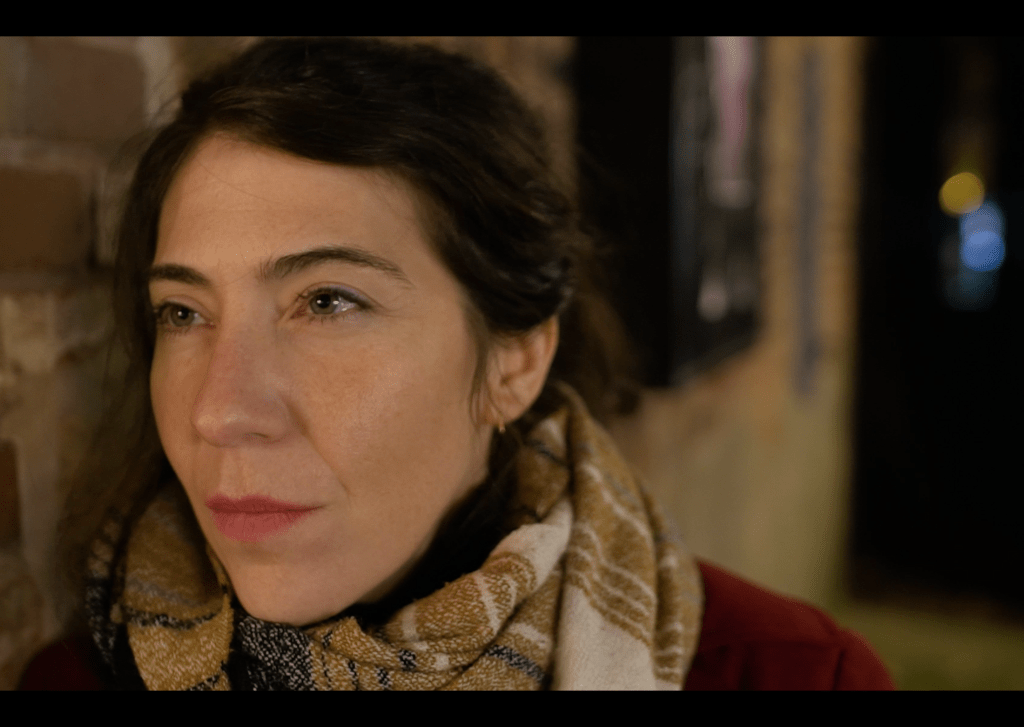
Sis Byers lives in Chicago and writes fiction, screenplays, and personal essays, and with her creative partner she produces and directs short films. Her stories have been published by God’s Cruel Joke and Red Noise Collective.
“Deepor Beel”: — Shruti Krishna Sareen
Tuni Das bolted and locked the front door of her house and walked down the garden path to the little white gate. Shutting it firmly behind her, she looked up and down the road for her cab. She was a woman of short height, in her mid-40’s. She had bob cut hair which was gradually greying. She wore a long pink skirt with a blue top, and had her sunglasses on her head. Tuni Das was a botany teacher in Guwahati with a passion for birds. Her binoculars hung round her neck with a loose chain, and she had her camera in hand. She had called for a cab to take her to Deepor Beel, one of the largest wetlands and biodiversity hotspots. Unfortunately the once pristine Deepor Beel was now a biologically and environmentally threatened habitat. It was drying up and had now shrunk to two-thirds of its original size. Tuni didn’t really go there as much as she used to earlier. She preferred other places for bird-watching. But it was April, the season of the migratory birds, and she thought of visiting it after almost an entire year. Less than a hundred bird species now visited the lake which used to attract hundreds of bird species earlier.
Deepor Beel was quite a distance away, on the outskirts of Guwahati. It would take a while to get there. As the cab sped past, first through the traffic of city lanes and later through quieter environs, her thoughts turned to the Beel. The southern side of the Beel was bounded by some forested hills. There were loads of huge elephants in these hilly forests and they would come down to the Beel for water, or to eat aquatic plants such as the water hyacinths, the water lily and the rhizomes. Tuni loved these magnificent and gentle creatures. However, a tragedy had befallen them a few years ago when a railway track had been built, running between the Beel and the hills. This obstructed the elephants’ path and they were sometimes killed on the railway track, on one of their several trips between the hills and the Beel. On the eastern side of the Beel was an ever growing waste dump where all the garbage of the capital city was thrown. This trash threatened to swallow up the entire Beel. The Beel was a freshwater body. A couple of small rivers, the Bhoralu and the Basistha fed the lake with the polluted water from Guwahati city. Both the rivers originated in Meghalaya, and flowed through the city of Guwahati before joining the main Brahmaputra river. The Bhoralu was one of the most polluted rivers of Assam. The Basistha flowed through the southern part of the city where the temples were, and this brought all the temple waste to the lake. The rivers also carry all the untreated sewage of the city— the city had no sewage treatment plant.
Tuni tried to think of the birds she would soon see to turn her mind away from these dismal thoughts. Well, she was not disappointed. The biodiversity hotspot still had an amazing variety of birds, far more than you would find in the city. As the taxi turned the corner and Deepor Beel came in full view, Tuni saw the breathtaking sight of thousands of birds swarming across the water body. She could lose herself here and live here forever. She was blissfully happy wandering around the lake by herself, shooting bird photographs, although there was a twinge of sadness and dismay when she thought of what the Beel had been in the past. She literally lost herself as she wandered and did not realise where she was going. She suddenly realised that she was towards the eastern side of the lake, where the garbage dumps were.
She thought she heard something. She looked around. She saw two small children. One of them seemed to be crying. She walked over to them. They seemed to be roaming around the garbage dumps. Rag pickers?, Tuni wondered. The children seemed to be hunting for something. Perhaps food. Dead elephant carcasses lay around the garbage dumps. Greater adjutant storks were feeding on these. The fish in the lake which they used to feed on had disappeared. The waste piles were deserted save for the children, and the greater adjutant storks. And the dead elephant carcasses. “Ki hol?”, she asked in Assamese. “What happened?” “Ekunai. Nothing”, answered the boy. But his voice was sad, as if he was suppressing something. “No, tell me what it is”, insisted Tuni. “Let’s go away from here, there’s such a garbage stench. Let’s walk over to that little clump of trees, and we’ll sit there. Then you tell me.” The children let themselves be guided by Tuni. “What are your names?”, she asked. “Jiri”, said the girl. “Luit”, said the boy. “Oh, how nice!”, she cried. “All of us are named after rivers. My name is Tuni.” “Now tell me what’s the matter”, she continued, as they all sat down. Jiri and Luit looked at each other. “Jiri, you go ahead”, said Luit. “Okay”, said Jiri. “Can I call you Tuni baidew?”, she asked, looking up at Tuni. “So the story is simply this. Our parents used to fish here. They would fish in the Beel and would get some money by selling the fish. The leftover fish we would eat ourselves. We used to go to school, Luit and I. I have studied till class 6th, Luit till 7th. But then, they forbade fishing in the lake. They said it’s bad for the environment. Anyway, the number of fish was reducing because the oil spills flow into the lake. The lake is full of kerosene, the fish are full of kerosene. Then the silt from the hills gets deposited in the lake. The silt from all the mining and quarrying in the hills. So when it settles into the lake, the number of fish decrease. Anyway, so we were not allowed to fish. Then our parents turned rag pickers here on these waste dumps. But it’s so hard to survive like this. Rag picking doesn’t bring money like fishing does. So we had to quit school. And start rag picking too. Plus, there’s such a terrible stench out there. Last month, I got rashes on my legs wandering amidst those garbage dumps. And Luit has picked up an allergy, he keeps sneezing all the time. There’s shortage of food. Sometimes we find some leftover food among those waste heaps. So I was just crying because… Because… Sometimes I feel I can’t take it anymore. Our life was so beautiful earlier. This year, the floods in the city where worse than ever this year. Our house was inundated. The goats perished. We couldn’t even fish as the fish get away in the waters. You want to add something, Luit?”, she asked, again looking at him. “Bihu is about to come. And we can’t find half of the hundred and one herbs leaves and plants we need to make the dishes. Jiri and I have been out, trying to collect some for days. These plants have just vanished. Disappeared. All because of this stupid climate change. And they find it easy to ban us from fishing and evict us. But why don’t they ban the railways from building tracks there and the oil companies releasing all their kerosene in the water, and all the corporates and affluent people responsible for garbage? Why is it only our fault?”, he said. “Jiri and I have this dream, that we’ll get out of this, we’ll have better lives”, he continued wistfully.
Tuni was reminded of her own family, who, two or three generations earlier, had been fishermen. They had managed to improve their lot in life, and look at her today, elite botany teacher carrying cameras and binoculars. The luxury of leisure. She looked at the two woebegone faces beside her and her heart went out to them. “Come with me”, she said, getting up. “We’ll go to a nice little place and eat something.” She took them in the cab to a small cafe near her place in the main city. She ordered them a farm fresh pizza and glasses of cold coffee to drink. Jiri and Luit were delighted. They looked bright-eyed at the food and voraciously wolfed it down. They hardly talked, they were so busy satisfying their tummies and their souls and their senses. “You both must come to work in my garden from tomorrow”, she said. “You must stop going to the Beel to collect garbage. My house has a pretty little garden and I need a gardener. The plants need to be watered, the flower beds need to be dug and new ones have to be planted, the grass is full of weeds. Then I have bird-feeders all over the place. Those must be filled too. And there’s a ton of other work that the garden needs every season. You can help out with the odd jobs and whatever projects I plan.” Jiri and Luit looked up at her with tears of happiness. “Our dream is coming true. Our life is changing for the better”, said Jiri. “You have been so good to us”, said Luit “we can’t thank you enough.” “It’s the least I can do”, said Tuni. “Come tomorrow, okay? House number 43. Uzan Bazar. Come at 5pm. See you then.”
Tuni had left the cab. The cafe was quite near her place. She would walk down. “What a frightful mess”, she thought. “I could help these two, but there are hundreds of others. And then the birds and the fish and the elephants and the plants— all just dying out like that! It’s a humongous tragedy and nobody realises it. The floods are increasing too as the air is warmer because of global warming, so it holds more moisture. They could easily take a few measures. They should just divert the waters of the flash floods into the Beel. That will be an excellent thing all round. That will rejuvenate the Beel and will solve the flood problem as well. But then, in order to do that, they have to first clear the mounds of garbage surrounding the Beel which blocks the inlet. And they must rehabilitate the people living near the Beel if they are to release the flood waters there. This must absolutely be done to kill two birds with one stone. But why would anyone want to kill birds, anyway? Dear me, what awful proverbs we have in this language”. This musing, she reached the small white gate and the pretty little garden.
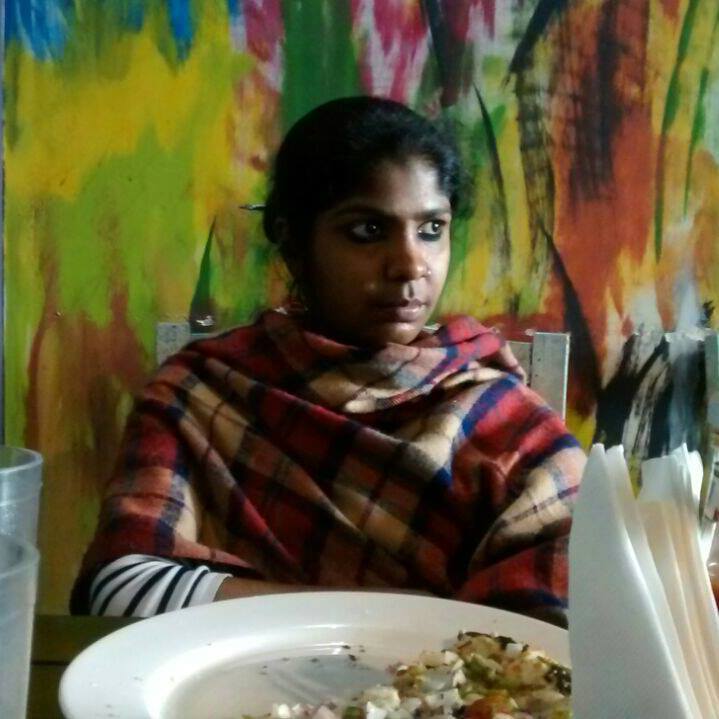
Shruti Sareen, graduated in English from Indraprastha College for Women, University of Delhi, and later earned a PhD from the same university, titled “Indian Feminisms in the 21st Century: Women’s Poetry in English” based on which two monographs from Routledge are forthcoming. Her debut poetry collection, A Witch Like You, was published by Girls on Key Poetry (Australia) in 2021. Her fictional memoir The Yellow Wall is forthcoming. She is working on a series of love-letters, Sapphic Epistles(?), as well as a collection of speculative fiction, Berserk Banshees(?). She was an invited poet at global poetry festival, hosted by Russia, Poeisia-21.
 Parcham Online
Leave a comment