
- Foreword— Candice Louisa Dacquin
- “But what is manusher gondho ma”?— Aratrika Das
- THE COLD AIR— Cynthia Graae
Foreword— Candice Louisa Dacquin
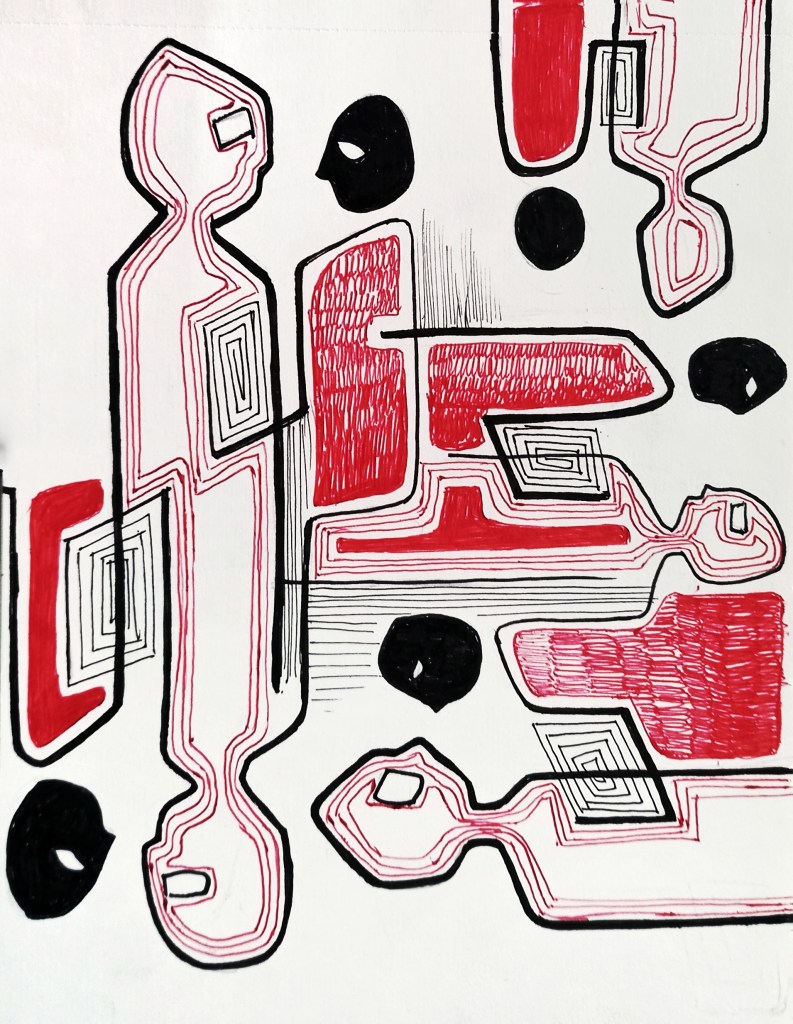
When Khaled Hosseini, in the acclaimed novel The Kite Runner, wrote, “There are so many children in Afghanistan, but no childhood,” he was alluding to a phenomenon and truism about every war-torn country. Women and children have, as history is witness, borne the brunt of nations locked in crisis and conflict. For the April Issue of Parcham, we examine via creative writing and art, the concept of childhood and what it means to be a child.
At first glance that might seem self-explanatory, but much like giving birth, we may not perfectly recall what it feels like to be a child once we have moved from that state of being. And make no mistake, childhood is a state of being, sometimes one of perfect innocence, sometimes robbed of innocence far too soon. The state of childhood is both challenging and unique; vastly disparate to the template of adulthood and an epoch worth creatively invoking.
For example, what of this strange journey of growing up? Or our experiences with parents, be they biological or otherwise? If we grow up without parents, how does that affect us? What scars does it leave? What deficits and strengths? Does it change how we perceive the world? How we form ourselves? What we consider safe and unsafe? What of being a parent witnessing our children’s development? Or adults reminiscing about their childhood? How many times does one consider things from childhood either as totems or lessons? What of the point of view of a young person watching the outside world waiting for their turn? How do these moments translate and form the adult? And what of the value of the child in that moment before it is lost?
Sadly, childhood may contain trauma and likewise, many children as a means of coping, retreat to fantasy. We understand children’s desire to play, but do we understand what play means once we have grown away from childhood? The childhood of play is a rich place of growth and safety, often relegated to a developmental stage, it is far more than that.
How does play act as an escape? When children who have lost their homes are still found playing, do we condemn them as insensitive, or envy them their ability to keep going? Children are like clay, malleable, they are the ultimate survivors because as we age, we hold the history of our experiences whereas children are blank canvases, able to bounce seemingly more robustly back from trauma. At the same time, what happens in our childhood, stays palpably with us, until the end. In a strange loop, we survive trauma only to find it affecting us years later. Therein lies the rub, and the machinations of childhood are both unfathomable and mysterious. A perfect recipe for any creative person to examine at length.
How do we become who we become? If not for our hours spent as children? Then surely there is necessity in revisiting childhood as a totem and bridge to the rest of our life. Do we drag baggage from those earliest years behind us without even knowing? Are our hang-ups and paranoias all from the source? Or is childhood an odd mixture of naivety and freedom, juxtaposed with heavy imprinting that never leaves us? And if so, what role does childhood play in the grander scheme of life? Could we exist without it if that were possible? Does it contain greater value than we ascribe it? What does the role of memory and what and how we remember, play, in the creation of selfhood?
Likewise, childhood holds vast potent memories, not least the world of fantasy and food and music, and for many, traveling as a child is an experience much disparate to traveling as an adult. We retain memories of our childhood in such distinct ways, at the very end of life many people refer to their childhood. This meaning is understated in our cultures and not examined much in literature, but it’s possibly the foundation of who we (ultimately) are. Think of Citizen Kane and his last words; “Rosebud.” Referring to the name of the sledge he had as a child. Why would a rich, important man think of this at the end? What does it say about the power of childhood memories and events? And this isn’t in isolation. In literature and arts dealing with death, often reveals our sentiments of childhood. It says a lot about what ends up mattering at the end (the circle of life) and perhaps the irrelevancy of other things in favor of those simple memories that others would not appreciate the depths of.
As adults, we may relegate childhood to a step in personal growth, but the journey of growing up is far more complicated and nuanced than simply a stage. Childhood is a force major, the foundations of which make us who we are. Some say who we are at ten years old is who we are essentially. That we do not change as much as we stay the same. Others believe change means we shift dramatically from childhood. Watching the days of childhood from an adult’s perspective, witnessing our children’s growth, these are lessons too. It’s not just the adult who teaches the child, but quite often, the reverse.
In addition, the cycle of life often means the grandparent, as they age, will bond with the young child. At first it seems an oxymoron, why would a young person find an old person appealing? Especially when ageism is so rife and the old are relegated to stereotype. Yet witness a child and you will see that child adore an older person. What do they see in them that others seem to be oblivious to? How is their special bond formed? Is it nature or nurture or some kind of magical bond developed throughout millennia?
How do we develop in adulthood when we become parents, or when we do not? How does that impact how others see us? How we see ourselves? What of the desire within many of us to create a family? If this doesn’t happen, are there other ways we can be useful in society outside of a career? These considerations are often at the heart of adult life but in a context of childhood, how do they shift and avoid becoming devastating roadblocks? Can we impact children’s lives in other ways? As teachers, friends, aunties, role models? And what of their ability to similarly touch our lives? To be a wise word from a young heart? And affect change without perhaps even being conscious of doing so?
What happens when a child loses their safety, their home, their cultural identity? And is forced to travel alongside family members to a new country, to start over? How does that child navigate such dramatic changes? How do they resolve or understand the grief and savagery of war? And death? Before they have even learned to live? And what happens when a child loses family, parents, siblings? How do they reconcile what cannot be reconciled? Years later, how does this continue to impact a person’s life and what can be understood from childhood to assist growth rather than stagnation?
There is horror and beauty in life, and this is also true of childhood. Understanding that horror and beauty are both part of the human condition is a life long battle, but within that, we find great beauty and reconciliation. Like when a child puts their tiny hand on a sick person’s face and says; “It’s going to be all right grandma.” The power of such innocent remonstrations goes beyond any intellectual reasoning. It’s just goodness. Something we may forget as adults exists. And whilst children can be terribly cruel, invoking their future adult selves, they can possess such depths of kindness. All these experiences contain value and lessons, even the hard ones. We hope to explore this circular journey to its fullest and present an unfettered portrait of childhood in all its myriad colors.

Candice Louisa Daquin is of Sephardi French/Egyptian descent. Born in Europe, Daquin worked in publishing for The U.S., Embassy / Chamber of Commerce before immigrating to the American Southwest to study and become a Psychotherapist, where she has continued writing and editing. Prior to publishing her own poetry collections, Daquin regularly wrote for the poetry periodicals Rattle, SoFloPoJo (South Florida Poetry Journal) and The Northern Poetry Review. Aside from her Psychotherapy practice where she specializes in adults who were abused as children, Daquin is also Senior Editor at Indie Blu(e) Publishing, Writer-in-Residence for Borderless Journal, Editor of Poetry & Art with The Pine Cone Review and Editorial Partner, for Blackbird Press.

Pratyusha Chakrabort , an artist based in Kolkata, works with different mediums and explores various genres in the hopes of mastering a few of them in her lifetime. She specializes in and is best known in the art community for her creative lettering pieces. She also worked as the editor of “The Quarto”, an online art magazine brought out by Last Page Doodles, Kolkata’s first and the biggest online art community. Pratyusha graduated from Bethune College in 2020 and has completed her Masters degree in English Language and Literature from The University of Calcutta.
 Parcham Online
Leave a comment